
Our first pick
Gryrigns 29.83 ct emerald-cut lab ruby, 20 x 15 mm
about $35
The best value on the site: roughly a dollar a carat for a stone that would be a museum piece if mined.
See it on Amazon· Al₂O₃ · 9
Ruby is red corundum, aluminium oxide coloured by a trace of chromium. It is the second-hardest natural gem after diamond. Mined ruby of fine colour is one of the most expensive gems on earth; lab-grown ruby is the same mineral, grown in a flame in a few hours, and costs cents to a few dollars a carat.
The same stone at four moments. Tap a photo of a listing to see it on Amazon.
01 In the ground (step 1 of 4)
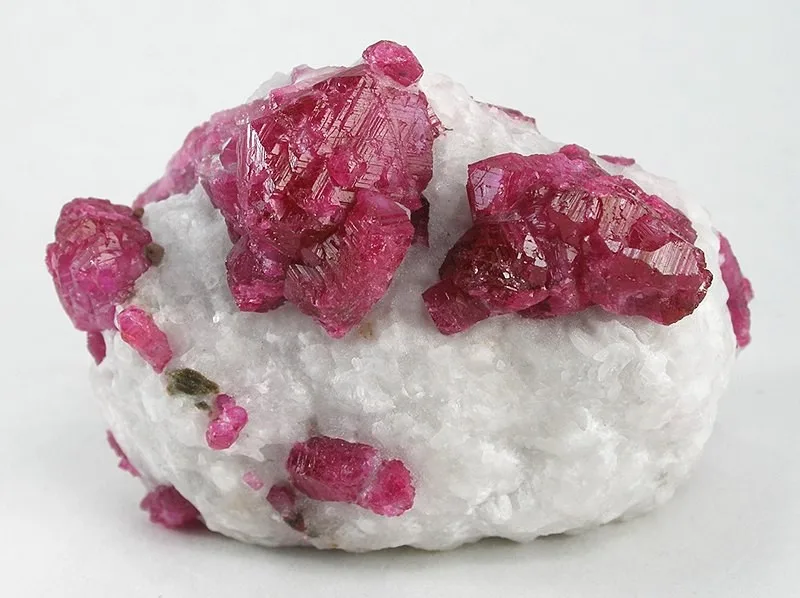
Natural ruby crystals in white marble, Luc Yen, Vietnam. Ruby grows where limestone was cooked into marble deep inside mountain belts.
Real specimen. Photo: Robert M. Lavinsky, CC BY-SA 3.0.
02 Out of the furnace (step 2 of 4)

A lab ruby , one single crystal grown drop by drop in a hydrogen-oxygen flame (600 ct).
Amazon listing photo. See it on Amazon
03 Cut (step 3 of 4)

Cut from a boule: a 29.83 ct emerald-cut lab ruby, 20 x 15 mm.
Amazon listing photo. See it on Amazon
04 Set (step 4 of 4)

Set in jewellery: a created ruby solitaire in sterling silver.
Amazon listing photo. See it on Amazon
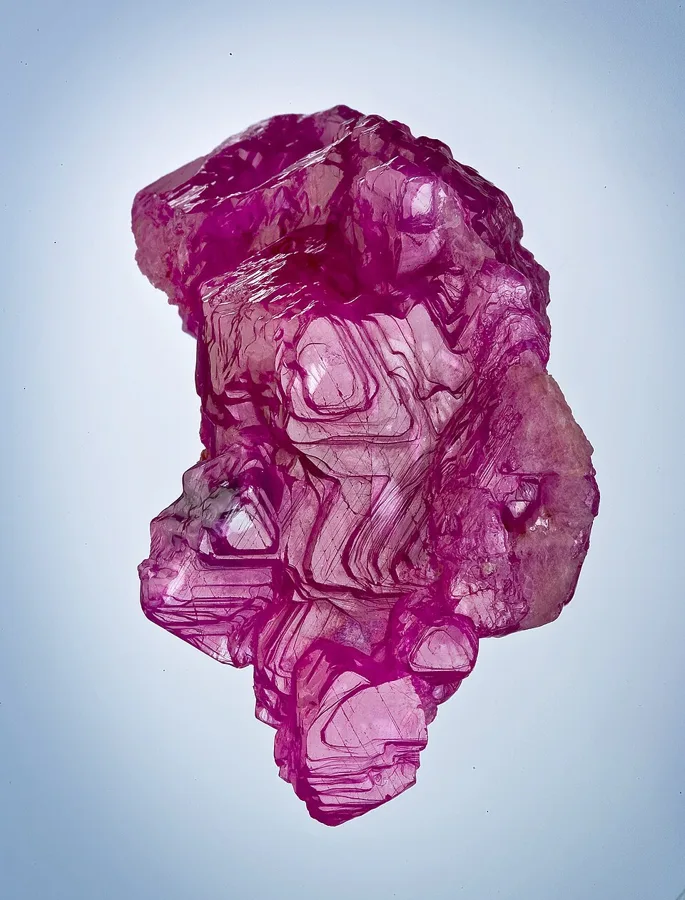
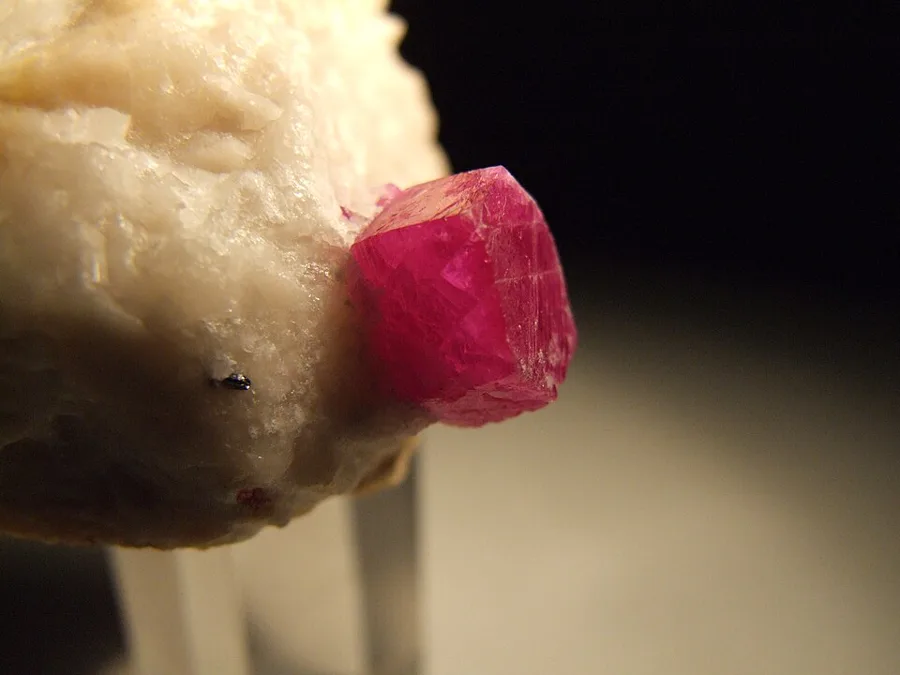
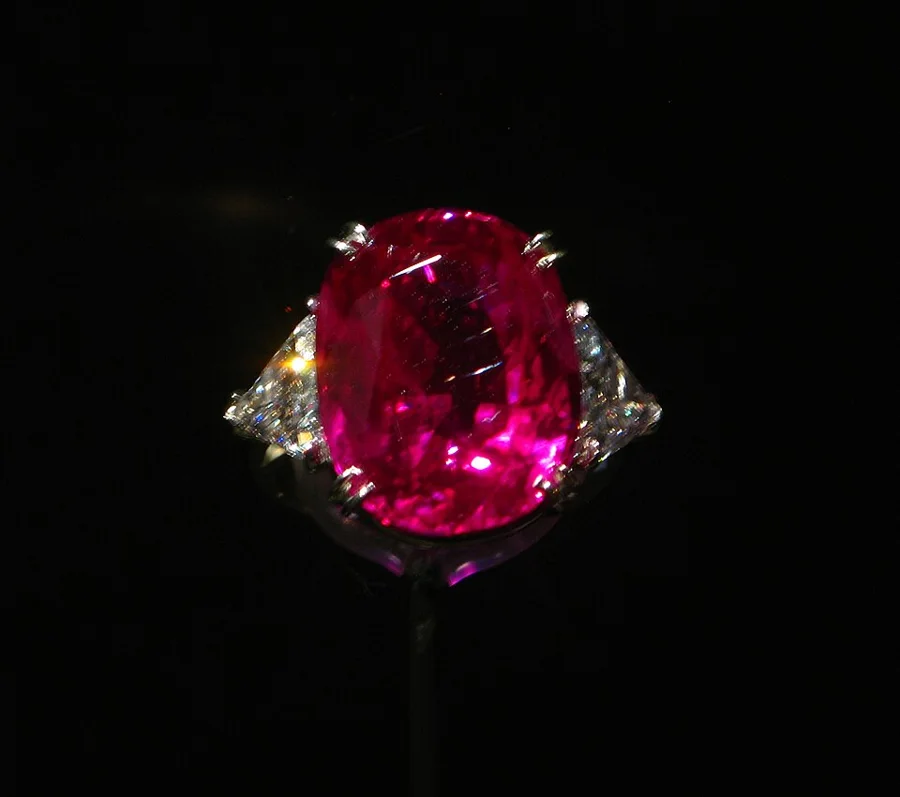
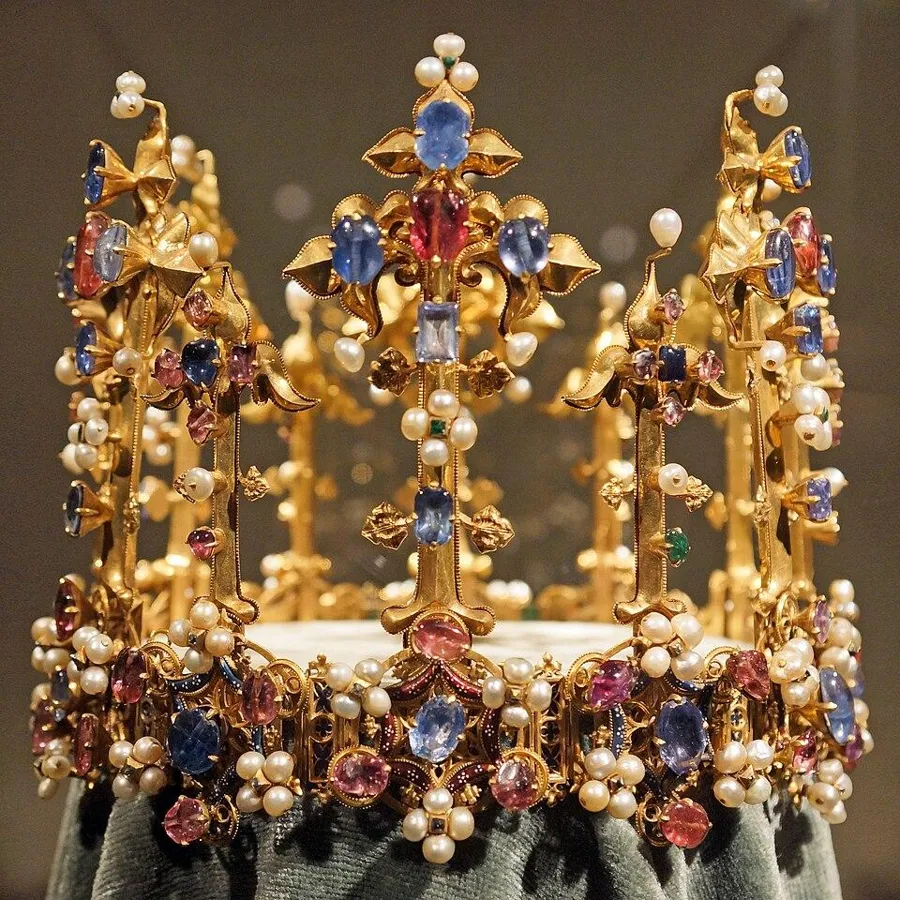
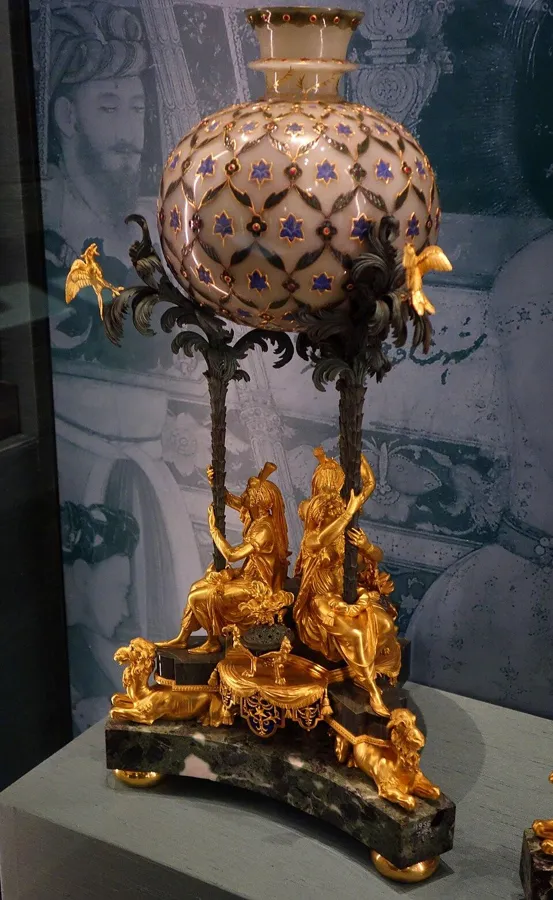
What the finest natural stones look like: real pieces in public collections. The whole gem museum.
Own a lab version, or a natural one
 Lab-grownLab ruby, oval, 20.5 ct, 20 x 15 mmabout $30on Amazon →
 NaturalNatural Burmese ruby, 5.11 ct, unheated, GIA reportabout $17,250on Amazon →
The lab oval is nearly the Carmen Lucia size. The biggest fine natural ruby we could find for sale is a Burmese stone like the Carmen Lucia, but under a quarter of its weight, and it costs about 575 times as much as the lab stone.
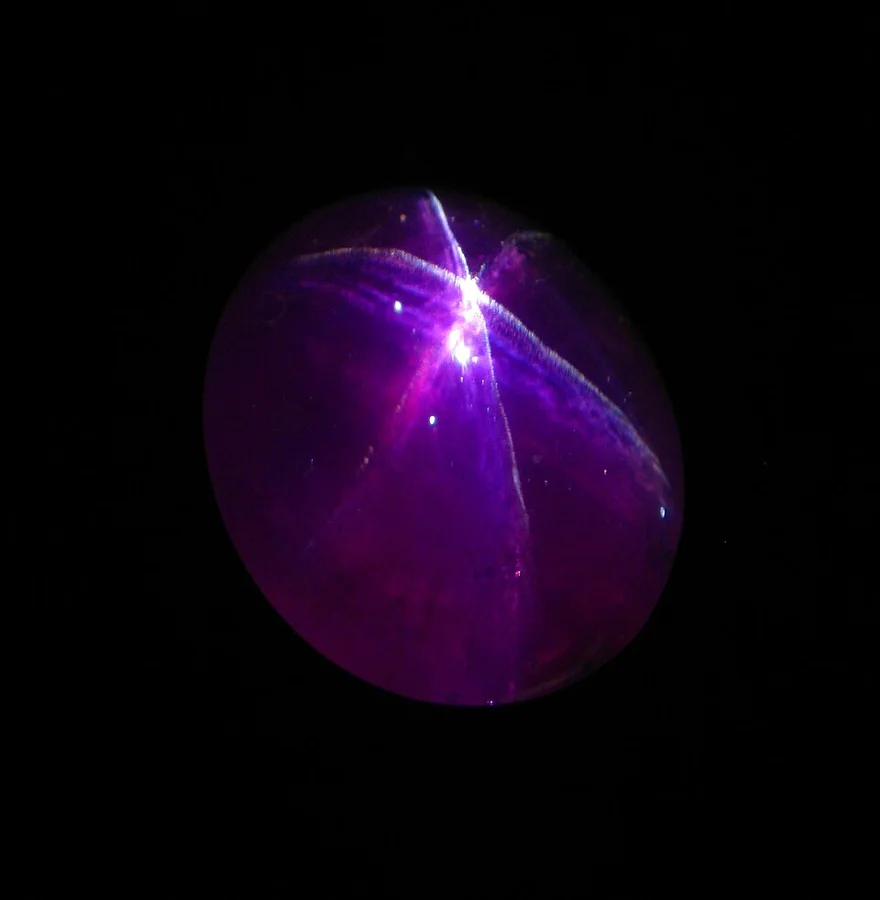
Own a lab version, or a natural one
 Lab-grownLab-created star ruby cabochon, ovalabout $15on Amazon →
 NaturalNatural Burmese star ruby, 17.83 ct, untreated, GRS reportabout $3,600on Amazon →
The same six-rayed star in red, natural or lab-grown.
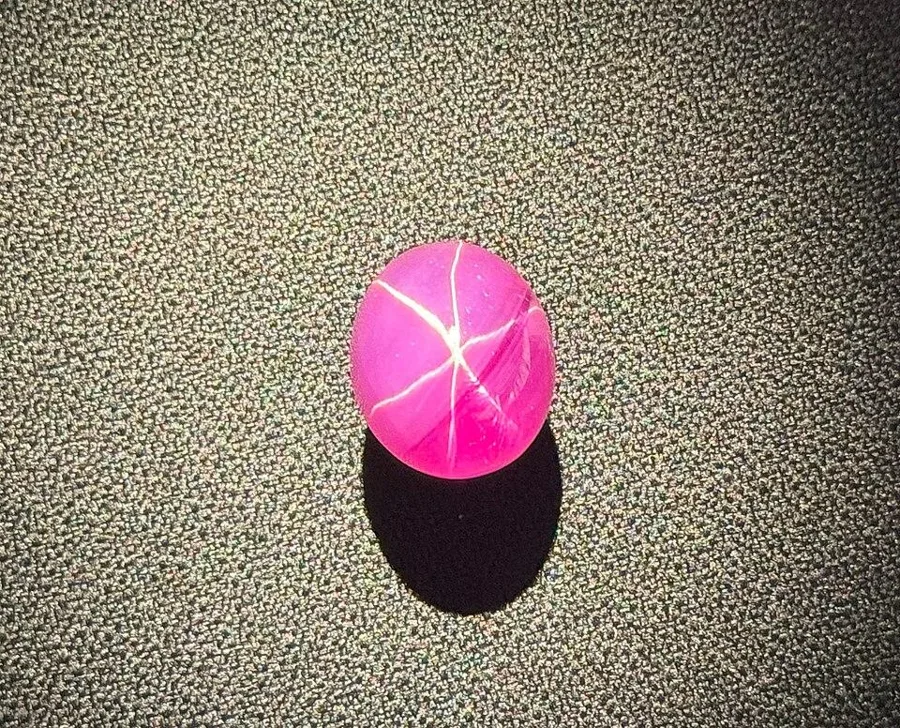
Own a lab version, or a natural one
Lab-grownLab-created star ruby cabochon, ovalabout $15on Amazon →NaturalNatural Burmese star ruby, 17.83 ct, GRS reportabout $3,600on Amazon →The same six-rayed star, lab-grown or from Burma.
Own a lab version
A full line of blue sapphires, lab grown.
| Mined | Lab-grown | |
|---|---|---|
| How it formed | Over millions of years in marble or basalt | In a flame furnace in hours (flame fusion), or in months (flux) |
| Inside | Silk, crystals, straight colour zones | Usually clean; and round bubbles in flame-fusion stones |
| Treatment | Usually heated; cheap stones may be glass-filled | Normally none |
| Price | Hundreds to many thousands of dollars a carat for good colour | Cents to a few dollars a carat |
| Resale | Fine stones hold value | Very little |
Treatments. Most mined ruby is heated to improve colour and clarity, which is permanent and accepted. Watch for glass-filled ruby: heavily cracked stones filled with lead glass and sold as huge, cheap "natural" rubies. All gem treatments explained.
Pins mark mining districts, not exact mines. Drag to move, pinch or scroll to zoom, tap a pin to read about it. Map data © OpenStreetMap contributors.
Lab ruby is mostly machine-cut in calibrated sizes, which is why a cut lab stone costs little more than its rough. Fine mined stones are often native-cut to keep weight, then recut by precision cutters. See cuts from easiest to hardest and whether cutting your own is cheaper than buying cut.
Checked in stock on October 10, 2026. Photos are the listings' own; prices are rounded.
Our first pick
about $35
The best value on the site: roughly a dollar a carat for a stone that would be a museum piece if mined.
See it on AmazonAlso good
about $60
A well-made 8 mm round in a cathedral setting from a long-running lab-gem brand.
See it on AmazonAlso good
about $50
Bold triangle studs, 2 ct total, from the same maker.
See it on AmazonAll 19 checked ruby picks
Every piece names the real stone and comes from a seller with a record, checked in stock on October 11, 2026. Photos are the listings' own; prices are rounded.
Loose stones20.5 ctGryrigns lab ruby, oval, 20 x 15 mmThe oval version of the same size. An oval is shallower than an emerald cut, so it weighs less for the same face.about $30on Amazon →Loose stones33.5 ctGryrigns lab ruby, oval, 25 x 18 mmA stone the size of a large coat button.about $40on Amazon → Loose stones48.3 ctGryrigns lab ruby, oval, 30 x 20 mmThe biggest faceted ruby on the list, and a showpiece for a desk or display case.about $55on Amazon →
 Loose stones5 ctCHINALUSTER lab ruby, emerald cutSmaller stones for setting in jewellery. We have bought from this seller before and liked the stones.about $20on Amazon →
 Loose stones5 ctCHINALUSTER lab ruby, pear cut, 9 x 13 mmA teardrop for a pendant or a pair of drop earrings.about $25on Amazon →
 WomenAmazon Essentials created ruby flower pendant, sterling silverThe cheapest lab ruby necklace we trust: small stones in a flower setting, sold by Amazon itself.about $18on Amazon →
 WomenAmazon Essentials created ruby three-stone drop earringsLeverbacks close like a latch, so they do not fall out.about $22on Amazon →
 WomenDECADENCE created ruby heart studs, solid 14K goldReal gold posts at a gift price.about $70on Amazon →
 Women19.24 ctGem Stone King created ruby pear drop earringsBig pear-shaped drops: lab ruby makes this size affordable.about $50on Amazon →
 Women5.45 ctEcoGems lab ruby emerald-cut halo necklaceFrom a seller that sells only lab-grown stones.about $110on Amazon →
 WomenPEORA created ruby heart pendant, 14K white goldPEORA is a lab gem specialist; this is their solid-gold line.about $250on Amazon →
 MenRaymard bar necklace with a created ruby, sterling silverA plain silver bar with one small ruby: a lab ruby a man can wear every day.about $75on Amazon →
 BeadsABCGEMS ruby in zoisite beads, TanzaniaGreen zoisite with red ruby spots. There are no real lab ruby beads on Amazon; this is the honest way to string ruby.about $25on Amazon →
 BeadsABCGEMS faceted ruby rondelle beads, Tanzania, 7 mmNatural bead-grade ruby: pinkish and cloudy, nothing like a cut gem, but real corundum.about $65on Amazon →
 BeadsVictory Glassworks synthetic ruby spheres, 6 mm, 10 packReal lab corundum balls, sold mostly as hot-glass accessories. No hole, so not for stringing as they are; a beautiful way to own a handful of perfect lab ruby.about $18on Amazon →
 BeadsVictory Glassworks synthetic ruby spheres, 3, 4 and 5 mm assortmentA mixed bag of sizes for a display dish or resin work.about $25on Amazon →
 BeadsVictory Glassworks synthetic ruby spheres, 3 mm, 25 packThe cheapest way to hold lab ruby.about $10on Amazon →
 BeadsTerporium ruby red synthetic corundum spheres, 4 mm, 25 packSame material from another seller.about $15on Amazon →
 Jewellery250 ctLab ruby rough, half a flame-fusion boule, 250 ctabout $40on Amazon →
 Jewellery350 ctLab ruby rough, split flame-fusion boule, 350 ctabout $57on Amazon →
 Jewellery0.13 ctLab ruby ring, heart, sterling silver, 0.13 ctabout $25on Amazon →
 Jewellery0.13 ctLab ruby ring, heart, sterling silver, 0.13 ctabout $25on Amazon →
 Jewellery2.216 ctLab ruby ring, heart, plated, 2.216 ctabout $20on Amazon →
 Jewellery10.3 ctLab ruby earrings, 10.3 ctabout $130on Amazon →
 Jewellery4 ctLab ruby earrings, 4 ct, sterling silverabout $80on Amazon →
 JewelleryLab ruby earringsabout $85on Amazon →
 JewelleryLab ruby earrings, round, 4 mm, sterling silverabout $25on Amazon →
 Jewellery9.62 ctLab ruby pendant, pear, 16 x 12 mm, 9.62 ct, sterling silverabout $40on Amazon →Jewellery0.13 ctLab ruby ring, heart, sterling silver, 0.13 ctabout $25on Amazon →
 Jewellery1 ctLab ruby ring, round, 1 ct totalabout $120on Amazon →
 JewelleryLab ruby earrings, platedabout $30on Amazon →
 Jewellery3.15 ctLab ruby bracelet, 18K white gold, 3.15 ct totalabout $190on Amazon →
 Jewellery1.29 ctLab ruby and sapphire ring, 1.29 ctabout $90on Amazon →
 Jewellery4 ctLab ruby ring, 4 ct, platedabout $120on Amazon →
 Jewellery2 ctLab ruby pendant, heart, 2 ctabout $75on Amazon →
 Men1.36 ctLab ruby or sapphire ring, princess, sterling silver, 1.36 ctabout $230on Amazon →
 Jewellery1.5 ctLab ruby ring, plated, 1.5 ct totalabout $70on Amazon →
 Jewellery3.95 ctLab ruby ring, 3.95 ct, sterling silverabout $150on Amazon →
 Jewellery4.8 ctLab ruby pendant, 4.8 ctabout $190on Amazon →
 Jewellery1.75 ctLab ruby pendant, pear, 1.75 ct, 14K goldabout $660on Amazon →
 Jewellery3.5 ctLab ruby and sapphire pendant, oval, sterling silver, 3.5 ctabout $160on Amazon →
 JewelleryLab star ruby ring, 8 mm, sterling silverabout $120on Amazon →
 Jewellery2.25 ctLab ruby pendant, pear, sterling silver, 2.25 ctabout $45on Amazon →
 Jewellery3 ctLab ruby pendant, pear, sterling silver, 3 ctabout $85on Amazon →
 Jewellery1.5 ctLab ruby ring, 1.5 ctabout $95on Amazon →
 Jewellery1.5 ctLab ruby ring, oval, 1.5 ct, platedabout $190on Amazon →
 Jewellery8 ctLab ruby earrings, pear, 8 ct, platedabout $120on Amazon →
 Jewellery2.74 ctLab ruby earrings, 2.74 ct, sterling silverabout $120on Amazon →
 Jewellery1.47 ctLab ruby ring, sterling silver, 1.47 ctabout $35on Amazon →
 Jewellery3 ctLab ruby pendant, princess, 8 mm, 3 ct, sterling silverabout $80on Amazon →
 Jewellery10.56 ctLab ruby ring, pear, 16 x 12 mm, 10.56 ct, sterling silverabout $120on Amazon →
 Jewellery3.5 ctLab ruby earrings, pear, 3.5 ct, 14K goldabout $700on Amazon →
 Jewellery2 ctLab ruby earrings, oval, 2 ct, 14K yellow goldabout $140on Amazon →
 Jewellery2.66 ctLab ruby earrings, 2.66 ctabout $130on Amazon →
 Jewellery0.1 ctLab ruby pendant with lab white sapphires, round, 7 mm, sterling silver, 0.1 ctabout $55on Amazon →
 Jewellery2.66 ctLab ruby earrings, round, 4 mm, 2.66 ct, platedabout $150on Amazon →
 Jewellery2.53 ctLab ruby pendant, pear, 2.53 ct, 14K goldabout $1,000on Amazon →
 Jewellery1.76 ctLab ruby bracelet, 1.76 ctabout $100on Amazon →
 Jewellery1 ctLab ruby bracelet, 1 ct totalabout $60on Amazon →
 Jewellery3.04 ctLab ruby bracelet, 3.04 ct, 10K yellow goldabout $130on Amazon →
 Jewellery1.16 ctLab ruby and sapphire pendant, 1.16 ct, 10K yellow goldabout $170on Amazon →
 Jewellery3.33 ctLab ruby and pink sapphire earrings, round, 7 mm, 3.33 ct, platedabout $90on Amazon →
 Jewellery1.2 ctLab ruby ring, emerald cut, 8 x 6 mm, sterling silver, 1.2 ctabout $230on Amazon →
 Jewellery0.17 ctLab ruby ring, 0.17 ctabout $350on Amazon →
 Jewellery0.5 ctLab ruby ring, 0.5 ctabout $600on Amazon →
 Jewellery5.37 ctLab ruby jewellery set, round, 5.37 ct, sterling silverabout $180on Amazon →
 Jewellery4.5 ctLab ruby pendant, briolette, 14K rose gold, 4.5 ctabout $250on Amazon →
 Jewellery1.71 ctLab ruby pendant, heart, 1.71 ct, 10K yellow goldabout $180on Amazon →
 Jewellery14.8 ctLab ruby pendant, briolette, 14.8 ct, 14K goldabout $550on Amazon →
 Jewellery1.13 ctLab ruby pendant, heart, 1.13 ct, 10K yellow goldabout $150on Amazon →
 Jewellery1.7 ctLab ruby bracelet, 1.7 ct totalabout $90on Amazon →
 Jewellery9.67 ctLab ruby pendant, pear, 16 x 12 mm, 9.67 ct, 10K yellow goldabout $170on Amazon →
 Jewellery0.8 ctLab ruby and sapphire pendant, heart, 0.8 ctabout $150on Amazon →
 Men1.68 ctLab ruby ring, 1.68 ct, platedabout $150on Amazon →
 Jewellery0.98 ctLab ruby ring, oval, 7 x 5 mm, 0.98 ct, 10K yellow goldabout $300on Amazon →
 Jewellery2.4 ctLab ruby earrings, oval, 7 x 5 mm, 2.4 ctabout $450on Amazon →
 Jewellery3.4 ctLab ruby earrings, 3.4 ct totalabout $620on Amazon →
 Jewellery3.11 ctLab ruby bracelet, round, 7 mm, 3.11 ct, 10K yellow goldabout $480on Amazon →
 Jewellery2.32 ctLab ruby and pink sapphire bracelet, round, 5 mm, 2.32 ct, 10K yellow goldabout $150on Amazon →
 Jewellery1.6 ctLab ruby bracelet, heart, 7 mm, 1.6 ct, platedabout $80on Amazon →
 Jewellery1.62 ctLab ruby bracelet, round, 2.5 mm, 1.62 ct, sterling silverabout $100on Amazon →
 Jewellery1.26 ctLab ruby ring, 1.26 ct, 14K goldabout $550on Amazon →
 Jewellery4.65 ctLab ruby ring, heart, 10 mm, 4.65 ctabout $1,200on Amazon →
 Jewellery3.5 ctLab ruby ring, oval, 3.5 ct, 14K goldabout $810on Amazon →
 Jewellery4.76 ctLab ruby ring, emerald cut, 10 x 8 mm, 4.76 ctabout $1,000on Amazon →
 Jewellery4.02 ctLab ruby bracelet, oval, 7 x 5 mm, 4.02 ct, sterling silverabout $100on Amazon →
 Jewellery5 ctLab ruby pendant, 14K rose gold, 5 ctabout $1,300on Amazon →
 Jewellery16 ctChatham lab ruby earrings, 4 mm, 16 ct, 14K yellow goldabout $710on Amazon →
 JewelleryChatham lab ruby earrings, 2 mmabout $95on Amazon →
 JewelleryChatham lab ruby earrings, 3 mmabout $200on Amazon →
 JewelleryChatham lab ruby earrings, 4 mmabout $390on Amazon →
 Jewellery1.05 ctLab ruby pendant, 1.05 ct, sterling silverabout $90on Amazon →
 Jewellery1.05 ctLab ruby pendant, 1.05 ct, platedabout $100on Amazon →
 Jewellery4.04 ctLab ruby pendant, 4.04 ct, platedabout $100on Amazon →
 Jewellery5.74 ctLab ruby pendant, cushion, 10 mm, 5.74 ct, sterling silverabout $270on Amazon →
 Jewellery5.74 ctLab ruby pendant, cushion, 10 mm, 5.74 ct, platedabout $270on Amazon →
 Jewellery600 ctLab ruby rough, whole flame-fusion boule, 600 ctabout $85on Amazon →
 Loose stones22.5 ctLab ruby, round, 18 mm, 22.5 ctabout $30on Amazon →
 Loose stones18.75 ctLab ruby, oval, 18 x 13 mm, 18.75 ctabout $20on Amazon →
 Loose stones18.5 ctLab ruby, emerald cut, 18 x 13 mm, 18.5 ctabout $30on Amazon →
 Loose stones8.87 to 10.85 ctLab ruby, emerald cut, 14 x 10 mm, 8.87 to 10.85 ctabout $75on Amazon →Loose stones7.46 to 9.12 ctLab ruby, emerald cut, 12 x 10 mm, 7.46 to 9.12 ctabout $45on Amazon →
 Loose stones7.5 ctLab ruby, oval, 14 x 10 mm, 7.5 ctabout $20on Amazon →
 Loose stones3.92 to 5.42 ctLab star ruby, oval, 11 x 9 mm, 3.92 to 5.42 ctabout $35on Amazon →
 Loose stones4.4 to 5 ctLab star ruby, round, 10 mm, 4.4 to 5 ctabout $35on Amazon →
 Loose stones12 ctLab ruby, round, 14 mm, about 12 ctabout $35on Amazon →
 Loose stones12 ctLab ruby, round, 14 mm, about 12 ctabout $30on Amazon →
 Loose stones14 ctLab ruby, emerald cut, 12 x 16 mm, about 14 ctabout $30on Amazon →
 Loose stones11 ctLab ruby, oval, 12 x 16 mm, about 11 ctabout $30on Amazon →
 Loose stones10.0 ctLab ruby, pear, 12 x 16 mm, about 10.0 ctabout $30on Amazon →
 Loose stones13 ctLab ruby, cushion, 12 x 16 mm, about 13 ctabout $35on Amazon →
 Loose stones10.0 ctLab ruby, pear, 12 x 16 mm, about 10.0 ctabout $35on Amazon →
 Loose stones14 ctLab ruby, emerald cut, 12 x 16 mm, about 14 ctabout $40on Amazon →
 Loose stones11 ctLab ruby, oval, 12 x 16 mm, about 11 ctabout $35on Amazon →
 Loose stones11 ctLab ruby, oval, 12 x 16 mm, about 11 ctabout $40on Amazon →
 Natural, with report3.03 ctNatural ruby, 3.03 ct, unheated, Mozambique, GRS reportabout $24,500on Amazon →
 Natural, with report4.79 ctNatural ruby, 4.79 ct, unheated, Burma, GRS reportabout $23,750on Amazon →
 Natural, with report2.01 ctNatural ruby, 2.01 ct, unheated, Mozambique, GRS reportabout $18,750on Amazon →
 Natural, with report5.11 ctNatural ruby, 5.11 ct, unheated, Burma, GIA reportabout $17,250on Amazon →
 Natural, with report2.48 ctNatural ruby, 2.48 ct, unheated, Burma, GRS reportabout $17,000on Amazon →
 Natural, with report3.5 ctNatural ruby, 3.5 ct, unheated, Mozambique, GRS reportabout $15,250on Amazon →
 Natural, with report2.01 ctNatural ruby, 2.01 ct, unheated, Mozambique, GRS reportabout $13,750on Amazon →
 Natural, with report11.51 ctNatural ruby, 11.51 ct, unheated, Burma, GRS reportabout $9,950on Amazon →
 Natural, with report4.06 ctNatural ruby, 4.06 ct, unheated, Madagascar, IGI reportabout $9,100on Amazon →
 Natural, with report2.59 ctNatural ruby, 2.59 ct, unheated, Burma, GRS reportabout $8,800on Amazon →
 Natural, with report7.38 ctNatural ruby, 7.38 ct, unheated, Burma, GRS reportabout $6,450on Amazon →
 Natural, with report3.49 ctNatural ruby, 3.49 ct, unheated, Burma, GRS reportabout $5,950on Amazon →
Five tools that let you check what you bought (a loupe, a UV torch, locking tweezers, a gem box and a pocket scale), plus a turntable that spins your stone under the light the way jewellers show one. The full collector's kit.
 LookGemOro 10x triplet loupeunder $20
 LookDARKBEAM filtered 365 nm UV flashlightabout $10
 HandleHonoson locking tweezers, 3 packabout $10
 StoreTeensery gem display boxes with clear lids, 10 packabout $9
 ShowComXim motorized turntable, adjustable speed and directionabout $15
 MeasureGemOro Platinum XP500 pocket scale, 0.01 gabout $40
In short
Ruby grows over millions of years in the earth, or in hours to months in a lab. Both are real ruby; the mined stone is rare and priced for rarity, the lab stone is priced for the cost of growing it. Buy lab to wear and enjoy, check the listing names the mineral, and test it when it arrives.
See our first pick: Gryrigns 29.83 ct emerald-cut lab ruby, 20 x 15 mmYes. It is corundum coloured by chromium, exactly what a mined ruby is, with the same hardness and the same optical properties. It must be sold as lab-grown, lab-created, created or synthetic.
Only colour. Both are corundum; red corundum is called ruby and every other colour, including pink in some markets, is sapphire.
Weigh and measure it: corundum is about 60 percent heavier than glass for the same size. Our weight checker does the maths. Lab ruby also glows strong red under a UV flashlight.
Not automatically. Cheap flame-fusion (Verneuil) ruby is very clean and even, with curved growth lines and round gas bubbles under magnification, so a big one can look almost too perfect. Flux ruby costs more to grow and traps wispy fingerprints that look more like a mined stone. Ask what a premium changes to your eye before paying it.
Amazon links are affiliate links (tag thegemtray-20): buying through them costs you nothing extra and supports the site. As an Amazon Associate we earn from qualifying purchases.
