


Our first pick
Timberline Traders Sleeping Beauty turquoise studs, 5 mm, sterling silver
about $30
Named-mine Arizona turquoise, the famous even sky blue, handmade in sterling silver.
See it on AmazonPhosphate · CuAl₆(PO₄)₄(OH)₈·4H₂O · 5 to 6
Turquoise is a copper aluminium phosphate that forms where water seeps through copper-rich rock in dry country, filling cracks with sky-blue to green veins. It has been mined for at least 5,000 years, from the Sinai for the pharaohs, in Persia, and across the American Southwest. It is soft and porous, so most turquoise sold today is stabilised with resin, and much cheap "turquoise" is dyed howlite or plastic. It is not grown in labs in any real quantity.
The same stone at four moments. Tap a photo of a listing to see it on Amazon.
01 In the ground (step 1 of 4)
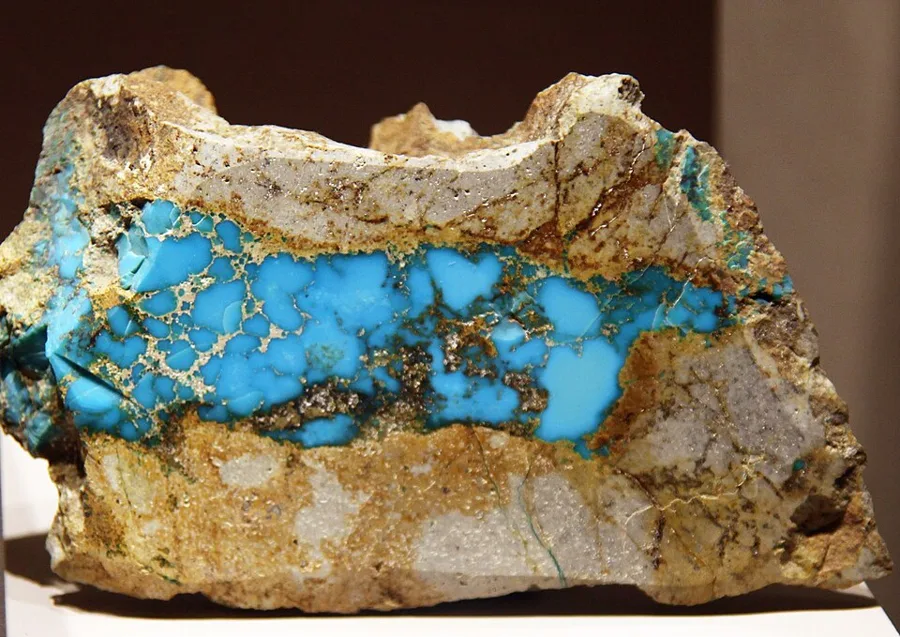
A vein of turquoise in its host rock from the Cerrillos Hills, New Mexico, mined by Ancestral Puebloans. Smithsonian collection.
Real specimen. Photo: Tim Evanson, CC BY-SA 2.0.
02 Rough (step 2 of 4)
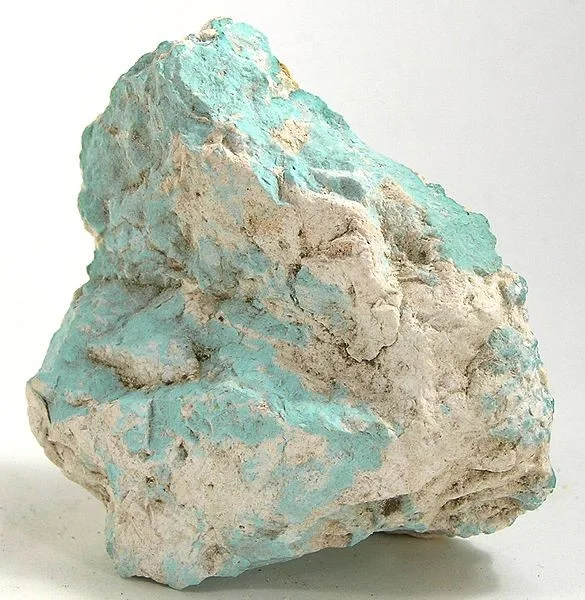
A raw turquoise nugget: chalky and porous on the outside, which is why most turquoise is stabilised before cutting.
Real specimen. Photo: Robert M. Lavinsky, CC BY-SA 3.0.
03 Cut (step 3 of 4)
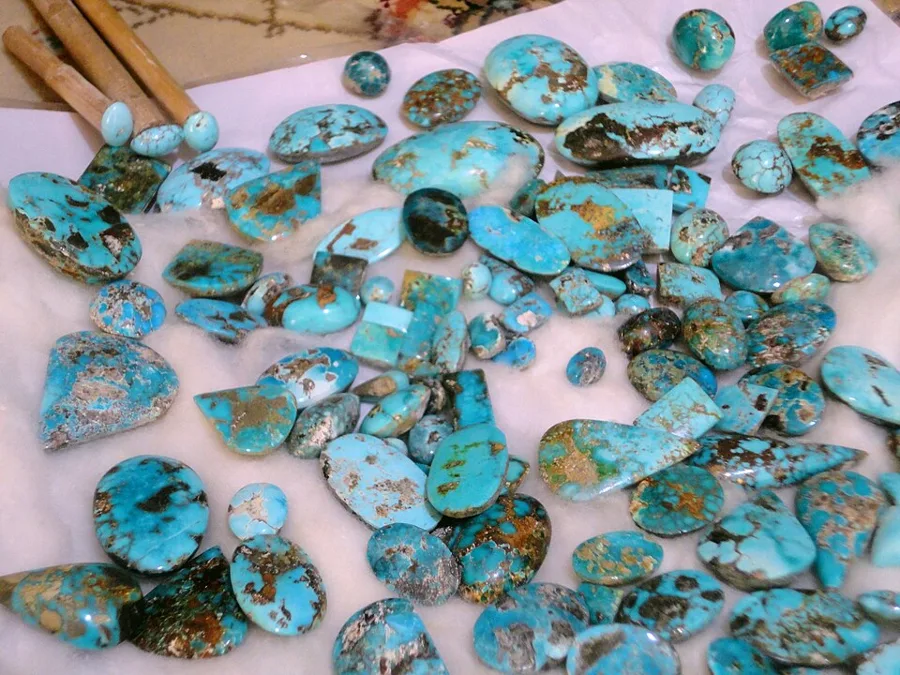
Turquoise cut in the mining village near Nishapur, Iran, the source of classic Persian turquoise.
Real specimen. Photo: Sonia Sevilla, CC0.
04 Set (step 4 of 4)

A turquoise bead bracelet.
Amazon listing photo. See it on Amazon
What the finest natural stones look like: real pieces in public collections. The whole gem museum.
Own a natural piece
Lapis is not grown in labs. A natural cabochon of the same deep blue, with gold pyrite.
Own a natural piece
A natural lapis cabochon for your own inlay.
Build the necklace part: real gem beads
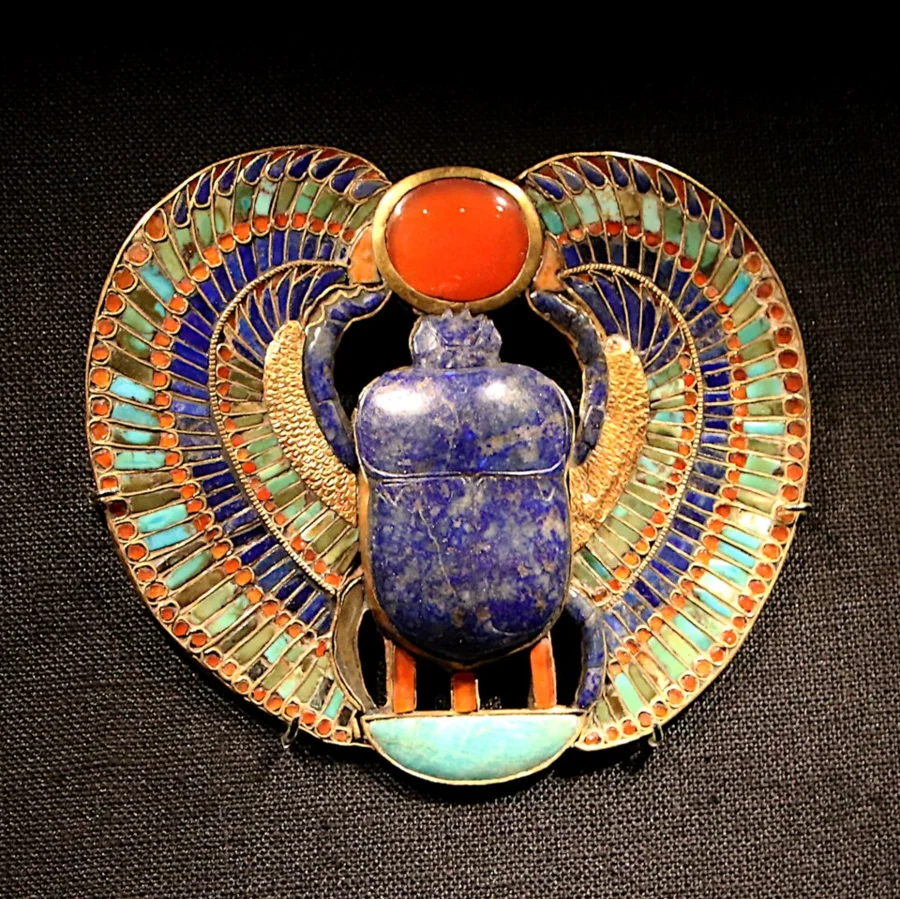
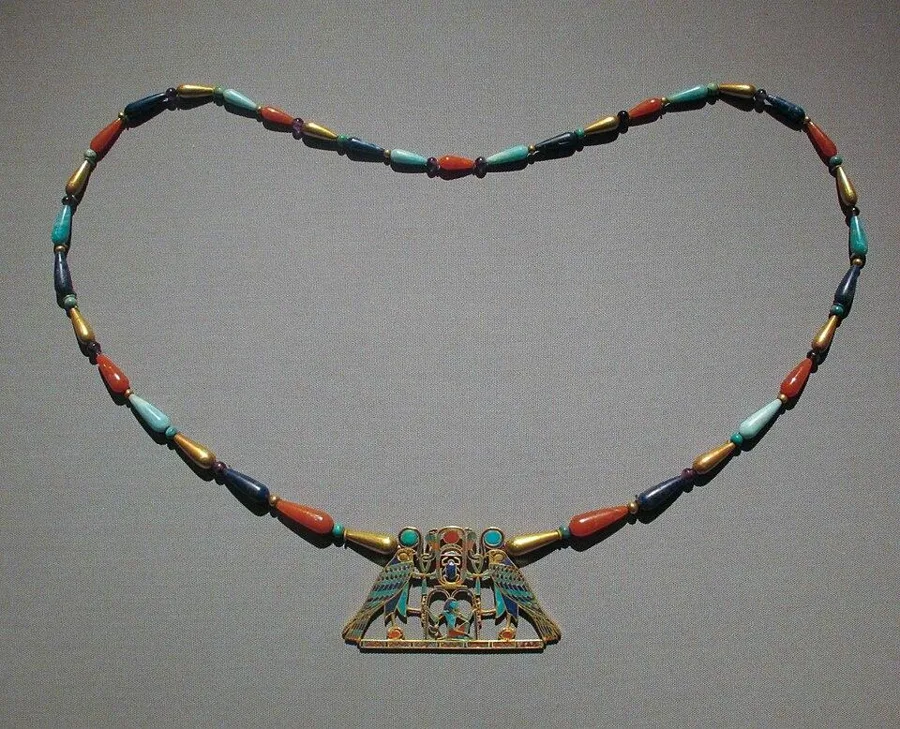
The princess wore drop beads of lapis, carnelian, turquoise and amethyst between gold. All but turquoise come as honest natural beads; cheap turquoise beads are almost always dyed howlite, so skip them or use a real turquoise piece.
Own a natural piece
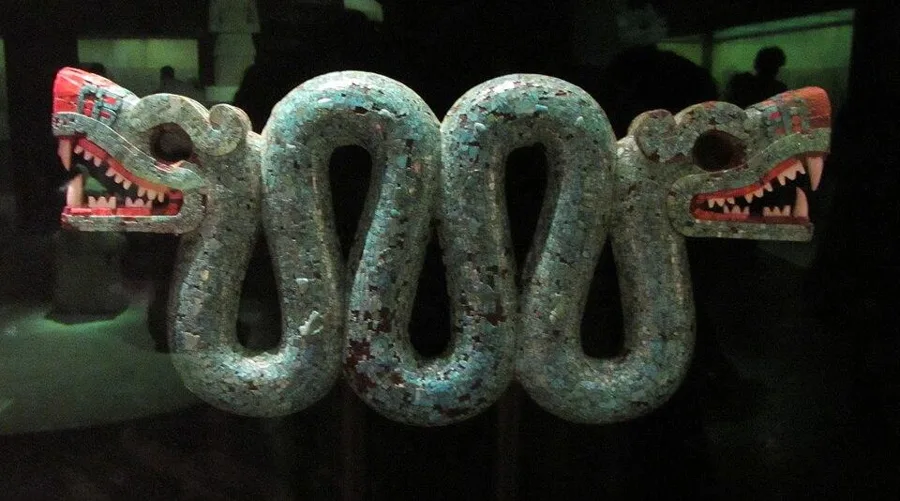
Real Arizona turquoise, a long way from Aztec Mexico but the same mineral.
Own a natural piece
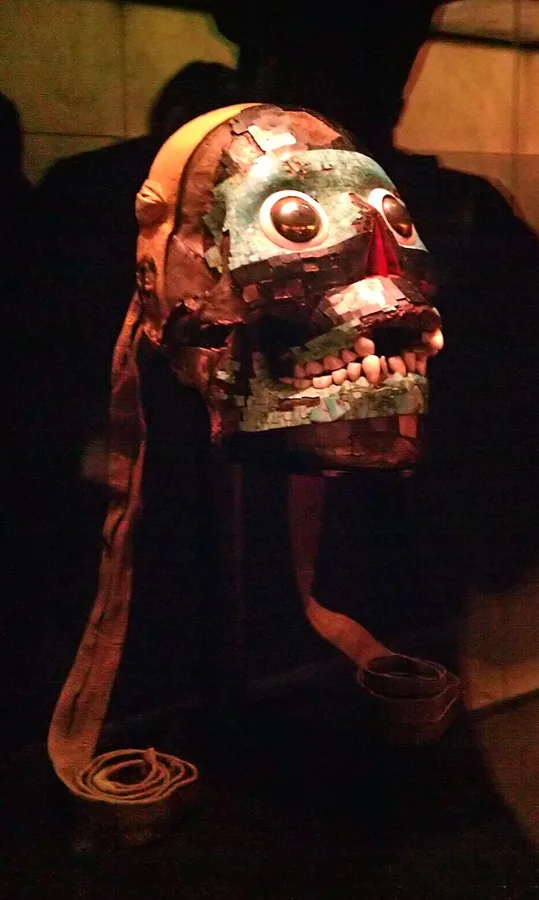
Genuine turquoise inlay, made the same way: small pieces set side by side.
Own a natural piece
Genuine turquoise jewellery.
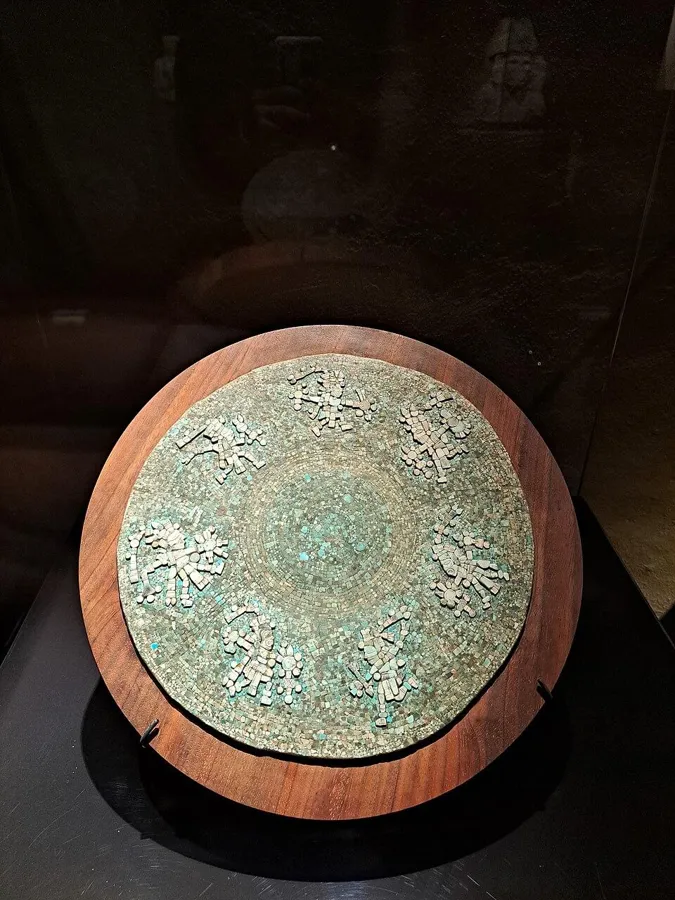
Own a natural piece
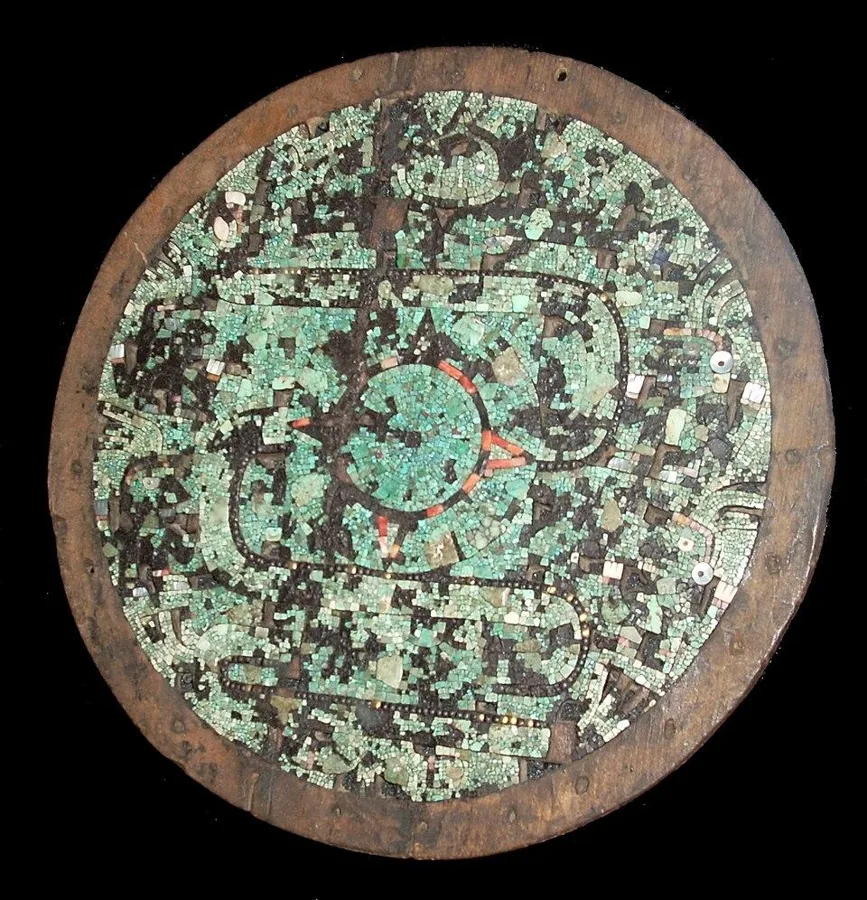
Real turquoise inlay, done the same way: many small pieces fitted side by side.
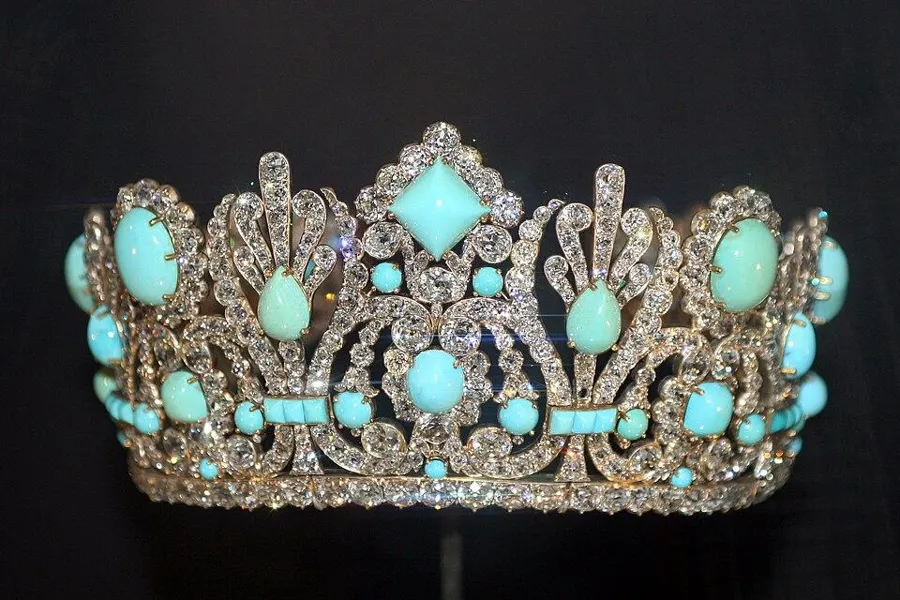
Own a lab version, or a natural one
 Lab-grownLab emerald, emerald cut, 18 x 13 mm, 11 to 15 ctabout $1,070on Amazon →
 NaturalSleeping Beauty turquoise studs, sterling silverabout $30on Amazon →
Own both sides of its story: a big lab emerald like the stones it began with, and real turquoise like the stones it wears now.
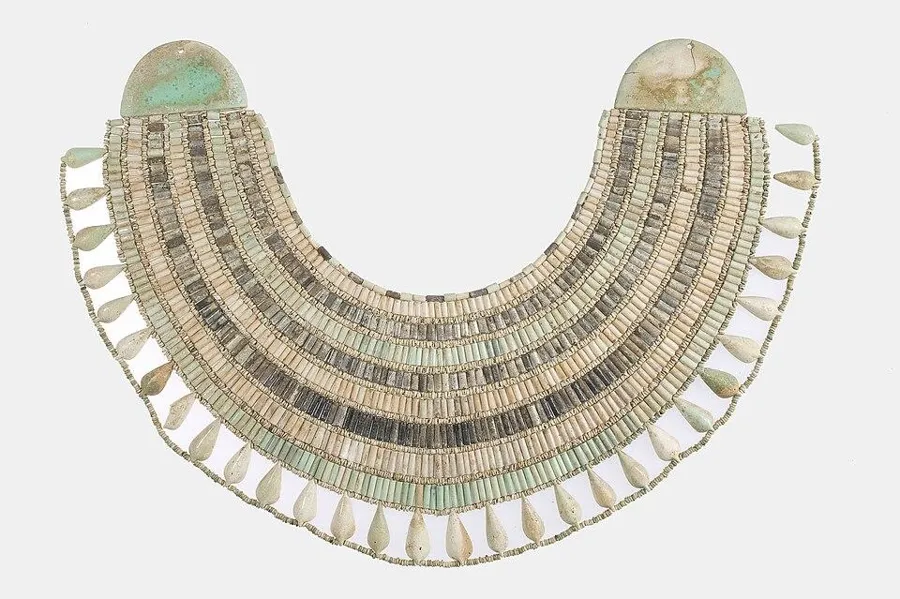
Own a natural piece
Real turquoise, the stone that faience was made to look like.
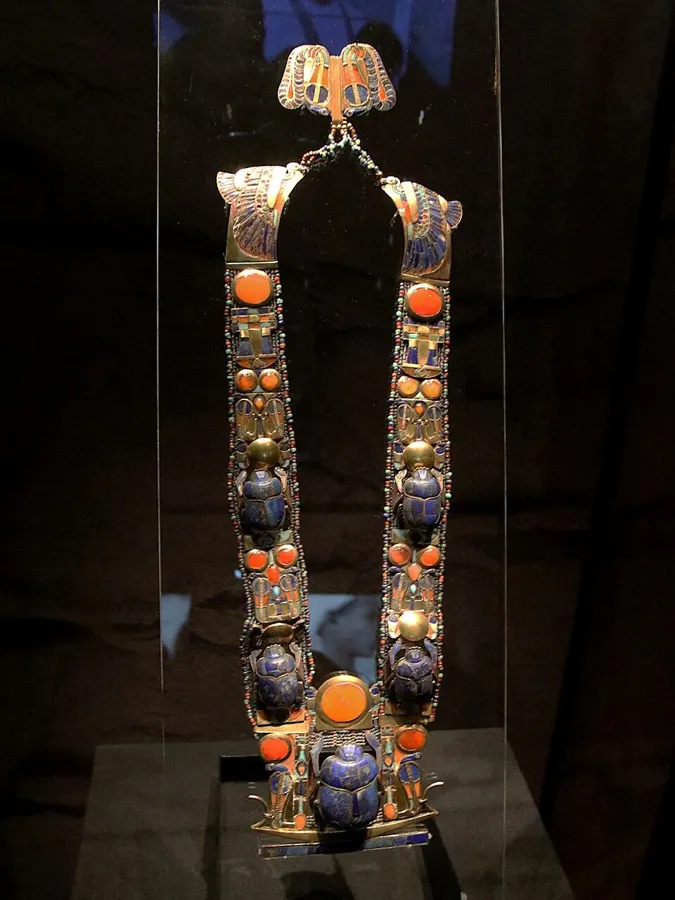
Own a natural piece
Real Afghan lapis beads, the same blue the pharaoh wore.
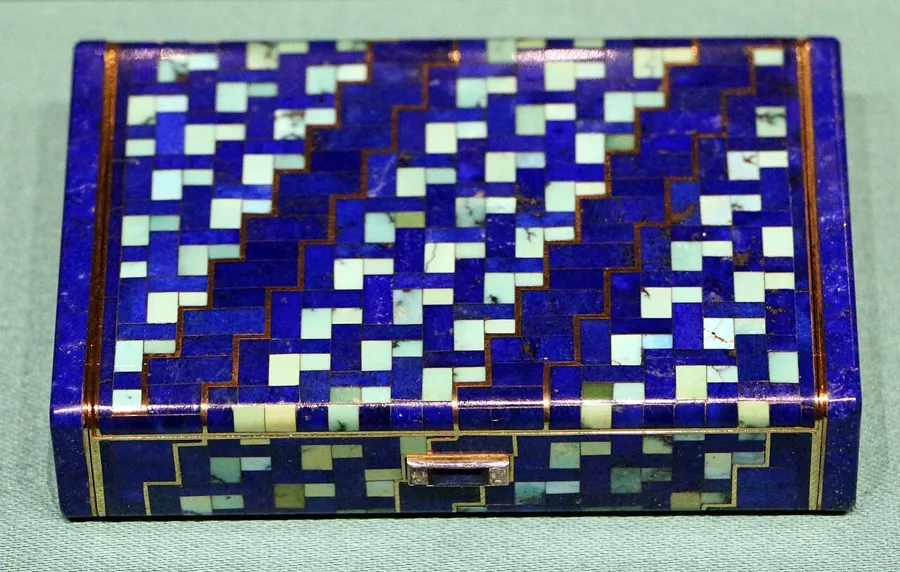
Own a natural piece
A lapis lazuli jewellery box cut from Afghan lapis, the same stone as the Medici caskets.
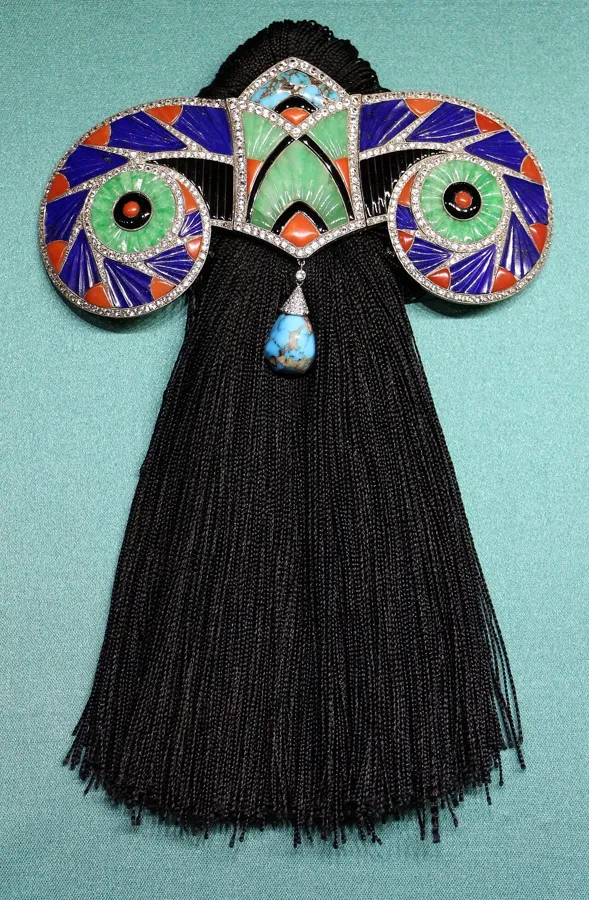
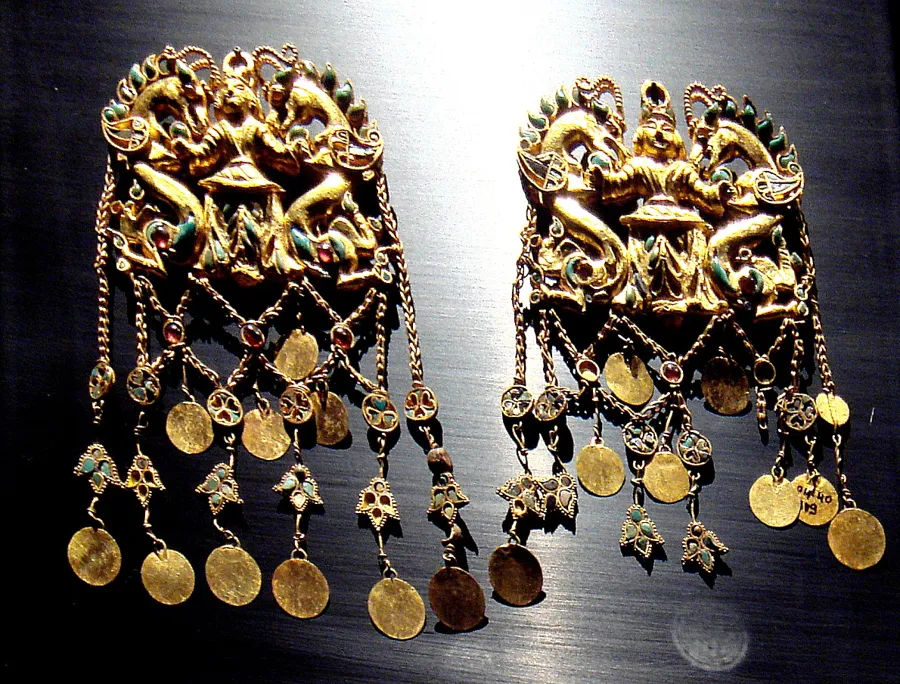
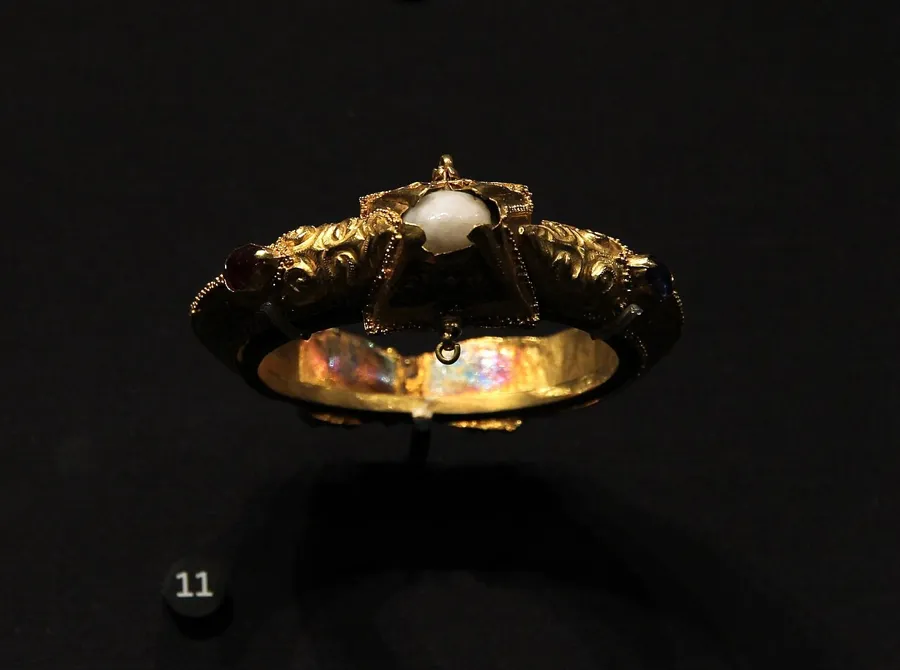
| Real turquoise | Common imitations | |
|---|---|---|
| Material | Copper aluminium phosphate, usually stabilised with resin | Dyed howlite or magnesite, "reconstituted" powder in resin, plastic, glass |
| Matrix (the dark web) | Natural host rock, varied and often slightly recessed | Painted-on or perfectly even lines |
| Colour | Uneven, from sky blue to green | Uniform, or white showing through chips and drill holes |
| Acetone swab | Stays clean | Dyed stone turns the swab blue |
| Price | From cheap stabilised to very costly natural mine-named stones | Very cheap; often sold as "synthetic turquoise" |
Treatments. Most turquoise is stabilised: soaked in resin to harden it and fix its colour, which is normal and expected. Untreated, natural, high-grade turquoise is rare and costs far more. Watch for "reconstituted" (powder glued with resin) and dyed howlite or magnesite sold as turquoise. Many listings on Amazon openly call their stones "synthetic turquoise", which here means an imitation. All gem treatments explained.
Pins mark mining districts, not exact mines. Drag to move, pinch or scroll to zoom, tap a pin to read about it. Map data © OpenStreetMap contributors.
Turquoise is opaque, so it is cut as cabochons, beads, nuggets and inlay, never faceted. The best stones are cut to keep the attractive web of matrix, and Native American silversmiths set it in silver bezels to protect its soft edges. See cuts from easiest to hardest and whether cutting your own is cheaper than buying cut.
Checked in stock on October 10, 2026. Photos are the listings' own; prices are rounded.
Our first pick
about $30
Named-mine Arizona turquoise, the famous even sky blue, handmade in sterling silver.
See it on AmazonAlso good
about $60
An everyday turquoise bracelet for men or women.
See it on AmazonAll 5 checked turquoise picks
Every piece names the real stone and comes from a seller with a record, checked in stock on October 11, 2026. Photos are the listings' own; prices are rounded.
 MenTurquoise Network turquoise ring, sterling silverA big slab of turquoise with dark matrix lines. Sized for men or women.about $90on Amazon →
 WomenTurquoise Network turtle pendant, sterling silverTurquoise inlaid into a silver turtle.about $100on Amazon →
 WomenTurquoise Network necklace and earrings set, sterling silverTeardrops in matching sizes.about $100on Amazon →
Five tools that let you check what you bought (a loupe, a UV torch, locking tweezers, a gem box and a pocket scale), plus a turntable that spins your stone under the light the way jewellers show one. The full collector's kit.
 LookGemOro 10x triplet loupeunder $20
 LookDARKBEAM filtered 365 nm UV flashlightabout $10
 HandleHonoson locking tweezers, 3 packabout $10
 StoreTeensery gem display boxes with clear lids, 10 packabout $9
 ShowComXim motorized turntable, adjustable speed and directionabout $15
 MeasureGemOro Platinum XP500 pocket scale, 0.01 gabout $40
In short
Turquoise is a soft copper mineral mined for 5,000 years from the Sinai to the Southwest. Most is stabilised, which is fine; the fakes are dyed howlite and plastic. Buy from sellers who name the mine, check the matrix and do the acetone test on anything cheap.
See our first pick: Timberline Traders Sleeping Beauty turquoise studs, 5 mm, sterling silverLook at the matrix lines: natural ones are irregular and often slightly sunken. Check drill holes and chips for white showing through, a sign of dyed howlite. A cotton bud with acetone on a hidden spot turns blue on dyed stone. For anything expensive, buy from a seller who names the mine.
No. Stabilised turquoise is real turquoise that has been impregnated with resin so it does not crumble or change colour. Most turquoise on the market is stabilised. It should simply cost less than natural, untreated turquoise.
Turquoise from the Sleeping Beauty mine near Globe, Arizona, famous for its even sky-blue colour with little matrix. The mine stopped producing turquoise in 2012, so it now comes from existing stock.
Amazon links are affiliate links (tag thegemtray-20): buying through them costs you nothing extra and supports the site. As an Amazon Associate we earn from qualifying purchases.