
Our first pick
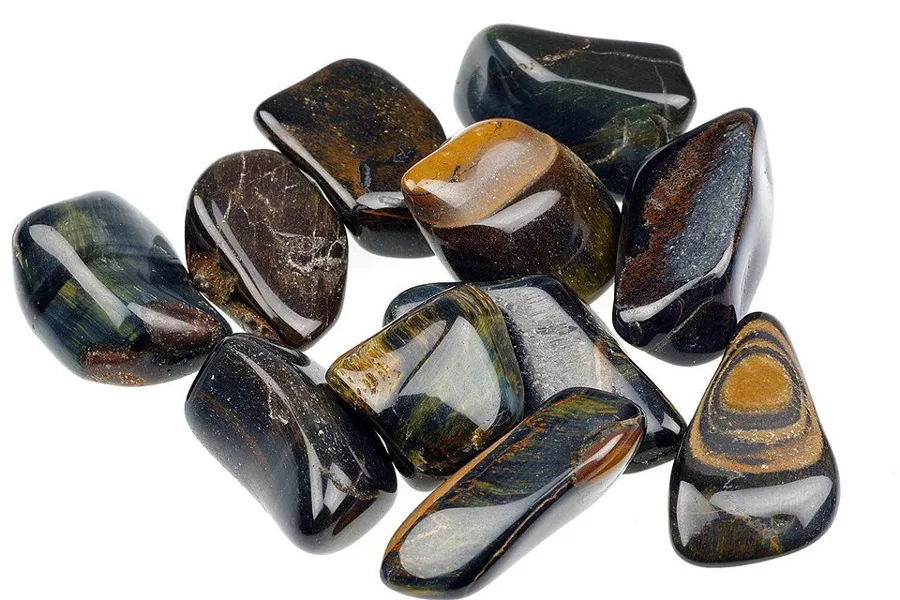
ZAICUS tiger's eye tumbled stones, 1 lb
about $20
A pound of polished stones: tilt any one and watch the band of light move.
See it on AmazonQuartz · SiO₂ with fibres · 7
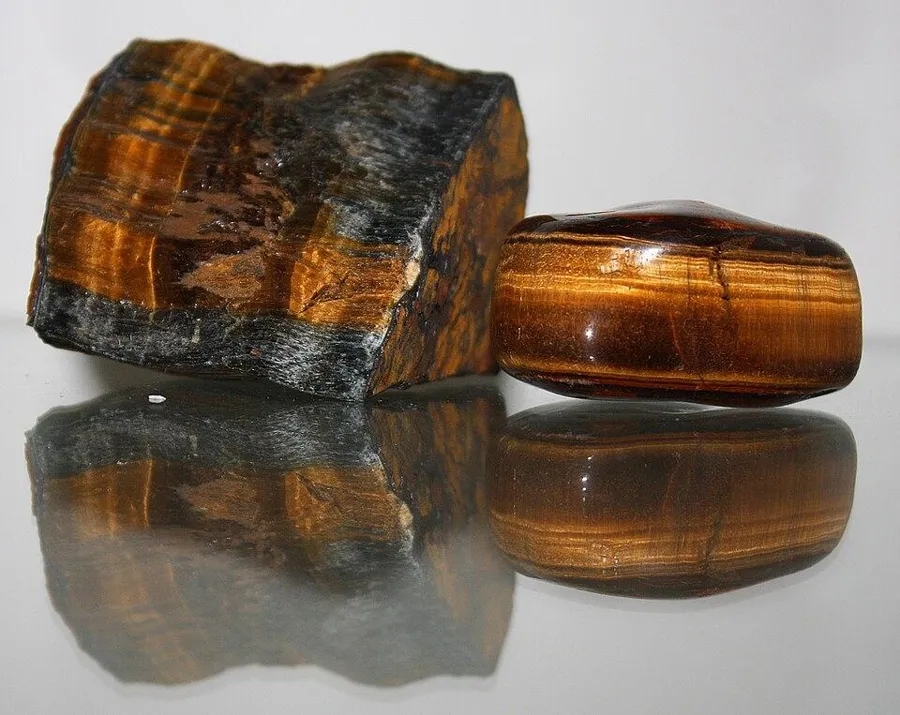
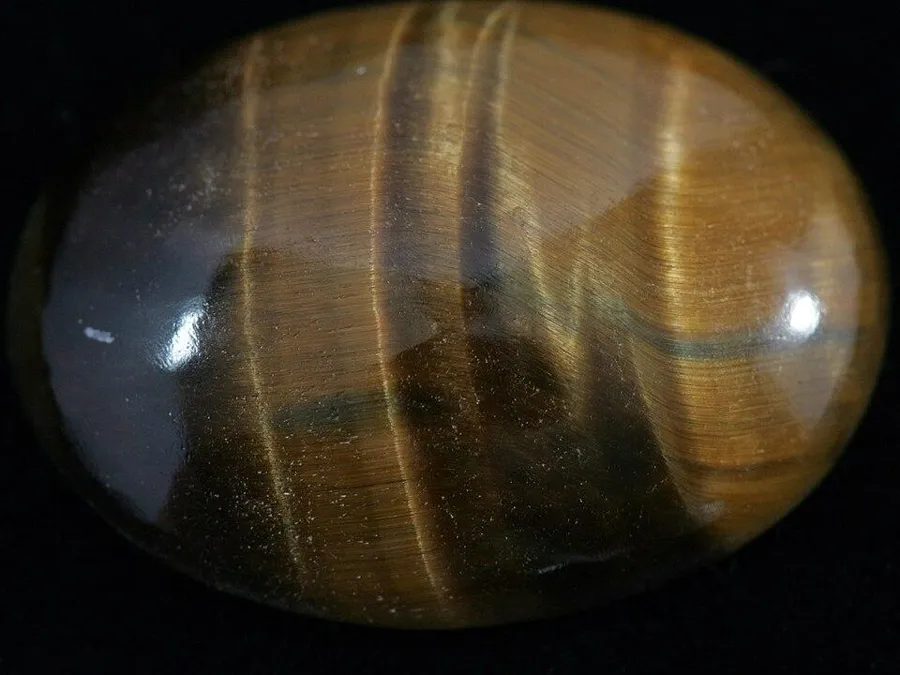
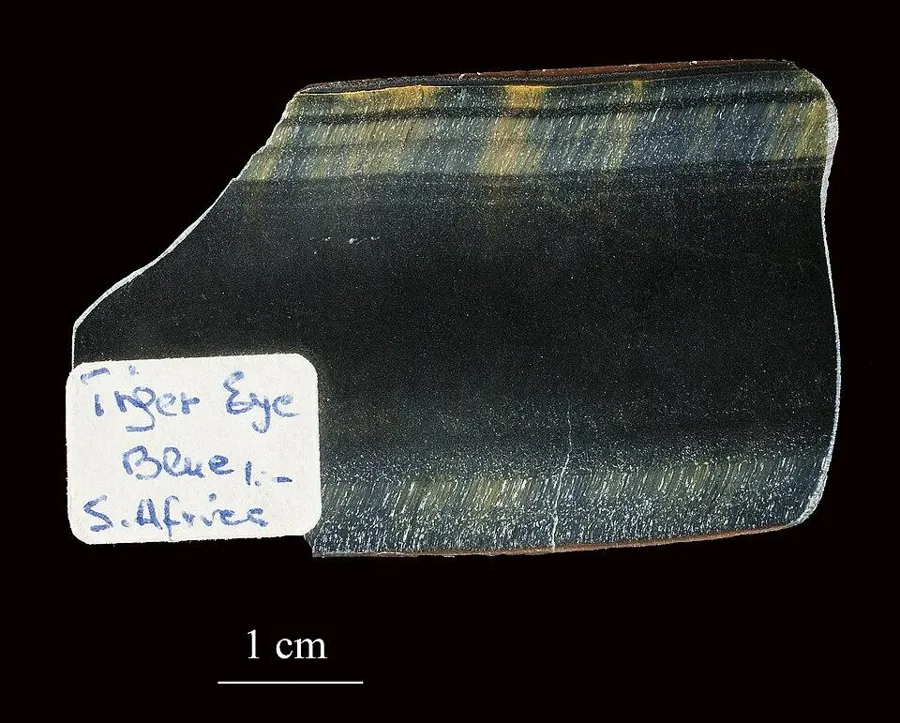
Tiger's eye is quartz that grew through a mass of fine mineral fibres. The fibres were a blue asbestos mineral, crocidolite, which iron oxide later turned golden brown, all sealed inside hard quartz. Light catches the parallel fibres and throws a bright band that rolls across the stone as you tilt it, called chatoyancy, the cat's-eye effect. Blue, less altered stone is called hawk's eye. It is cheap, tough and never lab-grown.
The same stone at four moments. Tap a photo of a listing to see it on Amazon.
01 In the ground (step 1 of 4)
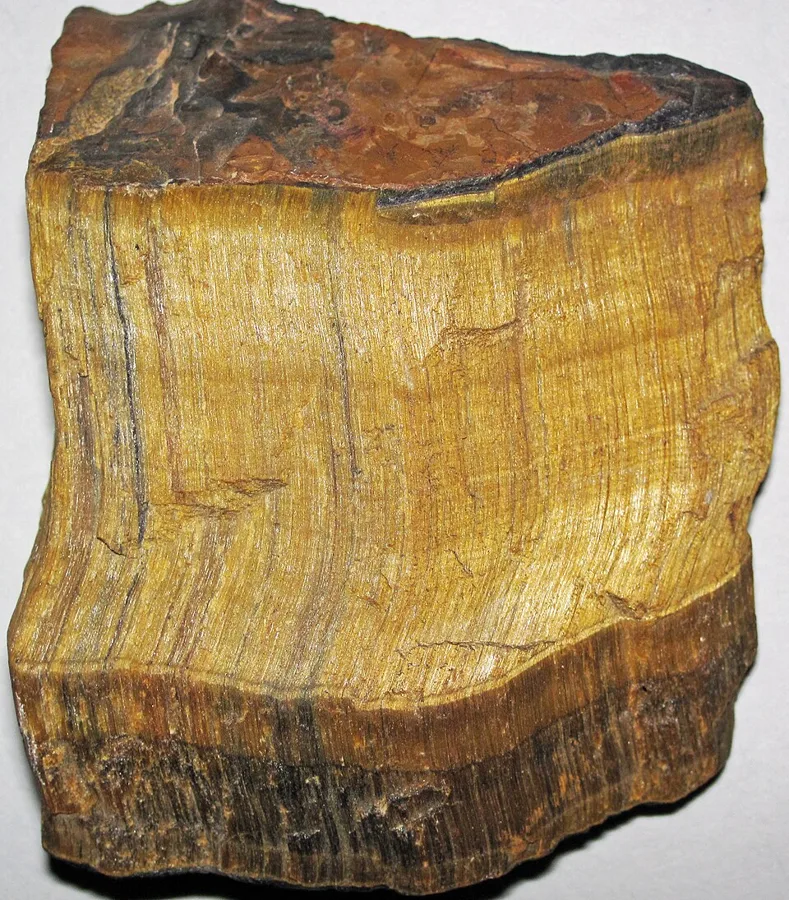
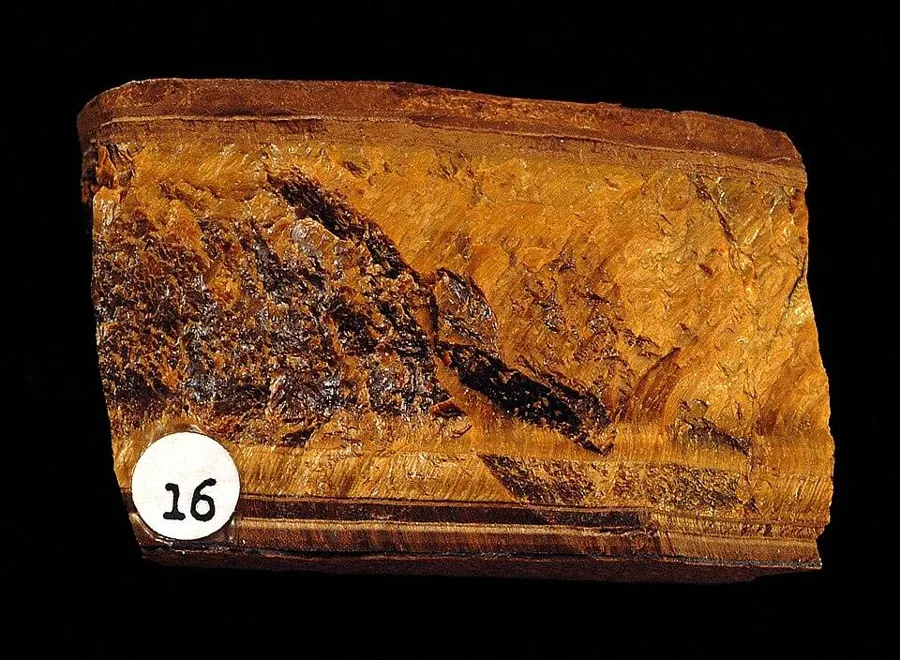
Raw tiger's eye: golden bands of fibrous quartz in an iron-rich rock, as mined in South Africa.
Real specimen. Photo: James St. John, CC BY 2.0.
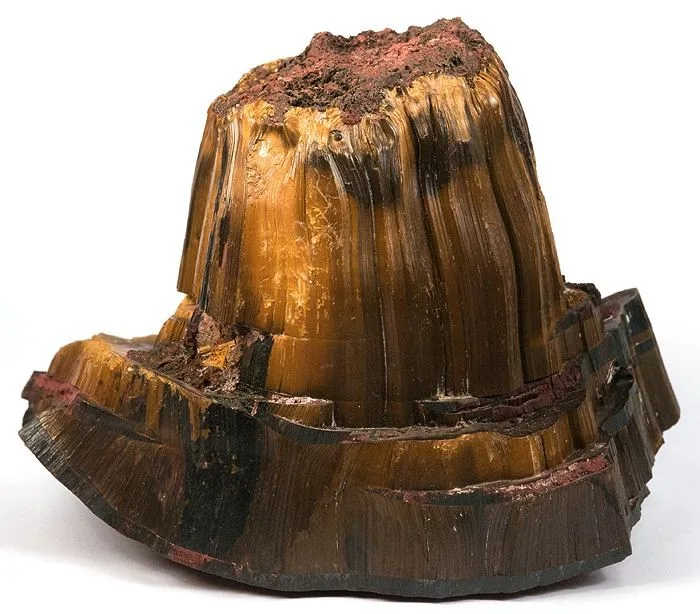
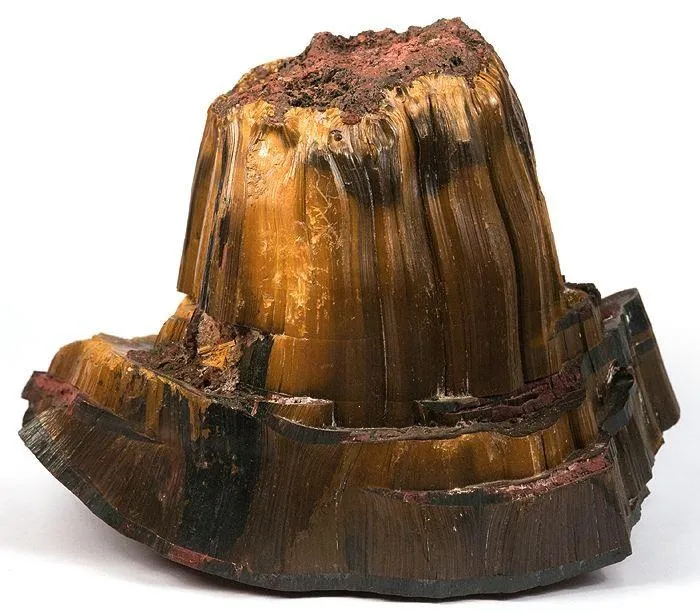
02 Rough (step 2 of 4)

A raw piece of tiger's eye, as sold to collectors and tumblers.
Amazon listing photo. See it on Amazon
03 Cut (step 3 of 4)

Tiger's eye , 18 x 25 mm: cut as smooth domes with the fibres parallel to the base, so the band of light rolls across the top.
Amazon listing photo. See it on Amazon
04 Set (step 4 of 4)

A tiger's eye ring in sterling silver.
Amazon listing photo. See it on Amazon
What the finest natural stones look like: real pieces in public collections. The whole gem museum.
Own a natural piece
The biggest tiger’s eye ball we found on Amazon.
Own a natural piece
The biggest tiger’s eye ball we found on Amazon.
Own a natural piece
A polished tiger’s eye sphere, 129 mm across.
| Stone | What it is | |
|---|---|---|
| Golden tiger's eye | Quartz with fibres altered to golden-brown iron oxides | |
| Hawk's eye (blue tiger's eye) | The same stone where the blue fibres were not altered | |
| Red tiger's eye | Golden tiger's eye heated, which turns the iron red; common and stable | |
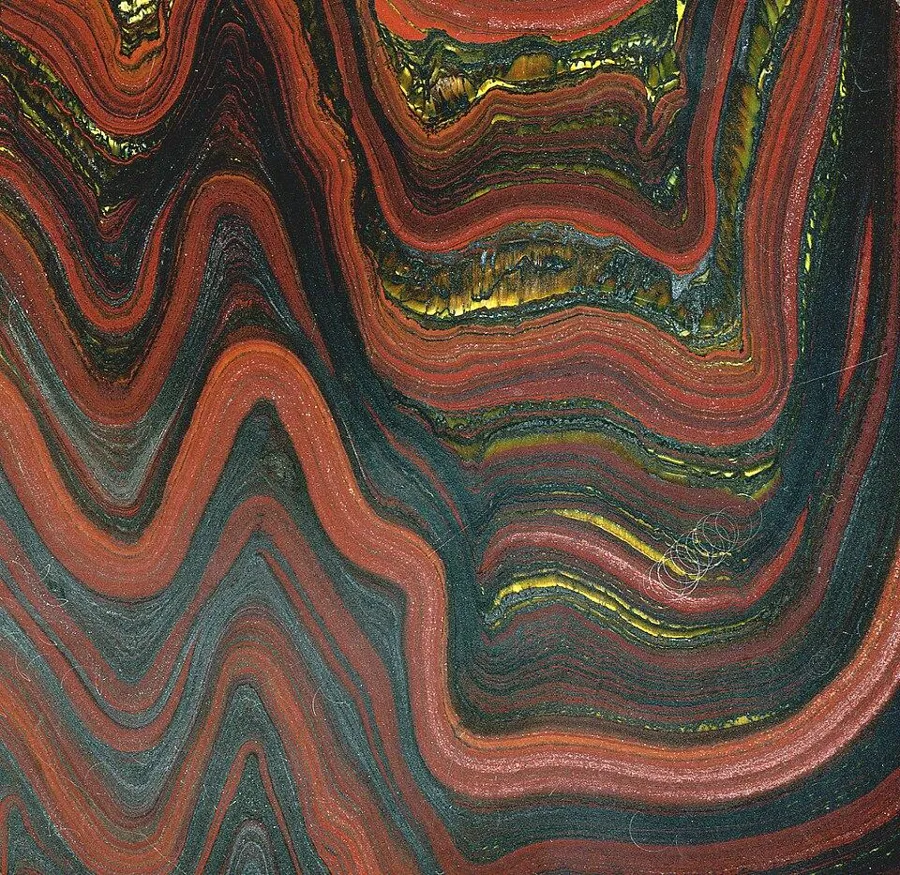
| Tiger iron | Tiger's eye banded with red jasper and silvery hematite, from Western Australia | |
| Cat's-eye glass | Fibre-optic glass with very regular stripes; an imitation |
Treatments. Much red tiger's eye is golden tiger's eye that has been heated, and some is dyed in other colours or bleached with acid to a honey tone. All of this is cheap and stable, but it should be disclosed. The fibres are fully sealed in quartz, so finished stones are safe to wear; cutters grind raw material wet, because dust from the original fibres should not be breathed. All gem treatments explained.
Pins mark mining districts, not exact mines. Drag to move, pinch or scroll to zoom, tap a pin to read about it. Map data © OpenStreetMap contributors.
Tiger's eye is cut as cabochons, beads, spheres and carvings. The cutter orients the stone so the fibres run parallel to the base; that makes the band of light sit across the dome and roll as the stone moves. Cut the wrong way, the stone shows dull stripes instead. See cuts from easiest to hardest and whether cutting your own is cheaper than buying cut.
Checked in stock on October 10, 2026. Photos are the listings' own; prices are rounded.
Our first pick
about $20
A pound of polished stones: tilt any one and watch the band of light move.
See it on AmazonAlso good
about $15
An everyday bracelet with thousands of buyers behind it.
See it on AmazonAlso good
about $30
A handmade statement ring with a large oval cabochon.
See it on AmazonAll 7 checked tiger's eye picks
The heaviest and largest pieces we found on Amazon, all checked in stock on October 11, 2026. Weights and sizes are the listings' own. Photos are the listings' own; prices are rounded.
 Giant piecesTiger's eye sphere, 129 mm, 7.28 lbFive inches across: the biggest tiger's eye ball we found. Turn it and the gold bands roll.about $220on Amazon →
 Giant piecesTiger's eye sphere, 118 mm, 5.74 lbabout $210on Amazon →
 Giant piecesTiger's eye obelisk tower, 450 to 500 gA tall polished point.about $85on Amazon →
 Giant piecesSkullis blue and gold tiger's eye skull, 2 inCarved from stone with both gold and blue (hawk's eye) bands.about $80on Amazon →
 Giant piecesFundamental Rockhound tiger's eye rough, 5 lb, South AfricaFive pounds of raw South African tiger's eye, the classic source.about $50on Amazon →
 Giant piecesHypnotic Gems tiger's eye rough, AAA, 2 lbabout $35on Amazon →
 Giant piecesTiger's eye sphere with stand, 2.4 to 2.8 inOver 40 ratings: the reliable size.about $45on Amazon →
 Giant piecesHand-carved tiger’s eye, 2,200 ct (about 440 g)A single carved piece about the weight of a can of soup.about $80on Amazon →
 Giant piecesTiger’s eye pear carving, 1,500 ctabout $70on Amazon →
 Giant piecesTiger’s eye sphere, 90 to 100 mmTurn it and the gold band rolls around the ball.about $99on Amazon →
 Giant piecesSkullis tiger iron skull, 5 in, hand carvedTiger iron: tiger’s eye banded with red jasper and silver hematite.about $169on Amazon →
 Giant piecesJIC Gem extra large pietersite towerPietersite is tiger’s eye broken up and re-cemented, so the flash swirls like a storm.about $86on Amazon →
 Giant piecesJIC Gem extra large pietersite obeliskabout $67on Amazon →
 Giant piecesLuckeeper raw tiger’s eye rough, 2 lbabout $23on Amazon →
 Giant piecesBlue tiger’s eye (hawk’s eye) rough, 3,000 ct lotabout $23on Amazon →
 Giant piecesCrystalAge tiger’s eye egg, about 48 mmabout $30on Amazon →
Every piece names the real stone and comes from a seller with a record, checked in stock on October 11, 2026. Photos are the listings' own; prices are rounded.
 MenKAR mens tigers eye ring, sterling silverA heavy carved silver ring with a big golden cabochon. Hundreds of ratings.about $100on Amazon →
 MenM MOOHAM tigers eye bead bracelet for menThousands of ratings for a plain bead bracelet.about $14on Amazon →
 BeadsABCGEMS African blue tigers eye beadsThe blue form, coloured by the same crocidolite fibres before they turned golden.about $12on Amazon →
 BeadsNancybeads golden tigers eye beads, 6 mmTigers eye is cheap and rarely faked, which makes it a good first strand.about $8on Amazon →
Five tools that let you check what you bought (a loupe, a UV torch, locking tweezers, a gem box and a pocket scale), plus a turntable that spins your stone under the light the way jewellers show one. The full collector's kit.
 LookGemOro 10x triplet loupeunder $20
 LookDARKBEAM filtered 365 nm UV flashlightabout $10
 HandleHonoson locking tweezers, 3 packabout $10
 StoreTeensery gem display boxes with clear lids, 10 packabout $9
 ShowComXim motorized turntable, adjustable speed and directionabout $15
 MeasureGemOro Platinum XP500 pocket scale, 0.01 gabout $40
In short
Tiger's eye is quartz filled with golden fibres that throw a rolling band of light. It comes mostly from South Africa and Western Australia, is never lab-grown, and costs very little. Look for the moving band of light, and know that red tiger's eye is usually heated golden stone.
See our first pick: ZAICUS tiger's eye tumbled stones, 1 lbReal. Tiger's eye is a natural stone, quartz grown through mineral fibres, and it is not made in labs. Imitations are fibre-optic glass, whose stripes are too straight and regular, and dyed stones in unnatural colours.
Finished stones are safe: the original fibres are completely sealed inside quartz. Only grinding raw material releases dust, which is why lapidaries cut it wet and with ventilation.
They are the same stone. Hawk's eye is the blue version, where the fibres kept their original blue colour; in golden tiger's eye, iron in the fibres oxidised to brown and gold.
Amazon links are affiliate links (tag thegemtray-20): buying through them costs you nothing extra and supports the site. As an Amazon Associate we earn from qualifying purchases.
