We earn a commission if you buy through links on this page, at no extra cost to you.
Quartz · SiO₂ · 7
Amethyst
Amethyst is purple quartz. A trace of iron, switched on by natural radiation in the rock over millions of years, makes the colour. It grows as crystal points lining hollow geodes in old lava flows, some big enough to stand inside. It is plentiful and cheap; lab amethyst is also grown, and the two are very hard to tell apart.
From the ground to your hand
The same stone at four moments. Tap a photo of a listing to see it on Amazon.
01 In the ground (step 1 of 4)
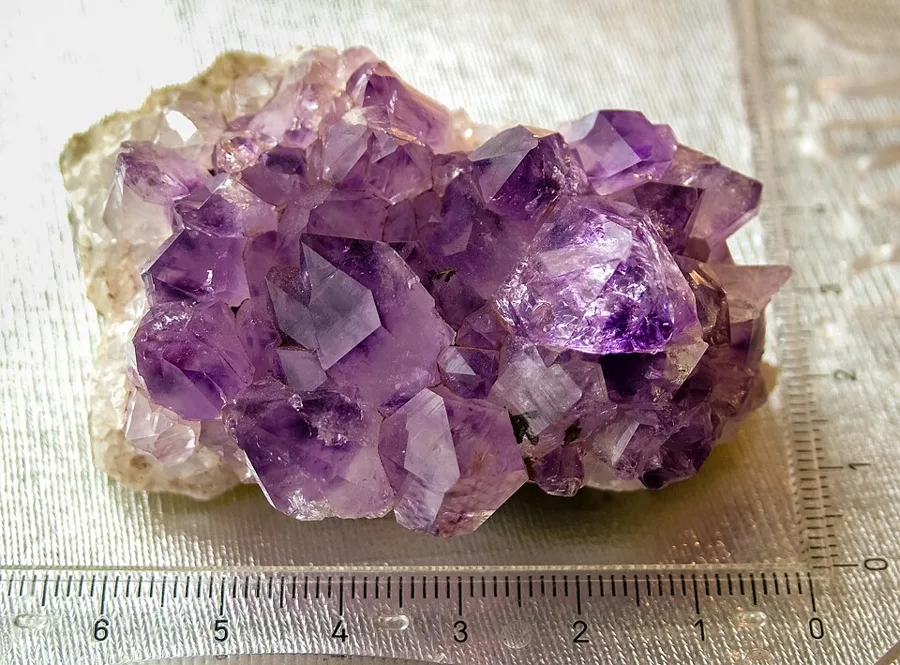
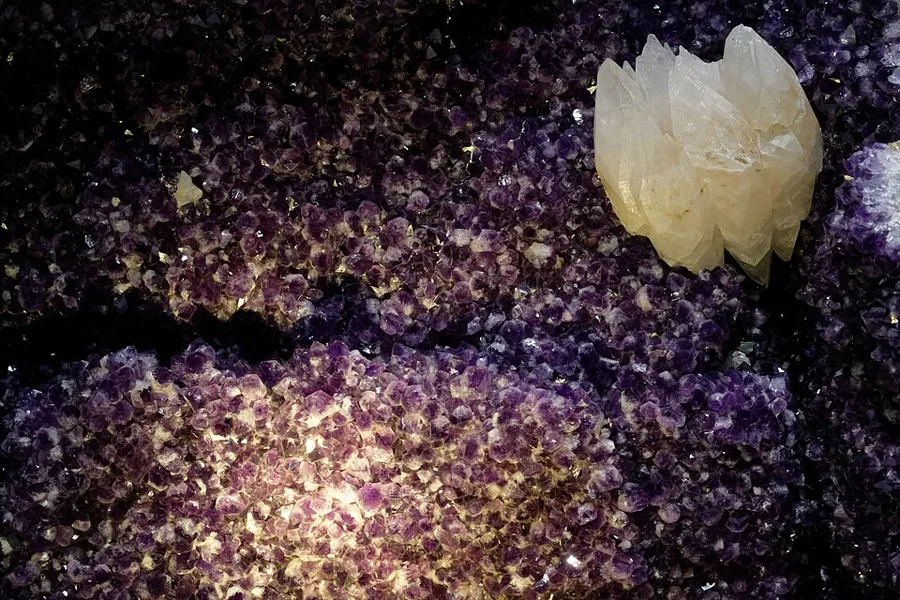
Raw amethyst crystals as they grow, packed points lining the inside of a geode.
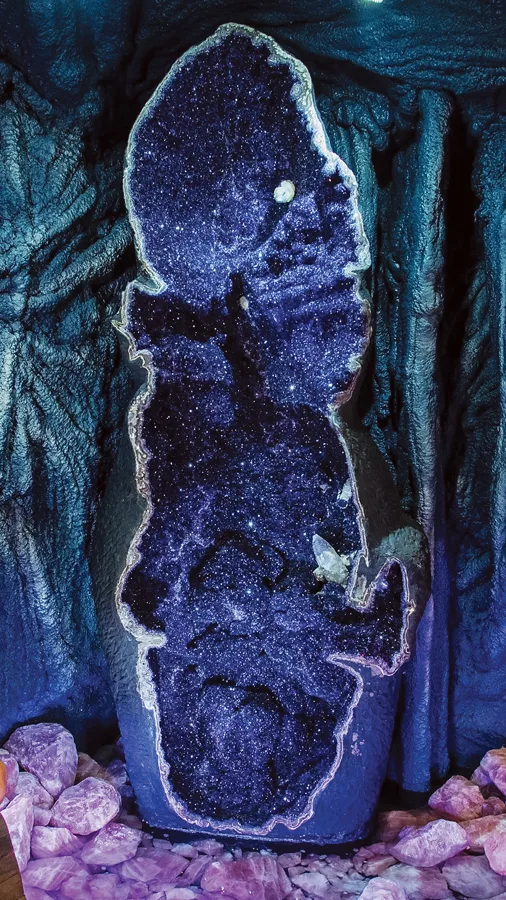
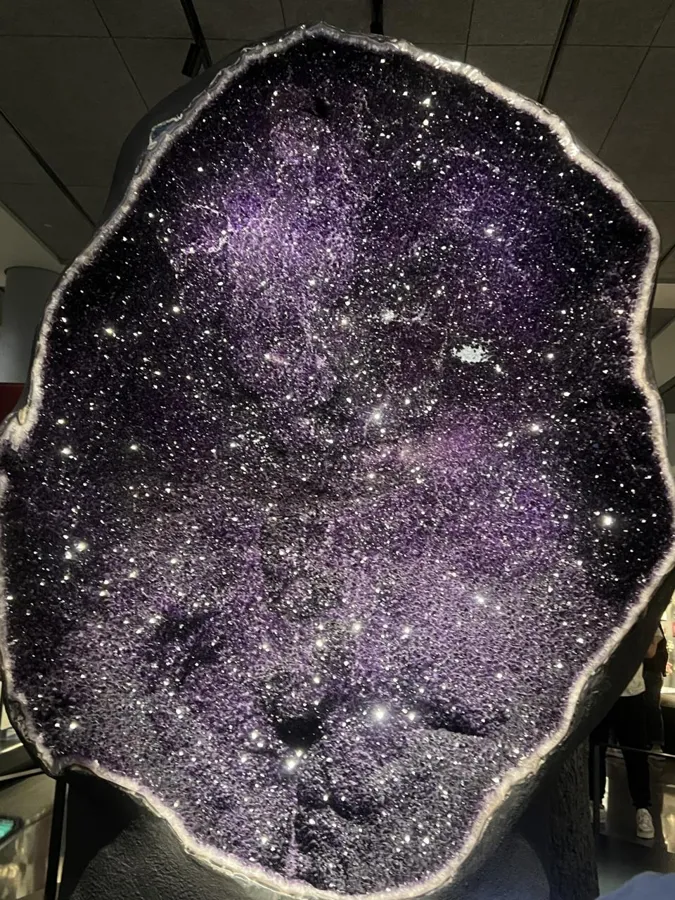
The Empress of Uruguay, one of the largest amethyst geodes ever found, taller than a person. Photo: Curiousparrot532, CC0.Inside an amethyst geode from Brazil, with a calcite crystal growing on the amethyst. Photo: Marie-Lan Taÿ Pamart, CC BY 4.0.
Famous amethyst in museums
What the finest natural stones look like: real pieces in public collections. The whole gem museum.
The Empress of UruguayAbout 3.3 metres tall and 2.5 tonnes, often called the largest amethyst geode on show anywhere.The Crystal Caves, Atherton, AustraliaA single gas bubble in an ancient lava flow in Uruguay, lined with amethyst, then cut open and shipped across the world.Photo: Curiousparrot532, CC0.
A geode from the same lava fields, small enough for a shelf.
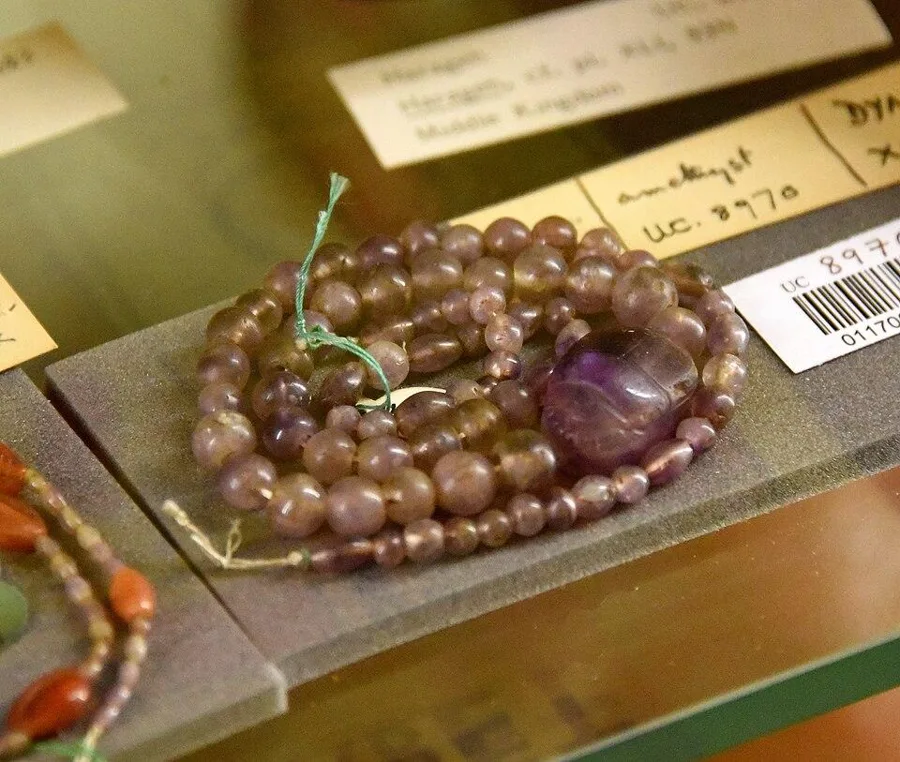
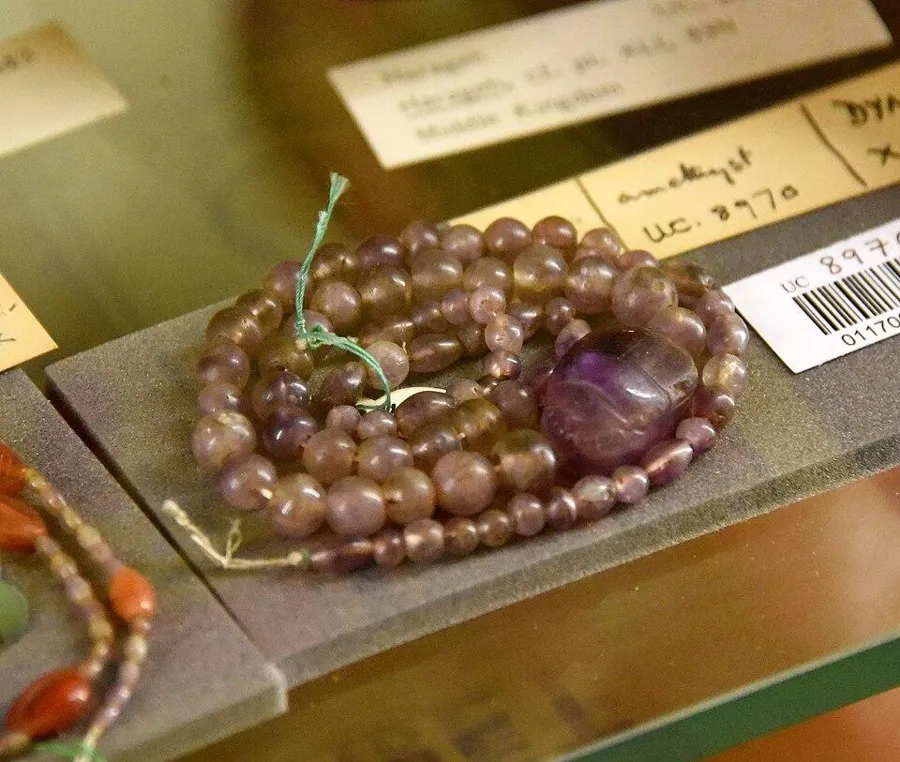
An amethyst scarab on amethyst beadsAn amethyst scarab strung with amethyst ball beads, Egyptian Middle Kingdom, about 2000 to 1700 BCE.Petrie Museum of Egyptian Archaeology, LondonMiddle Kingdom Egypt mined amethyst in the desert at Wadi el-Hudi, and for a few centuries it was the fashionable stone.Photo: Osama Shukir Muhammed Amin FRCP(Glasg), CC BY-SA 4.0.
The biggest cut amethyst we could verify on Amazon.
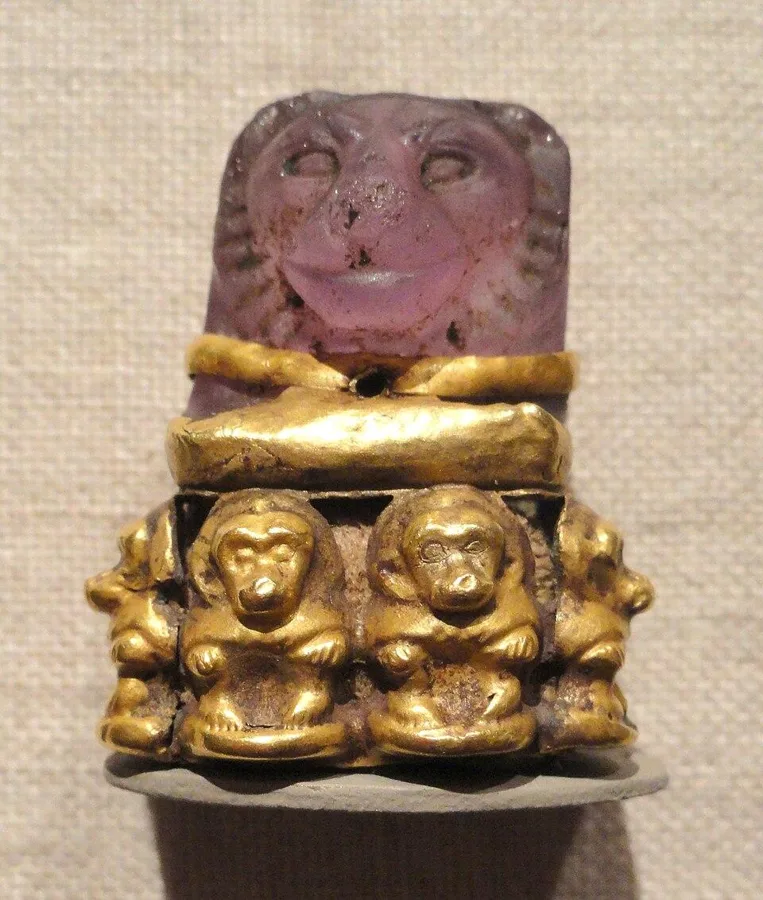
An amethyst and gold pendantA carved amethyst head on a gold mount, about 700 BCE, Egypt, Dynasty 25.Cleveland Museum of ArtFrom the era when kings from Kush, in present-day Sudan, ruled Egypt.Photo: Daderot, CC0.
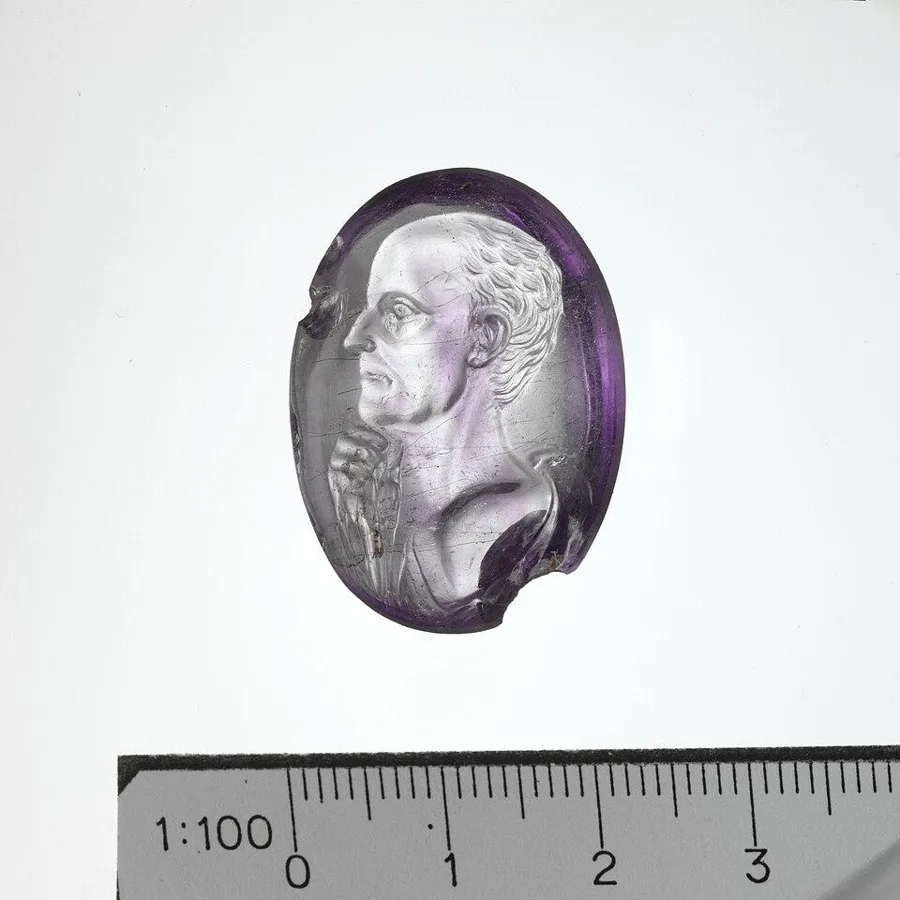
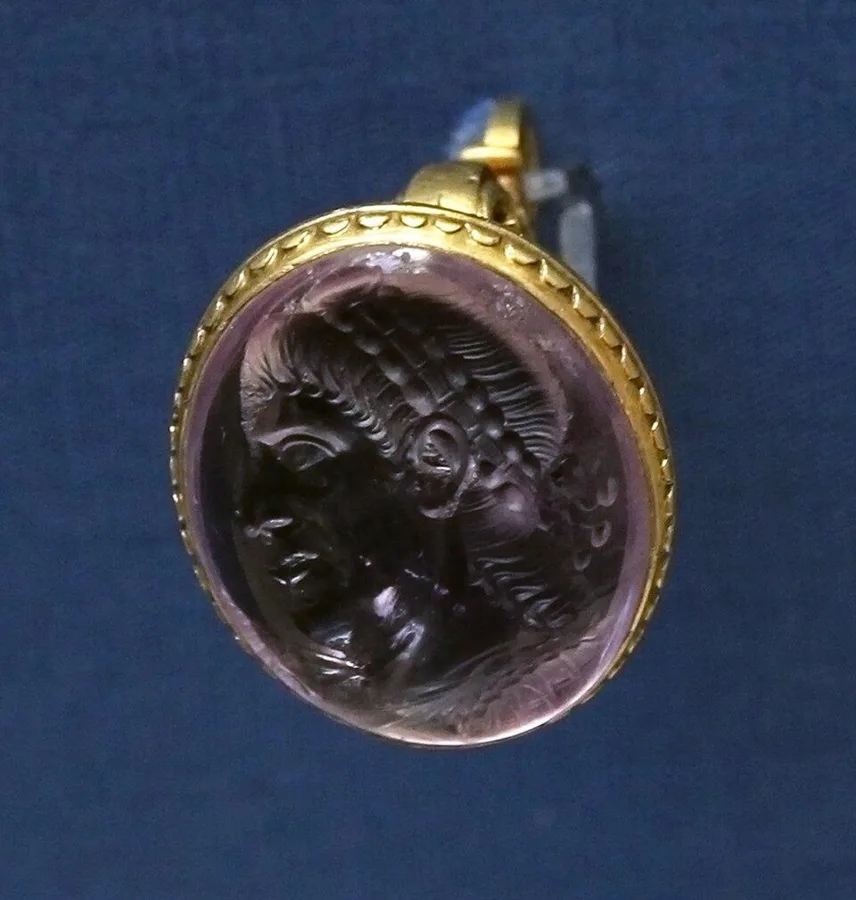
A Roman amethyst intaglioA portrait of a man carved into amethyst, Roman.Metropolitan Museum of Art, New YorkAn intaglio is cut in reverse into the stone, so pressed into wax it prints the portrait. The Greek name amethystos means not drunk: the stone was thought to protect against drunkenness.Photo: The Metropolitan Museum of Art, CC0.
Natural amethyst, cut for sparkle instead of carving.
Emperor Constantius II in amethystAn amethyst intaglio portrait of the Roman emperor in a jewelled headband, about 360 CE, set in gold.British Museum, LondonImperial portraits in purple stone: purple was the colour of emperors.Photo: Vassil, CC0.
An amethyst scarab necklaceAn uninscribed amethyst scarab at the centre of a string of amethyst ball beads, Middle Kingdom Egypt (about 2000 to 1700 BC).Petrie Museum of Egyptian Archaeology, LondonEgypt’s Middle Kingdom loved amethyst: it was mined in the desert at Wadi el-Hudi, far to the south.Photo: Osama Shukir Muhammed Amin FRCP(Glasg), CC BY-SA 4.0.
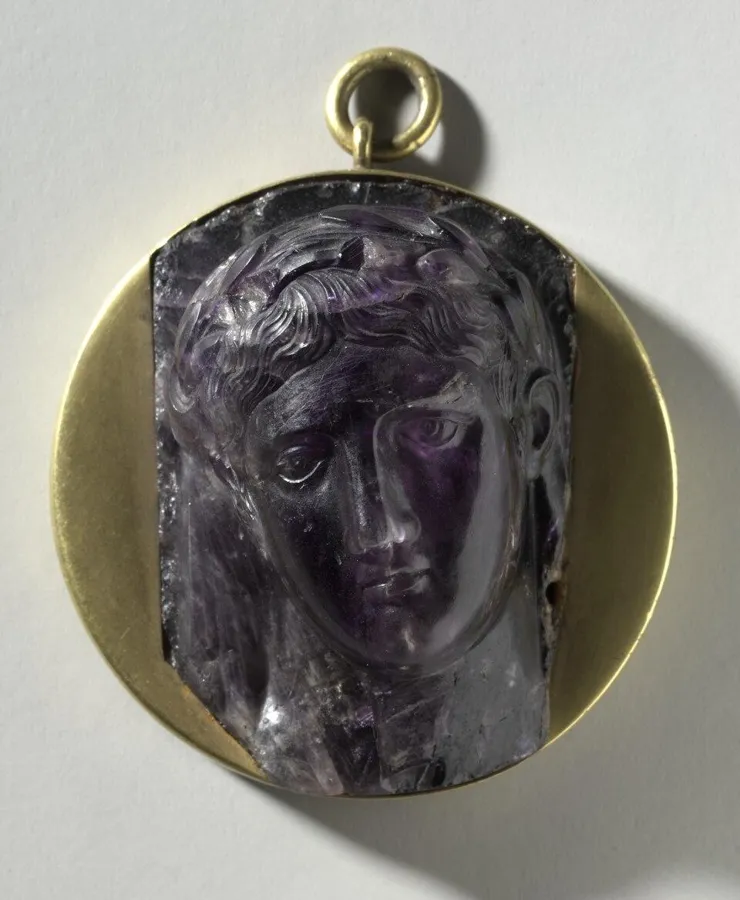
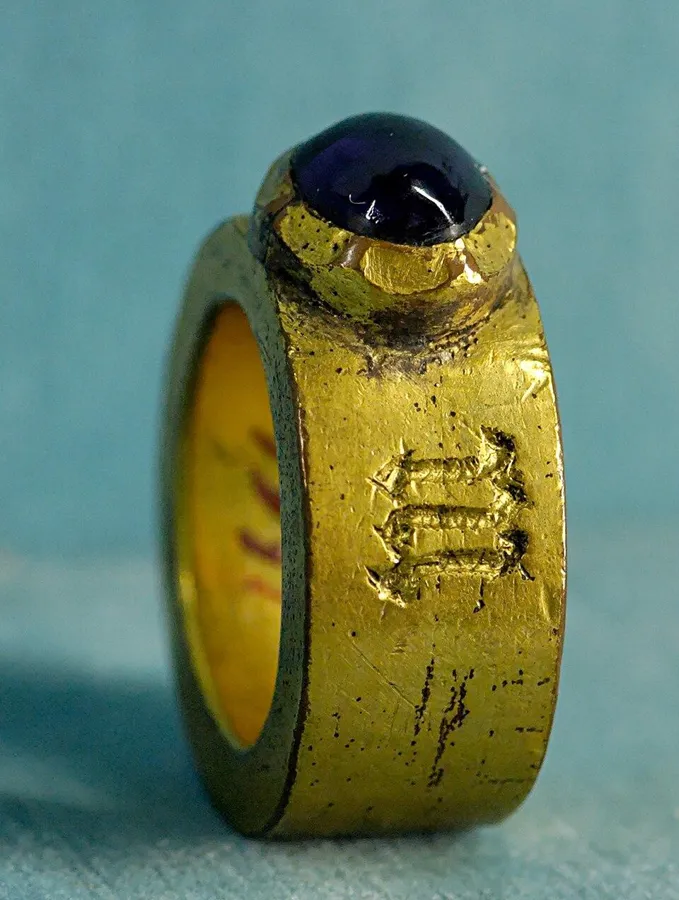
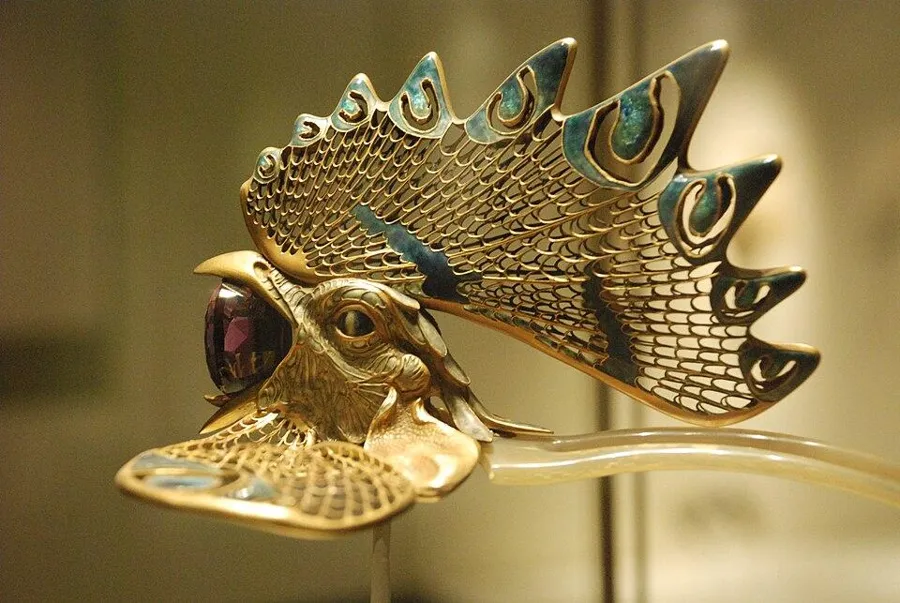
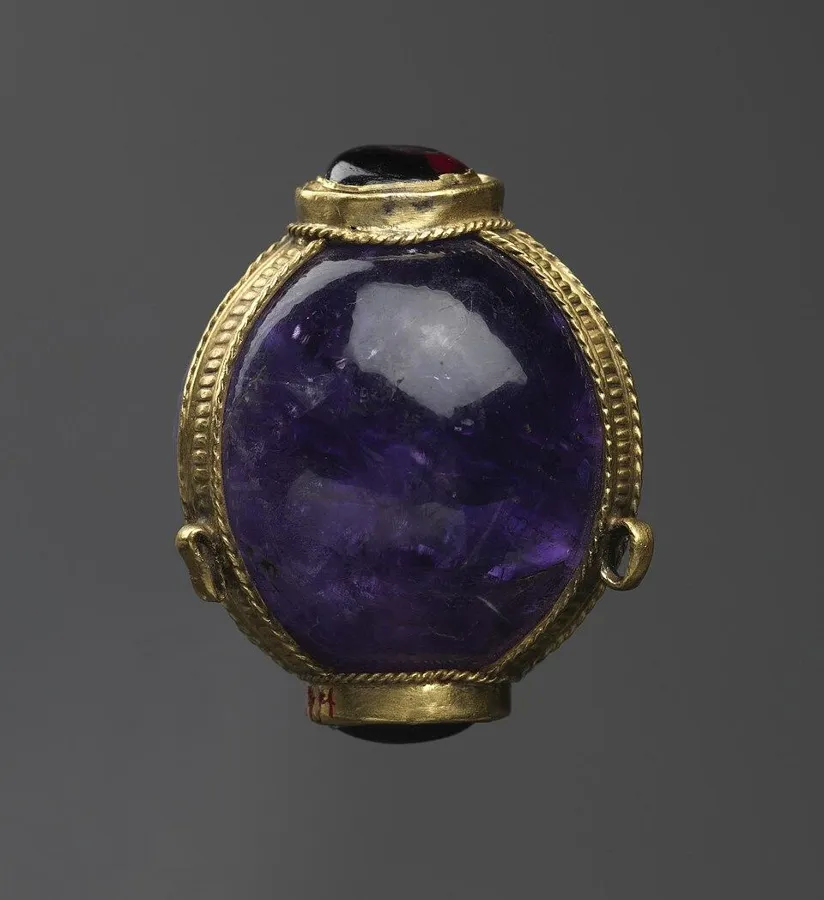
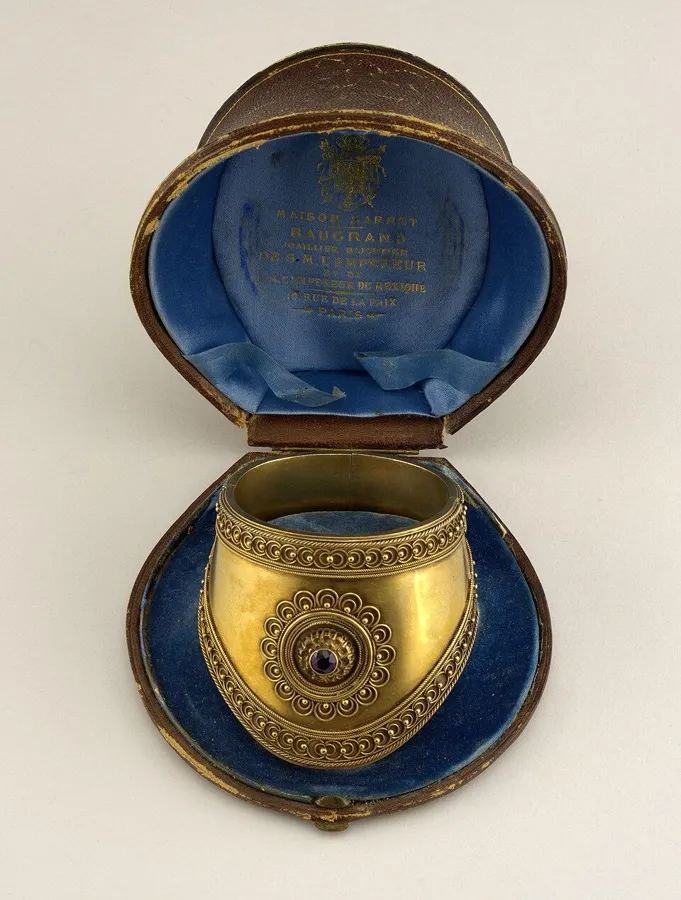
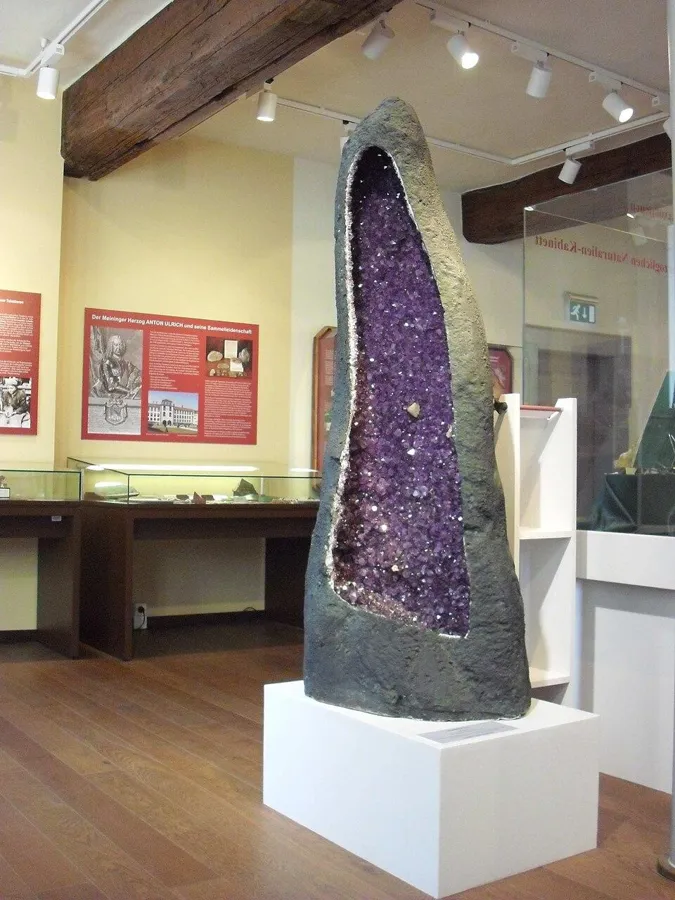
A Roman amethyst cameo of a womanA head of a woman carved in relief from amethyst, Roman, about the 1st century AD.Cleveland Museum of ArtCameo carvers used the stone’s own colour bands: the lighter purple of the face stands out from the darker ground.Photo: Madreiling, CC0.A bishop’s amethyst ringA pastoral ring of gilt bronze set with a large amethyst, 15th century.Musée de Cluny, ParisAmethyst became the stone of bishops in medieval Europe. Its name comes from the Greek for "not drunk", and it stood for sobriety.Photo: Jastrow, Public domain.Lalique’s cockerel diademA diadem of gold, enamel, horn and amethyst made by René Lalique in 1897 to 1898.Calouste Gulbenkian Museum, LisbonLalique made jewellery look like nature caught in motion. Here a cockerel’s head holds a large amethyst in its beak.Photo: Antonio, CC BY-SA 2.0.An amethyst ball pendantA pendant set with a polished ball of amethyst in a gold mount.Smithsonian American Art Museum, WashingtonA polished sphere shows amethyst’s colour zoning: the purple often deepens toward one side of the crystal.Photo: Sonoet2, CC0.A revival bracelet with an amethyst bossA gold bracelet in an ancient revival style, centred on a large amethyst, France, about 1865.Cooper Hewitt, Smithsonian Design Museum, New YorkIn the 1860s, new finds from Etruscan and Roman tombs set off a fashion for jewellery in the ancient style.Photo: Fæ, Public domain.A giant amethyst geodeA geode from Rio Grande do Sul, Brazil, taller than a person, lined with amethyst and a few calcite crystals.Natural History Museum, Schleusingen, GermanyIt formed inside a gas bubble in an ancient lava flow. Water seeped in over a very long time and left the crystals behind.Photo: FerdiBf at de.wikipedia, Public domain.
A small piece of an amethyst geode from Uruguay, to hold the same thing in your hand.
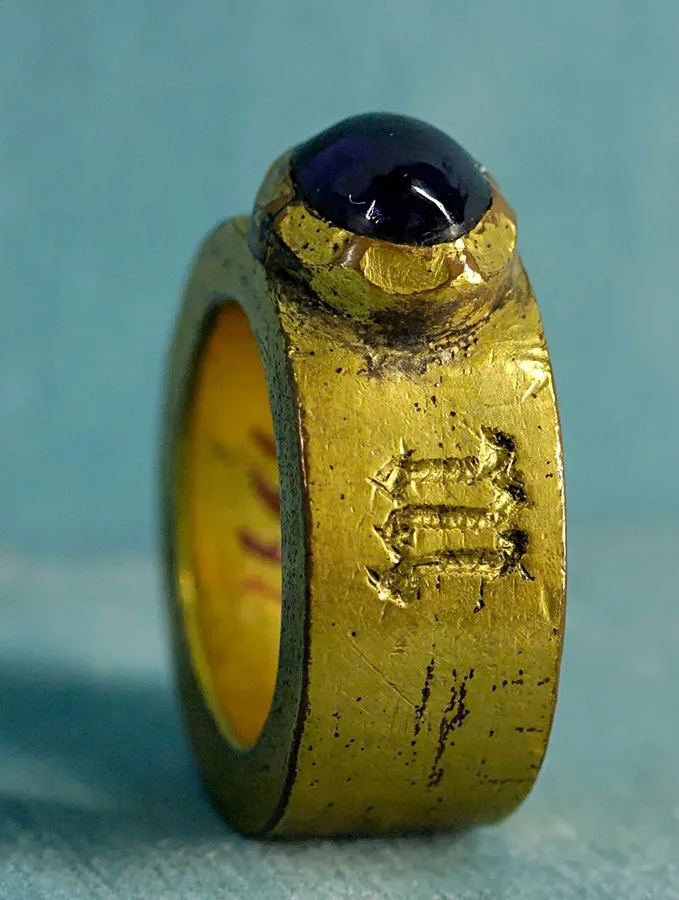
A bishop’s amethyst ringA pastoral ring of gilt bronze set with an amethyst, 15th century.Musée de Cluny, ParisAmethyst was the bishop’s stone: its name means "not drunk" in Greek, a fitting sign for a sober shepherd of souls. Bishops still wear amethyst rings today.Photo: Musée de Cluny, Public domain.
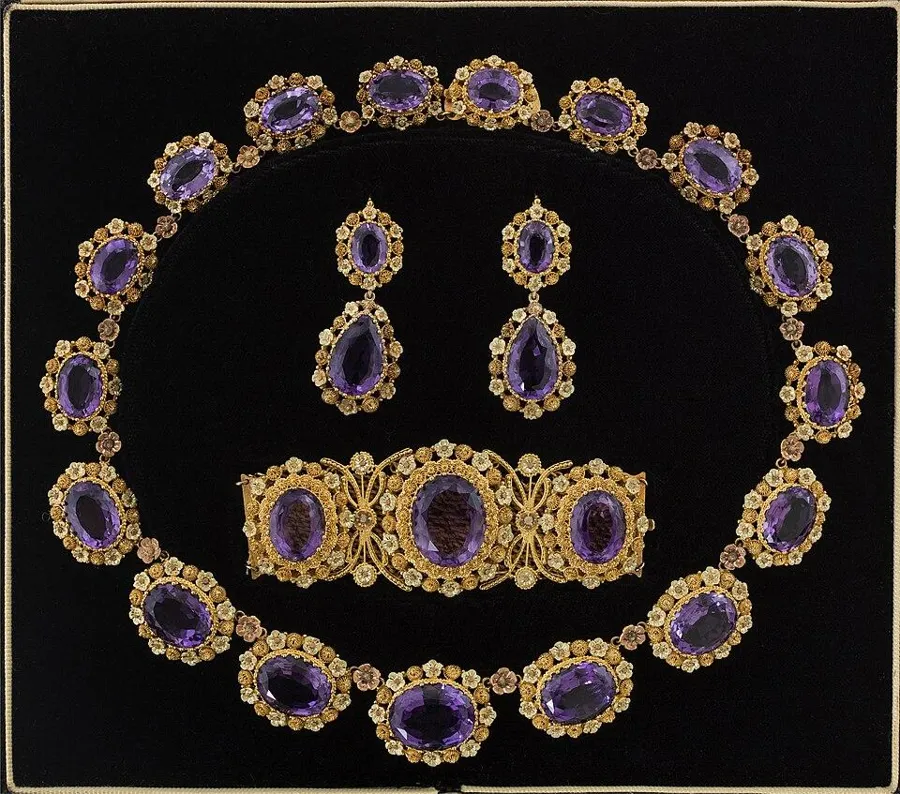
An amethyst parure from ParisA matching set of necklace, earrings and brooch in gold set with amethysts, made in France between 1820 and 1830.Paris Musées collectionA parure is a full matching set. Rich women of the 1820s wore amethyst parures to balls, and the stone was as fashionable as diamonds.Photo: Public domain reproduction, CC0.
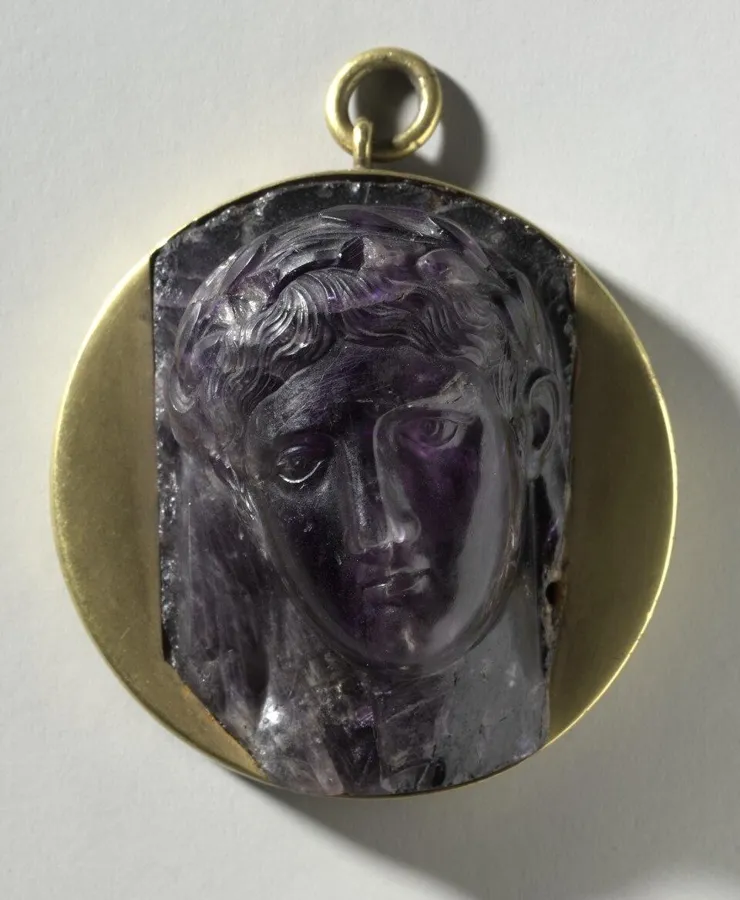
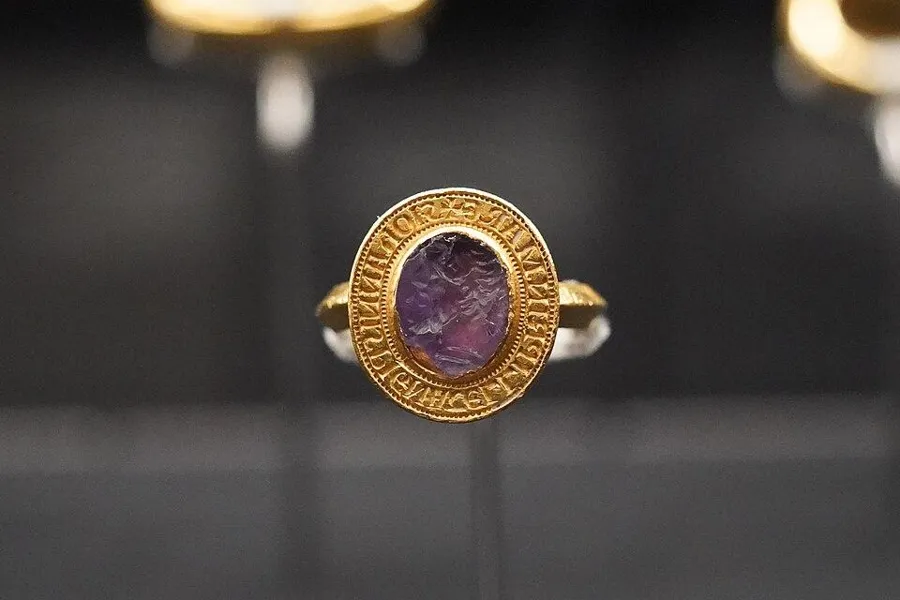
A Roman amethyst cameoThe head of a woman carved in relief from amethyst, Roman, 1st century AD.Cleveland Museum of ArtCarving a cameo meant grinding the stone away with drills and abrasive powder, a millimetre at a time, for months.Photo: Madreiling, CC0.An ancient amethyst reused as a sealAn amethyst intaglio carved in the 1st century BC, later set in a ring as the seal of Iohannes Pignatelli.Guy Ladrière Collection, shown at the Paris School of Jewelry ArtsAncient engraved gems were treasured in the Middle Ages and Renaissance. Nobles reused them as personal seals, pressing a 1,500-year-old carving into their wax.Photo: TimeTravelRome, CC BY 2.0.Twin amethyst geodes, 9 and 12 feet tallA 9 ft, 11,000 lb amethyst geode, shown back to back with a second geode 12 ft tall, both from the Bolsa mine in Uruguay.Museum of Natural History, New YorkEach one was a single gas bubble in a lava flow about 130 million years ago, lined slowly with purple crystals. Visitors can walk right up to them.Photo: Jan Schaumann, CC BY 4.0.
A Uruguay amethyst geode small enough for a shelf.
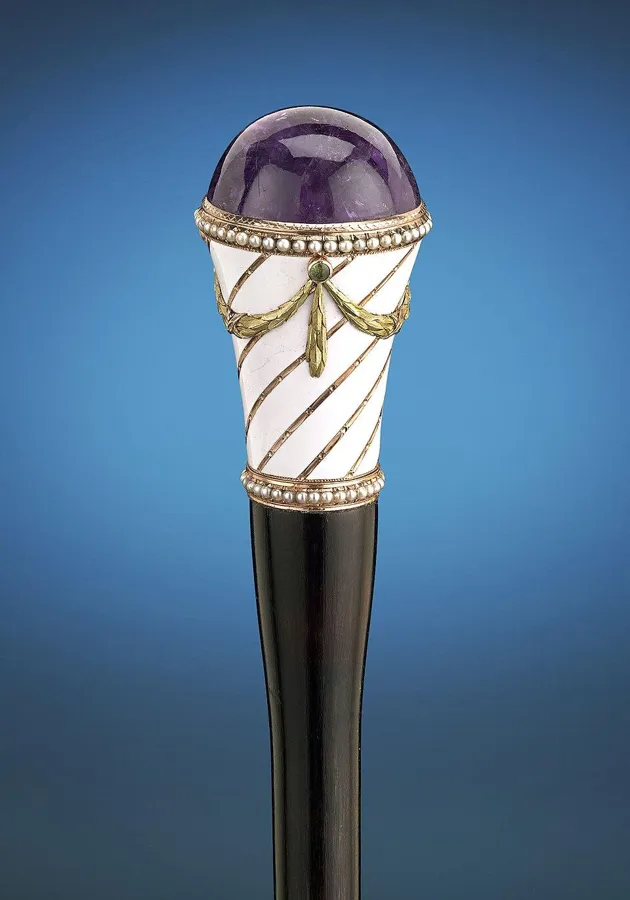
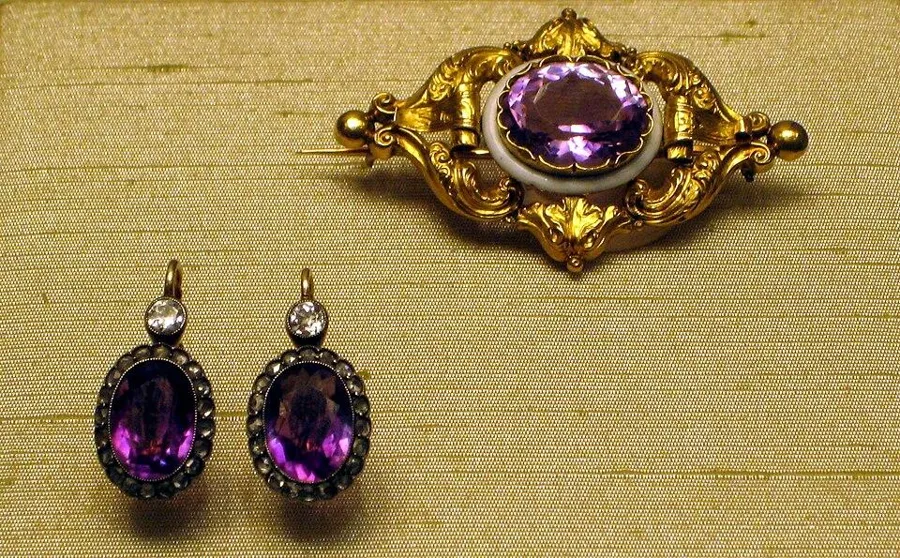
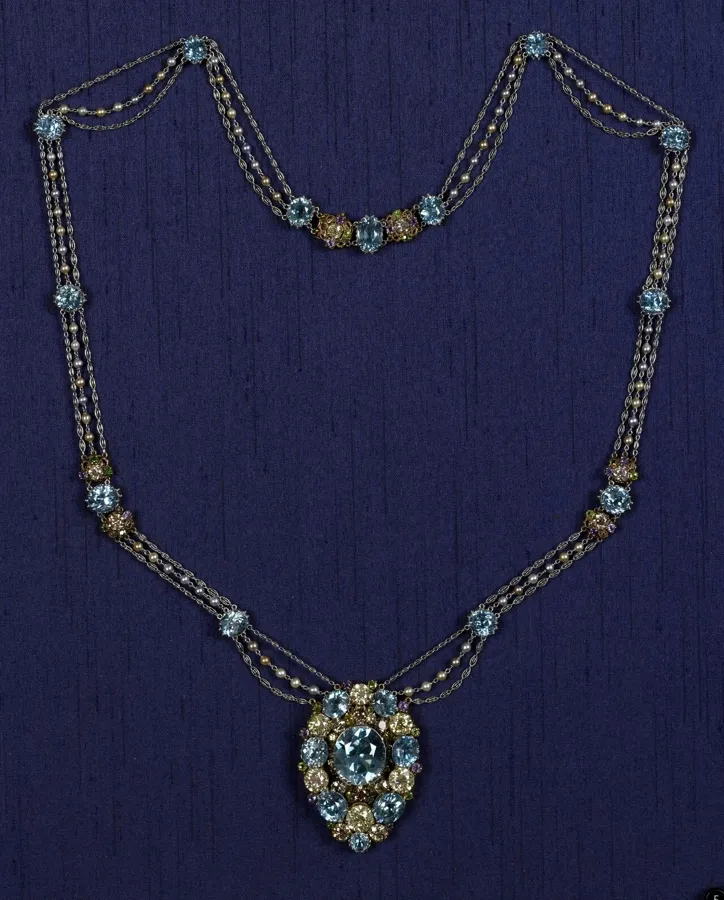
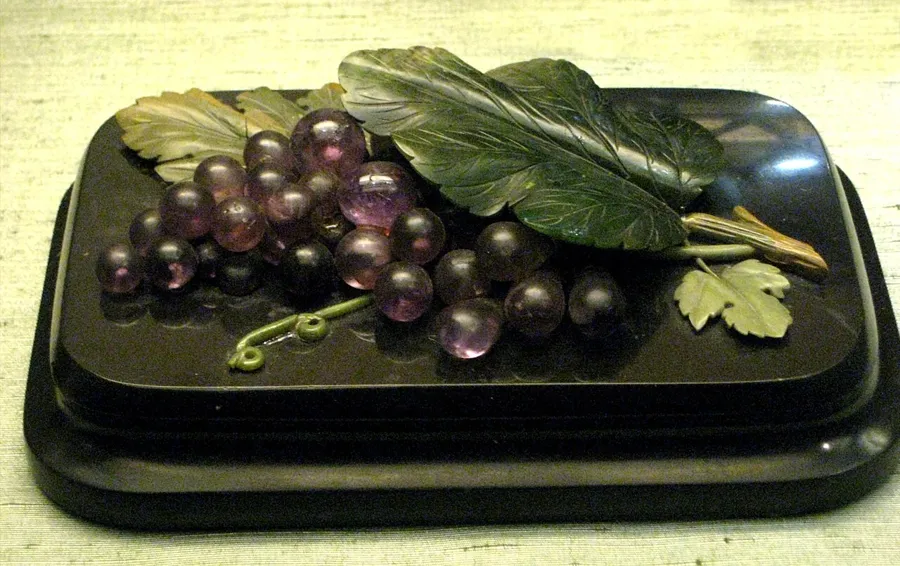
A Fabergé amethyst cane handleA cane handle of polished amethyst by Fabergé, with white enamel, rose and yellow gold and a string of pearls, about 1890 to 1898.Antiques collection (Commons photograph)Fabergé made everyday objects for the Russian court, from cane handles to cigarette cases, out of hardstones and gold.Photo: Rauantiques, CC BY-SA 4.0.A Russian amethyst brooch and earringsA gold and amethyst brooch by A. Holmström, St Petersburg, 1857 to 1864, with amethyst and diamond earrings made between 1908 and 1917.Peterhof State Museum and the Moscow Kremlin MuseumsDeep purple Siberian amethyst from the Urals was the most prized amethyst in the world in the 1800s, and Russia’s jewellers used it lavishly.Photo: shakko, CC BY-SA 3.0.A Tiffany pendant with a blue zirconA pendant necklace by Tiffany & Co. with a large blue zircon in the centre, surrounded by canary and coloured diamonds, demantoid garnets and amethysts, on platinum chains with coloured pearls.Walters Art Museum, BaltimoreIt was bought as a wedding present, at a time when Louis Comfort Tiffany was pushing the firm toward bold coloured stones.Photo: Walters Art Museum, Public domain.A bunch of amethyst grapesA paperweight with a bunch of grapes carved in amethyst on serpentine and marble, made by the Ekaterinburg lapidary works and once owned by the Stroganov family.Fersman Mineralogical Museum, MoscowUral amethyst was prized for its deep purple, and Russian carvers turned it into fruit that looks good enough to eat.Photo: shakko, CC BY-SA 3.0.
Mined vs lab-grown amethyst
Mined and lab-grown amethyst are the same mineral; this is what differs
Mined
Lab-grown
How it formed
In geodes in old lava, over millions of years
In a steel of hot, pressurised water, over weeks
Inside
Colour zones, natural
Often very clean; growth patterns only a lab reads
Treatment
Sometimes heated, which turns it yellow (citrine)
Normally none
Price
Cheap; deep, clean colour costs more
Cheap
Resale
Little, except fine large stones
Very little
Treatments. Heat turns amethyst yellow to orange, and most citrine on the market is heated amethyst. Strong sunlight can slowly fade some amethyst, so do not leave it in a sunny window. All gem treatments explained.
Amethyst: Ametista do Sul, Rio Grande do Sul, Brazil. A town named after the stone: amethyst geodes are mined from tunnels in old lava flows, some big enough to stand in.
Amethyst: Artigas, Uruguay. Deep purple geodes from the same lava plateau as southern Brazil.
Amethyst: Kariba district, Zambia. A leading source of dark, rich gem amethyst.
Amethyst: Four Peaks, Arizona, United States. Remote mountain mine known for deep reddish-purple amethyst.
Amethyst is plentiful, so size is cheap: a 16 carat faceted amethyst costs less than a dinner out. Drawn to scale, ovals from a ring stone to a 20 x 15 mm showpiece, all sold as natural by long-running gem sellers. Lab amethyst exists too and is hard to tell from mined; at these prices either is a fair buy.
The heaviest and largest pieces we found on Amazon, all checked in stock on October 11, 2026. Weights and sizes are the listings' own. Photos are the listings' own; prices are rounded.
Five tools that let you check what you bought (a loupe, a UV torch, locking tweezers, a gem box and a pocket scale), plus a turntable that spins your stone under the light the way jewellers show one. The full collector's kit.
Amethyst is purple quartz from geodes in old lava, mostly in Brazil, Uruguay and Zambia. It is hard enough for daily wear and cheap enough to buy big. Keep it out of strong sun, and know that a yellow "citrine" is very often heated amethyst.
Yes. It is quartz grown in hot water in a lab, the same mineral as natural amethyst, and it is very hard to separate without a gem lab. Because natural amethyst is cheap too, most of what you buy is natural.
What is the difference between amethyst and citrine?
Both are quartz. Amethyst is purple from iron and natural radiation; heating it drives the purple out and leaves yellow to orange, which is sold as citrine. Natural citrine exists but is much rarer.
Does amethyst fade?
Some amethyst slowly fades in strong sunlight or heat. Store it out of direct sun and it keeps its colour.
Photo credits
amethyst-raw-crystals.webp: W.carter, CC BY-SA 4.0, via Wikimedia Commons.
amethyst-empress-of-uruguay.webp: Curiousparrot532, CC0, via Wikimedia Commons.
amethyst-geode-planalto.webp: Marie-Lan Taÿ Pamart, CC BY 4.0, via Wikimedia Commons.
Product photos: Amazon listings, via the Amazon Product Advertising (Creators) API.
Amazon links are affiliate links (tag thegemtray-20): buying through them costs you nothing extra and supports the site. As an Amazon Associate we earn from qualifying purchases.

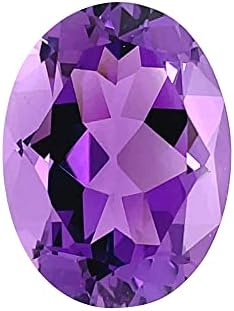


 Cushion, the biggest18 mm, 18 to 20 ctabout $385 on Amazon →
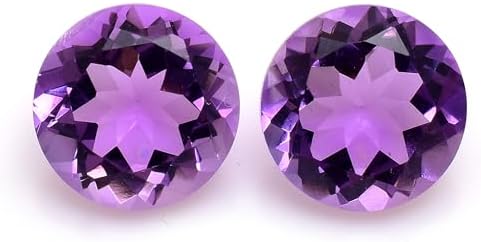
  Round12 mm, 5.17 ctabout $98 on Amazon →
  Pear16 x 12 mm, 7 to 8 ctabout $71 on Amazon →
  Emerald cut12 x 10 mm, 4.80 to 5.25 ctabout $53 on Amazon →
  Princess8 mm, 2.12 to 2.55 ctabout $26 on Amazon →
  Trillion8 mm, 1.30 to 1.50 ctabout $32 on Amazon →
  Rose de France (pale lilac)8 x 6 mm, weight not listedabout $22 on Amazon →
  Green amethyst (prasiolite)12 x 10 mm, 5.70 ctabout $54 on Amazon →
  Giant piecesGAF Treasures amethyst cathedral, 103.4 lb, BrazilThe heaviest amethyst we found on Amazon: a standing geode taller than a toddler.about $1,900on Amazon →
 Giant piecesGAF Treasures amethyst cathedral, 99.55 lb, BrazilIts near twin, just under a hundred pounds.about $1,800on Amazon →
 Giant piecesAg Minerals amethyst geode, 65 lb, UruguayUruguay amethyst is famous for its deep purple.about $4,900on Amazon →
 Giant piecesAg Minerals amethyst cathedral geode, 62 lb, BrazilA cathedral is a geode cut so it stands up like a cave.about $2,950on Amazon →
 Giant piecesAg Minerals amethyst cathedral, 49 lb, Brazilabout $3,400on Amazon →
 Giant piecesAmethyst cluster geode, 43.8 lb, Brazilabout $2,500on Amazon →
 Giant piecesChevron amethyst sphere, 240 mm, 44.4 lbA ball almost 10 inches across, banded purple and white.about $1,400on Amazon →
 Giant piecesAg Minerals amethyst tree, 17 lbHand-built from amethyst crystals.about $2,450on Amazon →
 Giant piecesDinosaurs Rock amethyst geode tower with calcite, 19 in tallWhite calcite crystals growing inside the purple.about $1,600on Amazon →
 Giant piecesAmethyst cathedral geode, 18.5 inabout $1,300on Amazon →
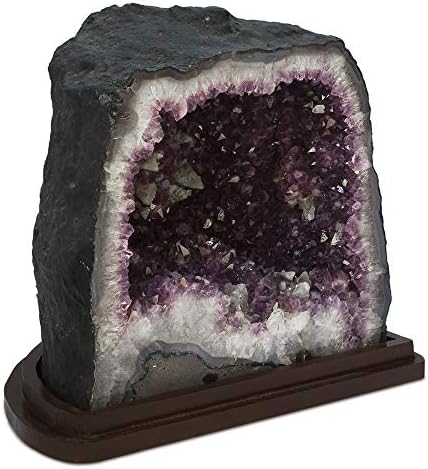 Giant piecesAmethyst cathedral geode, 15.5 inabout $1,400on Amazon →
 Giant piecesEmporion Gems amethyst geode, 21.55 lb, 10 x 8 inOver 1,500 ratings on this listing: the best-reviewed big geode.about $1,150on Amazon →
 Giant piecesStarStuff.Rocks amethyst cathedral, grade AAAWhat you see is what you get: the photo is the actual piece.about $650on Amazon →
 LookGemOro 10x triplet loupeunder $20
 LookDARKBEAM filtered 365 nm UV flashlightabout $10
 HandleHonoson locking tweezers, 3 packabout $10
 StoreTeensery gem display boxes with clear lids, 10 packabout $9
 ShowComXim motorized turntable, adjustable speed and directionabout $15
 MeasureGemOro Platinum XP500 pocket scale, 0.01 gabout $40