
Onyx marble (calcite)
Marble Range green onyx mortar and pestle, 3 inch
under $20
Shows the classic cream, green and honey bands. Fine for dry spices; acids like lemon or vinegar will etch it.
See it on Amazon"Green onyx" is a trade name for two different stones. The banded green-and-honey stone carved into bowls, vases and coasters is onyx marble, a soft banded calcite mostly from Pakistan. The deep, even green stone in rings and pendants is chalcedony, a hard form of quartz, dyed green. Both are real stone and both are fine to buy; they just need different care. The natural green chalcedony is chrysoprase, coloured apple green by nickel.
Part of the gem world, laid out. Its orange cousin: carnelian.
Two journeys in one: onyx marble from the quarry to a carving, and natural green chalcedony from the ground to jewellery.
01 In the quarry (step 1 of 4)
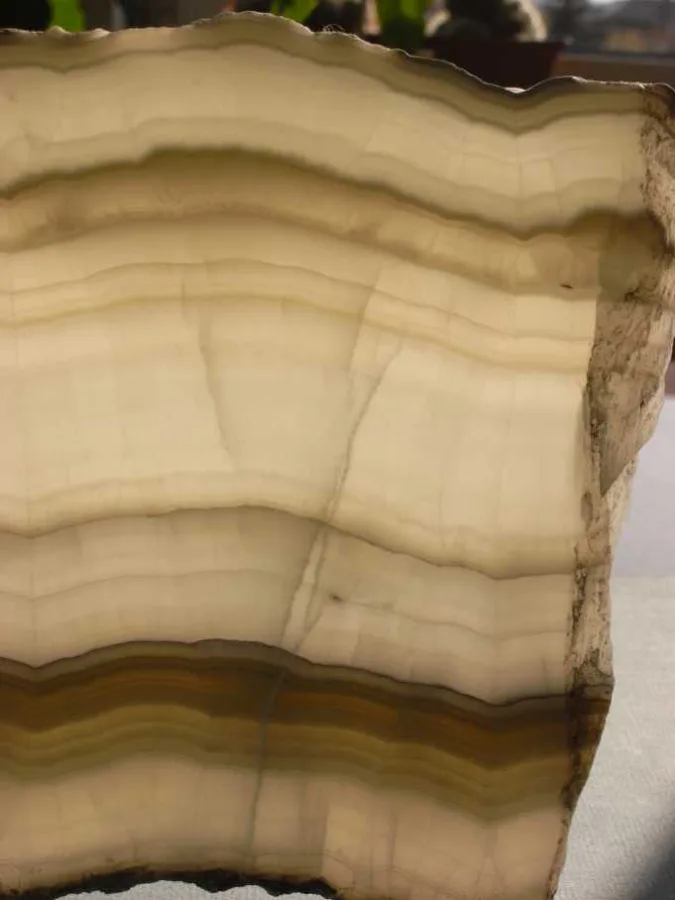
Onyx marble cut open: banded calcite laid down layer by layer by mineral springs.
Real specimen. Photo: Lysippos (German Wikipedia), CC BY-SA 2.0 de.
02 Carved (step 2 of 4)

Pakistan green onyx marble, hand-carved into a vase.
Amazon listing photo. See it on Amazon
03 Green chalcedony, natural (step 3 of 4)
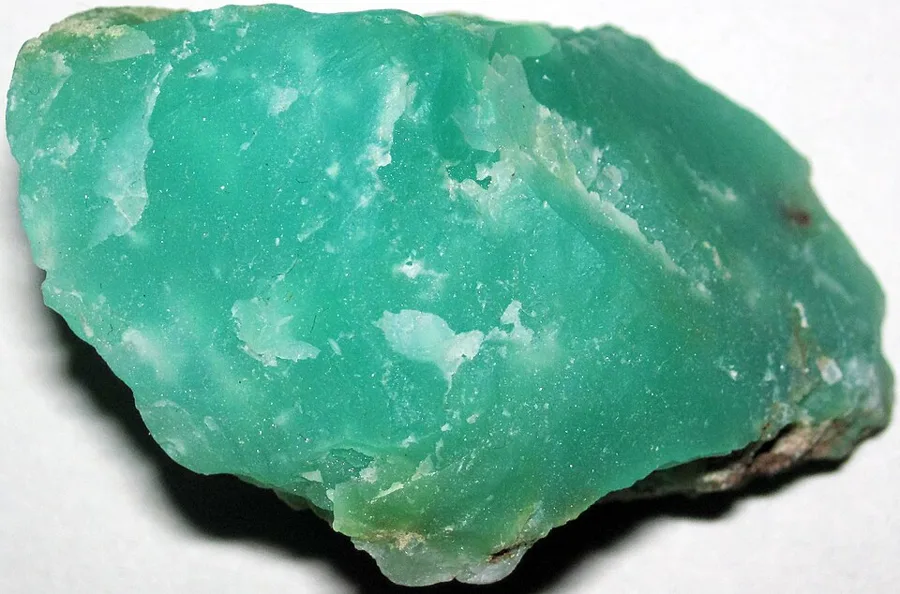
Chrysoprase rough from Australia: chalcedony that grew green, coloured by nickel.
Real specimen. Photo: James St. John, CC BY-SA 4.0.
04 Set (step 4 of 4)

Faceted chrysoprase beads strung as a choker.
Amazon listing photo. See it on Amazon
| Onyx marble ("Pakistan green onyx") | Green onyx in jewellery | |
|---|---|---|
| What it is | Banded calcite (calcium carbonate), deposited layer by layer by mineral springs and in caves | Chalcedony (microcrystalline quartz), dyed green |
| Look | Translucent bands of pale green, cream, honey and rust | Even, saturated emerald green, no bands |
| Hardness | About 3: a knife scratches it | About 7: harder than steel |
| Vinegar test | Fizzes | Nothing happens |
| Used for | Bowls, vases, coasters, carvings, tiles | Rings, pendants, earrings, beads |
| Main source | Balochistan, Pakistan; also Mexico and Argentina | Chalcedony from India and Brazil, dyed |
True onyx is something else again: chalcedony with straight, parallel bands, classically black and white, used for cameos. Green is not one of its natural colours, which is why green onyx jewellery is dyed. Calling banded calcite "onyx" is an old habit of the stone trade, and you will also see it as "Mexican onyx" or "onyx marble".
If you want green chalcedony that grew green, there are two. Chrysoprase is apple to mint green, coloured by tiny amounts of a nickel-rich clay mineral; the best today comes from Marlborough in Queensland, Australia, and the historic mines were at Szklary in Poland. Chrome chalcedony, sometimes called mtorolite, is coloured by chromium and comes mainly from near Mtoroshanga on the Great Dyke of Zimbabwe. Both are softer, slightly milkier greens than dyed green onyx, and they cost more.
Tap a pin. The map includes Idar-Oberstein in Germany, not a mine but the town whose craftsmen perfected dyeing agate and chalcedony in the 1800s. For every other gem, open the full gem world map.
Pins mark mining districts, not exact mines. Drag to move, pinch or scroll to zoom, tap a pin to read about it. Map data © OpenStreetMap contributors.
Onyx marble (calcite)
under $20
Shows the classic cream, green and honey bands. Fine for dry spices; acids like lemon or vinegar will etch it.
See it on AmazonOnyx marble (calcite)
about $50
Turned from a single block, so the bands wrap around the bowl. Translucent when held to the light.
See it on AmazonOnyx marble (calcite)
about $30
Hand-carved Pakistan onyx marble. Use an inner liner for fresh flowers, since standing water can dull calcite.
See it on AmazonOnyx marble (calcite)
about $125
A hand-carved figure, the kind of work this soft stone is perfect for.
See it on AmazonOnyx marble (calcite)
about $10
A small desk piece with strong banding, from a seller with many reviews across its range.
See it on AmazonOnyx marble (calcite)
about $30
A pair with lids: one green onyx, one black marble. Salt is fine; keep wet or acidic food out.
See it on AmazonOnyx marble (calcite)
about $25
The grooved tray drains water. Rinse it now and then so soap film does not build up on the stone.
See it on AmazonDyed chalcedony
about $30
The even, deep emerald green is the dyed-chalcedony look. Hard enough for a daily ring.
See it on AmazonDyed chalcedony
about $20
A large teardrop of green chalcedony in a sterling bezel.
See it on AmazonDyed chalcedony
about $70
Round and marquise stones in an ornate silver drop.
See it on AmazonChrysoprase (natural)
about $35
The soft apple green of real chrysoprase, coloured by nickel, never as saturated as dyed "green onyx".
See it on AmazonOnyx marble: soft and sensitive to acid. Keep lemon, vinegar, wine and fruit juice off it, wipe spills straight away, wash with mild soap and water, and dry it. A coat of stone sealer helps on bowls and coasters. Dyed chalcedony jewellery: hard and tough; clean with warm soapy water and keep it away from solvents, which can affect the dye.
Onyx marble is soft, so it is turned on a lathe into bowls and vases and hand-carved into figures, work that is quick on calcite and would take far longer in quartz. Green chalcedony is cut as and beads, or faceted for a glassy sparkle. See gem cuts from easiest to hardest for how each kind of cut compares in skill and cost.
The name is used for two real but different materials. Green onyx carvings and homeware are onyx marble, a banded calcite mined in Pakistan and elsewhere. Green onyx jewellery is chalcedony, a form of quartz, dyed green. True onyx is black-and-white banded chalcedony, and green is not one of its natural colours.
Hardness and acid. Onyx marble is calcite, about 3 on the scale: a steel knife scratches it, and a drop of vinegar on a hidden spot fizzes. Chalcedony is about 7: steel will not scratch it and vinegar does nothing.
It is real chalcedony with a colour added, which is long-standing trade practice for this material and is permanent under normal wear. It should be cheap. Natural green chalcedony is chrysoprase (nickel, apple green) or chrome chalcedony (chromium, from Zimbabwe), and those cost more.
For dry food, yes. Calcite reacts with acids, so lemon, vinegar, wine, tomato and fruit juice will etch and dull the polish. Wash with plain water and mild soap and dry it.
Amazon links are affiliate links (tag thegemtray-20): buying through them costs you nothing extra and supports the site. As an Amazon Associate we earn from qualifying purchases.


