Big lab gems
Most of the big stones on these pages are listings we have not bought. Each guide says so at the top and marks every piece "Not bought by us"; the stone, metal and size are what the seller says. Pieces we own are marked We own this.
Lab-grown gems are real gem minerals, so the thing that makes a mined ruby, sapphire or emerald priceless, size, becomes cheap. A lab ruby of 10 carats, a 30x20 mm oval, or a ruby ring with a 5 carat centre are all ordinary Amazon purchases. The rule is honest labelling: buy stones called lab-created, created or synthetic, and pick the size in millimetres.
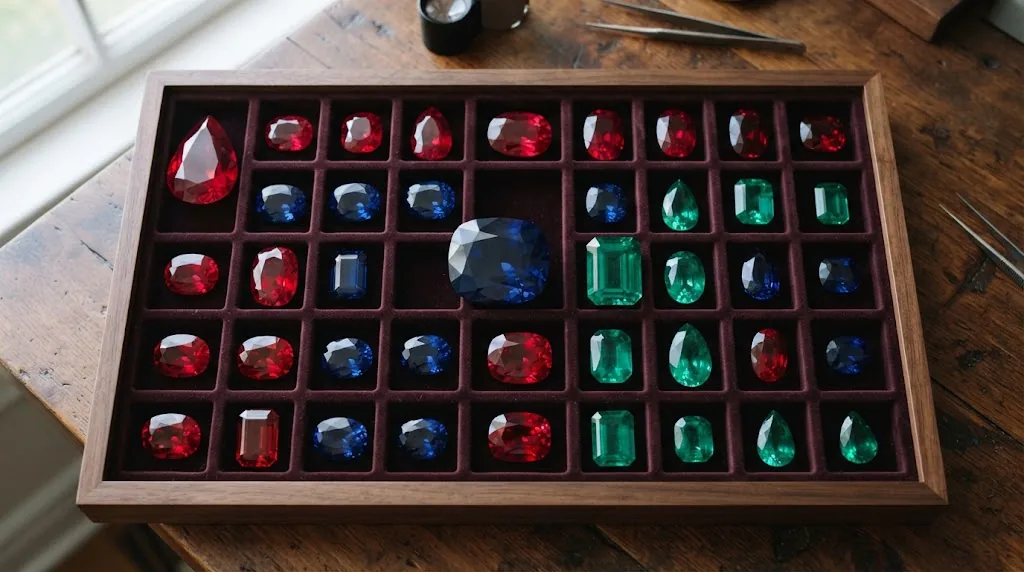
Big lab rubies
Questions first
- Are lab rubies real rubies? Are lab-created rubies real rubies? What a lab ruby is made of, how it is grown, how it differs from a mined ruby, and what it should be called.
- How big is a 5 carat ruby? Ruby size chart: millimetres to carats for round rubies from 6 mm to 18 mm, why a ruby weighs more than a diamond of the same size, and how big a 5 carat ruby looks.
- Is a cheap "natural certified" ruby on Amazon real? Amazon listings offer "natural, unheated, certified" rubies of 5 carats or more for the price of a meal. What those stones usually are, and how to buy a big ruby honestly.
Big lab sapphires and emeralds
The same logic works for blue sapphire (corundum, like ruby) and emerald (beryl). Searches narrowed to honestly labelled large stones:
See the stones we own: everything we bought, including a 2 carat lab sapphire.
Frequently Asked Questions
Why buy big lab gems?
A lab ruby or sapphire is the real mineral (corundum), and a lab emerald is real beryl, grown instead of mined. That turns sizes that would be museum pieces as mined stones into affordable ones: a 10 carat lab ruby costs about what a meal out does.
Do big lab gems have resale value?
Very little. Buy them to enjoy, collect and wear; the value of a set piece is mostly its metal.
What should the listing say?
Lab-created, lab-grown, created or synthetic, followed by the gem name. "Simulated" means an imitation such as glass, and "natural" at a lab-gem price is a red flag.
Amazon links are affiliate links (tag thegemtray-20): buying through them costs you nothing extra and supports the site. As an Amazon Associate we earn from qualifying purchases.