
Our first pick
MPH-JEWELRY carved jadeite dragon pendant, sold as Grade A untreated
about $80
Burmese jadeite with a certificate per the listing.
See it on AmazonJadeite or nephrite · 6 to 7 · the toughest gem
"Jade" is two different minerals: jadeite and nephrite. Both are made of tiny interlocking crystals that make them tougher than any other gem, which is why people carved tools and axes from them for thousands of years. Jade is not grown in labs. The fakes are dyed quartzite, serpentine and glass, and cheap jadeite is often bleached and filled with polymer.
The same stone at four moments. Tap a photo of a listing to see it on Amazon.
01 In the ground (step 1 of 4)
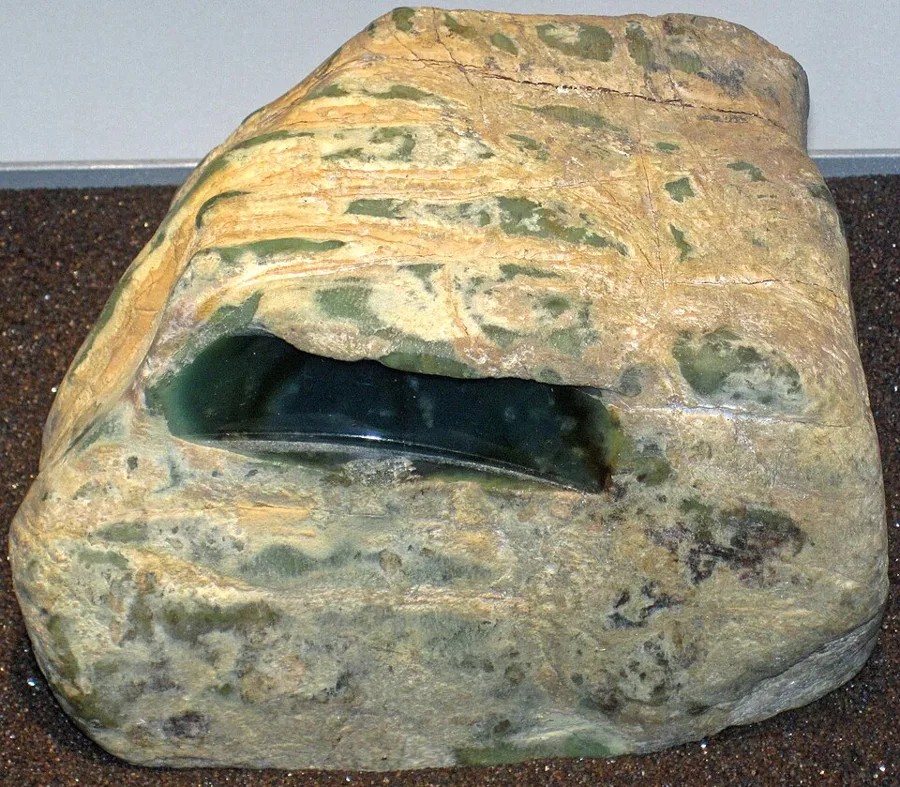
A jadeite boulder from Myanmar with a "window" ground into its skin, the way buyers judge the green inside before cutting.
Real specimen. Photo: James St. John, CC BY 2.0.
02 Rough (step 2 of 4)

Hetian nephrite rough from China, the jade carved there for thousands of years.
Amazon listing photo. See it on Amazon
03 Cut (step 3 of 4)

A nephrite jade , 25 x 18 mm.
Amazon listing photo. See it on Amazon
04 Set (step 4 of 4)

A carved jadeite dragon pendant, sold as untreated Grade A.
Amazon listing photo. See it on Amazon
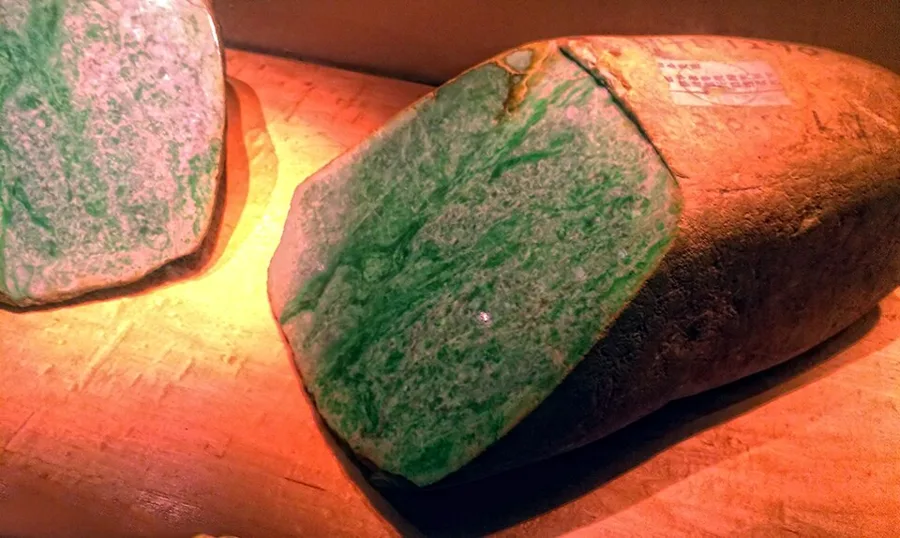
What the finest natural stones look like: real pieces in public collections. The whole gem museum.
Own a natural piece
Jadeite from Guatemala, the source the Maya used.
Own a natural piece
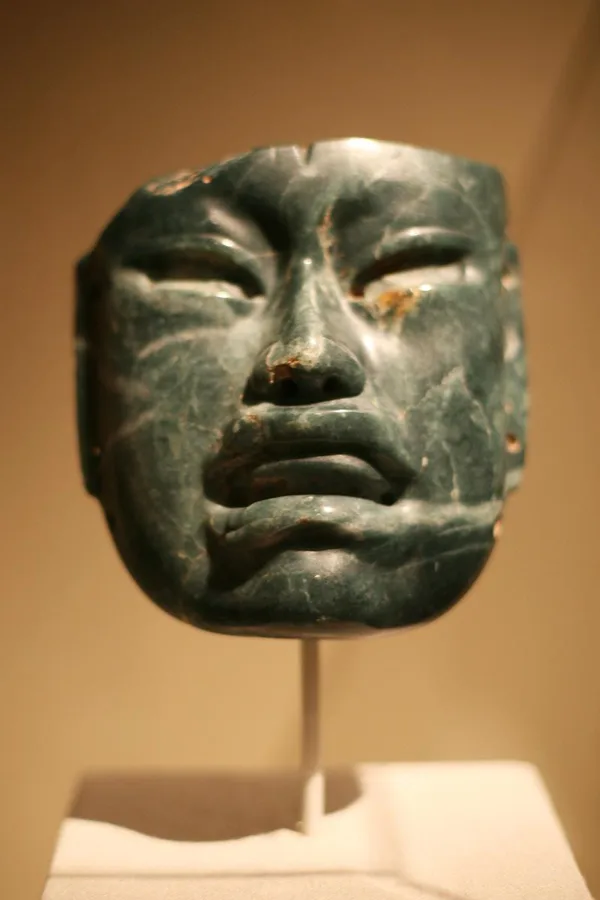
Mesoamerican jadeite, still carved in Guatemala.
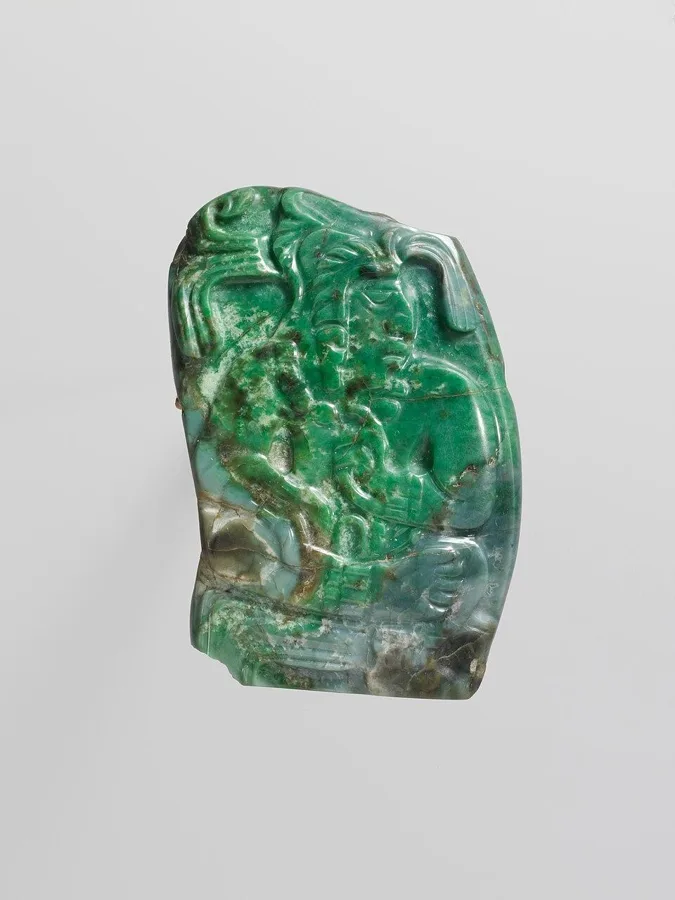
Own a natural piece
Guatemalan jadeite, set in silver.
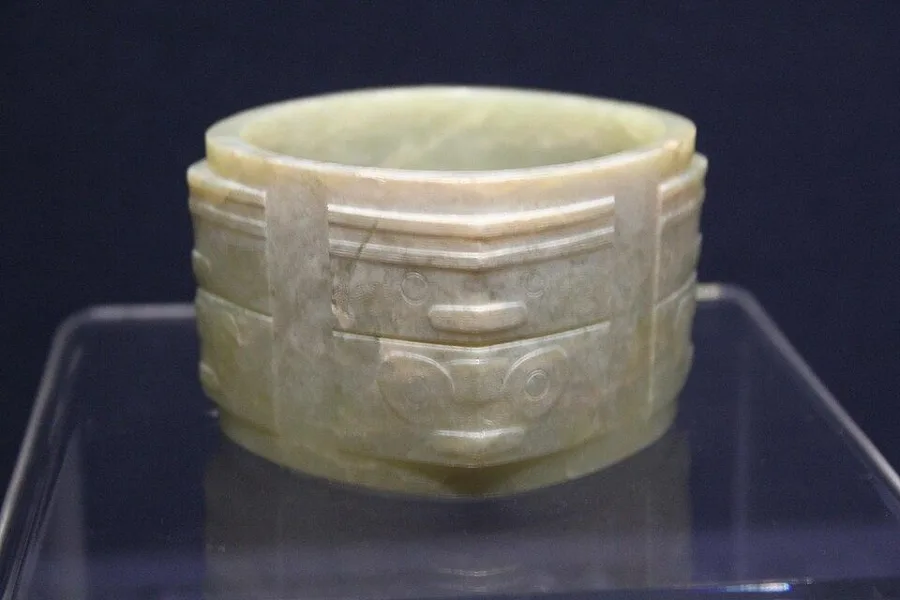
Own a natural piece
A solid nephrite bangle, cut from one block like a cong.
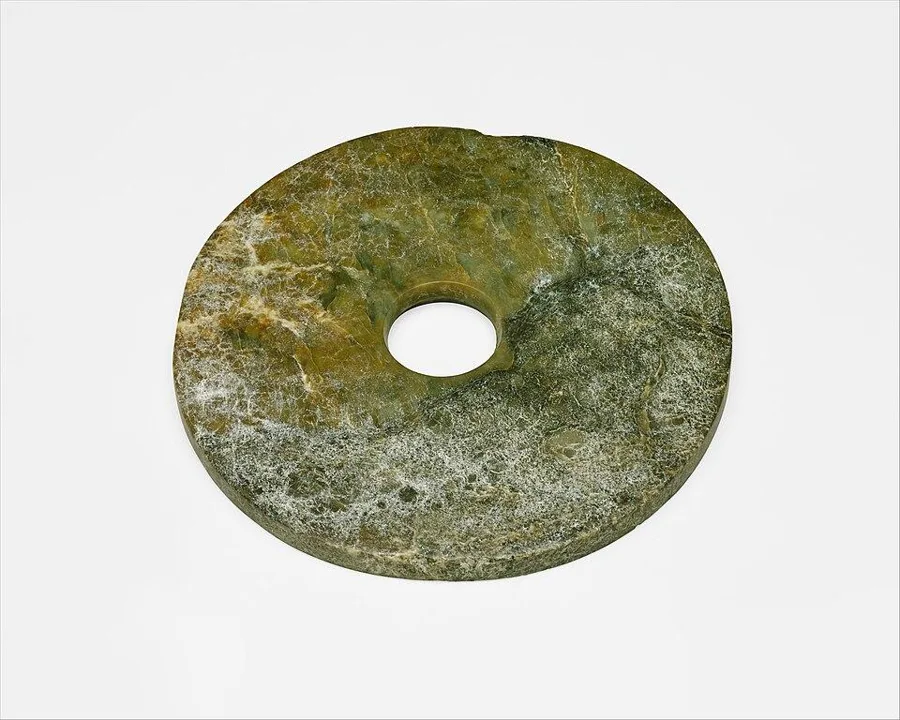
Own a natural piece
The same disc shape, small enough to wear.
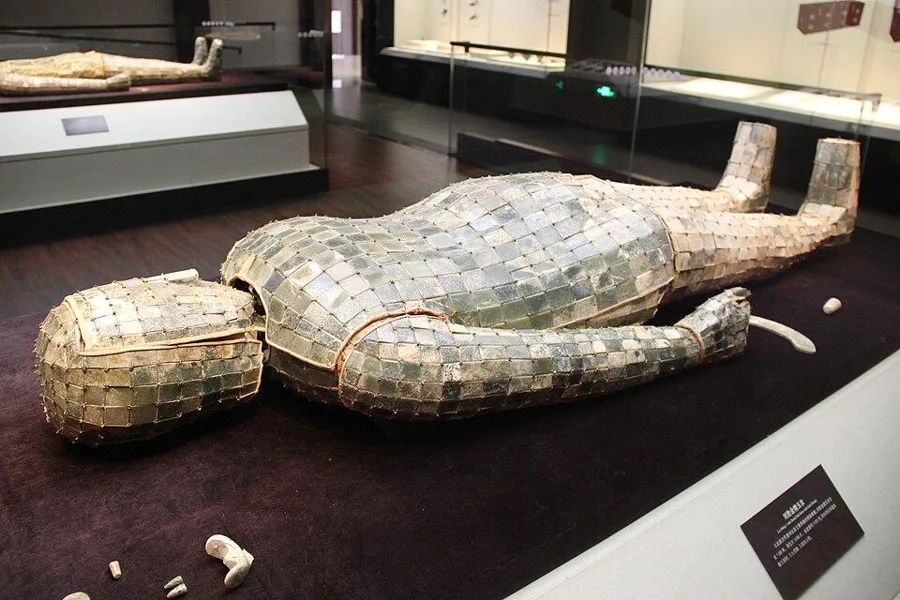
Own a natural piece
Hetian nephrite, the jade of Chinese emperors.
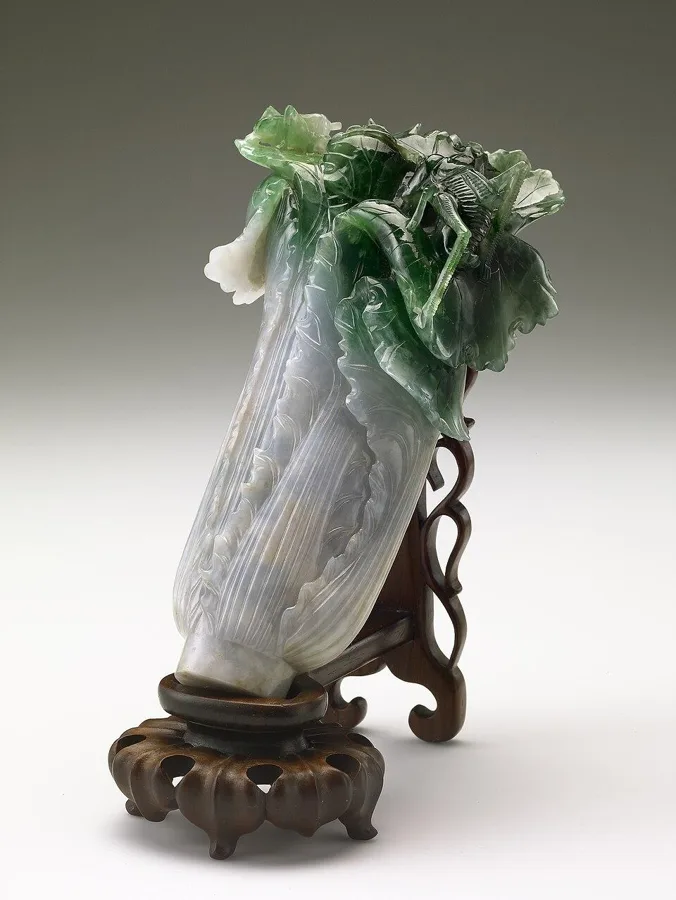
Own a natural piece
Jadeite from Burma, like the cabbage.
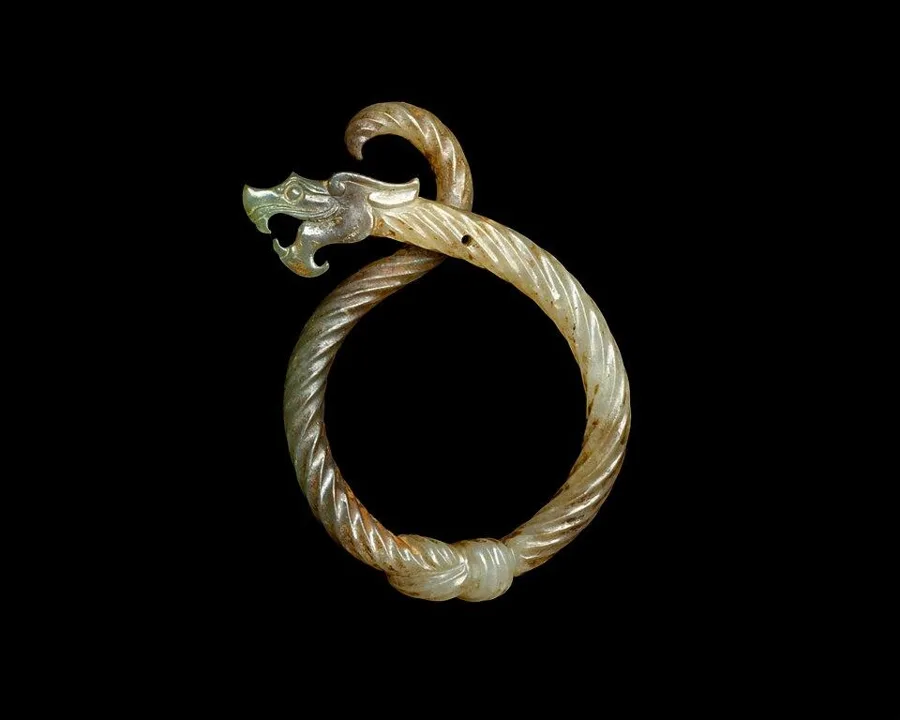
Own a natural piece
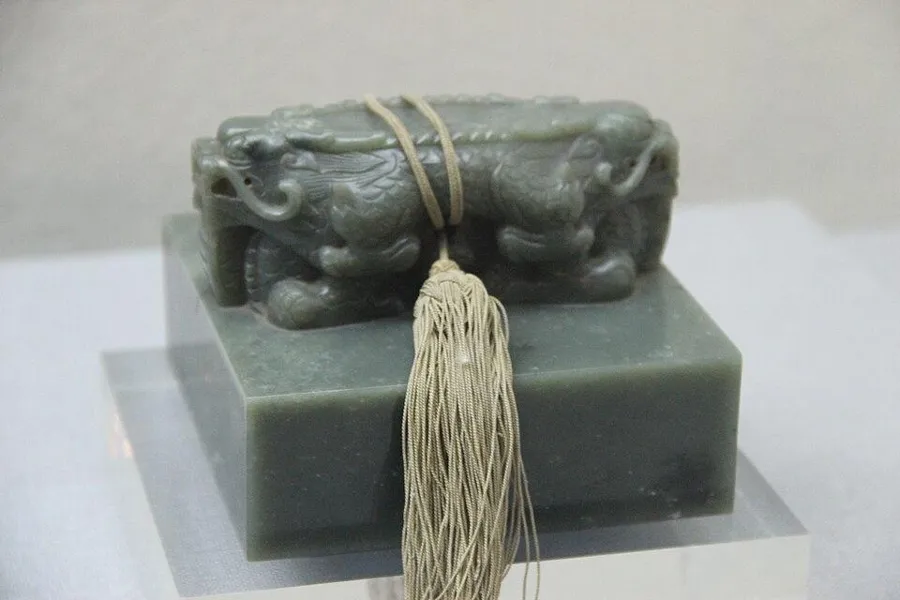
A carved nephrite dragon of your own.
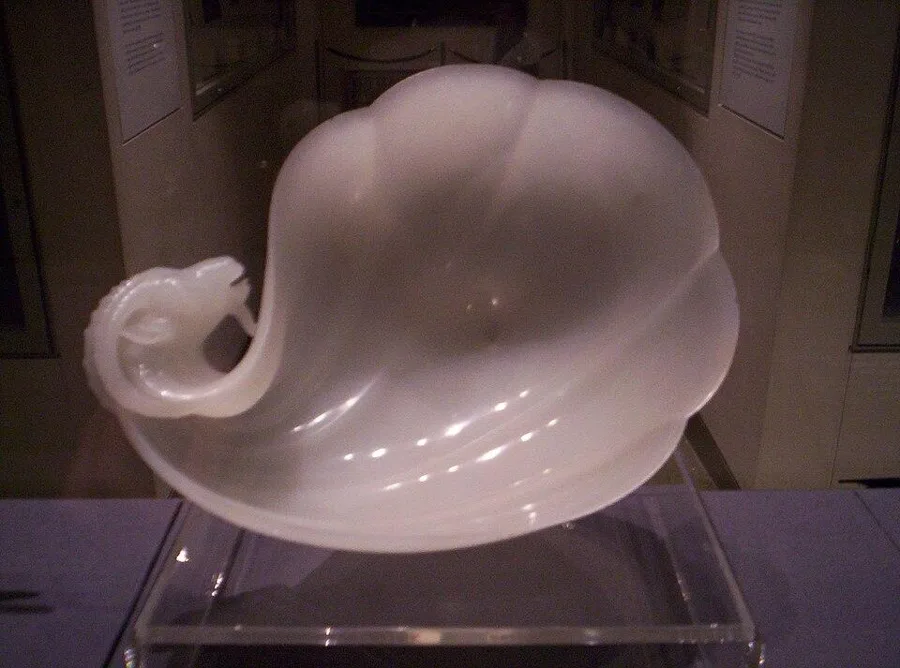
Own a natural piece
White jade, a long way down in price.
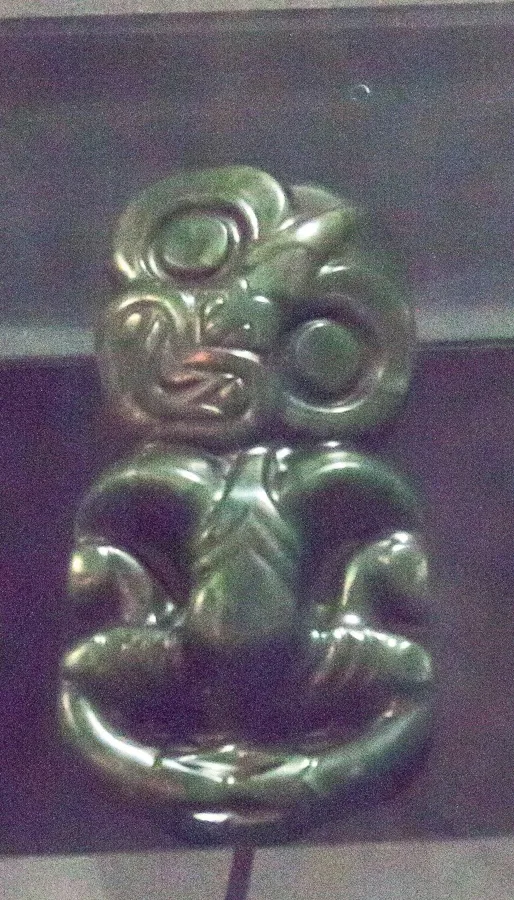
Own a natural piece
New Zealand pounamu, hand carved.
Own a natural piece
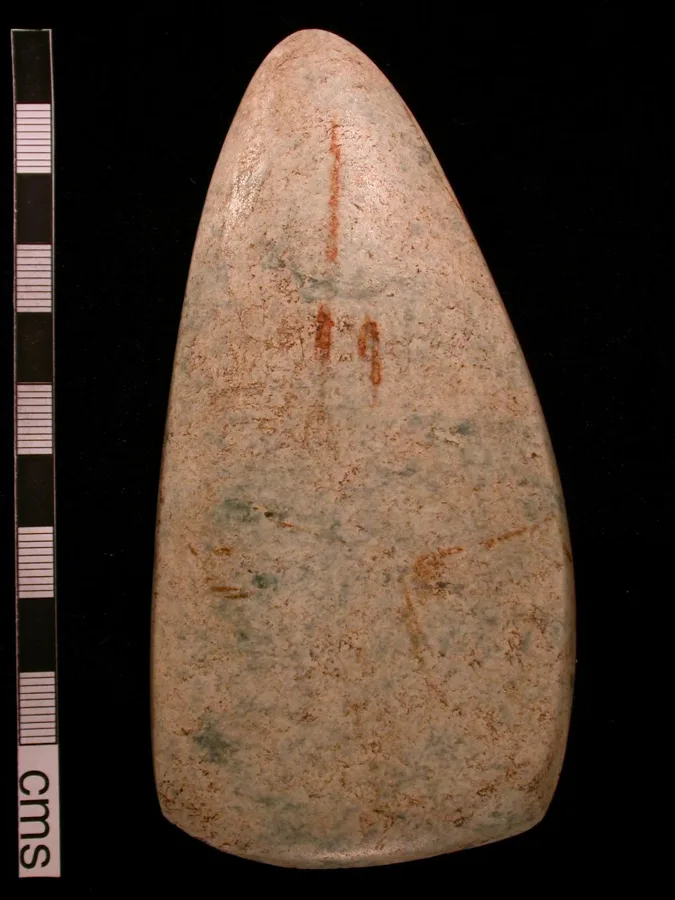
Polished nephrite, smooth as the axe.
Own a natural piece
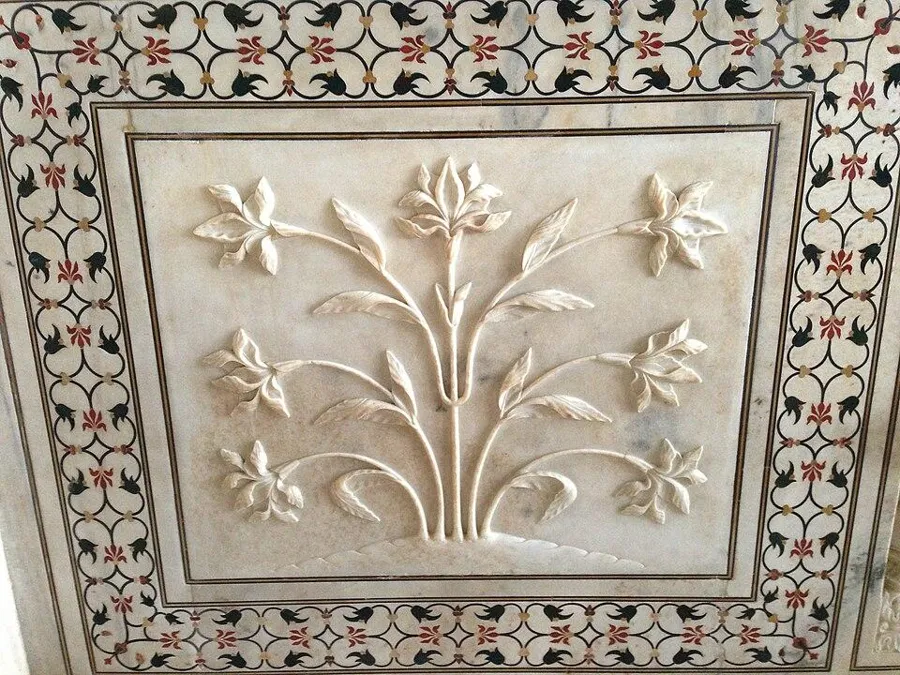
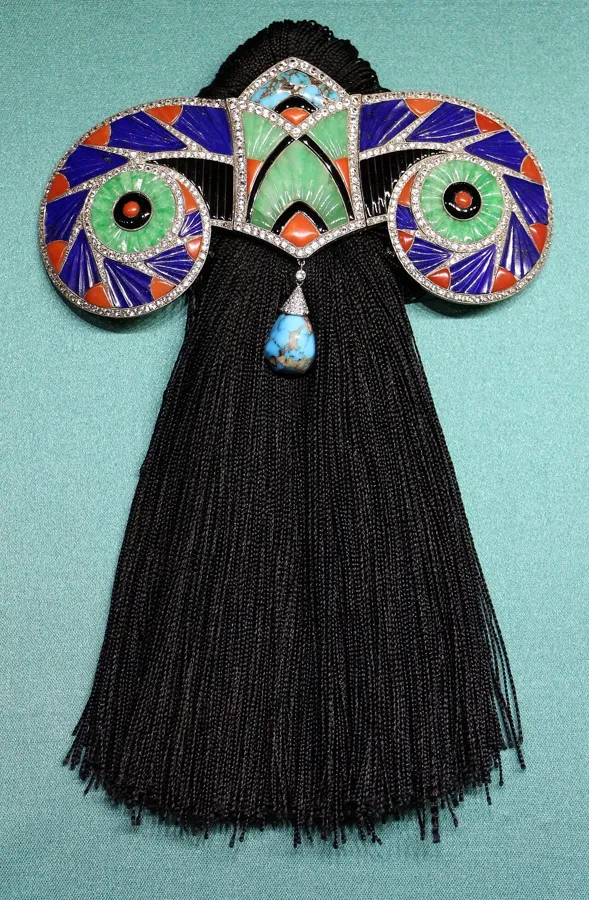
Lapis is one of the stones in the Taj flowers. A polished lapis sphere shows off the same deep blue.
Own a natural piece
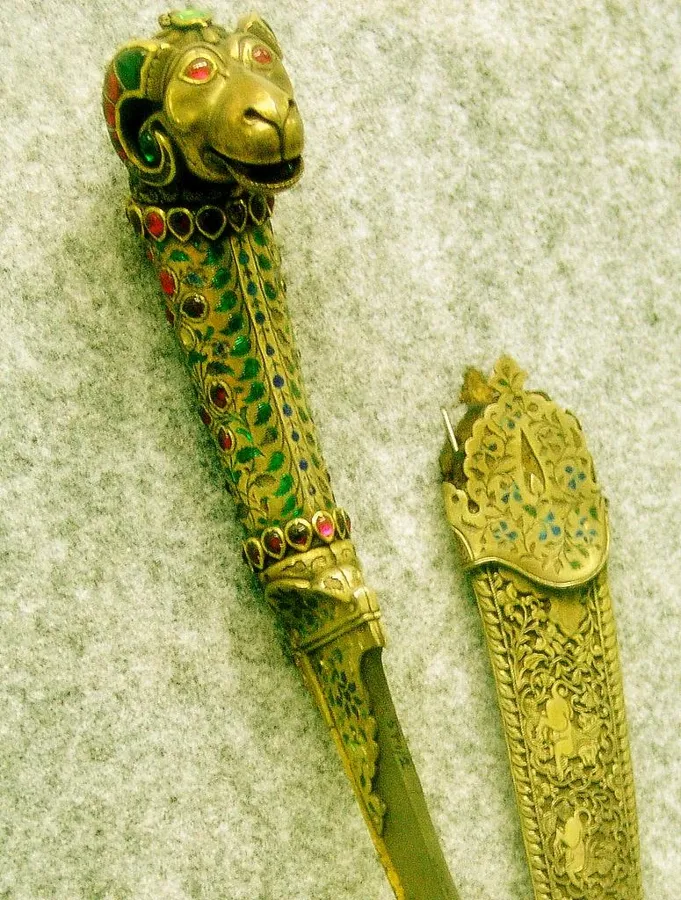
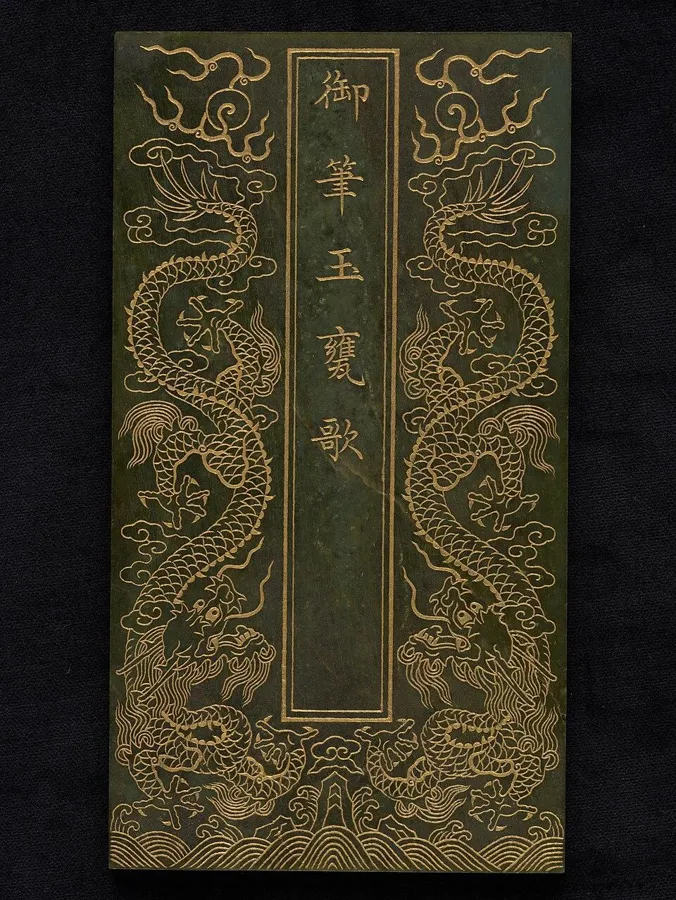
A carved nephrite jade dragon, the same stone carvers loved for hilts.
Own a natural piece
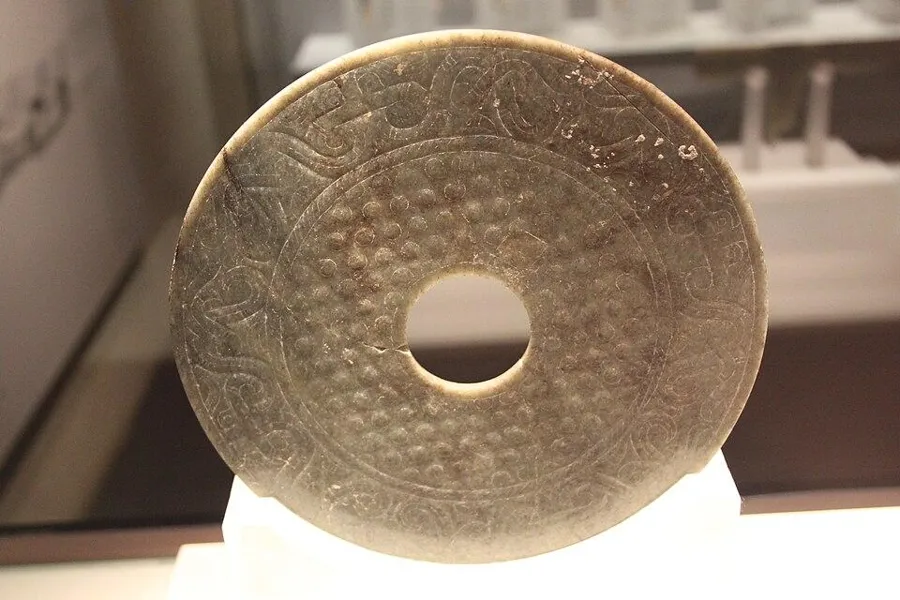
A jade pendant to own; the bi shape is still carved today.
Own a natural piece
A New Zealand pounamu pendant, the same stone.
The only gem that three civilisations on opposite sides of the world each decided was worth more than gold.
Jade is two different minerals that look alike. Nephrite is a mat of tiny interlocking fibres, which makes it one of the toughest natural materials known: it dents rather than shatters. Jadeite is a mass of tiny interlocking crystals, a little harder, and it can be glassy and brilliantly green. Neither can be cut with a knife or a metal saw. For most of history jade was shaped by grinding it with sand of harder minerals, slowly, for months.
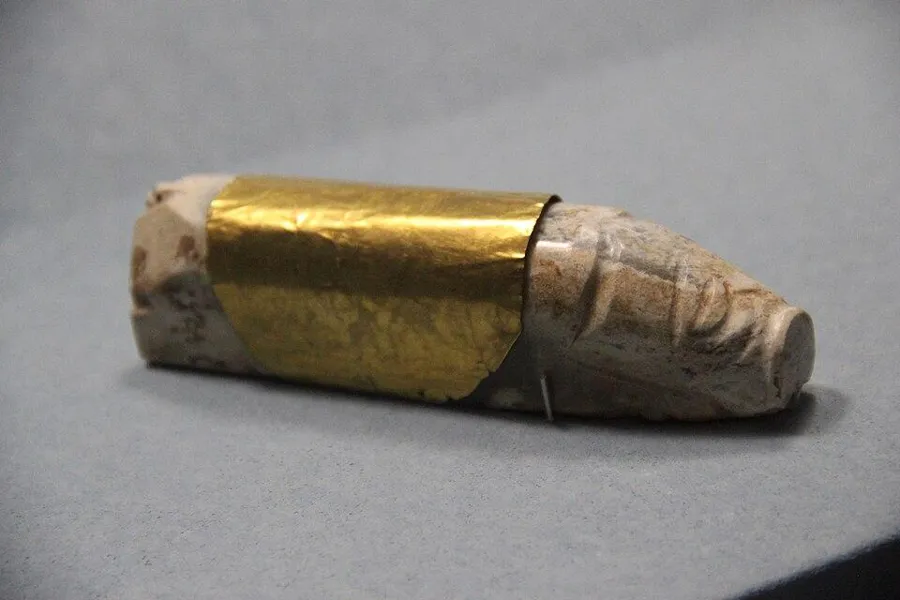
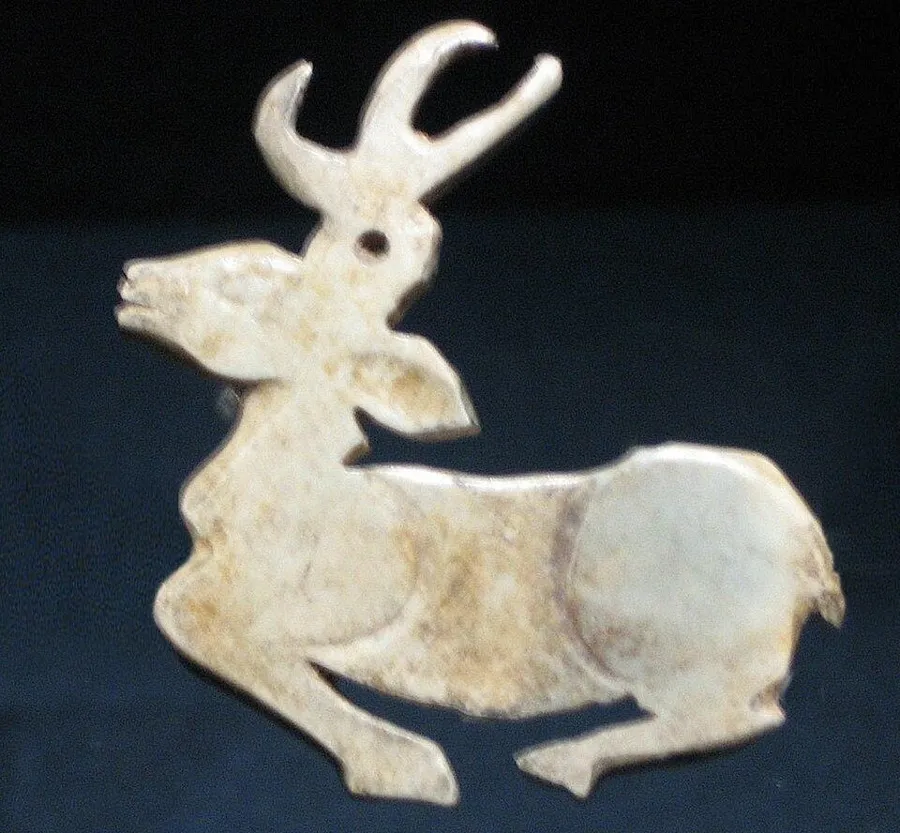
Chinese carvers were working nephrite before 6000 BCE. The Liangzhu culture, around 3300 to 2300 BCE, carved the mysterious square cong tubes and flat bi discs and buried them with their leaders. Confucius compared jade to the virtues of a gentleman: warm, smooth, firm and honest. A Chinese saying puts it plainly: gold has a price, jade is priceless.
Han dynasty princes were buried in suits of jade plates sewn with gold wire, in the belief that jade would preserve the body. For most of that history Chinese jade meant nephrite, much of it from the rivers of Hotan in the far west. Jadeite only arrived from Burma in the 1700s, and the emperors fell for its green.
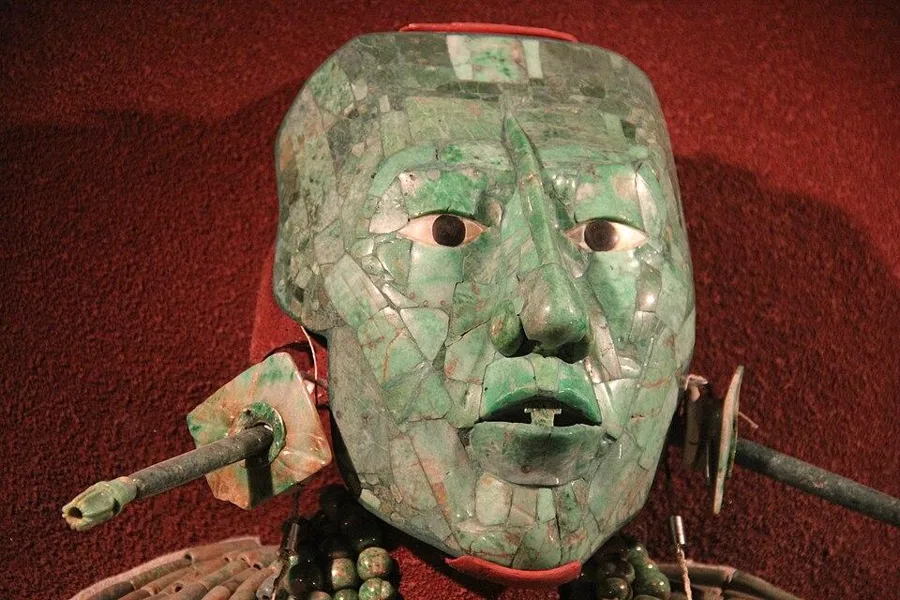
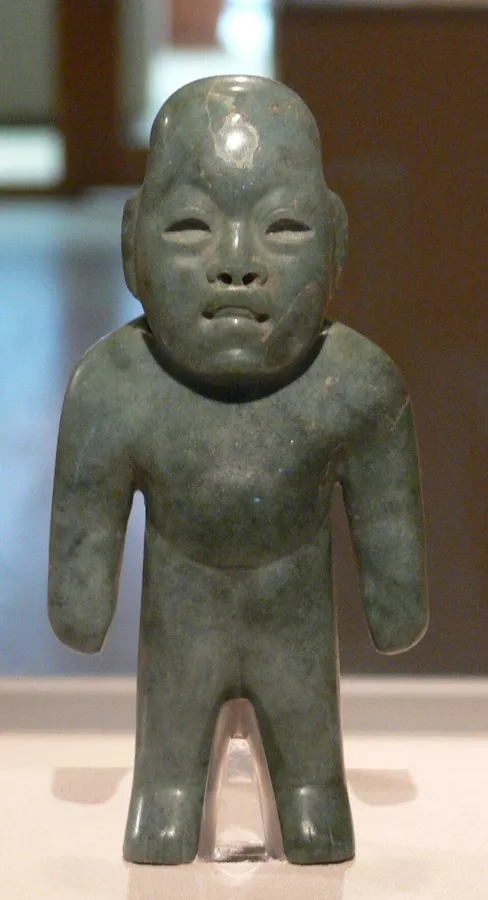
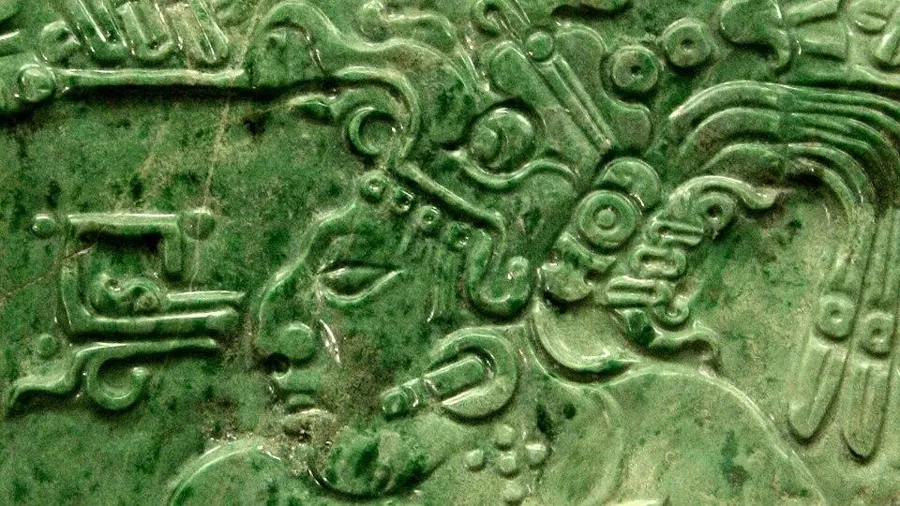
On the other side of the world, the Olmec of Mexico were carving jadeite by about 1000 BCE, and the Maya made it their most precious material. Green jade was the colour of maize, water and the breath of life. Kings wore jade earspools, collars and belt plaques, had jade set into their teeth, and went to their graves in jade masks, like Pakal the Great of Palenque.
Almost all of it came from one river valley, the Motagua in Guatemala. When the Spanish arrived they wanted gold and ignored the green stone, the craft died out, and the source of Maya jade was forgotten for centuries until it was found again in the 20th century. Jade from that valley is cut in Guatemala again today.
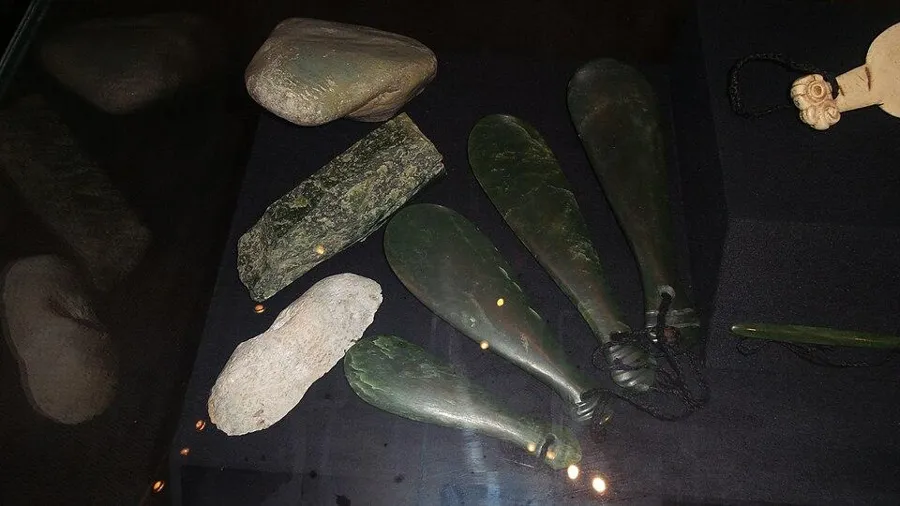
The Maori found nephrite in the rivers of the South Island and called it pounamu. It made the best adze blades they had, and the most treasured ornaments: the hei-tiki figure and the koru, the unfurling fern frond. Named pieces were passed down through families for generations. Since 1997, New Zealand law has recognised the pounamu of the South Island as belonging to the Ngai Tahu people.
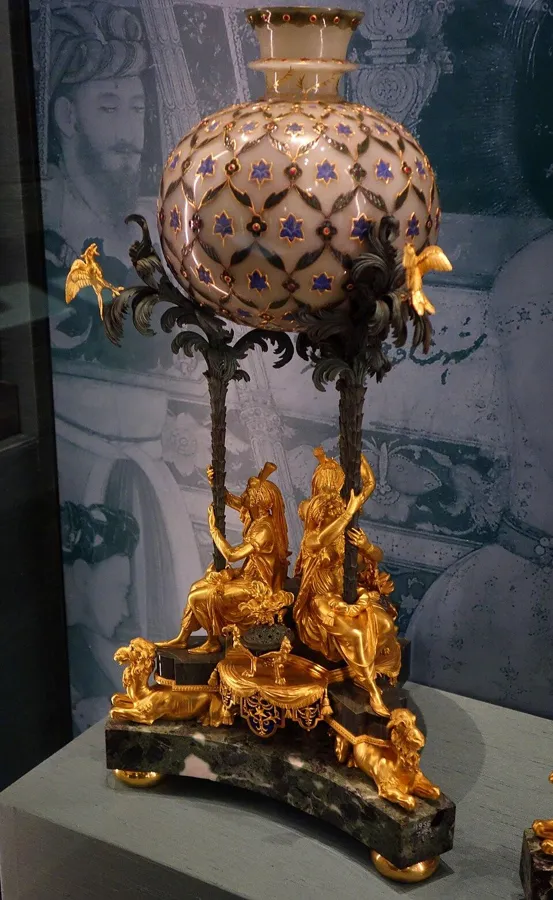
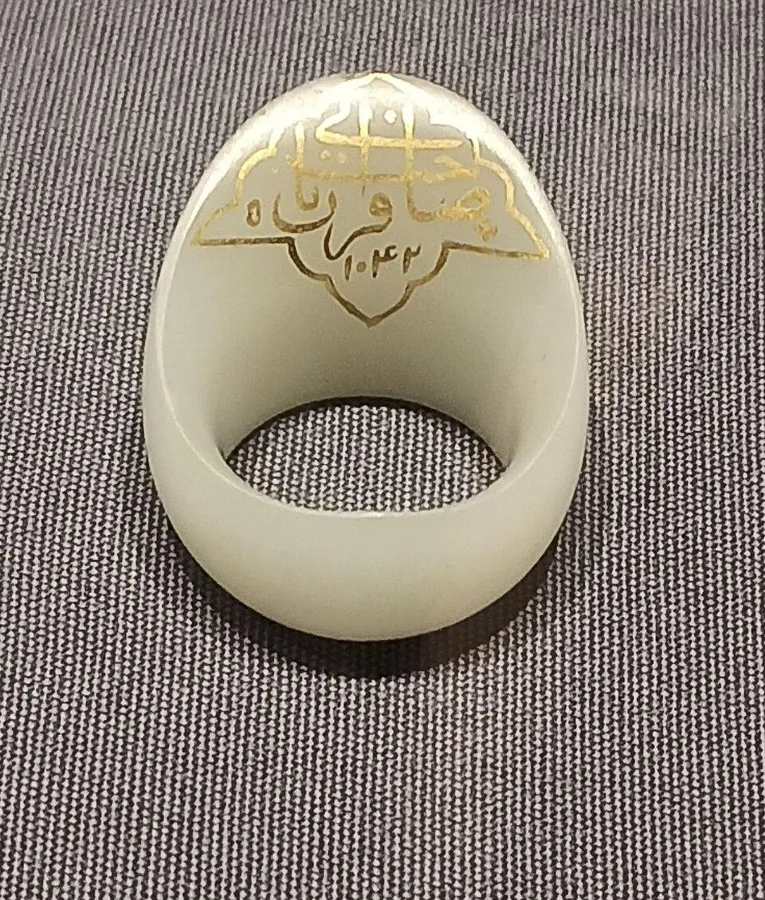
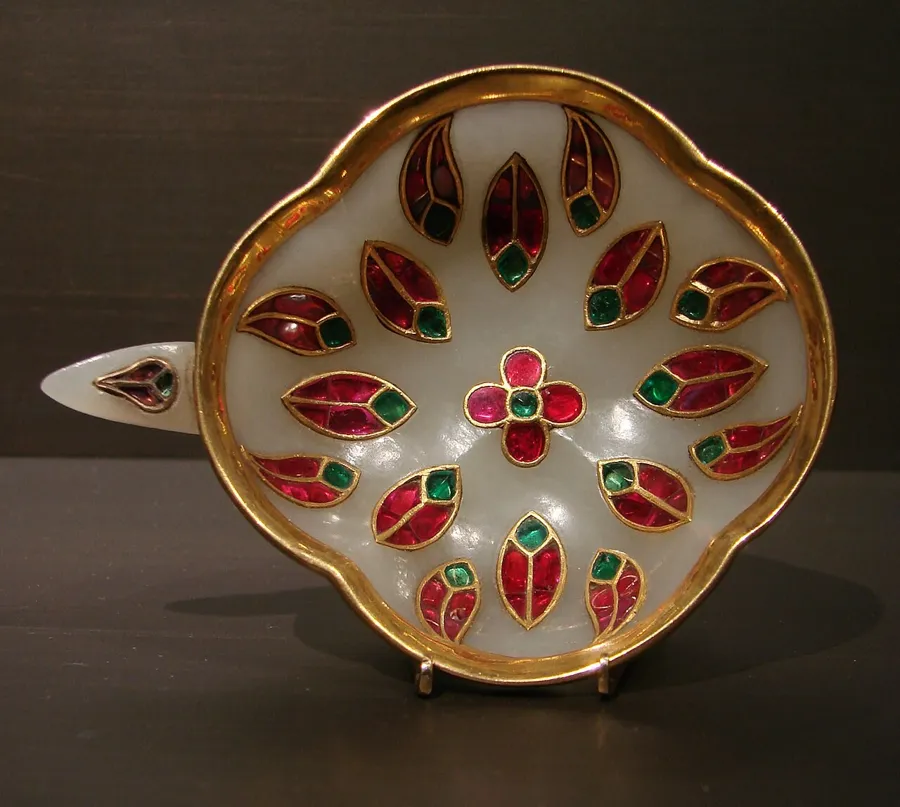
Six thousand years ago, Neolithic people quarried jadeite high in the Italian Alps and carried polished axeheads as far as Britain, Ireland and Scandinavia. Most show no sign of use: they were prestige objects. In Mughal India, emperors commissioned paper-thin cups and dagger hilts of white nephrite, like the wine cup of Shah Jahan. In Japan, the comma-shaped magatama, often of jadeite, was worn for thousands of years and is part of the imperial regalia.
Ask which jade: nephrite or jadeite. Untreated jadeite is sold as Type A; Type B has been bleached and filled with polymer, and Type C is dyed. Most cheap green jade online is neither mineral: it is dyed quartzite, serpentine or glass, often sold as Malaysia jade or new jade. Real jade feels cold and heavy for its size and rings when two pieces are tapped together. The pieces in the shop above all name the mineral.
| Real jade (jadeite or nephrite) | Common imitations | |
|---|---|---|
| Material | Jadeite or nephrite | Dyed quartzite ("Malaysia jade"), serpentine ("new jade"), aventurine, glass |
| Feel | Cold, heavy, smooth, almost oily polish | Lighter or glassy |
| Scratch | A steel knife will not scratch it | Serpentine scratches easily |
| Colour | Natural colour, even in fibres | Dye collects in cracks and grain |
| Treatment | Grade A: untreated. B: bleached and polymer-filled. C: dyed | Usually dyed |
Treatments. The trade grades jadeite A (untreated), B (bleached with acid and filled with polymer) and C (dyed). B and C jade are worth a fraction of A and can weaken or fade. For anything costly, buy with a lab report stating "natural, untreated". All gem treatments explained.
Pins mark mining districts, not exact mines. Drag to move, pinch or scroll to zoom, tap a pin to read about it. Map data © OpenStreetMap contributors.
Jade is carved, not faceted: bangles, beads, pendants and cabochons. Because it is so tough, it can be carved into thin, delicate shapes that would shatter in any other gem. See cuts from easiest to hardest and whether cutting your own is cheaper than buying cut.
Checked in stock on October 10, 2026. Photos are the listings' own; prices are rounded.
Our first pick
about $80
Burmese jadeite with a certificate per the listing.
See it on AmazonAlso good
about $20
Canadian nephrite from a well-reviewed bead seller.
See it on AmazonAlso good
about $45
Real nephrite in a simple everyday bracelet.
See it on AmazonAll 10 checked jade picks
Jadeite can be orange to red where iron stained the outer layer of a boulder. The Chinese call it fei, and fine red jadeite is valued. But most cheap "orange jade" on Amazon is dyed quartz or dyed jade, so we only list pieces sold as natural colour, plus one honestly labelled dyed strand.
 WomenRed jadeite Cai Shen pendant, grade A orange-red (hong fei)Sold as untreated grade A red jadeite: the real thing, coloured by iron near the skin of a jadeite boulder.about $80on Amazon →
 WomenYellow-orange jadeite bangleSold as natural genuine jadeite. Ships on a lead time.about $40on Amazon →
 WomenNatural colour red and white jade bangleNatural colour, not dyed, with about 65 ratings.about $25on Amazon →
 BeadsDyed orange jade rondelle beads, 5 x 8 mmHonestly labelled as dyed. Fine for bead projects; most cheap orange jade is dyed stone like this.about $9on Amazon →
Every piece names the real stone and comes from a seller with a record, checked in stock on October 11, 2026. Photos are the listings' own; prices are rounded.
 MenIna & Co New Zealand pounamu pendant, hand carvedPounamu is New Zealand nephrite, sacred to the Maori. This one is cut from New Zealand stone.about $180on Amazon →
 Men81stgeneration nephrite double koru pendantThe koru, an unfurling fern frond, a Maori symbol of new life.about $190on Amazon →
 Men81stgeneration nephrite koru toki pendantThe toki is an adze blade, once a working tool, now a symbol of strength.about $220on Amazon →
 Women81stgeneration nephrite fern leaf pendantA carved silver-fern leaf in greenstone.about $150on Amazon →
 WomenNOVICA Guatemalan jade circle pendant on cottonJadeite from Guatemala, the same source the Maya used.about $70on Amazon →
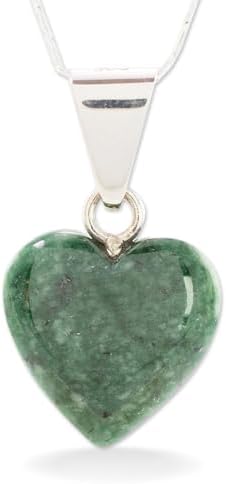 WomenNOVICA Guatemalan jade heart pendant, sterling silverGuatemalan jadeite, cut and set by artisans there.about $90on Amazon →
 WomenNOVICA Guatemalan jade pendant, sterling silverDeep green Guatemalan jadeite.about $100on Amazon →
 WomenNOVICA light green jade pendant, sterling silverA paler Guatemalan jadeite.about $90on Amazon →
 WomenCuckoo Jewels Grade A jade circle pendant, 43 mmA large donut, the shape of the ancient Chinese bi disc.about $50on Amazon →
 WomenReadJade Hetian jade fish pendantHetian nephrite carved as a fish, a Chinese symbol of plenty.about $40on Amazon →
 WomenJadeous icy green jadeite band ringA solid ring cut from one piece of jadeite.about $40on Amazon →
 WomenJadeous icy white jadeite band ringWhite jadeite, translucent like ice.about $30on Amazon →
 MenJadeous black jadeite band ringBlack jadeite, a solid band for men or women.about $35on Amazon →
 WomenYYXRYL Type A jadeite band ringType A means untreated: no bleach, no polymer, no dye.about $30on Amazon →
 MenYYXRYL Hotan nephrite ring, relief carvedCarved Hotan nephrite, for men.about $40on Amazon →
 WomenYMHOP Hotan jade ringA plain Hotan nephrite band.about $30on Amazon →
 MenJadeous jadeite magatama on a cordThe comma-shaped magatama of ancient Japan.about $35on Amazon →
 Carvings and decorPolar Jade Canadian nephrite egg, mediumFrom a Canadian jade company: polished BC nephrite.about $45on Amazon →
 Carvings and decorAmazing Gemstone nephrite jade palm stone, 45 to 50 mmHold it to feel how dense and cool nephrite is.about $25on Amazon →
 Carvings and decorAmazing Gemstone nephrite jade heartA smooth nephrite heart.about $25on Amazon →
 Carvings and decorLEOSENSE nephrite jade gua sha toolNephrite is tough enough to use every day.about $15on Amazon →
 BeadsBONNY BOXX Canadian jade rondelle beadsCanadian nephrite discs, one strand.about $9on Amazon →
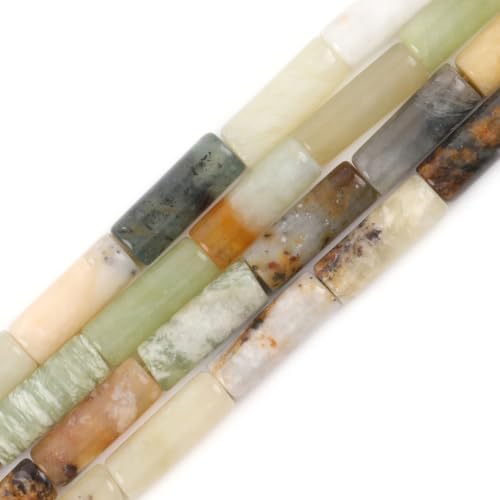 BeadsNephrite jade column tube beads, 6 x 16 mmLong tubes, like the beads in Maya necklaces.about $9on Amazon →
 WomenZHOU LIU FU Hetian nephrite jade bangleHetian is the jade Chinese emperors prized for 2,000 years. A bangle is cut from one solid block and most of the stone becomes waste, which is why it costs what it does.about $385on Amazon →
 WomenURED green Hetian jade bangle, certifiedThe same material at a lower grade, with a certificate in the box.about $130on Amazon →
 Men81stgeneration extra-large nephrite hei tiki pendantA Maori-style hei tiki in greenstone. A big, heavy carving, made to be worn for life.about $235on Amazon →
 Men81stgeneration nephrite roimata (teardrop) pendantThe roimata, a teardrop shape from Maori carving. Smaller and simpler than the tiki.about $95on Amazon →
 MenHetian nephrite carved royal dragon pendantA detailed carving. Nephrite is extraordinarily tough, which is why it holds fine undercut work like this.about $130on Amazon →
 WomenALOHAPLUS jadeite teddy bear pendant, 18K solid goldCarved jadeite on a solid gold bail. A gift that is real all the way through.about $120on Amazon →
 MenJadeous jadeite magatama charmThe magatama, a comma shape worn in Japan for more than 2,000 years, in jadeite.about $35on Amazon →
Five tools that let you check what you bought (a loupe, a UV torch, locking tweezers, a gem box and a pocket scale), plus a turntable that spins your stone under the light the way jewellers show one. The full collector's kit.
 LookGemOro 10x triplet loupeunder $20
 LookDARKBEAM filtered 365 nm UV flashlightabout $10
 HandleHonoson locking tweezers, 3 packabout $10
 StoreTeensery gem display boxes with clear lids, 10 packabout $9
 ShowComXim motorized turntable, adjustable speed and directionabout $15
 MeasureGemOro Platinum XP500 pocket scale, 0.01 gabout $40
In short
Jade is jadeite or nephrite, the toughest gems on earth, and it is not grown in labs. Most cheap "jade" is something else. Buy from sellers who name the mineral and the source, and for jadeite of real value, insist on Grade A with a report.
See our first pick: MPH-JEWELRY carved jadeite dragon pendant, sold as Grade A untreatedThey are different minerals. Jadeite is a pyroxene, rarer and more valuable, with the brightest greens from Myanmar. Nephrite is an amphibole, a little softer, in greens, whites and creams, from Canada, China, Russia and New Zealand. Both are true jade.
Not commercially. Jadeite was synthesised in a lab in the 1980s but is not made for jewellery. Anything sold as "lab jade" is an imitation.
It should feel cold and heavy, resist a steel knife on a hidden spot, and show natural texture under a torch. Dye shows as colour concentrated in cracks. A lab report is the only sure test for treatment.
Sometimes. Real orange and red jadeite exists: iron from the soil stains the outer layer of jadeite boulders, and red jadeite (hong fei) is prized. But most bright, cheap "orange jade" beads are dyed quartzite or dyed pale jade. Natural colour sits in patches and fades into white; dyed colour is even and collects in cracks.
Amazon links are affiliate links (tag thegemtray-20): buying through them costs you nothing extra and supports the site. As an Amazon Associate we earn from qualifying purchases.

