We earn a commission if you buy through links on this page, at no extra cost to you.
Carbon · C · 10
Diamond
Diamond is pure carbon in the hardest crystal structure of any gem. Mined diamond formed 150 kilometres down and rode to the surface in volcanic pipes. Lab diamond is the same carbon, grown in days or weeks in a press (HPHT) or from gas (CVD), and only a laboratory can tell them apart. That is why a lab diamond should come with an IGI or GIA report.
From the ground to your hand
The same stone at four moments. Tap a photo of a listing to see it on Amazon.
01 In the ground (step 1 of 4)
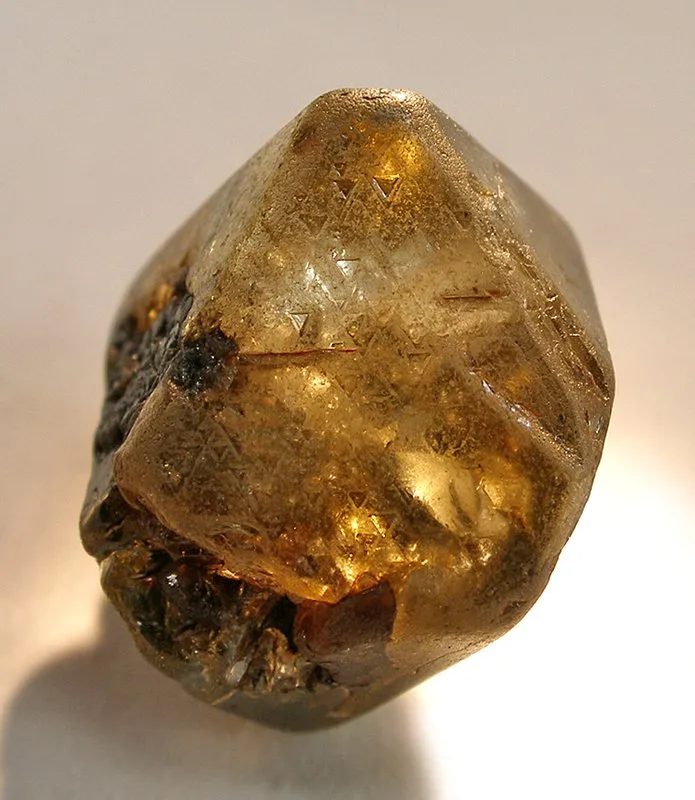
A natural diamond crystal: an octahedron, the shape diamond grows in, with a frosted, etched skin.
Real specimen. Photo: Robert M. Lavinsky, CC BY-SA 3.0.
02 Out of the press (step 2 of 4)
Lab diamond crystals straight out of an HPHT press, yellow from nitrogen.
What the finest natural stones look like: real pieces in public collections. The whole gem museum.
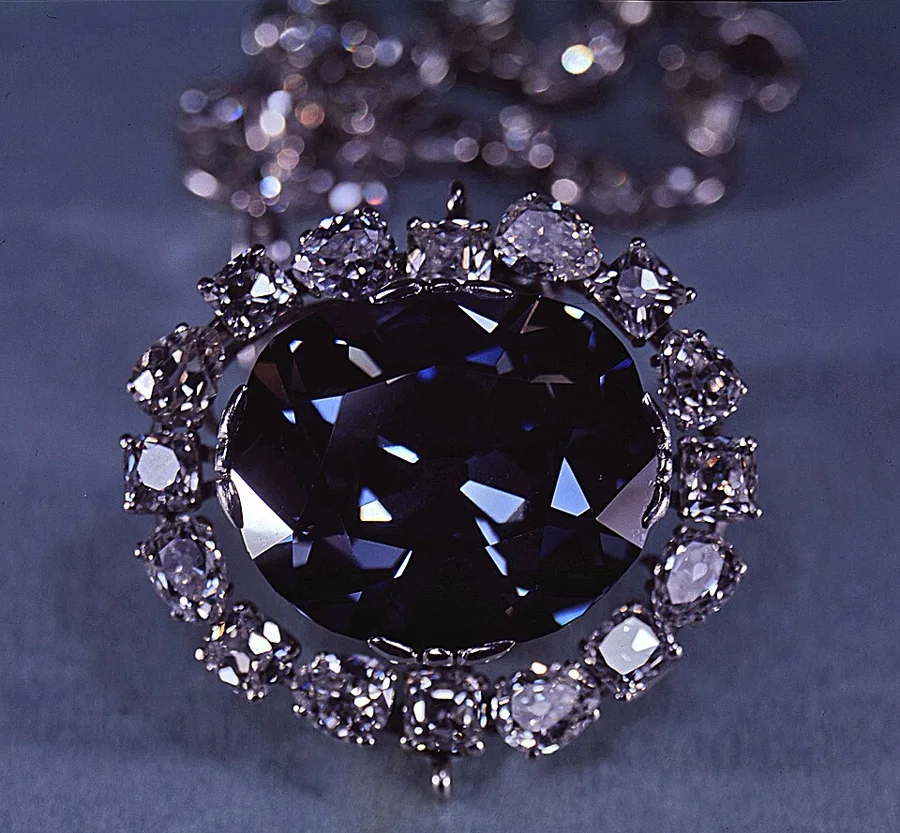
The Hope Diamond45.52 carats, a deep blue diamond from India, coloured by traces of boron.Smithsonian National Museum of Natural History, WashingtonHarry Winston gave it to the Smithsonian in 1958 and sent it by ordinary registered mail.Photo: Smithsonian Institution, Public domain.
Same cut and the same blue-by-boron chemistry, grown in a lab. No natural blue diamond is sold on Amazon: they are among the rarest gems on earth and sell at auction for millions.
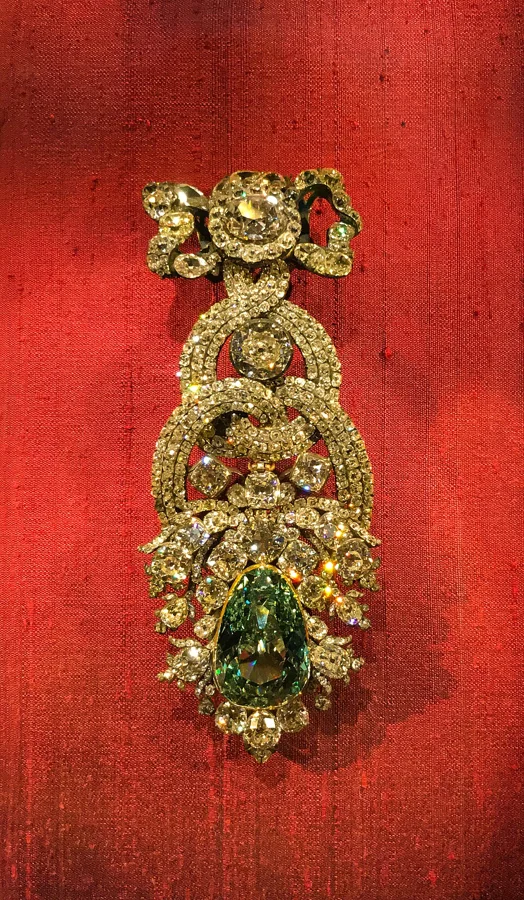
The Dresden Green DiamondAbout 41 carats, the largest natural green diamond known, set in an 18th-century hat ornament.Green Vault (Grünes Gewölbe), DresdenIts green colour comes from natural radiation the diamond absorbed underground over millions of years.Photo: ubahnverleih, CC0.
The same pear shape in lab diamond (colourless). Natural green diamonds are rarer still and not sold on Amazon.
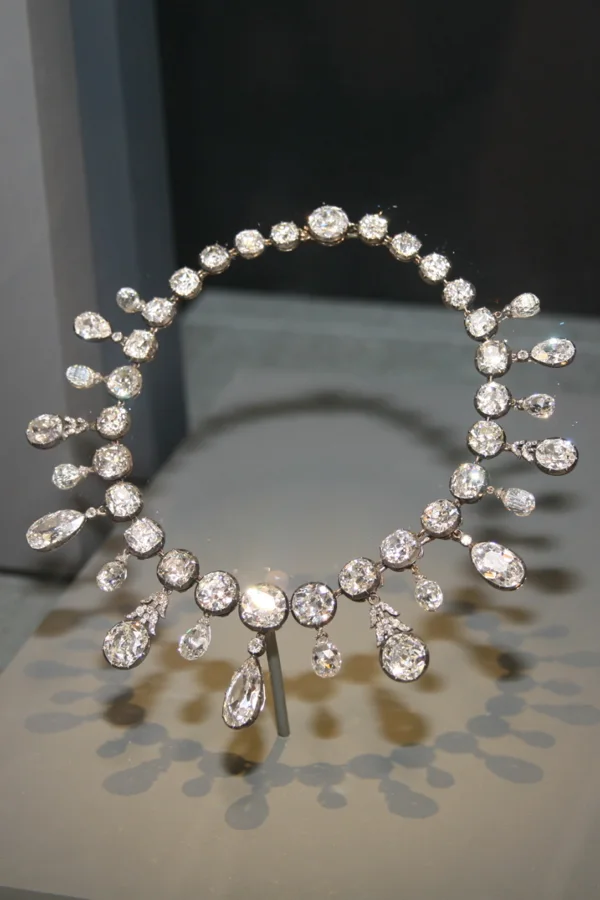
The Napoleon Diamond NecklaceA necklace of old-mine-cut diamonds Napoleon gave to Empress Marie-Louise in 1811.Smithsonian National Museum of Natural HistoryCut by hand two centuries ago, long before the modern brilliant was worked out.Photo: Cliff, CC BY 2.0.
A riviera of graduated diamonds, like the necklace Napoleon gave. For about twice the money, the lab necklace carries six times the diamond.
The Koh-i-Noor (a replica)Today about 105.6 carats, recut in 1852 from a larger, older Indian cut. The real stone is in the British Crown Jewels.Replica: Chhatrapati Shivaji Maharaj Vastu Sangrahalaya, MumbaiMughal emperors, a Persian shah, Afghan rulers and a Sikh maharaja all owned it before it went to Britain in 1849. India and others still ask for it back.Photo: aiva., CC BY 2.0.
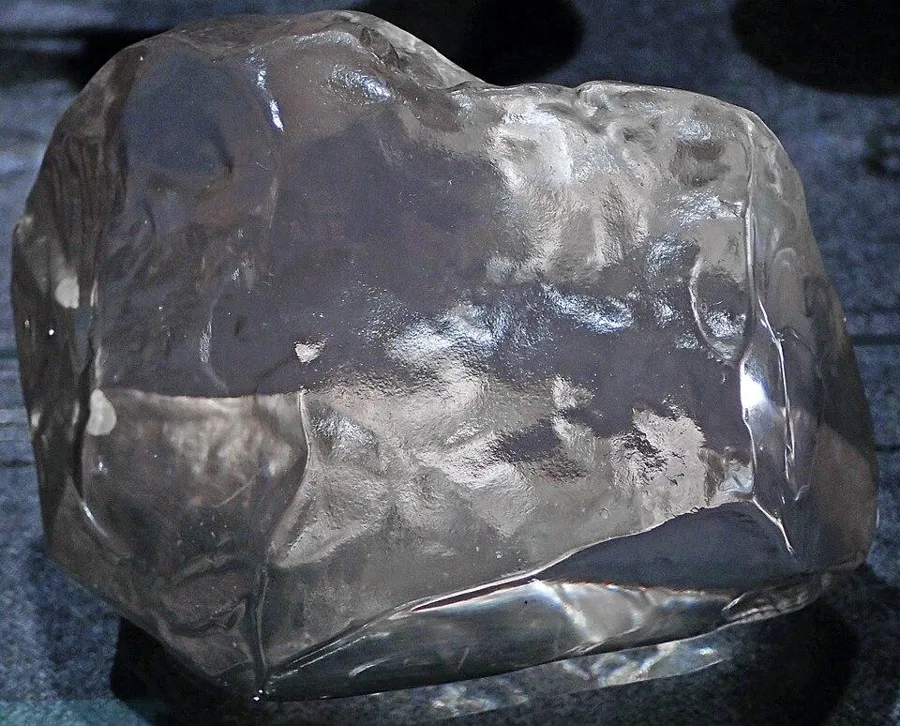
The Cullinan Diamond (a replica of the rough)About 3,106 carats, the largest gem-quality diamond ever found, from the Premier Mine, South Africa, in 1905.Replica: Denver Museum of Nature and ScienceIt was cut into nine major stones; the largest, Cullinan I of about 530 carats, sits in the British royal sceptre.Photo: James St. John, CC BY 2.0.
A real lab diamond crystal, as it comes out of the press.
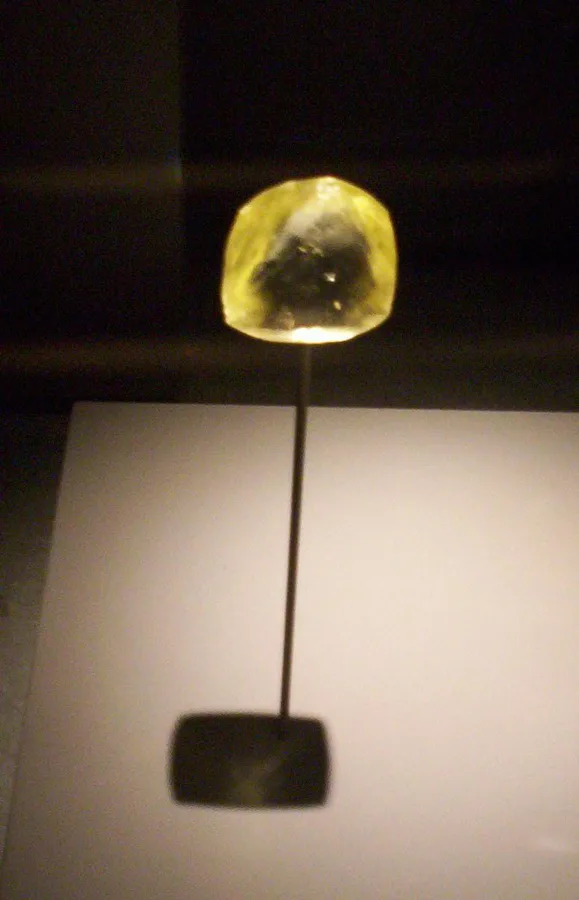
The Oppenheimer DiamondAn uncut yellow diamond crystal of about 253.7 carats from South Africa.Smithsonian National Museum of Natural HistoryLeft uncut so visitors can see what a diamond looks like as it grows: an octahedron with rounded edges.Photo: Alkivar, Public domain.
Yellow from nitrogen, the same reason as the Oppenheimer.
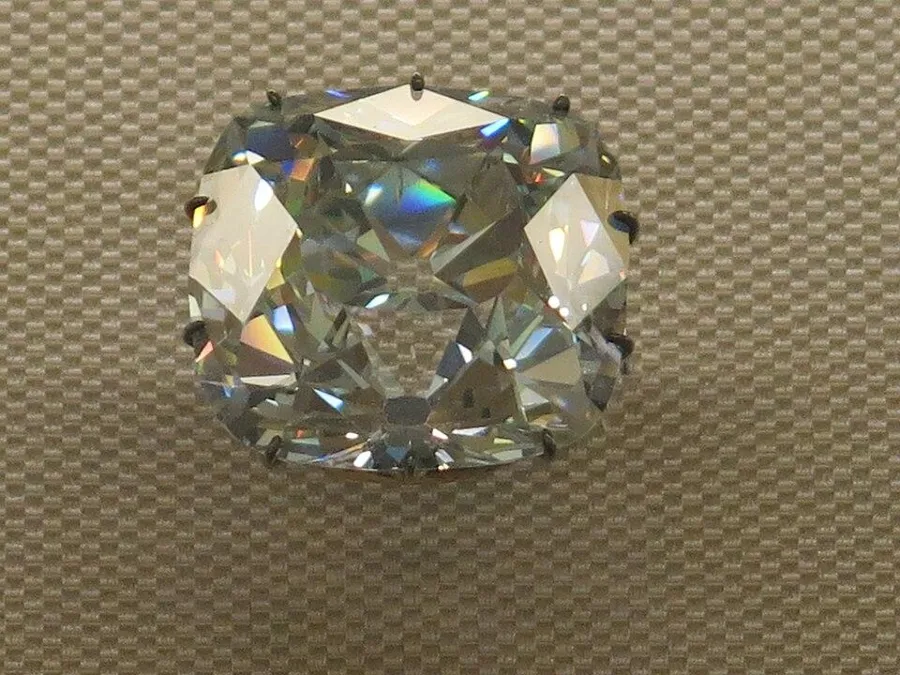
The Regent DiamondAbout 140.6 carats, a cushion-cut diamond found in India around 1698.Louvre, Apollo Gallery, ParisNapoleon had it set in the hilt of his sword. It is thought to be one of the most perfectly cut old diamonds there is.Photo: Tangopaso, Public domain.
A big cushion-shaped stone of your own, in lab diamond.
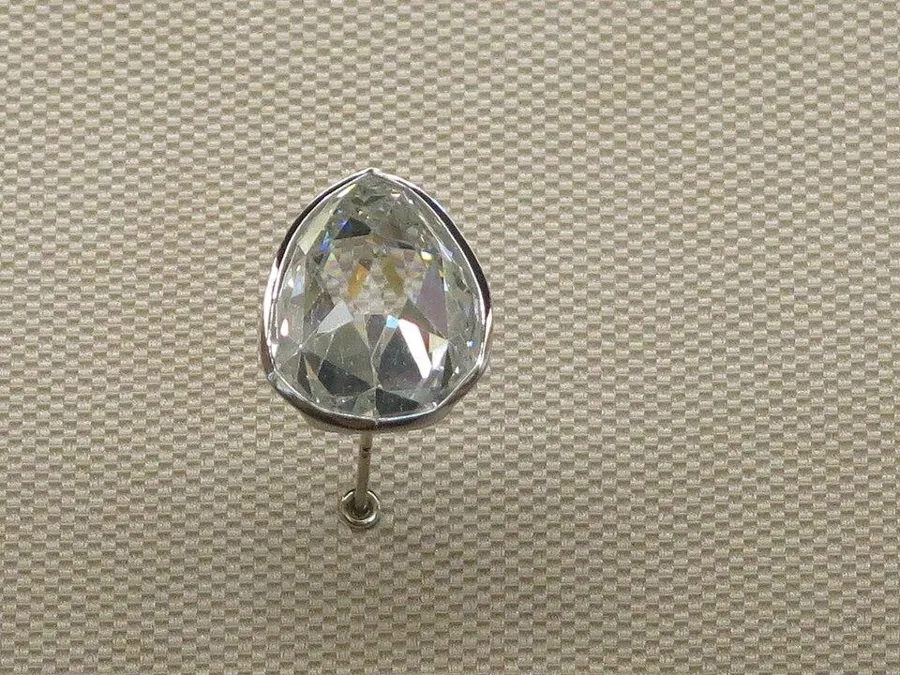
The Sancy DiamondAbout 55 carats, a pale yellow pear-shaped diamond, probably from India.Louvre, Apollo Gallery, ParisIt passed through French and English royal hands for centuries and is one of the first big diamonds cut with symmetrical facets.Photo: Tangopaso, Public domain.
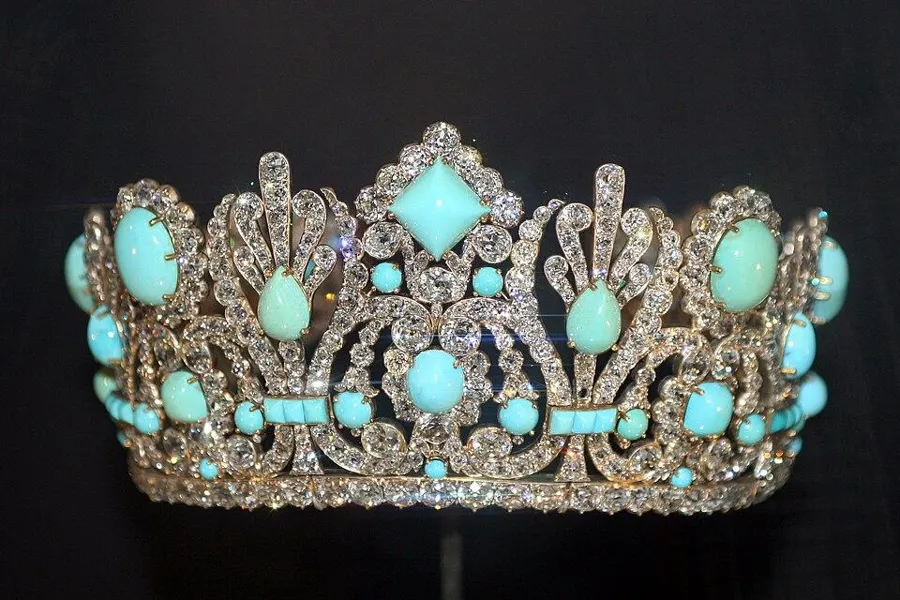
The Marie Louise DiademA diadem of more than 1,000 old-cut diamonds set with Persian turquoise. Napoleon gave it to Empress Marie-Louise in 1810, set with emeralds.Smithsonian National Museum of Natural History, WashingtonIn the 1950s a jeweller took the emeralds out and sold them one by one, and put turquoise in their place.Photo: Cliff from Arlington, Virginia, USA, CC BY 2.0.
Own both sides of its story: a big lab emerald like the stones it began with, and real turquoise like the stones it wears now.
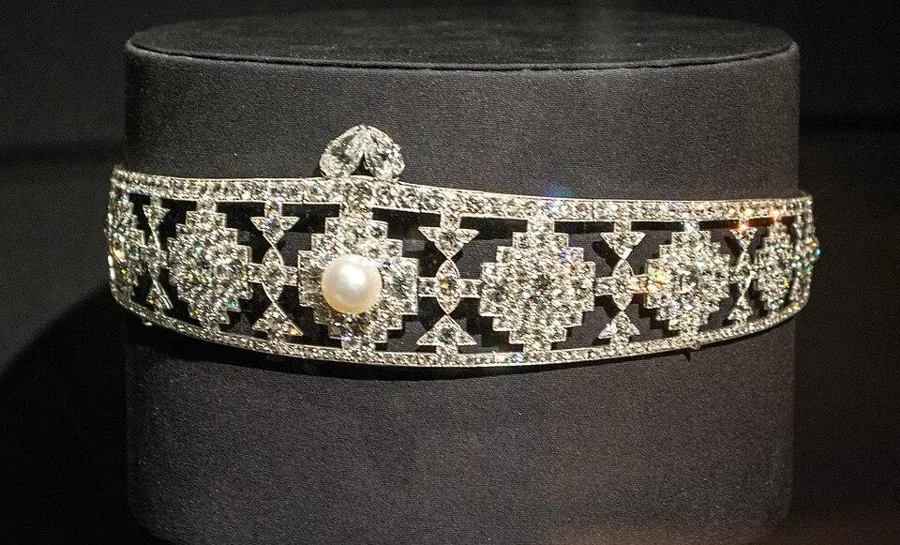
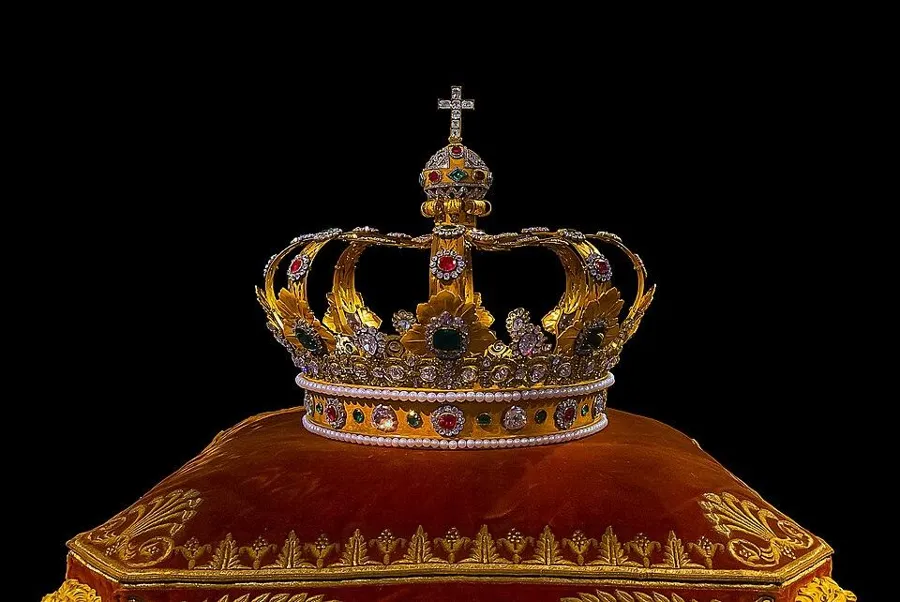
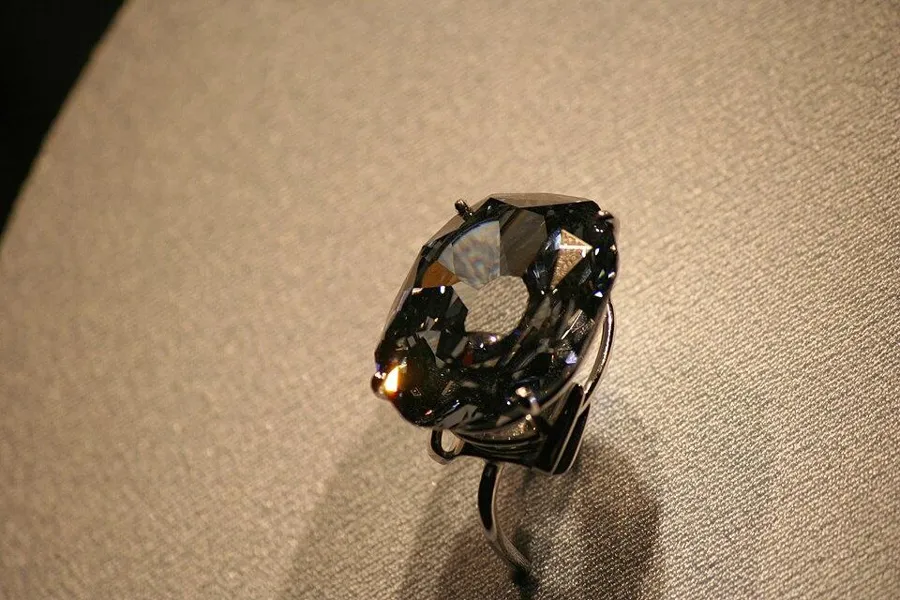
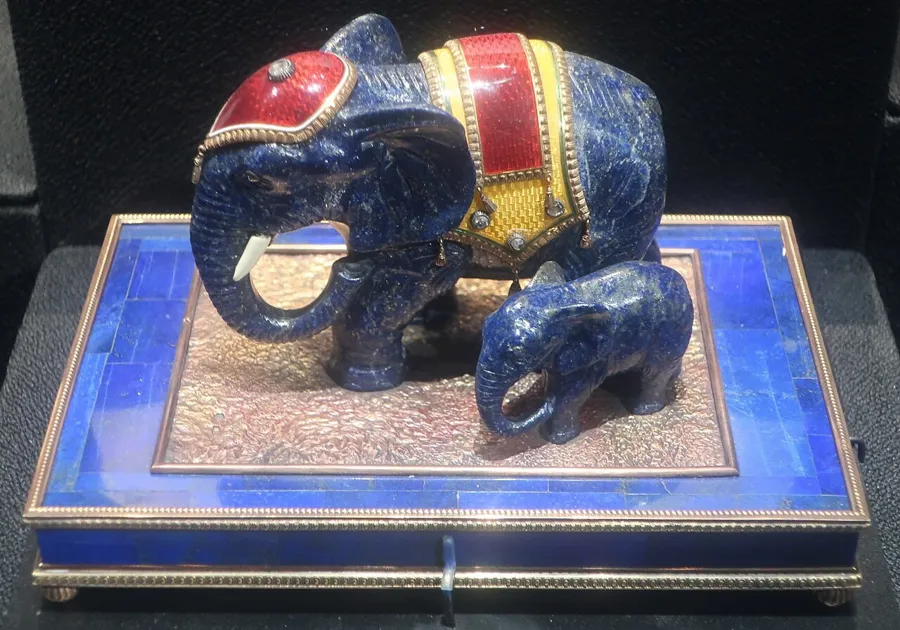
The Daria-i-NoorThe Sea of Light, a pale pink diamond of about 182 carats, one of the largest pink diamonds known.Iranian National Jewels, Central Bank of Iran, TehranIt came from the same Indian mines as the Koh-i-Noor and was taken to Persia by Nader Shah in 1739.Photo: Alborzagros, Public domain.A Cartier diamond bandeauA diamond headband by Cartier from the Jazz Age, worn low across the forehead.Cleveland Museum of Art (Jazz Age exhibition)In the 1920s the tall tiara gave way to the bandeau, worn over short bobbed hair.Photo: Tim Evanson from Cleveland Heights, Ohio, USA, CC BY-SA 2.0.The Crown of BavariaThe crown of the Kings of Bavaria, made in Paris in 1806 and 1807 by the jeweller Marie-Étienne Nitot with the goldsmiths Leblond and Biennais.Treasury of the Residenz, MunichBavaria became a kingdom in 1806 with Napoleon’s backing, so the new king ordered his crown from Napoleon’s own jewellers.Photo: Jebulon, CC0.The Wittelsbach-Graff diamondA deep blue diamond of 31.06 carats, once in the Bavarian crown jewels, recut by Laurence Graff after he bought it in 2008.Shown at the Smithsonian, WashingtonRecutting it removed chips and made it brighter but cost more than four carats, which angered many historians.Photo: 350z33 (talk)., CC BY-SA 3.0.Fabergé’s lapis elephantsElephant figures carved from lapis lazuli with silver, gold, enamel, ivory and diamond details, from the workshop of Carl Fabergé.American Museum of Natural History, New YorkFabergé’s hardstone animals were small enough to hold, and Russian high society collected them like trading cards.Photo: Hiart, CC0.
A Cartier cigarette case in lapis and turquoiseA cigarette case of gold, lapis lazuli, turquoise, sapphires and diamonds made by Cartier in Paris in 1930.Cartier Collection, GenevaArt Deco loved strong colour pairs, and lapis against turquoise is one of the boldest.Photo: Sailko, CC BY 3.0.
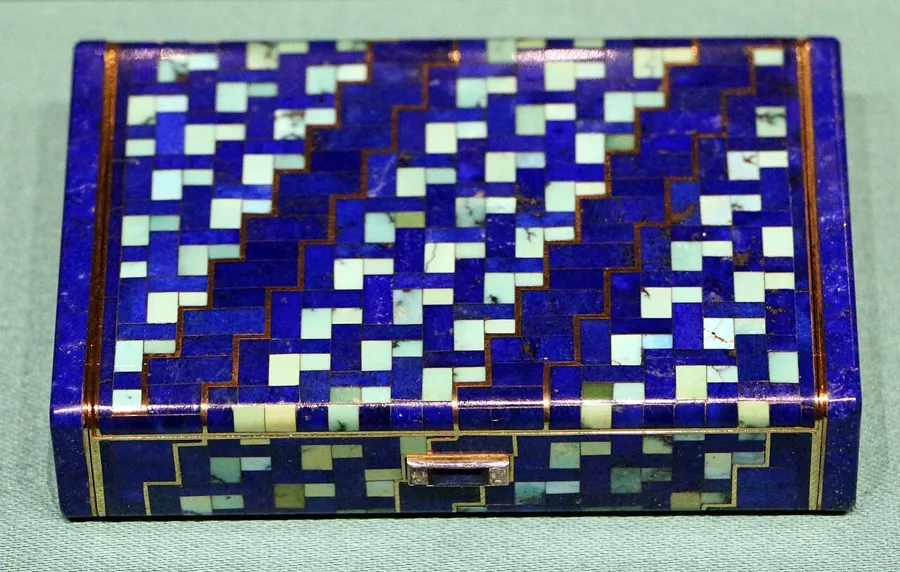
A lapis lazuli jewellery box cut from Afghan lapis, the same stone as the Medici caskets.
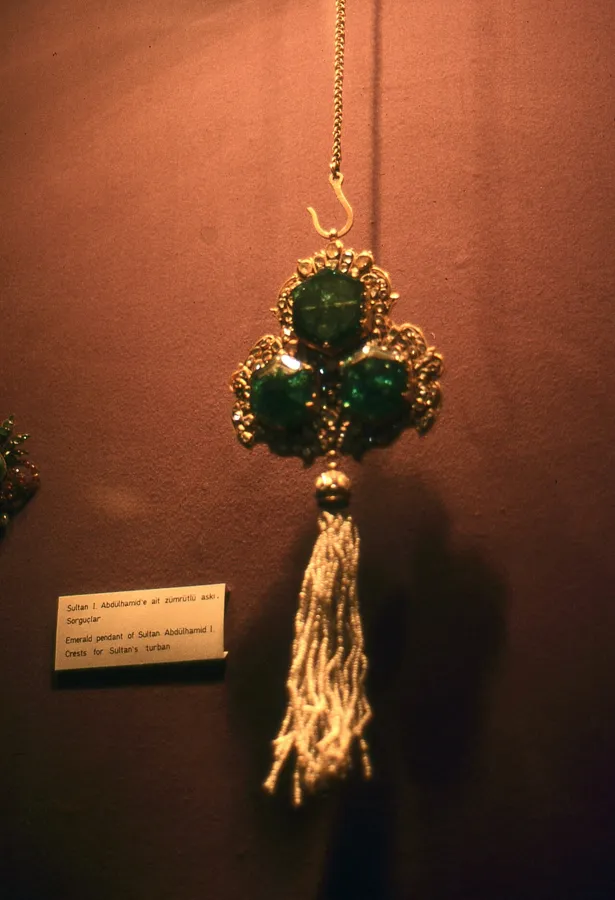
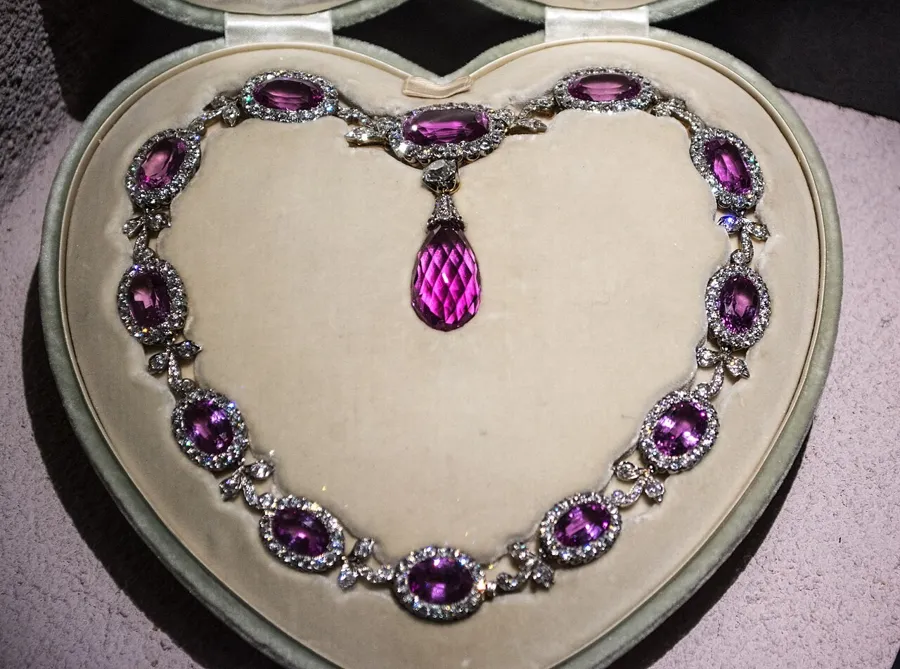
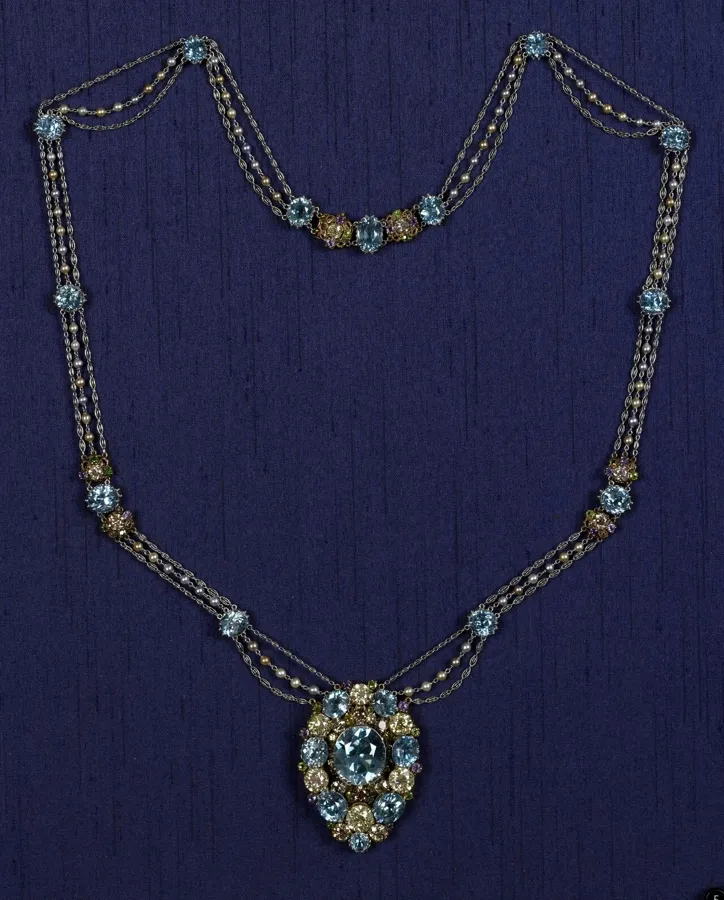
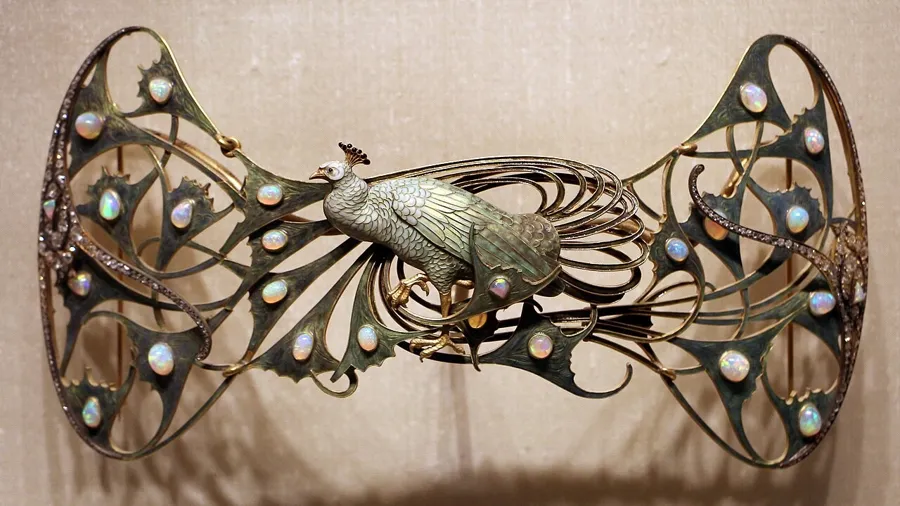
Sultan Abdulhamid I’s emerald turban pendantA turban ornament of Sultan Abdulhamid I, built around three large emeralds, in the treasury of Topkapı Palace.Topkapı Palace Museum, IstanbulOttoman sultans pinned jewels like this to the front of the turban, so the emeralds sat right at the centre of attention.Photo: Daniel Villafruela, CC BY 3.0.A Tiffany topaz and diamond necklaceA necklace of topazes and diamonds in gold and platinum, designed by Tiffany & Co., in the gem gallery of the Cleveland Museum of Natural History.Cleveland Museum of Natural HistoryGolden topaz and white diamond is a classic pairing that jewellers still use today.Photo: Tim Evanson, CC BY-SA 2.0.A Tiffany pendant with a blue zirconA pendant necklace by Tiffany & Co. with a large blue zircon in the centre, surrounded by canary and coloured diamonds, demantoid garnets and amethysts, on platinum chains with coloured pearls.Walters Art Museum, BaltimoreIt was bought as a wedding present, at a time when Louis Comfort Tiffany was pushing the firm toward bold coloured stones.Photo: Walters Art Museum, Public domain.Lalique’s peacock pectoralA pectoral ornament of gold, enamel, opals and diamonds with peacocks, made by René Lalique.Calouste Gulbenkian Museum, LisbonLalique used opals for their shifting colours, which suited peacock feathers perfectly.Photo: Sailko, CC BY 3.0.
Mined vs lab-grown diamond
Mined and lab-grown diamond are the same mineral; this is what differs
Mined
Lab-grown
How it formed
About 150 km down, over a billion years ago in many cases
Some laser-drilled, fracture-filled or colour-treated
Some colour-treated after growth
Price
Thousands of dollars for a good 1 ct
A few hundred dollars for a 1 ct with a report
Resale
Some value
Very little, and falling
Treatments. Mined diamonds can be laser-drilled to bleach dark or fracture-filled with glass; both must be disclosed. Many lab diamonds are given a short HPHT treatment after growth to improve colour, which the report will note. All gem treatments explained.
Five tools that let you check what you bought (a loupe, a UV torch, locking tweezers, a gem box and a pocket scale), plus a turntable that spins your stone under the light the way jewellers show one. The full collector's kit.
Diamond grows over millions of years in the earth, or in hours to months in a lab. Both are real diamond; the mined stone is rare and priced for rarity, the lab stone is priced for the cost of growing it. Buy lab to wear and enjoy, check the listing names the mineral, and test it when it arrives.
Yes. It is carbon in the diamond crystal structure, with the same hardness, sparkle and heat conduction. Only laboratory instruments can separate it from a mined diamond.
How do I know a lab diamond is what the listing says?
Buy one with an IGI or GIA report, look the number up on the lab's own website, match the measurements, and have a jeweller read the girdle inscription inside the return window.
Is moissanite a lab diamond?
No. Moissanite is , a different mineral with more rainbow fire and a lower price. See moissanite vs lab diamond.
Photo credits
diamond-crystal-natural.webp: Robert M. Lavinsky, CC BY-SA 3.0, via Wikimedia Commons.
Product photos: Amazon listings, via the Amazon Product Advertising (Creators) API.
Amazon links are affiliate links (tag thegemtray-20): buying through them costs you nothing extra and supports the site. As an Amazon Associate we earn from qualifying purchases.




 Lab-grown30 ct lab-grown graduated diamond riviera necklace, 14kabout $11,500on Amazon →
 Natural5 ct natural diamond riviera necklace, 14k white goldabout $5,200on Amazon →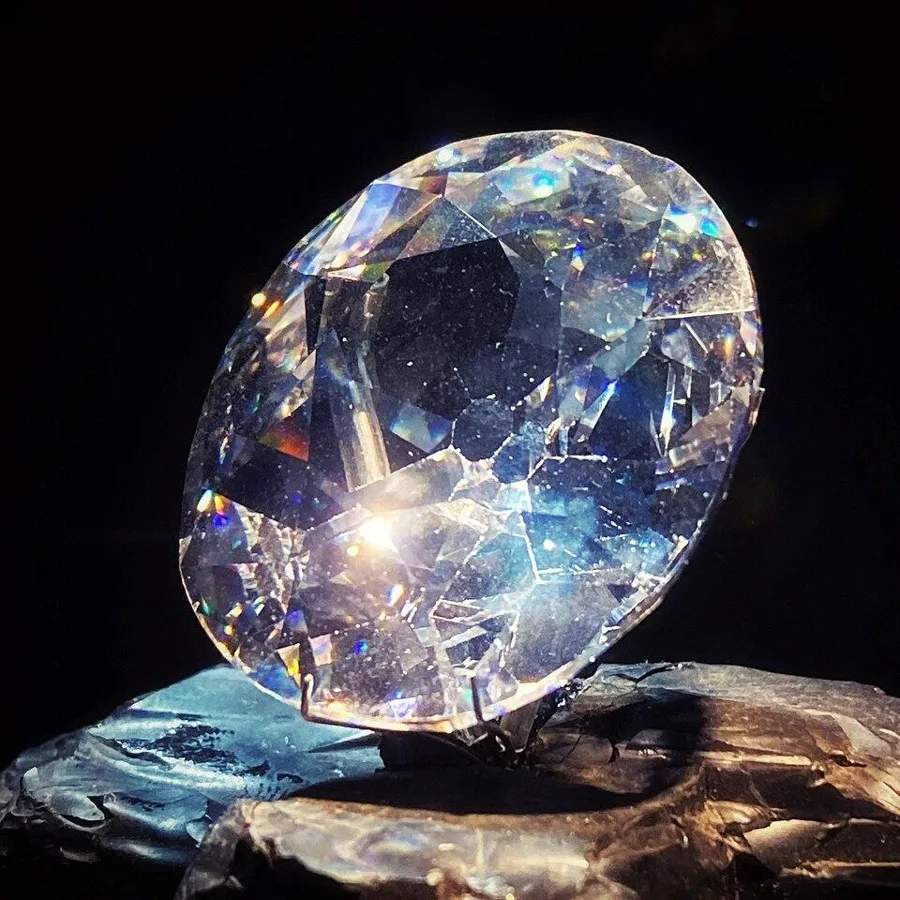
 Lab-grownLab emerald, emerald cut, 18 x 13 mm, 11 to 15 ctabout $1,070on Amazon →
 NaturalSleeping Beauty turquoise studs, sterling silverabout $30on Amazon →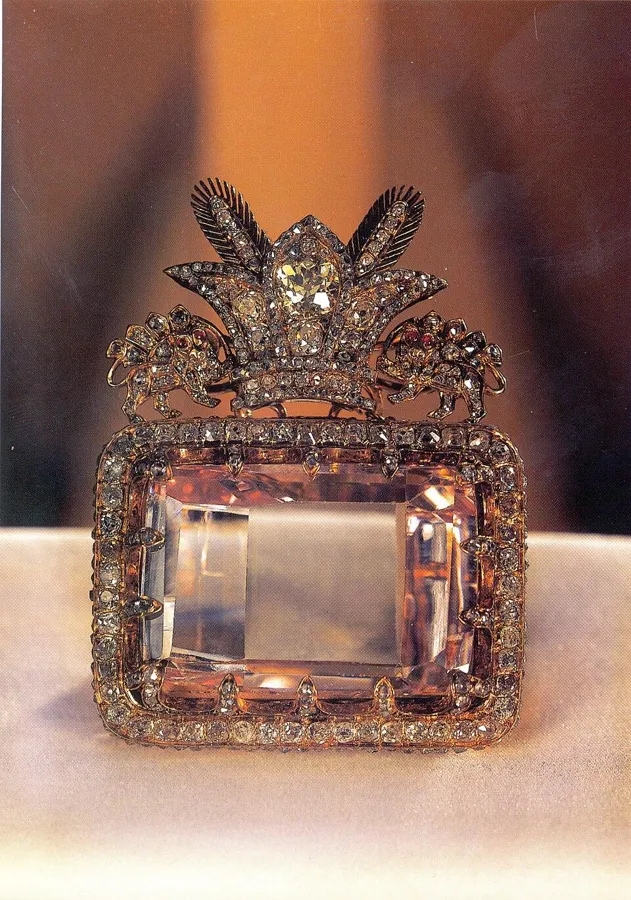
 LookGemOro 10x triplet loupeunder $20
 LookDARKBEAM filtered 365 nm UV flashlightabout $10
 HandleHonoson locking tweezers, 3 packabout $10
 StoreTeensery gem display boxes with clear lids, 10 packabout $9
 ShowComXim motorized turntable, adjustable speed and directionabout $15
 MeasureGemOro Platinum XP500 pocket scale, 0.01 gabout $40