


Natural carnelian
Faceted carnelian, marquise, calibrated sizes
about $16
Machine-calibrated so they drop straight into standard settings.
See it on AmazonCarnelian is the glowing orange-to-red variety of chalcedony, a quartz made of crystals too small to see, coloured by iron. It is hard, cheap, and one of the oldest gems people have worked: the Indus Valley civilisation was etching carnelian beads around 2500 BC, and they were traded as far as Mesopotamia. Most carnelian is gently heat-treated to deepen the red, which is permanent and normal. The thing to avoid is dyed agate sold as carnelian, and a bright light shows the difference.
Part of the gem world, laid out.
01 In the ground (step 1 of 4)
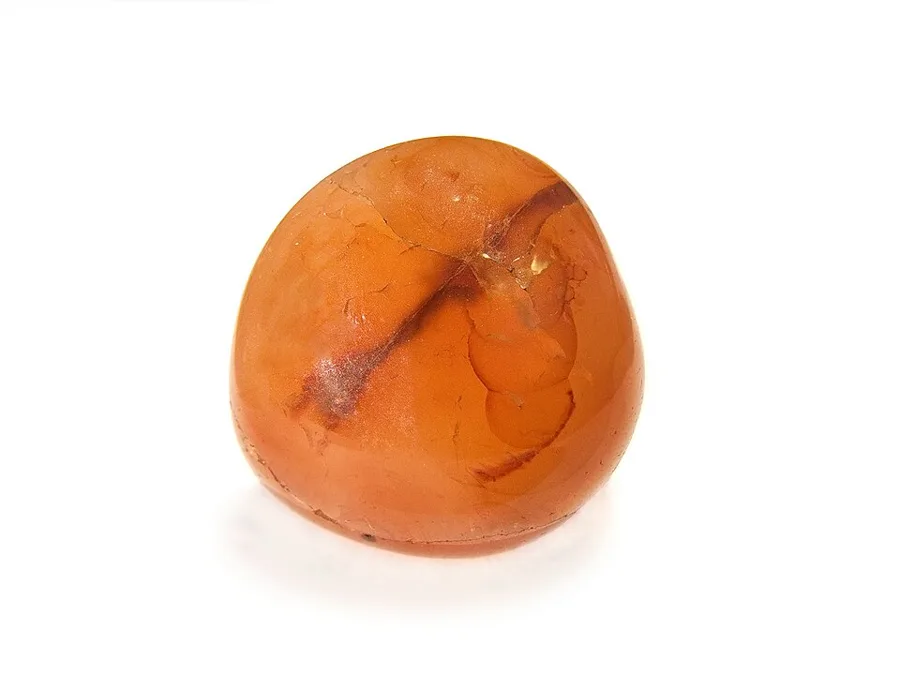
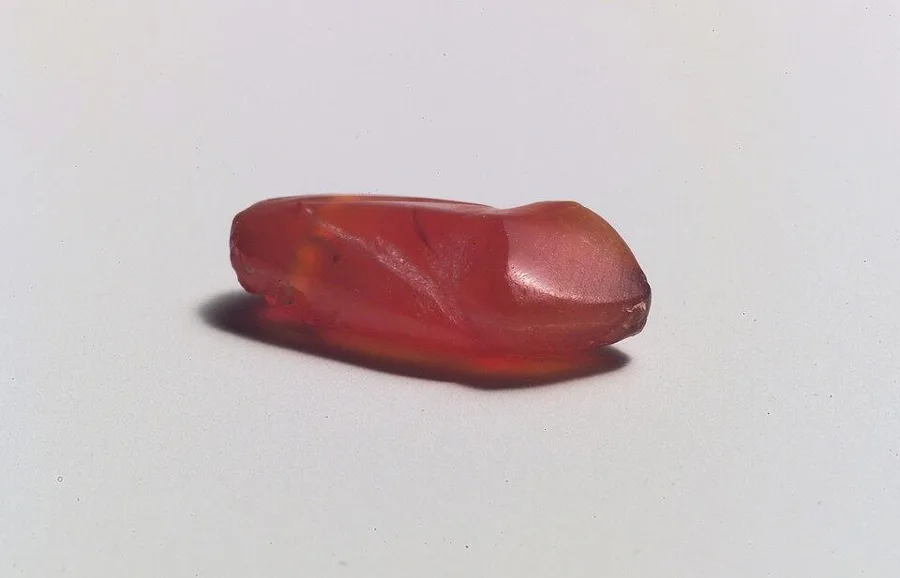
A natural carnelian pebble: translucent orange chalcedony as it is found in river gravels and old lava.
Real specimen. Photo: Benjamint444, CC BY-SA 3.0.
02 Raw (step 2 of 4)

A single raw carnelian chunk, as sold to collectors.
Amazon listing photo. See it on Amazon
03 Cut (step 3 of 4)

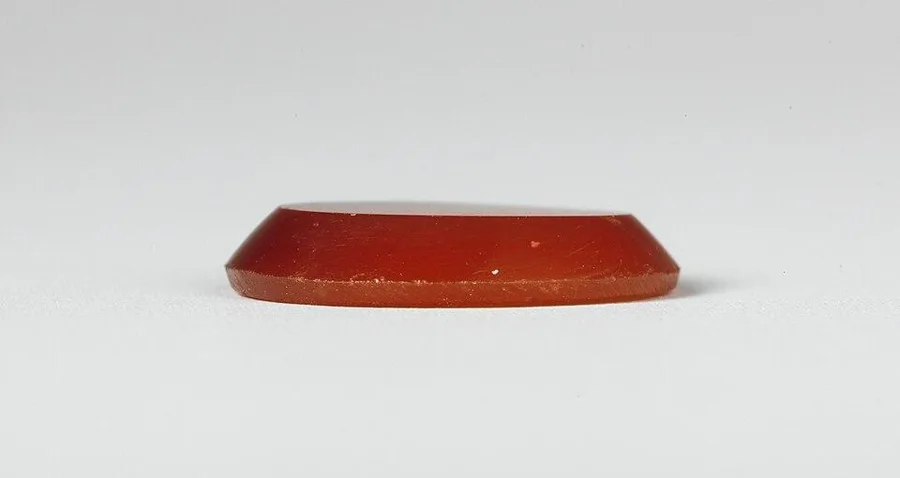
Carnelian , 8 x 10 mm: the classic way to cut it, a smooth dome that shows the glow.
Amazon listing photo. See it on Amazon
04 Set (step 4 of 4)

An oval carnelian set in a patterned sterling silver band.
Amazon listing photo. See it on Amazon
Chalcedony is quartz that grew as a mass of microscopic fibres instead of one big crystal, which is why carnelian is translucent and waxy rather than glass-clear. It forms when silica-rich water seeps into cavities in volcanic rock and slowly fills them, layer after layer; the same process makes agate, which is simply chalcedony with visible bands. Iron oxide trapped in the silica gives carnelian its colour, from pale orange to deep red. The darker, browner shades are called sard.
Twelve true stories, each checked against museum records, excavation reports or the ancient writers themselves. Sources sit under every story.
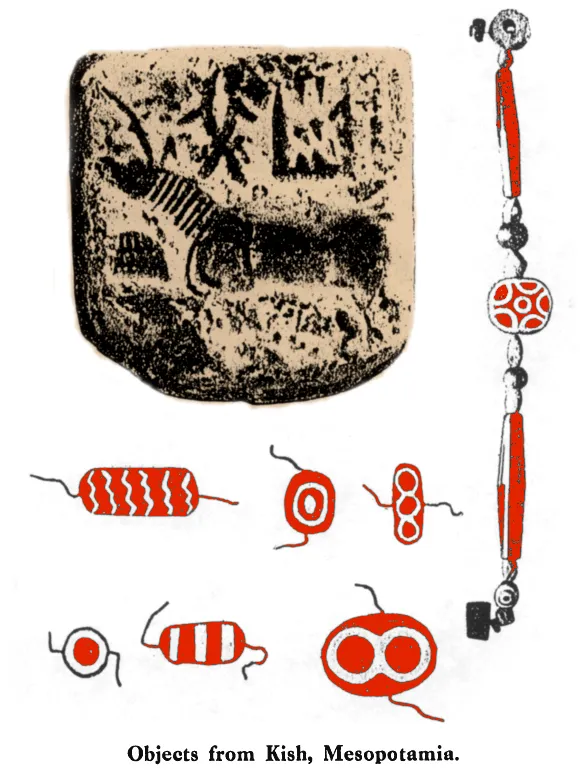
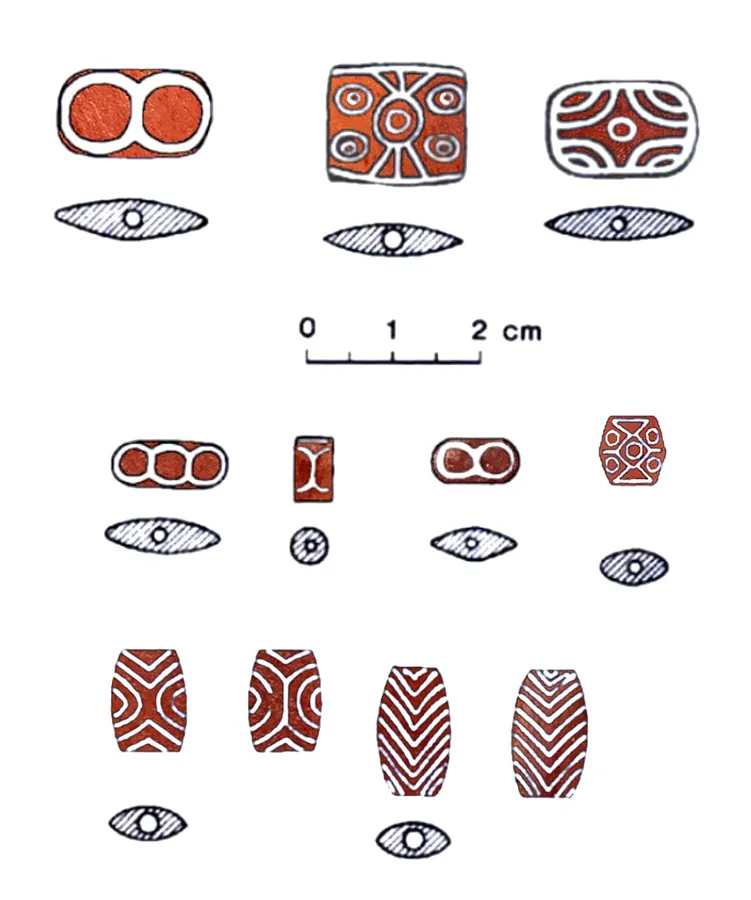
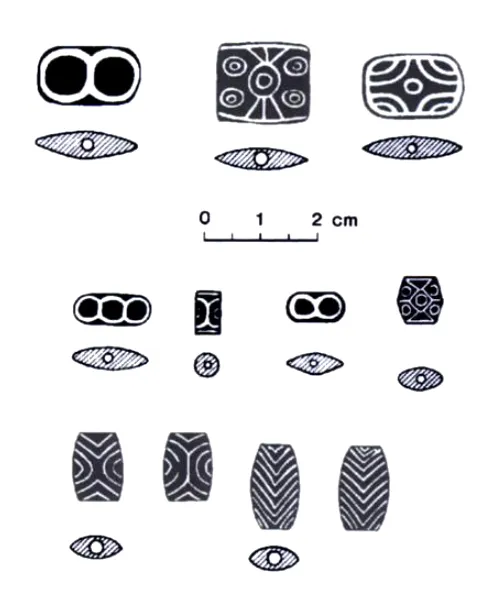
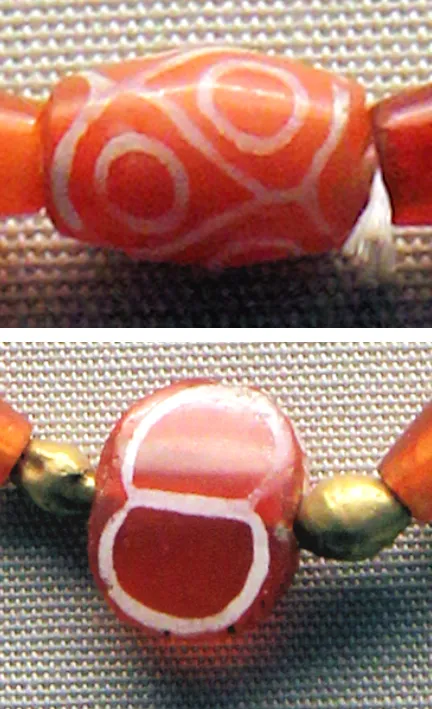
Around 2500 BC, craftsmen of the Indus civilisation, in what is now Pakistan and north-west India, worked out how to draw on carnelian. They painted the stone with a paste and fired it, and the paste left a permanent white pattern: lines, circles, eyes and figures of eight. Workshops for these etched beads have been excavated at Chanhu-daro and Lothal.
The beads travelled astonishingly far. They turn up in the Royal Cemetery of Ur, in the city of Kish, at Susa in Iran, and even, much later and much more rarely, in China and Southeast Asia. Archaeologists use them as a marker of ancient trade, because carnelian worked this way came from one place first.
In 1933 the excavator Ernest Mackay met a craftsman named Sahebdino at Sehwan in Sindh who still knew the method. He mixed the juice of a desert shrub with washing soda, painted it on with a reed pen, buried the bead in live coals for about five minutes, let it cool, and rubbed it clean. As Gregory Possehl summed up the result: "It was perfect!"
Sources: harappa.com, en.wikipedia.org, worldhistorylab.britishmuseum.org
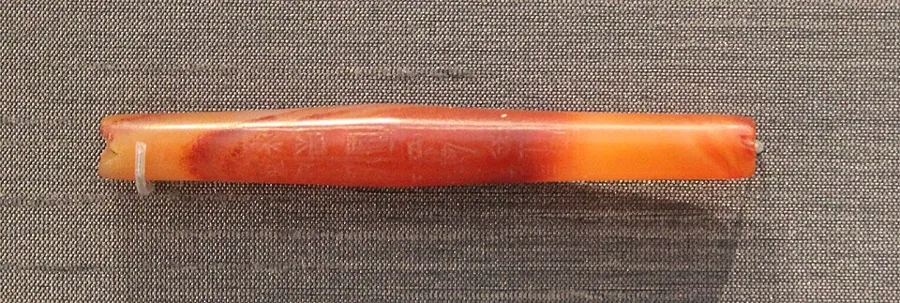
Long Indus carnelian beads were luxury goods in Mesopotamia, and at least two of them ended up as royal gifts to the gods. Shulgi, king of Ur from about 2094 to 2047 BC, had cuneiform inscriptions cut into them.
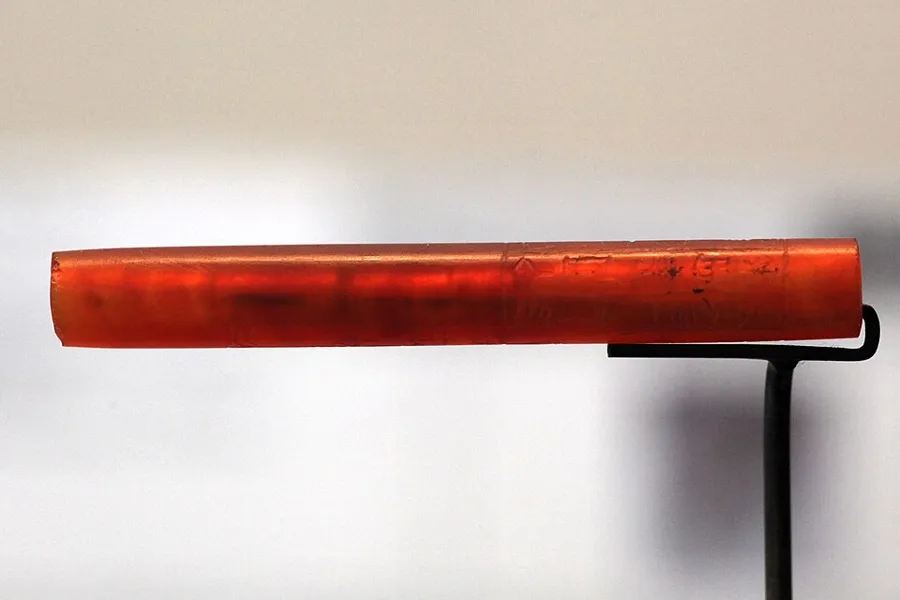
One, a 7 cm Harappan-style bead now in the British Museum, is dedicated to the goddess Ninlil "for his (own) life". The other was found at Susa in Iran by Jacques de Morgan and is in the Louvre (Sb 6627); it is dedicated to Ningal, called Shulgi's mother, and calls him "god of his land, king of Ur, king of the four world quarters".
No inscribed carnelian beads are known from the Indus itself. The stone and the craft came from the east; the writing was added in Mesopotamia. A few decades earlier, around 2100 BC, Gudea of Lagash recorded getting carnelian from Meluhha, the Mesopotamian name generally identified with the Indus region.
Sources: britishmuseum.org, en.wikipedia.org, en.wikipedia.org
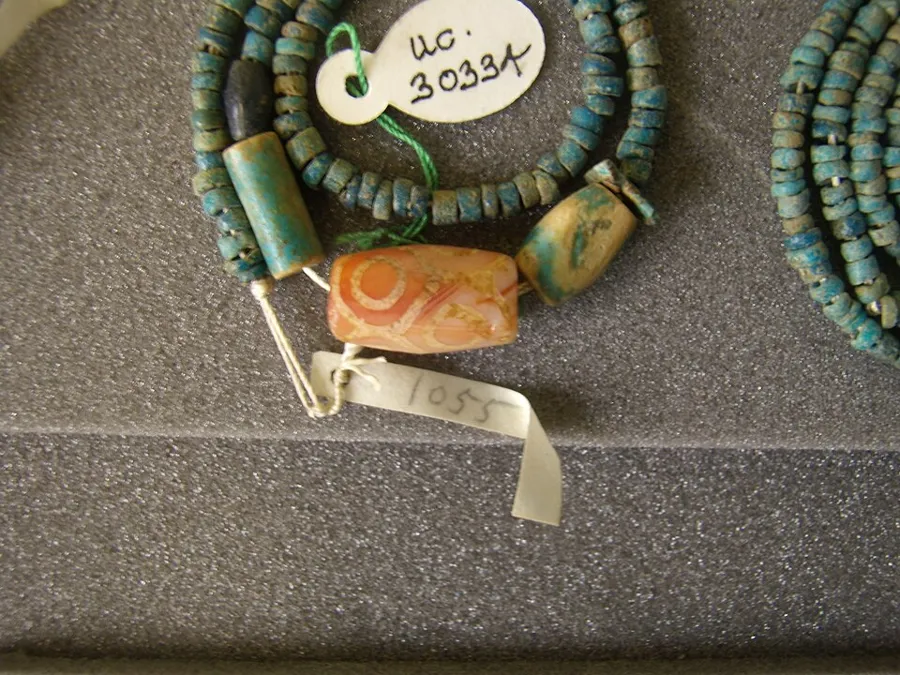
Etched carnelian is very rare in Egypt, which makes one find stand out. In tomb 197 at Abydos, from the late Middle Kingdom around 1800 BC, excavators found a necklace with an etched carnelian bead in the Indus style.
It is now in the Petrie Museum of Egyptian Archaeology in London (UC30334). Scholars think it probably reached Egypt through Mesopotamia rather than directly from India, passed from hand to hand along the trade routes.
Sources: en.wikipedia.org, doi.org
Most carnelian starts out duller than the stone you buy. Its colour comes from iron, and when brownish iron hydroxide is heated it loses water and becomes red iron oxide. Leave pale chalcedony in strong sun, or bake it, and the orange deepens.
People have known this for thousands of years. Harappa.com notes that carnelian is chalcedony "turned red by heating". In about 1516 the Portuguese traveller Duarte Barbosa wrote of a white, milky or red stone in Gujarat that "is made much redder in the fire". A Field Museum leaflet of 1927 describes stones near Cambay being sorted into those to bake and those not to, then exposed to the sun or baked in a cow-dung fire, which turned straw yellows rosy and orange into red.
It is still standard. The International Gem Society says sun heat alone can darken carnelian and advises assuming any piece has been heated unless told otherwise. It is stable, permanent and accepted.
Sources: gemsociety.org, harappa.com, archive.org, en.wikisource.org
The town of Khambhat, the old port of Cambay in Gujarat, is one of the largest stone-bead centres in the world. The archaeologists Jonathan Mark Kenoyer, Massimo Vidale and Kuldeep Bhan describe it as an important centre for over 3,000 years of documented history, and the craft in the region goes back to the Harappans around 2500 BC.
The raw pebbles came from agate gravels near Ratanpur, in the Rajpipla hills, washed out of the ancient Deccan lava flows. In the 1500s the industry centred on Limodra, where Barbosa saw beads, sword knobs and rings being made and sold on to the Red Sea, Cairo and Alexandria. In the early 1600s the cutting moved to Cambay. The Portuguese word for carnelian, alaqueca, came from the Arabic al-aqiq.
The craft never stopped. In the 1990s the industry employed over 2,000 people making up to 20 million beads a year, and craftsmen today still describe seven steps from rough pebble to drilled bead, with heating to deepen the red.
Sources: harappa.com, archive.org, en.wikisource.org, thebetterindia.com
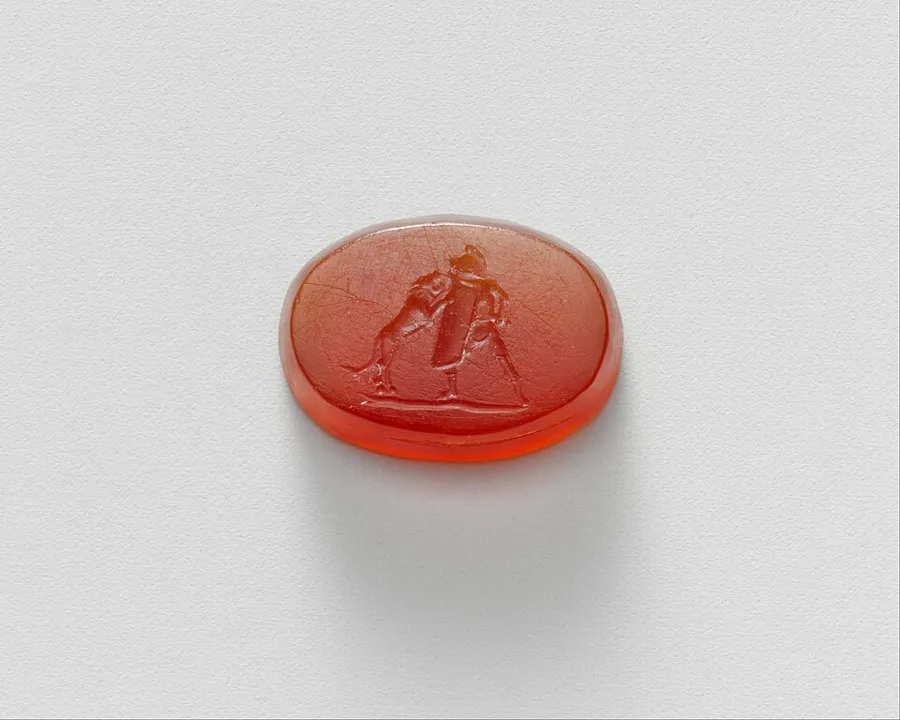
Pliny the Elder, writing his Natural History in the 70s AD, called the Roman name for carnelian sarda, and said it was first found at Sardis, though the best came from near Babylon. India, he said, had three kinds, some backed with silver foil to make them shine, while Egyptian stones were set on gold leaf.
Then he made the claim that sums up carnelian in the ancient world. In John Bostock's 1855 translation: "Among the ancients there was no precious stone in more common use than this." It was even famous enough to be paraded in the comedies of Menander and Philemon.
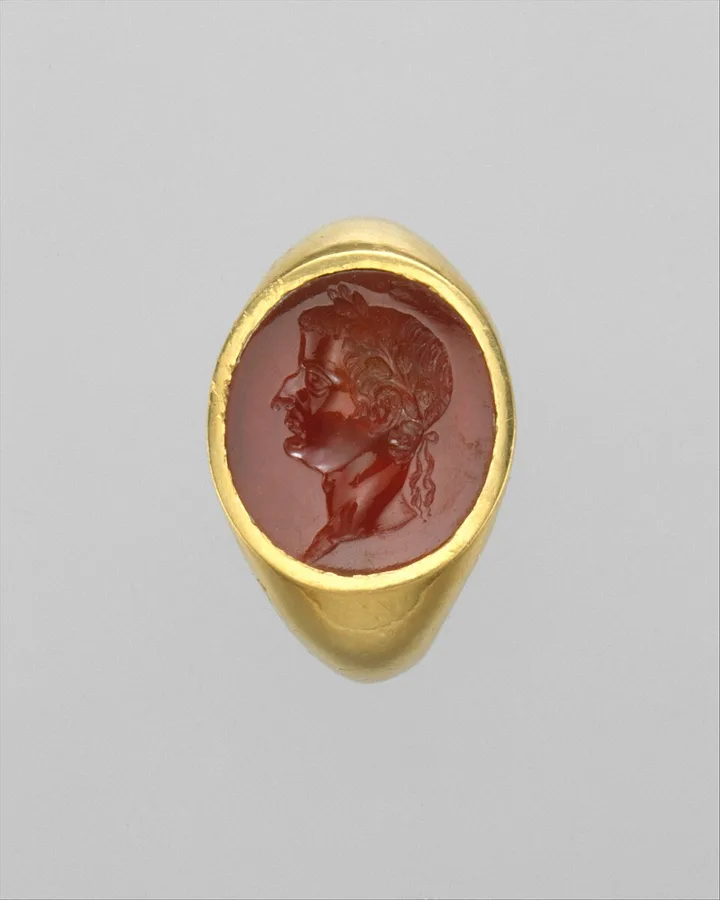
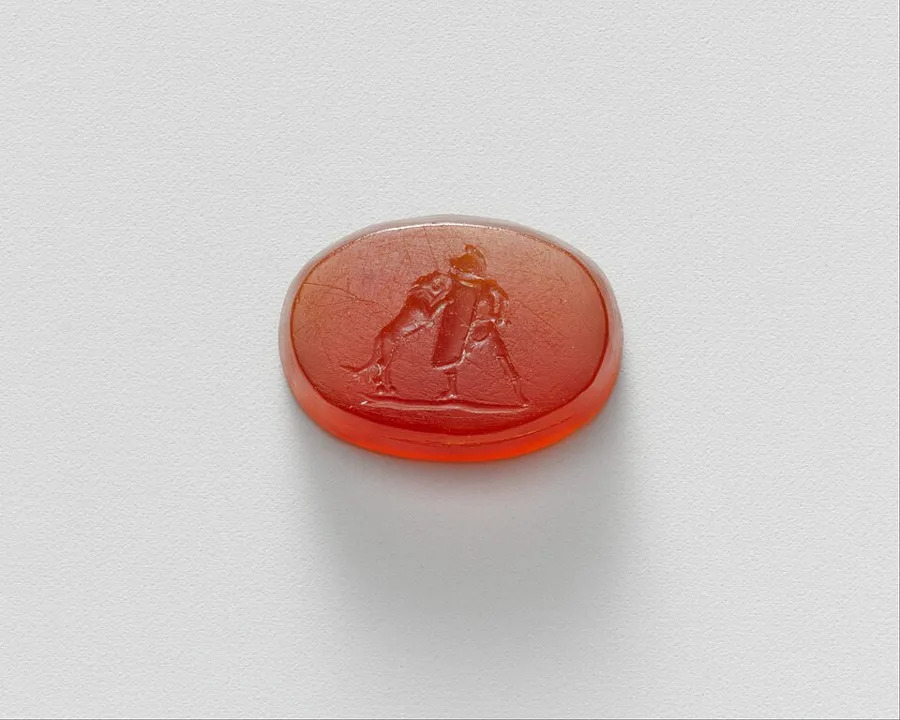
The reason was the signet, and Pliny explains why: some red stones resist the engraver and pull away part of the wax when the seal is lifted, but sarda is the most useful of all for seals. Carnelian is hard, takes a crisp engraving, and was carved in reverse as an intaglio to press into wax or clay as a signature. Museums hold thousands: gods, emperors, animals and scenes like a gladiator fighting a lion, cut into a stone smaller than a fingernail.
Sources: openscriptorium.com, perseus.tufts.edu, en.wikisource.org, metmuseum.org
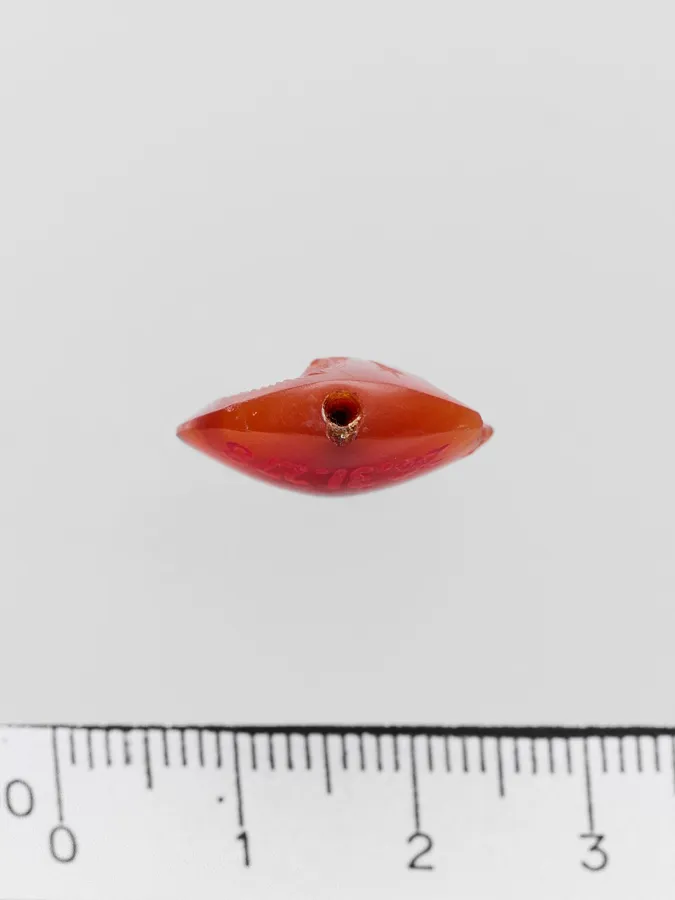
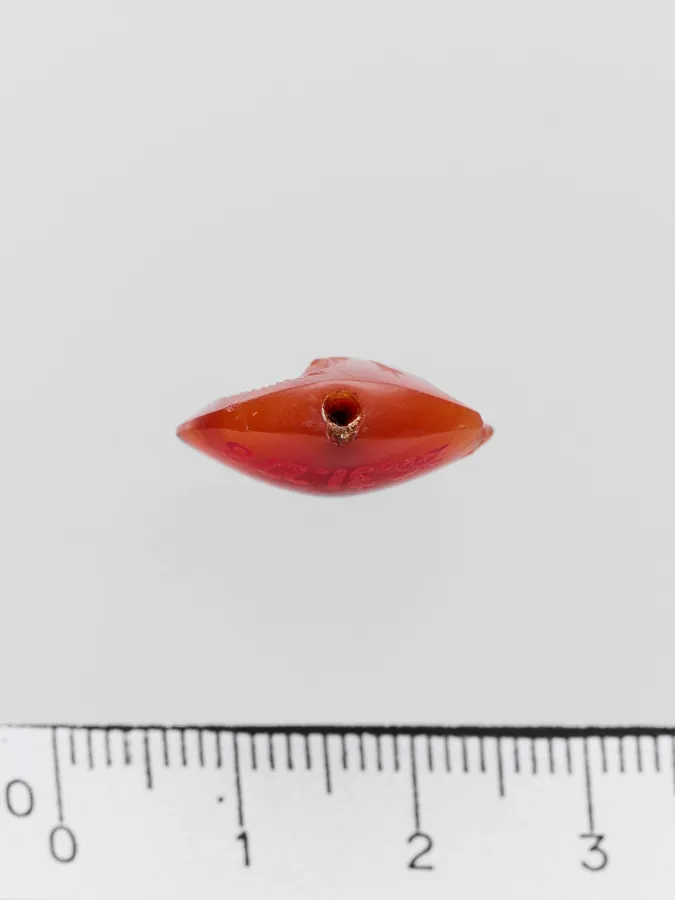
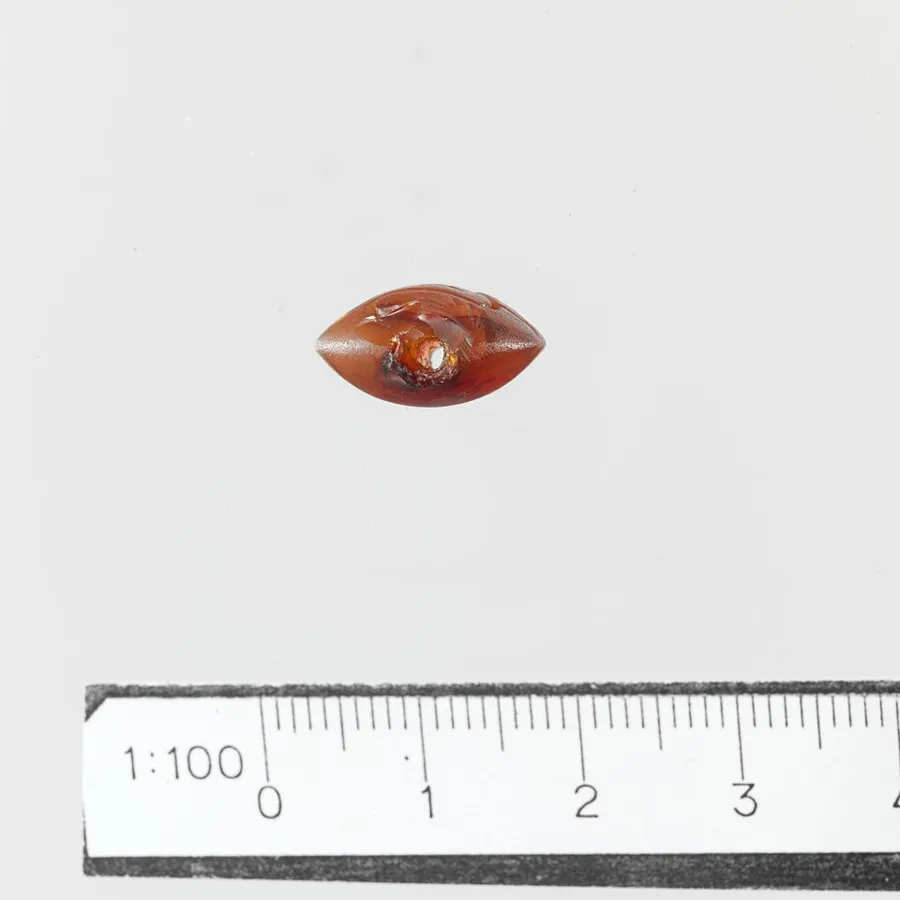
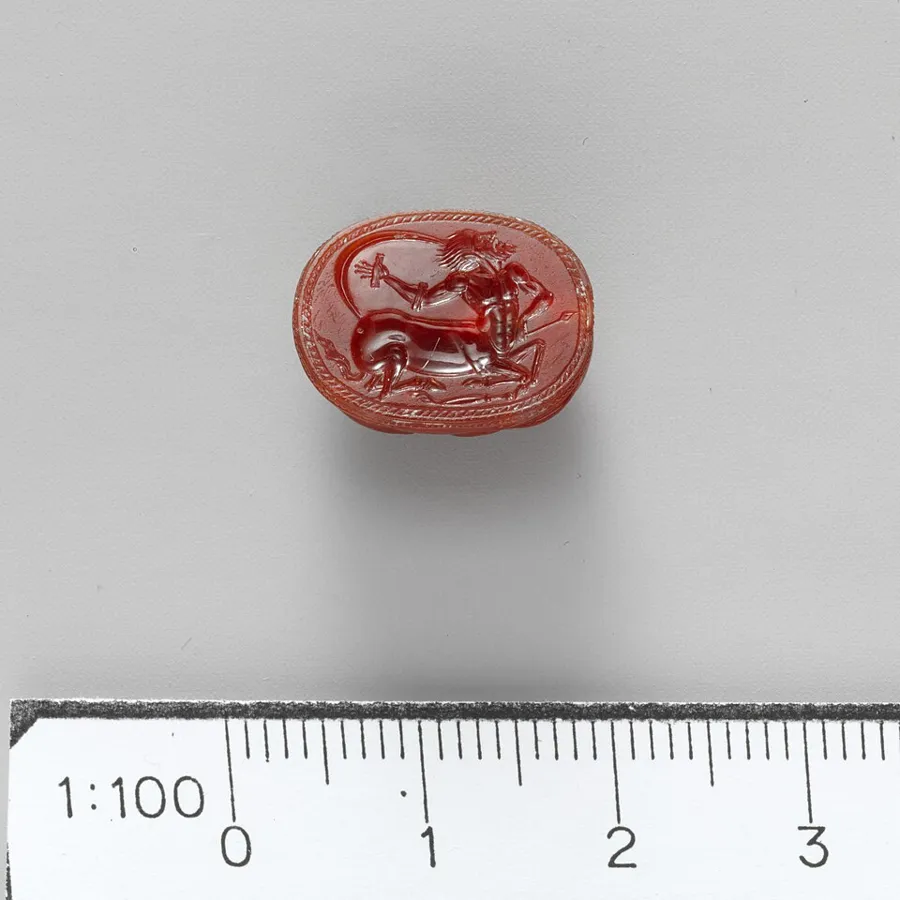
Long before Rome, carnelian was a seal stone in the Aegean. Minoan engravers on Crete carved small almond-shaped and lens-shaped seals from it between about 1750 and 1400 BC, worn on the wrist or neck and pressed into clay to mark goods and doors.
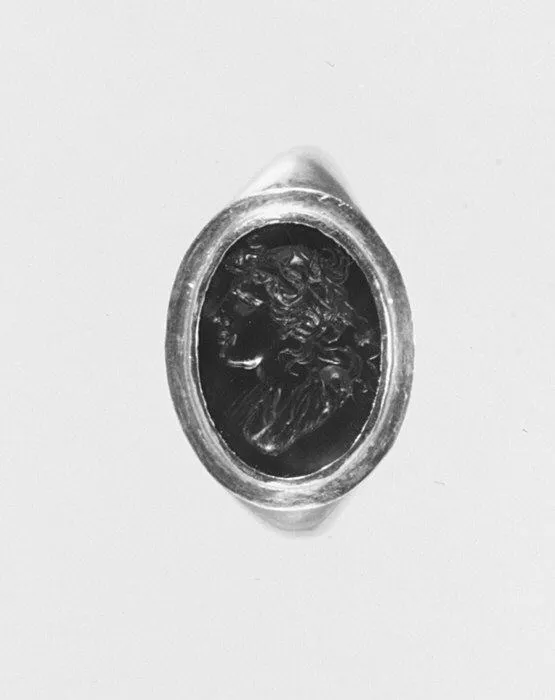
In Italy the Etruscans took up the Egyptian scarab beetle and made it their own, carving carnelian scarabs with Greek heroes on the flat underside from the 500s and 400s BC. Greek jewellers set carnelian in gold rings too, including portraits of Alexander the Great after his death.
Sources: metmuseum.org, metmuseum.org, metmuseum.org, metmuseum.org
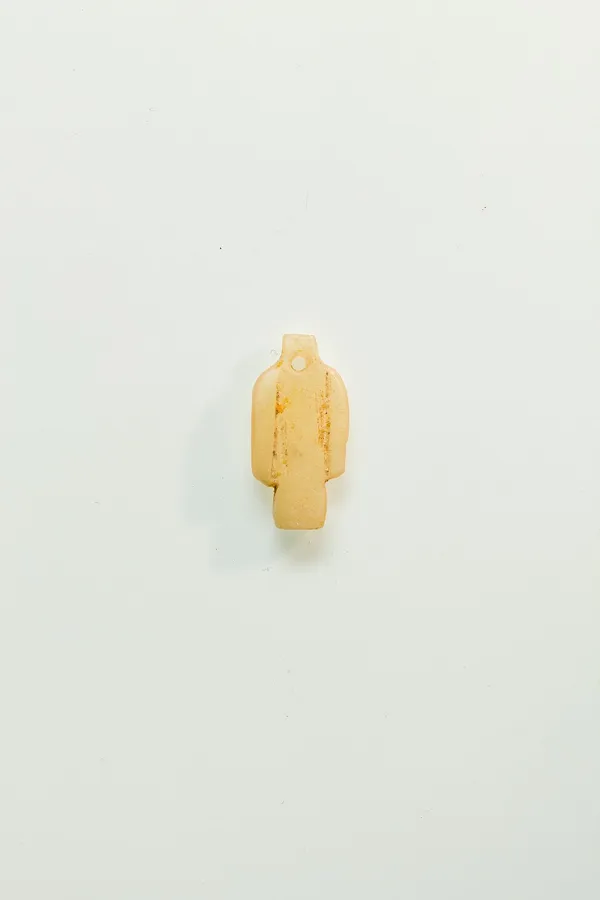
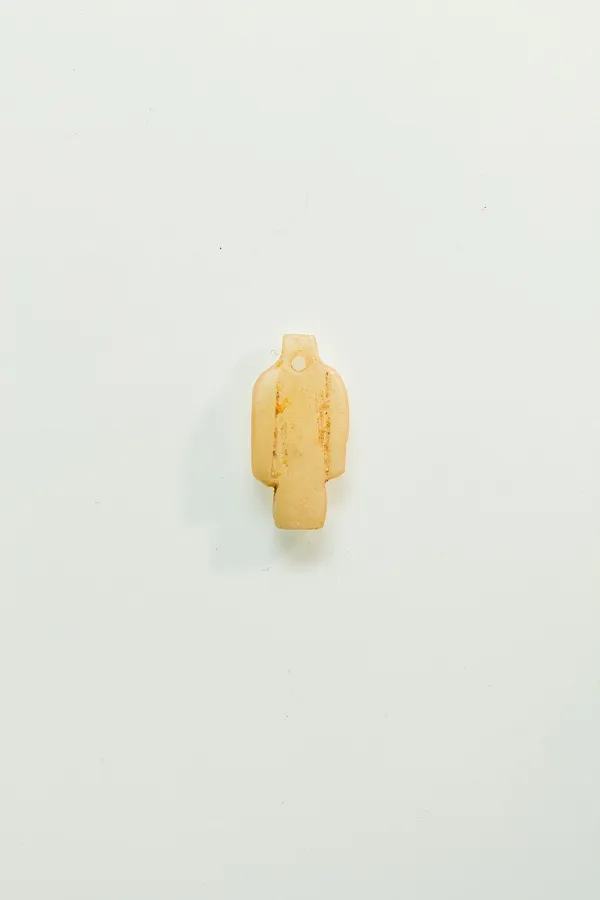
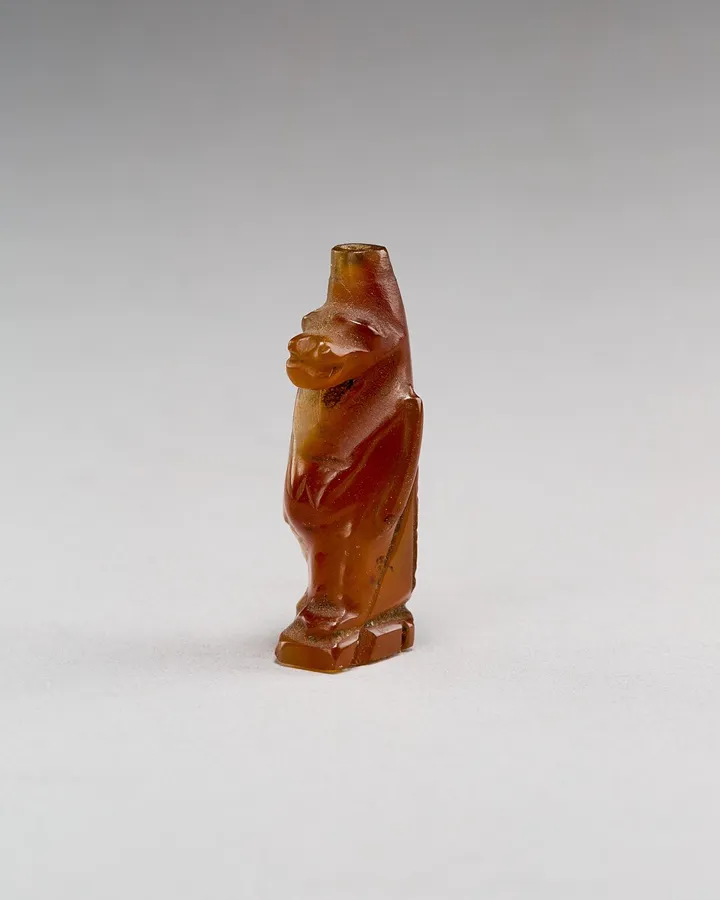
Egyptian jewellers loved red stones because red meant blood, and blood meant life. The Metropolitan Museum notes that its Old Kingdom hand and foot amulets were often carnelian, the colour "reminiscent of blood", to bring power and energy to the amulet.
The most famous red amulet is the tyet, or Isis knot, a looped cloth that looks a little like an ankh with drooping arms. Chapter 156 of the Book of the Dead prescribes a tyet of red jasper placed at the throat of the dead to give them the protection of Isis. Because of its link with the goddess's blood, it was usually made of a red stone such as carnelian or red jasper, or of red glass.
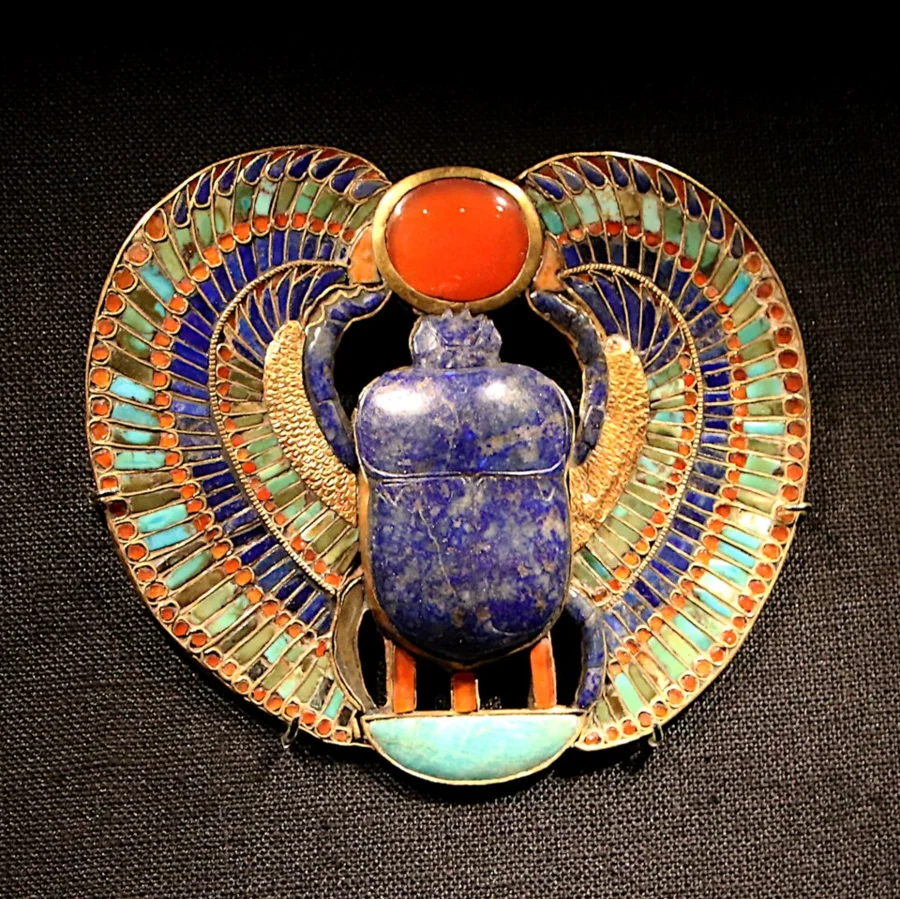
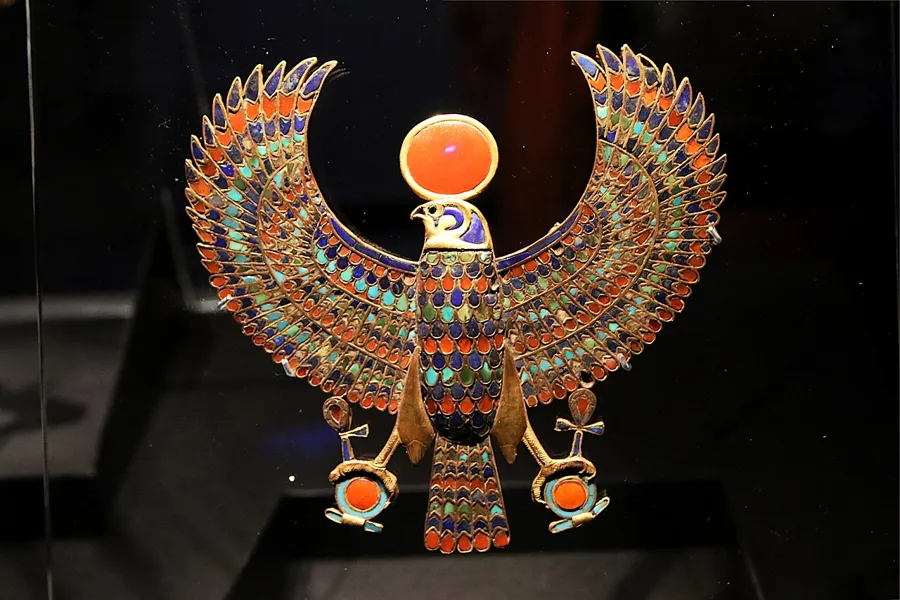
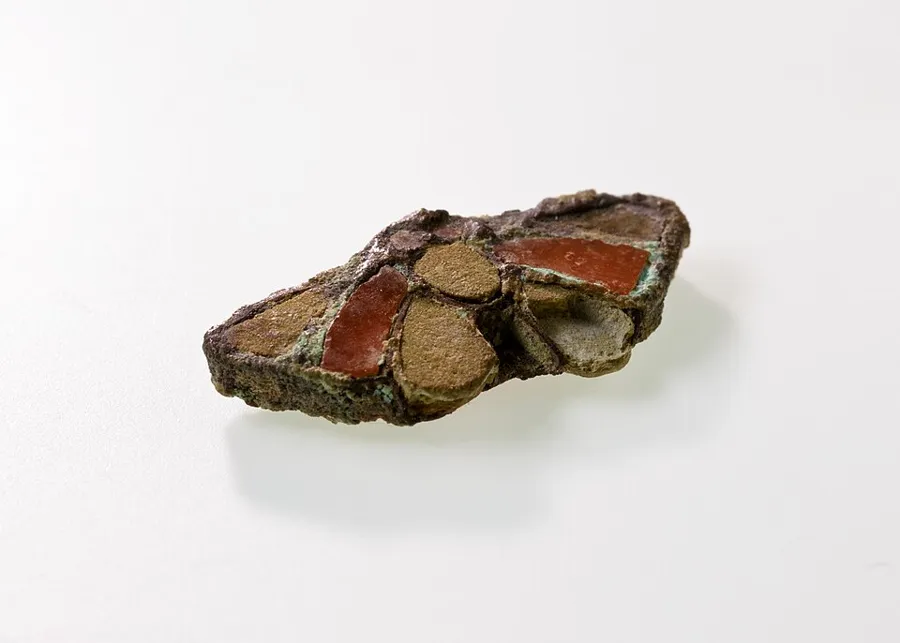
Carnelian also burned bright in Tutankhamun's tomb, alongside lapis lazuli and turquoise, in pieces such as his necklace of a scarab at sunrise.
Sources: metmuseum.org, metmuseum.org, metmuseum.org, en.wikipedia.org
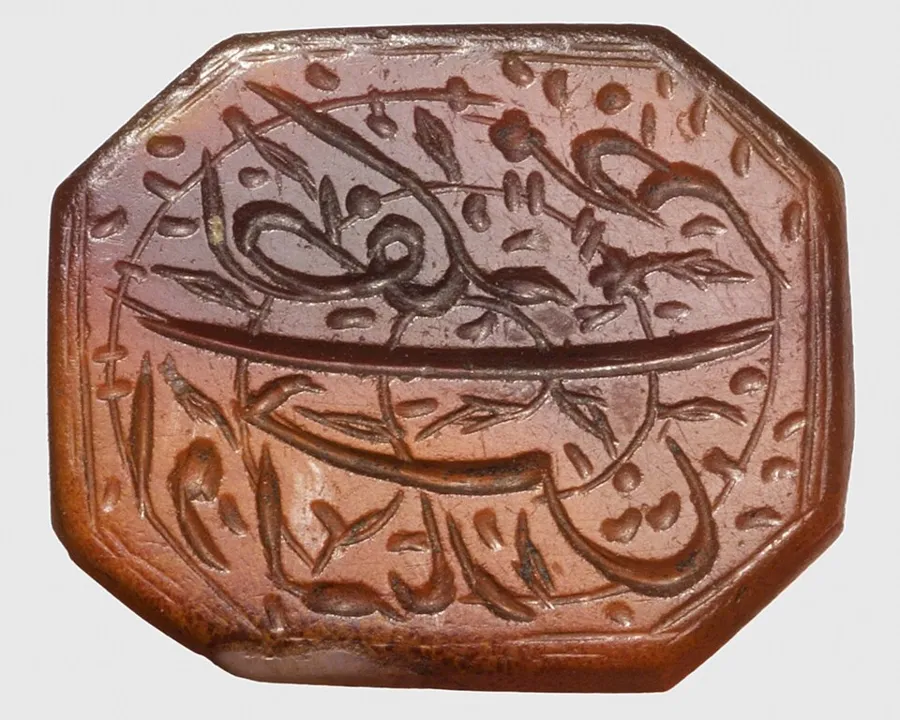
George Frederick Kunz, Tiffany's gem expert, told this story in 1913, citing the gem scholar C. W. King. During the French campaign in Egypt (1798 to 1801), the young Bonaparte is said to have picked up an octagonal carnelian seal engraved in Arabic: "The slave Abraham relying upon the Merciful (God)."
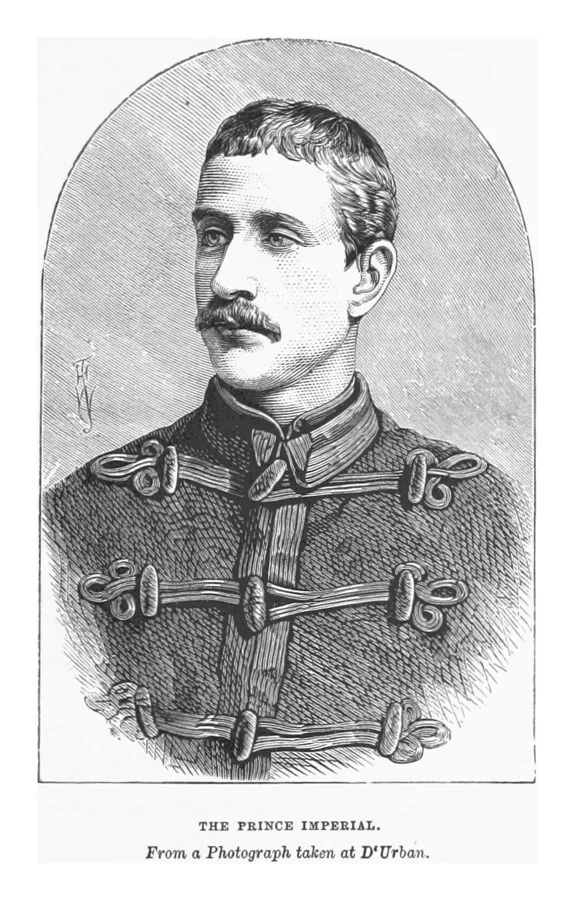
His nephew Napoleon III wore it on his watch chain, saying the First Consul had "picked it up with his own hands" and always carried it. He left it to his only son, the Prince Imperial, "as a talisman".
The prince carried it on a string around his neck. On 1 June 1879, serving with the British army in the Anglo-Zulu War, he was killed in an ambush. According to Kunz, the seal was taken when his body was stripped, and it has never been recovered.
Sources: gutenberg.org, en.wikipedia.org
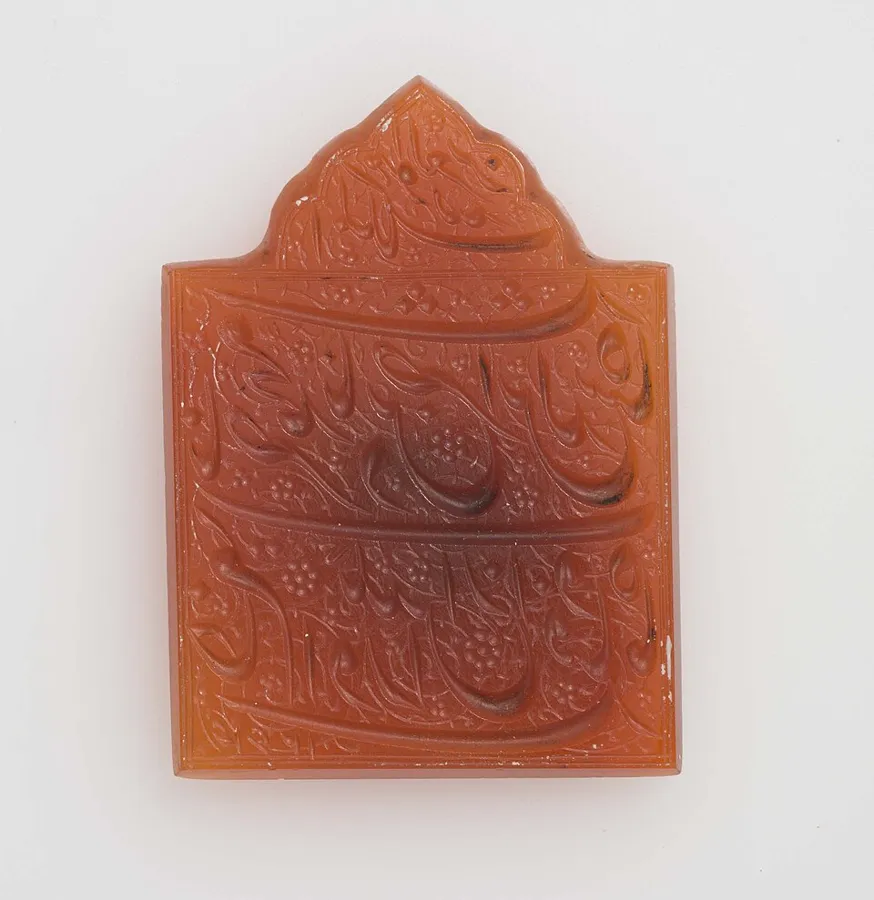
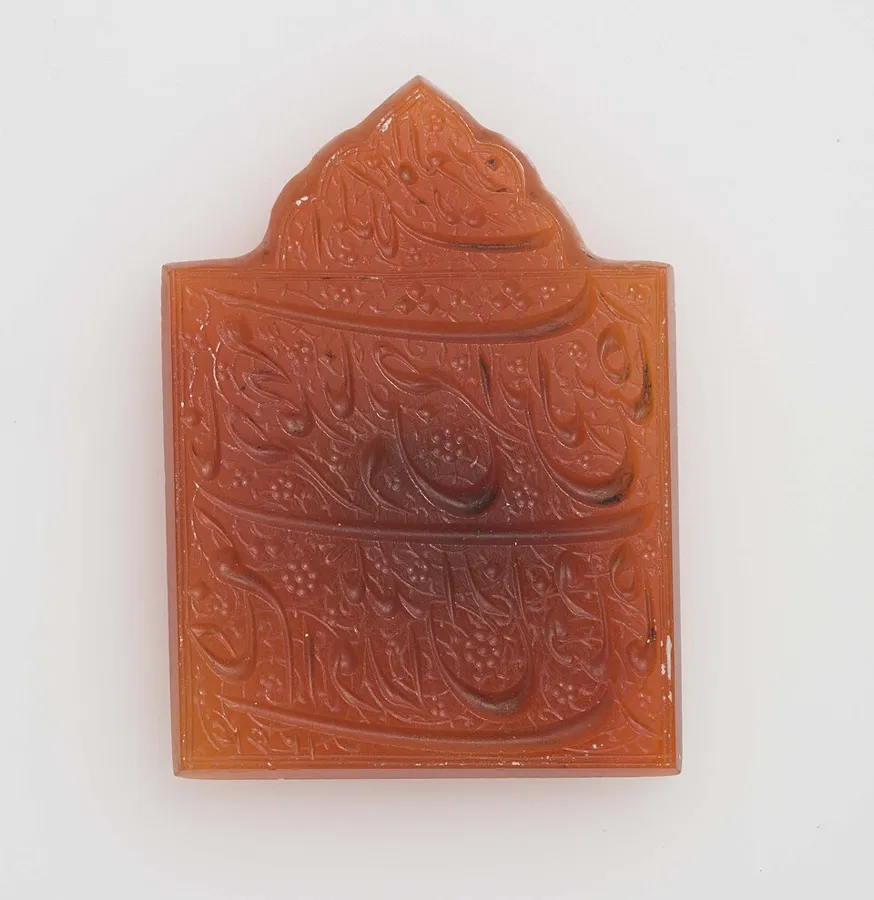
In Arabic carnelian is aqiq, and across the Islamic world it became the favourite stone for seal rings and prayers. Kunz recorded the tradition that the Prophet wore a silver ring set with an engraved carnelian, and that the imam Jafar declared that the desires of anyone who wore carnelian would be granted. In Persia, the names of the twelve imams were often cut into it.
Engraved carnelian seals were working documents. The Khalili Collection holds a carnelian seal of the Qajar ruler Nasir al-Din Shah of Iran, dated 1848, the year he took the throne; its inscription says that his seal became like rings of the sun and the moon.
Even Goethe wrote about it. His poem on a carnelian talisman, in the West-Eastern Divan, calls it a stone that brings good luck and drives away evil, especially when engraved with the name of God.
Sources: gutenberg.org, wikidata.org, archive.org
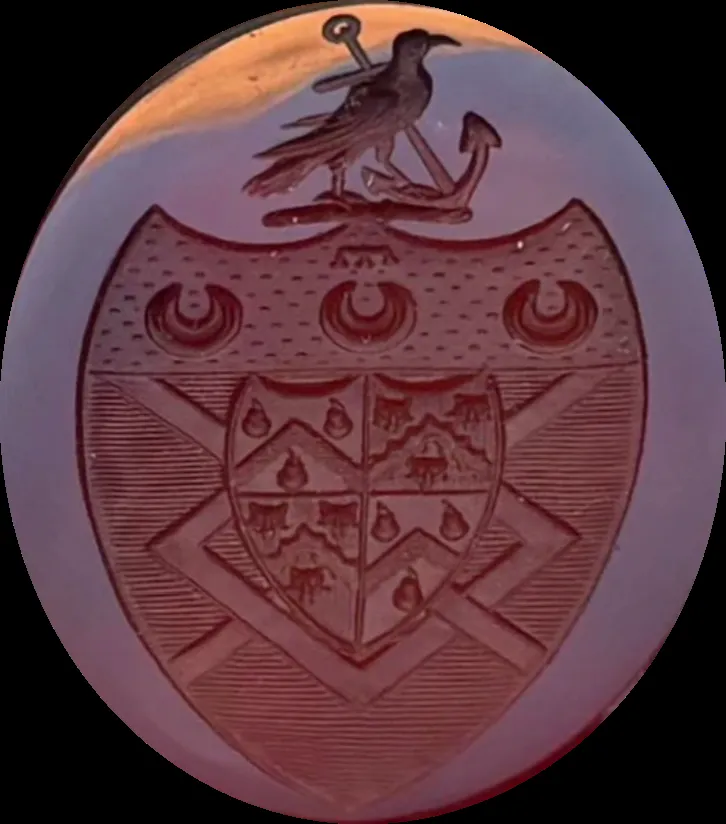
From the 1700s into the 1800s a gentleman sealed his letters with a fob seal hanging from his watch chain, and the stone was very often carnelian, engraved with a family coat of arms. Warm wax pressed onto it came away with the crest in relief.
One survives from Captain Alexander Hood of the Royal Navy. It is a gold and carnelian fob seal engraved with the Hood arms joined to those of the Periam family, made after he married Elizabeth Periam in 1792. Six years later, on 21 April 1798, Hood was killed commanding HMS Mars when she captured the French ship Hercule.
Sources: en.wikipedia.org, commons.wikimedia.org
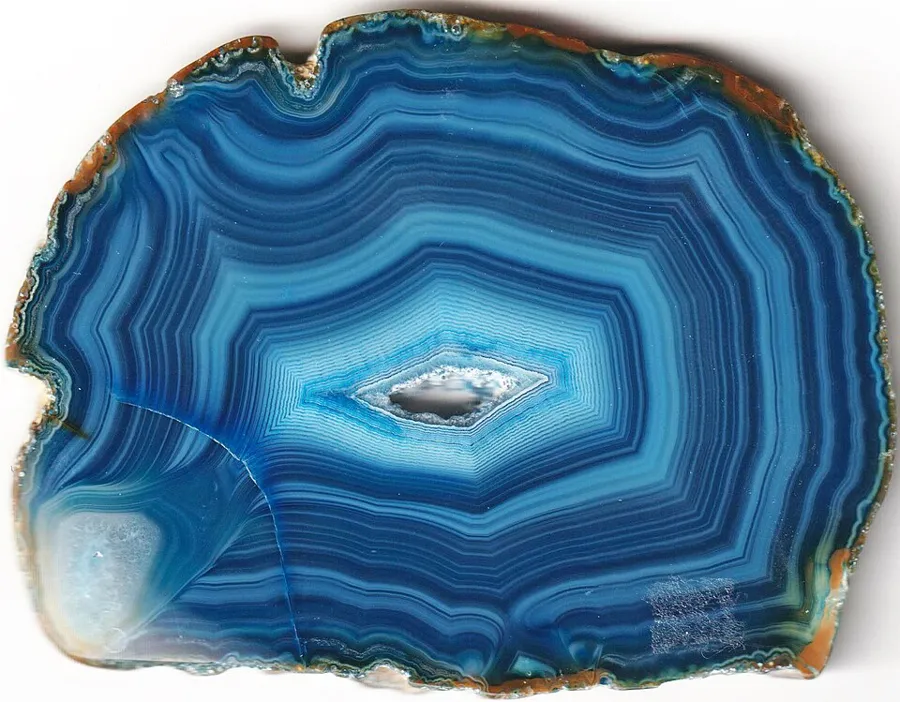
The fake carnelian problem is not new. The 1911 Encyclopaedia Britannica already warned that "a good deal of the carnelian now sold, however, is Brazilian agate, artificially stained." It explained the trick: soak the stone in an iron salt, then heat it, so red iron oxide forms inside its pores.
The centre of that trade was Idar-Oberstein in Germany, whose cutters turned to huge Brazilian and Uruguayan agates when local stone ran out. A Field Museum leaflet of 1927 prints the dyers' recipe table: red from iron nitrate by heating, apple green from nickel, black from sugar and sulphuric acid. Because agate layers differ in porosity, the dye soaks into some bands and not others.
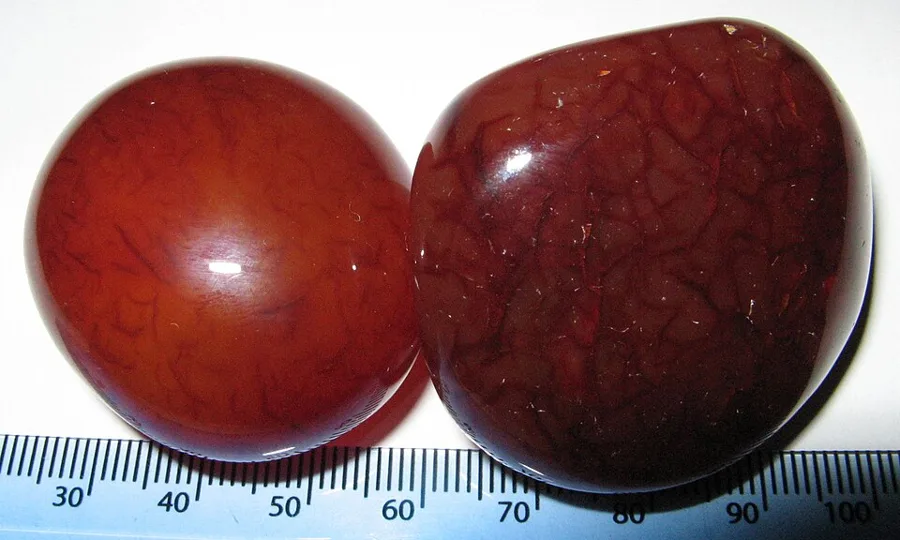
That is how to spot it. Hold the stone against a bright light. Dyed agate shows its red in crisp stripes that follow the bands, often with colour pooled in cracks and drill holes, and a whole strand may be the same too-even cherry red. Natural and heated carnelian glows with a soft, cloudy colour that varies from orange to red.
Sources: en.wikisource.org, archive.org, gemsociety.org
Real carnelian pieces in museum collections, from Egyptian amulets to a Persian shah's seal. Tap a piece for its story.
Own a natural piece
Lapis is not grown in labs. A natural cabochon of the same deep blue, with gold pyrite.
Own a natural piece
The same Afghan lapis, in beads, 4,500 years later.
Own a natural piece
A natural lapis cabochon for your own inlay.
Build the necklace part: real gem beads
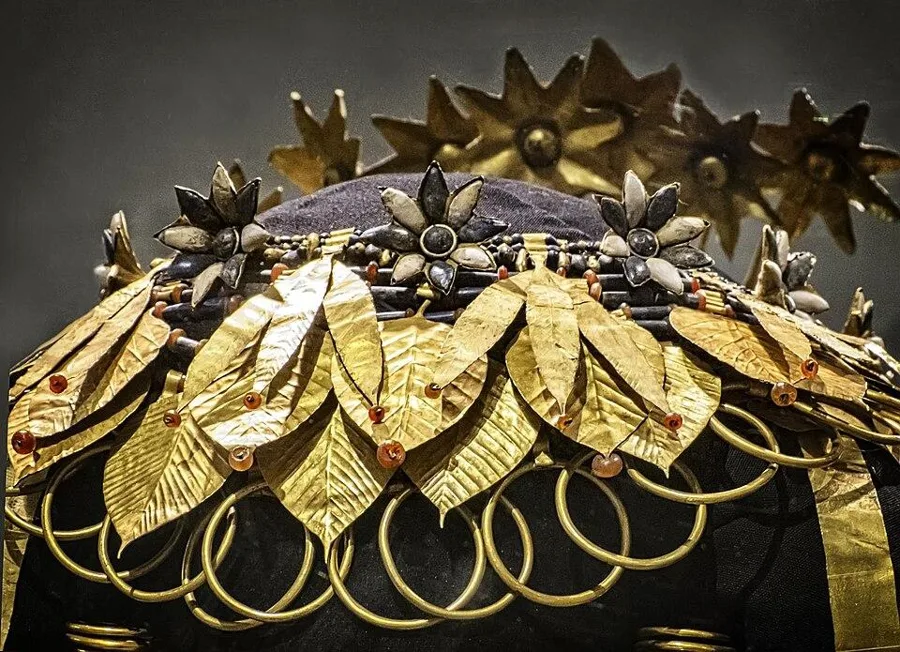
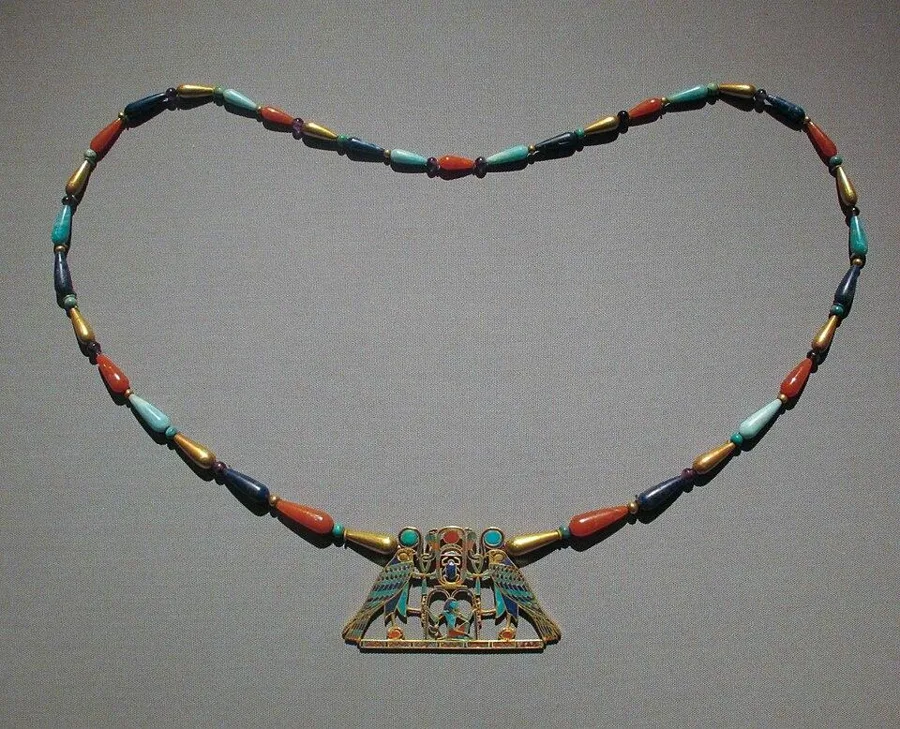
The princess wore drop beads of lapis, carnelian, turquoise and amethyst between gold. All but turquoise come as honest natural beads; cheap turquoise beads are almost always dyed howlite, so skip them or use a real turquoise piece.
Own a natural piece
Carnelian set in a ring, the way a Roman would wear a seal.
Own a natural piece
Polished carnelian, the same red glow.
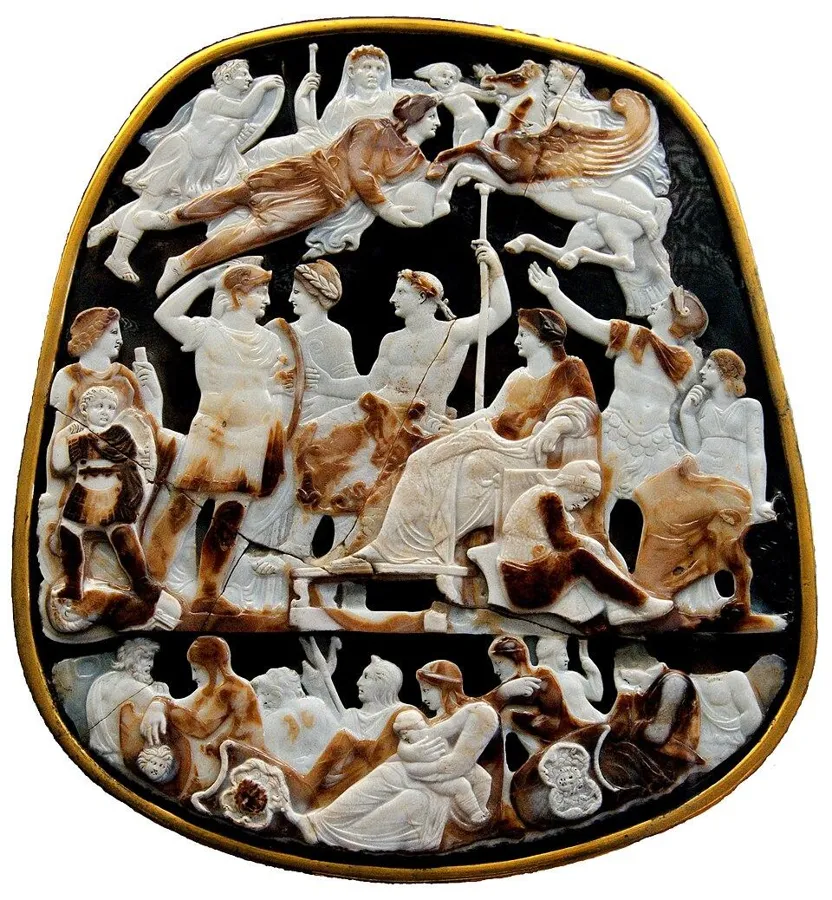
Own a natural piece
Sard, the dark layer of this cameo, is a close cousin of carnelian. Real carnelian cabochons cost a few dollars.
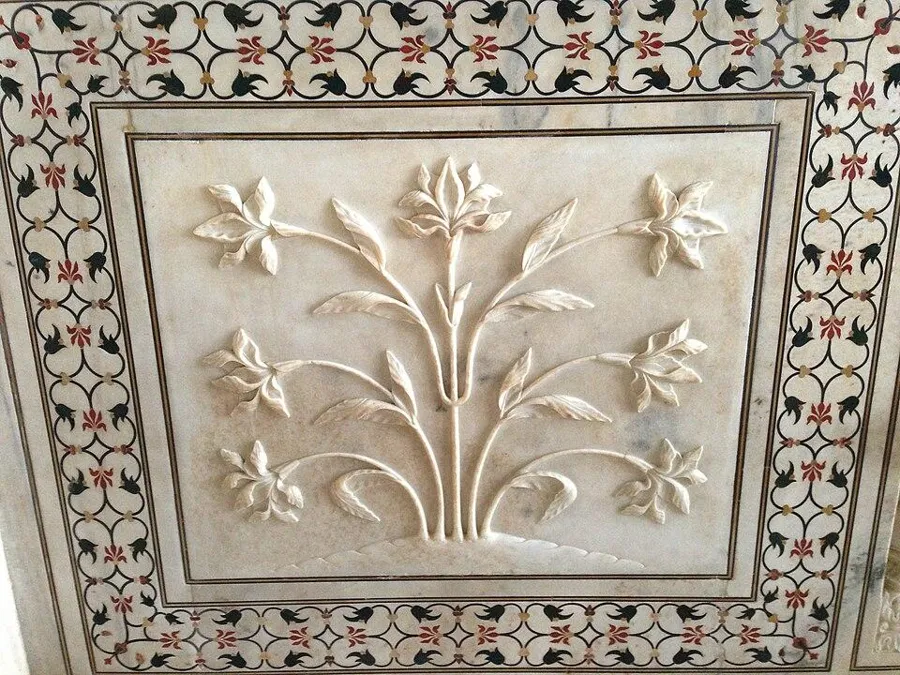
Own a natural piece
Lapis is one of the stones in the Taj flowers. A polished lapis sphere shows off the same deep blue.
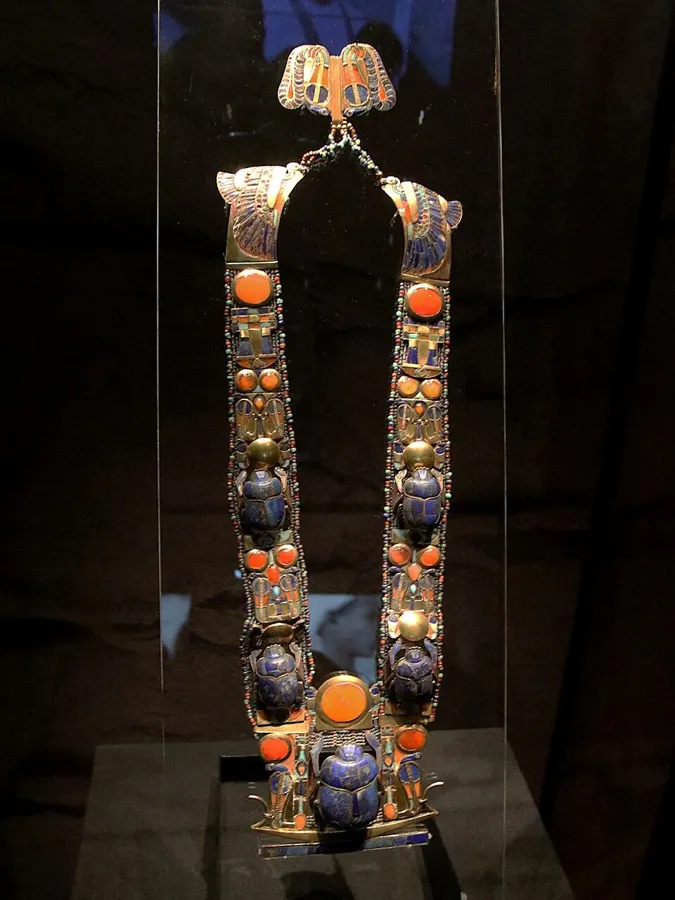
Own a natural piece
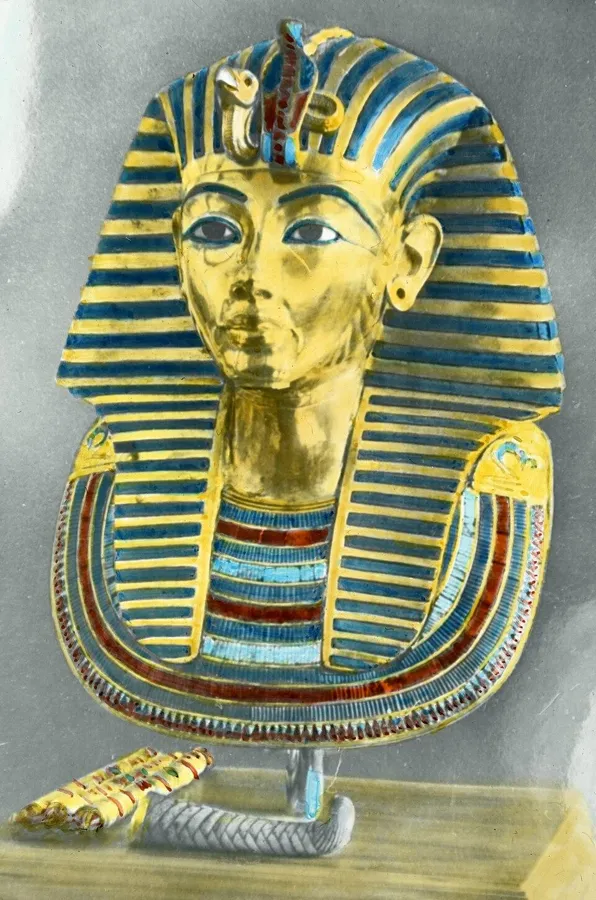
Real Afghan lapis beads, the same blue the pharaoh wore.
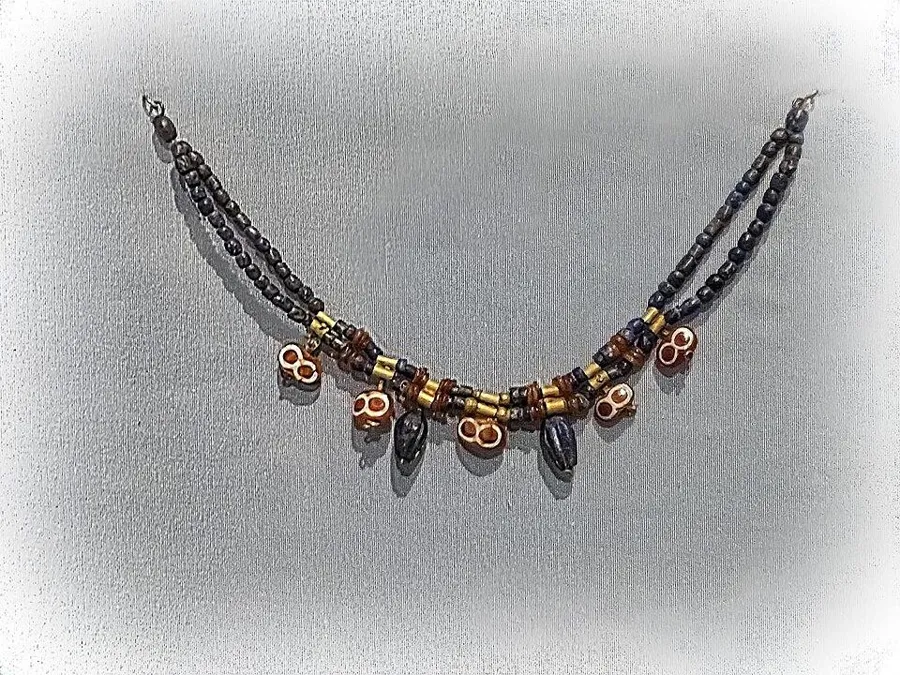
Own a natural piece
Lapis beads with pyrite, the same stone as the Ur necklaces.
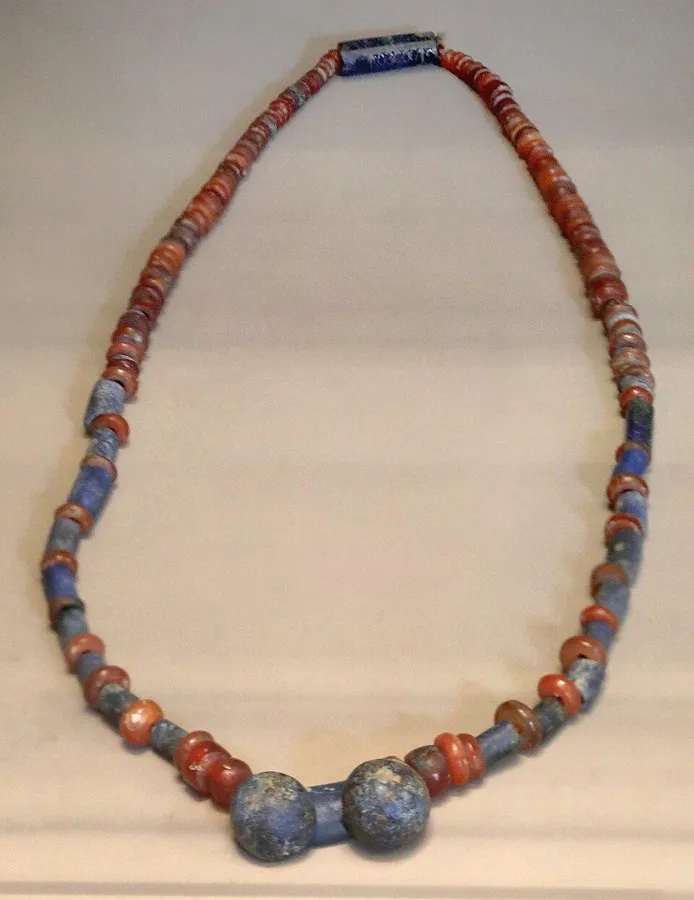
Own a natural piece
Real lapis beads, the same stone Uruk traded for.
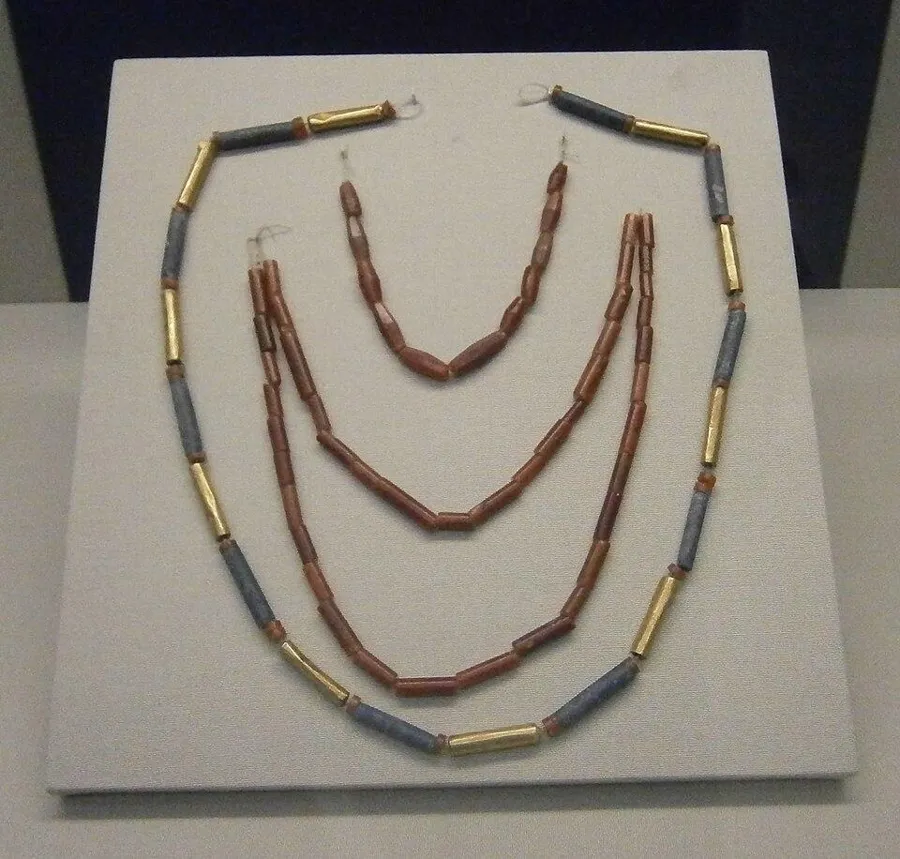
Own a natural piece
Lapis beads to string your own.
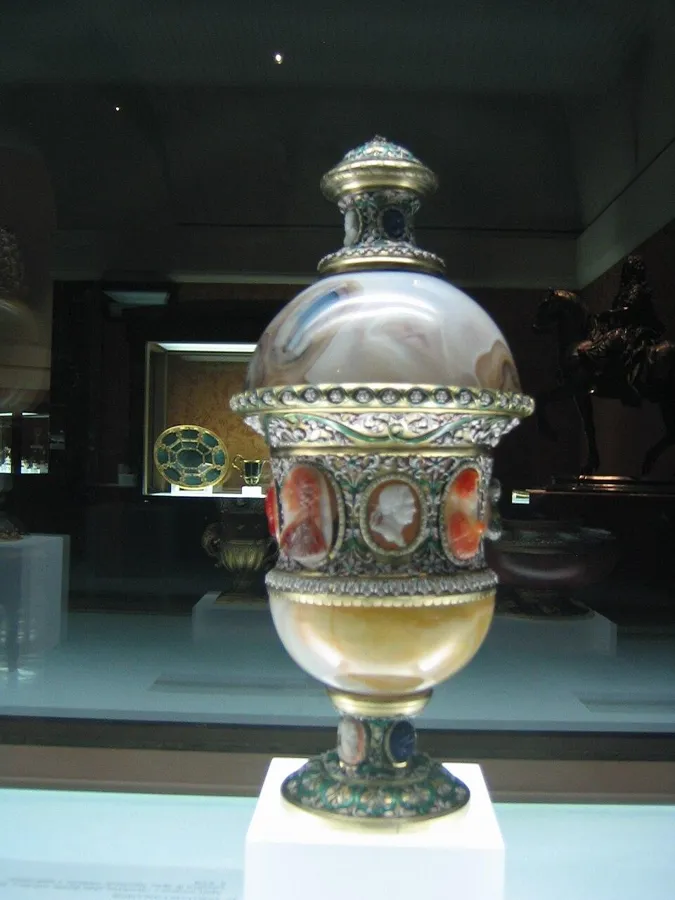
Most commercial carnelian comes from India, as it has for millennia; Brazil and Uruguay supply large amounts from the same volcanic agate fields, and Madagascar rough is sold by lapidary suppliers. Tap a pin for the story of each place. To see where every other natural gem comes from, open the full gem world map.
Pins mark mining districts, not exact mines. Drag to move, pinch or scroll to zoom, tap a pin to read about it. Map data © OpenStreetMap contributors.
Heating is old, permanent and accepted: it turns iron hydroxides in pale yellowish chalcedony into red iron oxide. The International Gem Society advises assuming any carnelian has been heated unless told otherwise. Dyeing is different. Agate is porous along its bands, so it soaks up dye, and dyed red agate is sold as "carnelian" in large quantities, especially as cheap uniform beads.
The test: hold the stone against a phone torch. If the red is in stripes with clear layers between them, it is dyed agate. If it glows evenly, it is carnelian. A cotton bud with acetone on a hidden spot can also lift surface dye.
Carnelian is usually cut smooth, but faceted carnelian throws light back like a warm orange glass. These are cut stones and faceted beads, real carnelian, for setting or stringing.
Natural carnelian
about $16
Machine-calibrated so they drop straight into standard settings.
See it on AmazonNatural carnelian
about $17
A square cabochon, the classic shape for a man’s ring.
See it on AmazonNatural carnelian
about $13
Faceted beads sparkle where smooth ones glow. Nearly 200 ratings.
See it on AmazonCarnelian is hard enough to hold a fine engraving, so for thousands of years it was cut as a seal and pressed into wax or clay to sign a letter. The signet ring is still the classic way to wear the stone.
Natural carnelian
about $160
A traditional English signet in sizes 6 to 13.
See it on AmazonNatural carnelian
about $85
In the Turkish and Ottoman tradition, where carnelian (aqeeq) is prized.
See it on AmazonNatural carnelian
about $80
See it on AmazonNatural carnelian
about $940
Solid gold. Ships on a lead time.
See it on AmazonNatural carnelian
about $2,500
Carnelian with a natural diamond accent in solid gold.
See it on AmazonCarnelian does not grow as big single rocks. It forms as pebbles and nodules in old volcanic rock, mostly fist-sized or smaller, so the way to get a lot of it is a big rough lot. These are the largest we found.
Natural carnelian
about $45
Five pounds of raw nodules: the biggest lot on Amazon.
See it on AmazonNatural carnelian
about $30
Picked for cutting cabochons, so the pieces are chunky.
See it on AmazonNatural carnelian
about $45
Sold as large pieces rather than chips.
See it on AmazonNatural carnelian
about $35
Counted in carats like a gem lot.
See it on AmazonNatural carnelian
about $35
A heavy polished piece, about a pound of carnelian in one.
See it on AmazonNatural carnelian
about $45
The biggest carnelian ball we found: red bands of agate swirling through orange carnelian. Hold a torch behind it and it glows.
See it on AmazonNatural carnelian
about $40
A clean orange ball from a big crystal seller.
See it on AmazonNatural carnelian
about $30
A smaller sphere for a desk.
See it on AmazonNatural carnelian
about $25
From a long-running UK crystal supplier.
See it on AmazonNatural carnelian
about $25
A polished point that shows the banding top to bottom.
See it on AmazonNatural carnelian
about $25
Carnelian chips wired into a little tree.
See it on AmazonNatural carnelian
about $20
A small banded carving.
See it on AmazonNatural carnelian
about $20
The same carver, a wolf.
See it on AmazonNatural carnelian
about $15
A tiny figure that glows orange in a window.
See it on AmazonNatural carnelian
about $20
Polished hearts, good gifts.
See it on AmazonNatural carnelian
about $12
Thumb-shaped and smooth.
See it on AmazonNatural carnelian
under $10
One translucent orange chunk: the easiest way to see what carnelian looks like in the hand, with the light glowing through it.
See it on AmazonNatural carnelian
about $15
A natural mix of orange, red, grey and white pieces. That variety is what untreated material really looks like.
See it on AmazonNatural carnelian
under $10
Two hand-sized raw chunks.
See it on AmazonNatural carnelian
about $20
From a long-running lapidary supplier. Mixed carnelian and agate for cabbing or tumbling; expect many pale pieces.
See it on AmazonNatural carnelian
under $10
One of the most-reviewed carnelian listings on Amazon, with more than a thousand ratings.
See it on AmazonNatural carnelian
about $10
Bigger tumbled pieces, smooth and glossy.
See it on AmazonNatural carnelian
about $20
Small chips for jars, crafts and wire wrapping, in the natural orange-to-white range.
See it on AmazonNatural carnelian
about $30
Calibrated ovals in an even orange that drop straight into standard ring and pendant settings.
See it on AmazonNatural carnelian
about $20
Large flatback ovals showing the cloudy orange-to-red variation of natural stone.
See it on AmazonNatural carnelian
about $15
A mid size for rings.
See it on AmazonNatural carnelian
about $20
A deeper red, typical of heat-treated carnelian. Hundreds of ratings.
See it on AmazonNatural carnelian
about $70
A handmade band from a small maker, with an oval carnelian set in patterned silver.
See it on AmazonNatural carnelian
about $60
The same maker, with the stone held in a decorative crown setting.
See it on AmazonNatural carnelian
about $30
A handmade oval ring with hundreds of ratings, at a gift price.
See it on AmazonNatural carnelian
about $85
A big domed carnelian in a hand-made silver sun, from Indonesia.
See it on AmazonNatural carnelian
about $40
A long marquise cabochon in silver.
See it on AmazonNatural carnelian
about $20
A raw-looking polished stone in a simple wire wrap on a cord.
See it on AmazonNatural carnelian
about $45
A smooth drop of carnelian on an adjustable cord, for men or women.
See it on AmazonSignet rings, jewellery, malas, carvings and loose stones, every listing naming real carnelian from a seller with a record, checked in stock on October 14, 2026. Photos are the listings' own; prices are rounded.
 Signet ringsmysilverworld men's carnelian signet ring, sterling silverA handmade silver signet with a natural red carnelian face, the classic seal-ring look.about $150on Amazon →
 Signet ringsLetsBuySilver solid silver carnelian signet ring, milled edgeSolid sterling silver with natural carnelian, from the same English signet maker as our existing pick.about $199on Amazon →
 Signet ringsLetsBuySilver gents carnelian signet ring, made in EnglandA traditional English signet with natural carnelian.about $159on Amazon →
 Signet ringsNatural Yemeni blood-red carnelian men's ring, sterling silverA heavy handmade ring in the aqiq tradition, with a deep red natural stone.about $180on Amazon →
 Signet rings14 carat natural Yemeni blood-red aqeeq ring, sterling silverA big 14 ct carnelian (aqeeq) in a plain, elegant handmade setting.about $170on Amazon →
 Signet ringsMuskan Handcraft carnelian signet ring for men, sterling silverAn oval carnelian signet at a friendlier price.about $65on Amazon →
 Signet ringsMuskan Handcraft square carnelian signet, sterling silverA square face, the shape most often engraved with initials.about $60on Amazon →
 Signet ringsBABA SHYAM JEWELS square red carnelian signet, sterling silverHandmade square signet with a red carnelian.about $70on Amazon →
 Signet ringsCELCIA natural carnelian 12 mm signet-style ring, sterling silverA round 12 mm natural carnelian in a solid statement setting that suits any hand.about $70on Amazon →
 JewelleryLOMBARDY natural carnelian halo ring, sterling silver and marcasiteVintage-style oval carnelian framed in marcasite; 5 stars from 11 ratings.about $30on Amazon →
 JewelleryNostrand carnelian band ring, 6 mmA ring carved entirely from carnelian, so the stone glows all the way round.about $20on Amazon →
 JewelleryLuna Tide carnelian teardrop necklace, 14k gold fillA single carnelian drop on gold-filled chain, made by a small studio.about $97on Amazon →
 JewelleryLUSTRE AND LIGHT marquise carnelian slider pendant, sterling silverA natural carnelian marquise that slides on the chain.about $75on Amazon →
 JewellerySilverStarJewel carnelian pendant, 1.2 inch, sterling silverA larger carnelian cabochon in a sterling setting.about $19on Amazon →
 Jewellery1928 Jewelry carnelian egg pendant necklace, 30 inchA polished carnelian egg on a long chain from a long-running costume jewellery house.about $46on Amazon →
 JewelleryRed carnelian drop earrings, handmade sterling silverHandmade earrings, 5 stars from 7 ratings.about $34on Amazon →
 JewellerySalish Sea Inspirations 6 mm carnelian stud earrings, sterling silverSimple studs from the small maker behind two of our carnelian rings.about $37on Amazon →
 JewelleryJUS natural carnelian teardrop earrings, sterling silverTeardrop cabochons in orange-red natural carnelian.about $45on Amazon →
 JewelleryJUS natural carnelian oval link bracelet, sterling silverOval carnelians linked in handmade silver, with a lobster clasp.about $80on Amazon →
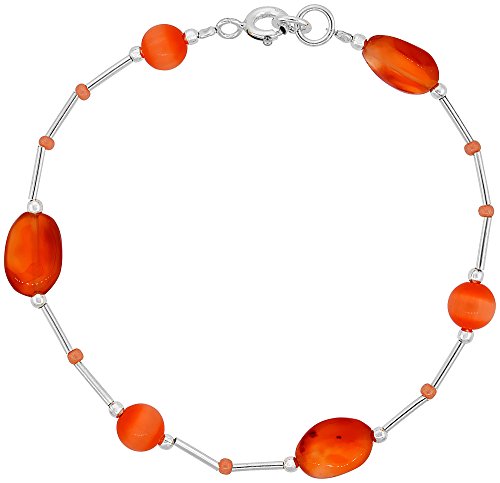 JewellerySabrina Silver carnelian and liquid silver bracelet, 7 inchCarnelian beads strung with fine liquid-silver tubes.about $10on Amazon →
 BeadsLIFAVOVY 8 mm carnelian beads, full strandRound carnelian beads for stringing, 4.8 stars from 241 ratings.about $7on Amazon →
 BeadsJM Design natural carnelian faceted rondelles, 5 x 8 mm strandThe listing states natural carnelian, not treated or dyed.about $20on Amazon →
 BeadsAmazing Gemstone carnelian mala, 108 beadsA 108-bead prayer strand in carnelian, from a large crystal seller.about $38on Amazon →
 BeadsSacred Woods carnelian mala, 108 beads, unknottedA simple 108-bead carnelian mala.about $30on Amazon →
 BeadsYAM Crystals carnelian agate tasbih, 99 beadsIslamic prayer beads in carnelian agate, in the aqiq tradition.about $35on Amazon →
 Carvings and decorAmazing Gemstone carnelian palm stone, 45 to 50 mmA big smooth palm stone, large enough to see the glow in a window.about $19on Amazon →
 Carvings and decorBacatgem natural carnelian polished free-form pebbleA polished natural shape rather than a cut one, 4.8 stars from 15 ratings.about $18on Amazon →
 Carvings and decorAmazing Gemstone carnelian heart palm stoneA polished carnelian heart.about $19on Amazon →
 Carvings and decorGAF Treasures large carnelian puffy heart, 1.75 inchA chunky polished heart.about $14on Amazon →
 Carvings and decorTUMBEELLUWA carnelian obelisk towerA tall polished obelisk for a shelf.about $26on Amazon →
 Carvings and decorLEADGEM carved red carnelian alpacaA small hand-carved animal in red carnelian agate.about $19on Amazon →
 Carvings and decorLoveliome carved carnelian sitting catA tiny hand-carved cat, 5 stars from 5 ratings.about $14on Amazon →
 Raw and tumbledZAICUS carnelian rough for tumbling and cabbingRaw pieces sold for lapidary work, so you can see the natural colour range.about $23on Amazon →
 Loose stonesCRYSTALIS natural faceted carnelian, 5 stonesLoose faceted carnelian for setting.about $18on Amazon →
 Loose stonesAdabele natural carnelian oval cabochons, 4 stonesFlatback ovals for jewellery making.about $5on Amazon →
Most carnelian is tumbled, drilled into beads or cut as cabochons, the cheapest finishes, because its beauty is the glow, not sparkle. Faceted carnelian exists but is less common. At the top of the ladder sits the intaglio: a seal engraved in reverse by hand, the ancient Greek and Roman speciality. See gem cuts from easiest to hardest.
Carnelian is hard and tough enough for everyday rings. Clean it with warm soapy water. Avoid strong heat, which can change the colour, and harsh chemicals, which can attack any dye in a doubtful piece. Store it apart from diamonds and sapphires, which can scratch it.
Yes. Carnelian is a natural variety of chalcedony, a form of quartz made of microscopic crystals, coloured orange to red by iron. It is hard (about 7 on the Mohs scale), takes a high polish and has been used in jewellery and seals for more than 4,500 years.
Usually. Heating turns the iron inside from yellowish-brown to red, and people in India were doing it thousands of years ago. The International Gem Society says to assume a piece has been heated unless told otherwise. It is permanent and accepted.
Hold it up to a bright light. Natural and heated carnelian glows with soft, cloudy colour spread through the stone. Dyed agate shows its colour in stripes, with the dye concentrated along the bands and in cracks, and it is often an even cherry red that looks too uniform.
No. Natural carnelian is cheap and plentiful, so nobody grows it. The imitations are dyed agate, glass and resin.
Both are reddish chalcedony. Carnelian is the lighter, brighter orange to red; sard is darker and browner. The boundary between them is a matter of degree, and the two names were used loosely in the ancient world.
Amazon links are affiliate links (tag thegemtray-20): buying through them costs you nothing extra and supports the site. As an Amazon Associate we earn from qualifying purchases.


