Our first pick
PEORA lab-grown white opal teardrop pendant, sterling silver
about $50
Lab opal with real play of colour, from a long-running lab-gem brand.
See it on AmazonSilica · SiO₂·nH₂O · 5.5 to 6.5
Opal is silica with water locked inside, built from tiny spheres stacked like oranges in a crate. When the spheres are even, they split light into flashes of colour, called play of colour. It is soft and can crack if it dries out. Lab opal, first made by Pierre Gilson in 1974, grows the same sphere structure; many lab opals contain a little resin.
The same stone at four moments. Tap a photo of a listing to see it on Amazon.
01 In the ground (step 1 of 4)
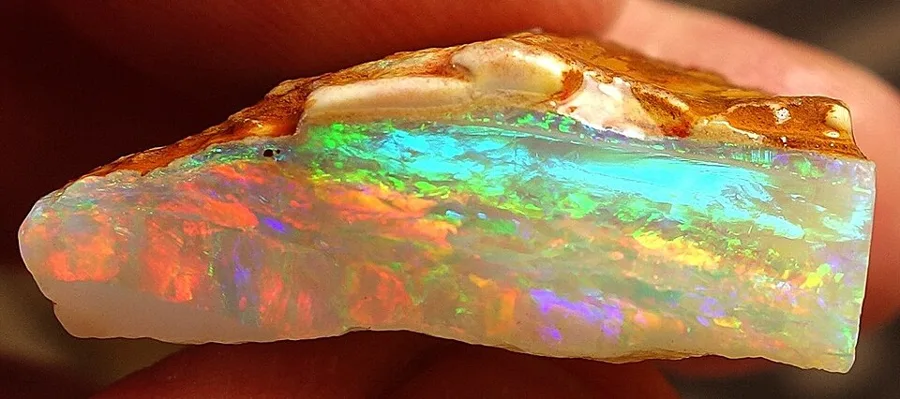
Precious opal still in its host rock, Coober Pedy, South Australia, the opal capital of the world.
Real specimen. Photo: Dpulitzer, CC BY-SA 3.0.
02 Out of the lab (step 2 of 4)
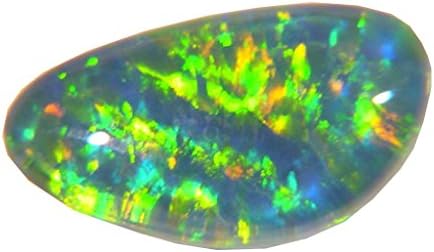
Gilson lab opal, the first lab opal, here cut as a triplet (a thin layer with a backing and a clear cap).
Amazon listing photo. See it on Amazon
03 Cut (step 3 of 4)

Natural Ethiopian opal . Opal is almost always cut as a smooth dome to show its colour.
Amazon listing photo. See it on Amazon
04 Set (step 4 of 4)

A lab-grown white opal teardrop pendant in sterling silver.
Amazon listing photo. See it on Amazon
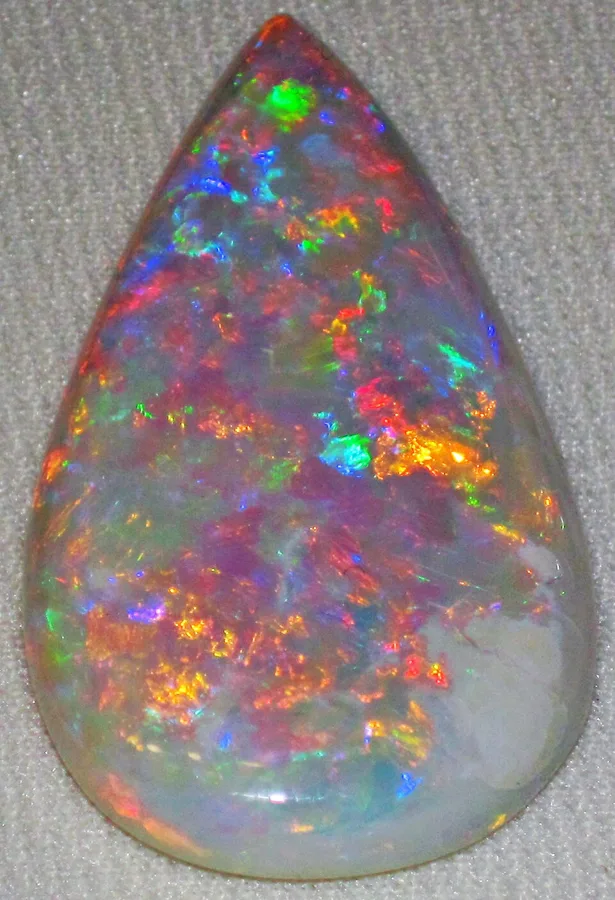
What the finest natural stones look like: real pieces in public collections. The whole gem museum.
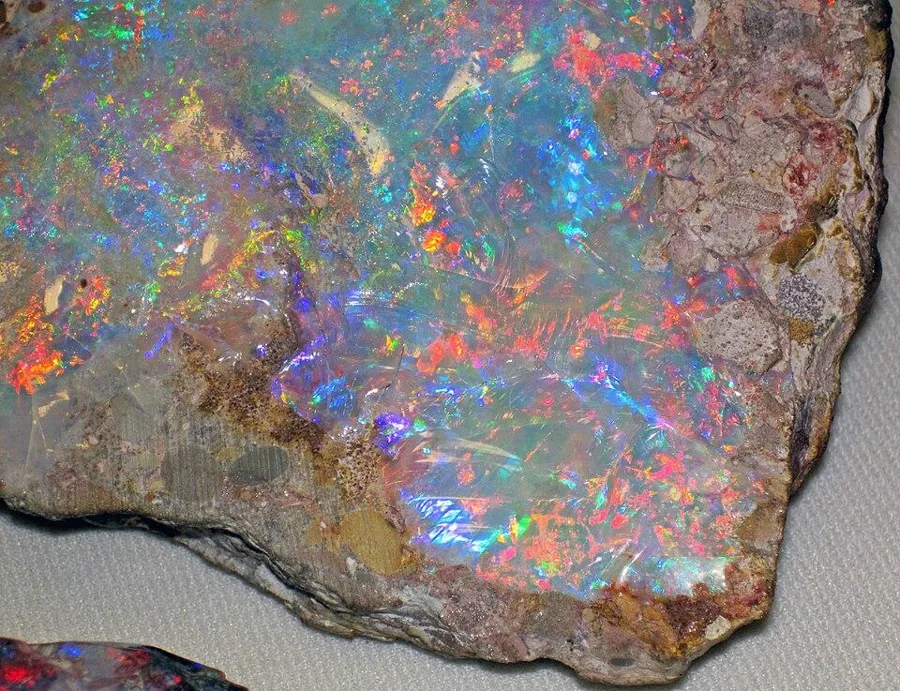
Own a lab version, or a natural one
Lab-grownGilson lab opal tripletabout $13on Amazon →NaturalEthiopian Welo opal cabochonsabout $30on Amazon →Opal of your own, lab or mined.
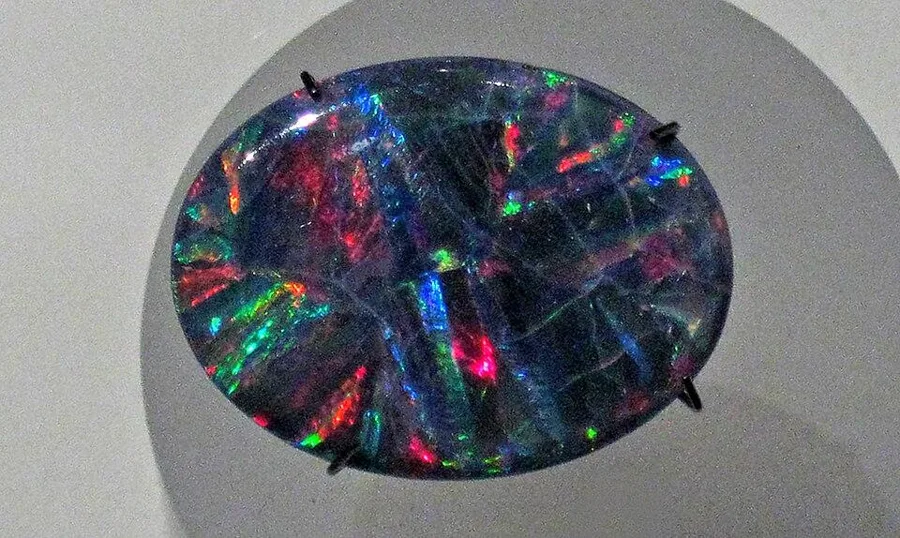
Own a lab version, or a natural one
Lab-grownGilson lab opal tripletabout $13on Amazon → NaturalSolid natural black opal, Lightning Ridge, 1.35 ctabout $1,150on Amazon →
Black opal from the same town, or a lab opal.
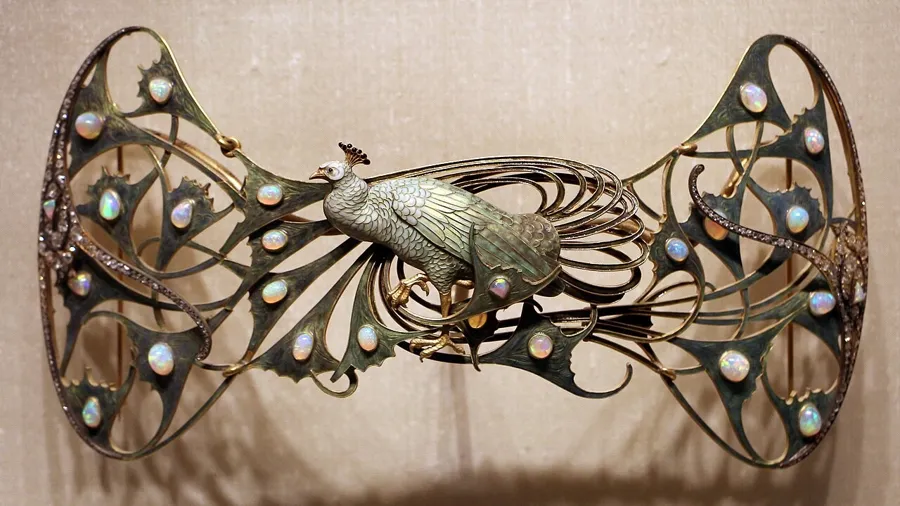
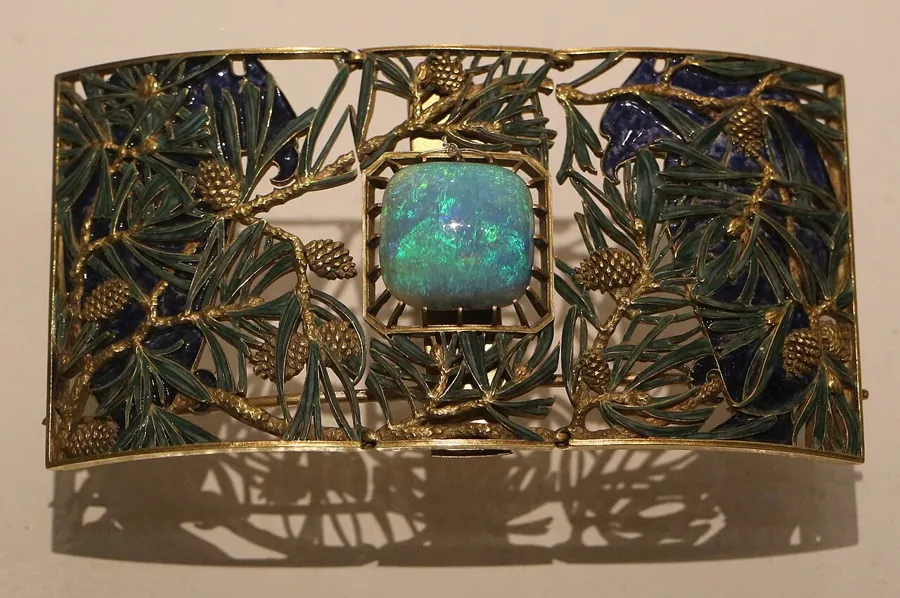
| Mined | Lab-grown | |
|---|---|---|
| How it formed | Silica-rich water seeping into cracks and fossils, over millions of years | Silica spheres settled and bonded in a lab, over months |
| Look | Irregular patches of colour | Often a regular "snakeskin" or columnar pattern |
| Treatment | Sometimes doublets, triplets or darkened by sugar or smoke | Often contains resin |
| Price | From a few dollars to thousands a carat (black opal most) | Low |
| Care | Avoid knocks, heat and sudden dryness | Same |
Treatments. Thin slices of opal are often glued to a dark backing (a doublet) or under a clear quartz cap (a triplet) to look brighter and protect them; both must be disclosed. Some Ethiopian opal soaks up water and turns cloudy for a while, which is normal for that type. All gem treatments explained.
Pins mark mining districts, not exact mines. Drag to move, pinch or scroll to zoom, tap a pin to read about it. Map data © OpenStreetMap contributors.
Opal is almost always cut as a cabochon, a smooth dome, because facets would cut through the thin colour layer. Cutters follow the colour bar in the rough, so every natural opal is a one-off shape; lab opal can be cut in calibrated sizes. See cuts from easiest to hardest and whether cutting your own is cheaper than buying cut.
Checked in stock on October 10, 2026. Photos are the listings' own; prices are rounded.
Our first pick
about $50
Lab opal with real play of colour, from a long-running lab-gem brand.
See it on AmazonAlso good
about $30
Five small natural opals with rainbow fire, ready to set.
See it on AmazonAlso good
under $20
Black, white and green created opal studs for the price of one pair.
See it on AmazonFive tools that let you check what you bought (a loupe, a UV torch, locking tweezers, a gem box and a pocket scale), plus a turntable that spins your stone under the light the way jewellers show one. The full collector's kit.
 LookGemOro 10x triplet loupeunder $20
 LookDARKBEAM filtered 365 nm UV flashlightabout $10
 HandleHonoson locking tweezers, 3 packabout $10
 StoreTeensery gem display boxes with clear lids, 10 packabout $9
 ShowComXim motorized turntable, adjustable speed and directionabout $15
 MeasureGemOro Platinum XP500 pocket scale, 0.01 gabout $40
In short
Opal is silica and water arranged in microscopic spheres that turn light into colour. Natural opal is mined mostly in Australia and Ethiopia; lab opal copies the same structure. Wear it in protective settings, keep it away from heat and knocks, and ask whether a bright, cheap opal is a doublet or triplet.
See our first pick: PEORA lab-grown white opal teardrop pendant, sterling silverLab opal reproduces opal's structure of silica spheres and shows real play of colour. Many lab opals also contain resin. They must be sold as lab-created, created or synthetic.
A thin slice of opal glued to a dark backing (doublet), sometimes with a clear quartz dome on top (triplet). It is real opal, but much less of it, so it should cost less than solid opal and must be disclosed.
Solid Australian opal is fine with water. Some Ethiopian opal absorbs water and turns cloudy until it dries, and doublets and triplets should not be soaked because water can weaken the glue.
Often by pattern. Gilson-type lab opal is built from the same silica spheres as natural opal, but grown so evenly that its colour often sits in tidy columns or a scaly "lizard skin" mosaic. Natural opal patterns are more random. Some lab opal also contains plastic (polymer), so ask what the material actually is.
Amazon links are affiliate links (tag thegemtray-20): buying through them costs you nothing extra and supports the site. As an Amazon Associate we earn from qualifying purchases.
