Is a cheap "natural certified" ruby on Amazon real?
Almost never as described. GIA says ruby “can command high per-carat prices”, and at the top of the market the 25.59 carat Sunrise Ruby sold for US$30.42 million at Sotheby’s Geneva in 2015. A “natural, unheated, certified” ruby of several carats for tens of dollars is therefore likely to be something else: a lab-grown ruby, a lead-glass-filled ruby, or glass or another look-alike. If you want a big red stone at that price, buy one labelled lab-created ruby: it is the same mineral as mined ruby (red ), and you know what you are getting.
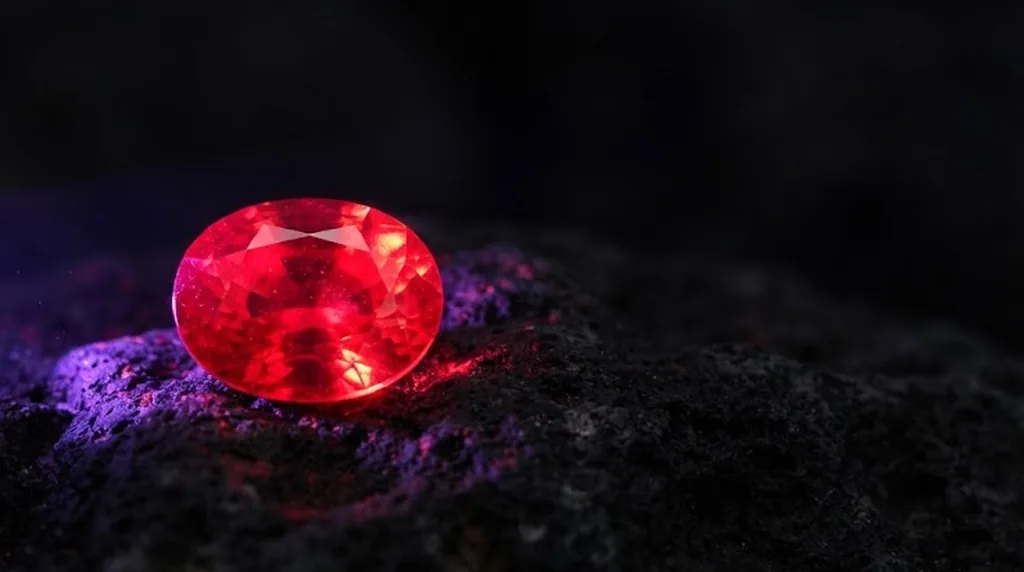
What a cheap “natural ruby” may really be
Three things can turn up under “natural ruby” at bargain prices. A lab-grown ruby described as natural. A lead-glass-filled ruby: heavily fractured corundum whose cracks are filled with high-lead glass so it looks transparent; GIA warns that the glass can be damaged by chemicals, even lemon juice, and says such stones should be cleaned only with a damp cloth. Or glass or another look-alike. A certificate in the box does not change which one you have.
What the label must say
The US FTC Jewelry Guides set the words (16 CFR 23.25). “Ruby” on its own may only describe a mined ruby. A lab-made one must say “laboratory-grown”, “laboratory-created”, “[manufacturer name]-created” or words of like meaning right before the name, and a look-alike must say “imitation” or “simulated”. For ruby made with any amount of filler or binder, such as lead glass, the Guides call it deceptive to describe it as “ruby”, “treated ruby”, “laboratory-grown ruby”, or a “composite”, “hybrid” or “manufactured” ruby unless the label clearly says that it does not have the same characteristics as ruby and that it needs special care (16 CFR 23.25(d)). A treatment that is not permanent, needs special care or significantly affects value must be disclosed, and online that means in the description itself (16 CFR 23.24).
The 10x loupe check
A 10x loupe will not prove a ruby is natural, but it can catch two of the substitutes. and tiny gas bubbles are the tell-tale signs of flame-fusion lab ruby. A lead-glass-filled ruby shows many large fractures, flattened gas bubbles in the glass, and blue or orange flashes in the cracks as you tilt it (GIA lab notes, 2014). Neither is a scam if the listing said lab-created or glass-filled; both mean it is not a natural, untreated ruby.
Why the price gives it away
GIA says ruby can command high per-carat prices, and at auction the finest have sold for more than $1 million a carat: the 25.59 carat Burmese Sunrise Ruby fetched US$30.42 million at Sotheby’s Geneva on 12 May 2015. Rough lab corundum, by contrast, can cost a few cents a carat (International Gem Society). A seller cannot offer natural, unheated rubies of several carats at the price of a lab stone.
How to buy a big ruby honestly
Buy a stone labelled lab-created ruby for the price of a lab stone. If you want a mined ruby, buy it with a report from an independent gem laboratory, from a seller whose returns you trust, at a mined-ruby price.
Frequently Asked Questions
What is a composite or glass-filled ruby?
Heavily fractured corundum whose cracks are filled with lead glass so it looks clearer. GIA says the glass can be damaged by chemicals, even lemon juice, and that such stones should be cleaned only with a damp cloth. US rules say the label must make clear that it lacks ruby’s characteristics and needs special care (16 CFR 23.25(d)). It is not the same as a heated ruby.
Can a UV light tell me if my ruby is natural?
No. Rubies fluoresce whether they are mined or lab-grown, and flame-fusion lab ruby often glows more strongly (International Gem Society); but mined rubies from marble typically glow red too, while iron in a ruby can mask the glow (GIA). The glow tells you little about where the stone came from.
Sources
- US FTC Jewelry Guides, 16 CFR 23.25: ruby and other gem names; lead-glass-filled products in 23.25(d), Cornell LII
- US FTC Jewelry Guides, 16 CFR 23.24: disclosure of treatments to gemstones, Cornell LII
- GIA: Ruby (high per-carat prices; marble rubies fluoresce red; iron masks fluorescence)
- GIA: Ruby care and cleaning guide (lead-glass filling damaged by chemicals, even lemon juice)
- GIA, Gems & Gemology Lab Notes: Lead-glass-filled Burmese rubies (Winter 2014)
- International Gem Society: Do natural rubies fluoresce?
- Wikipedia: Sunrise Ruby (25.59 ct, US$30.42 million, Sotheby’s Geneva, 12 May 2015)
- Wikipedia: Verneuil method (curved growth lines and gas bubbles)
Keep reading
Amazon links are affiliate links (tag thegemtray-20): buying through them costs you nothing extra and supports the site. As an Amazon Associate we earn from qualifying purchases.