Our first pick
Silvershake natural moonstone Celtic knot ring, 8 mm
about $45
Over 1,500 ratings on a natural moonstone in sterling silver.
See it on AmazonFeldspar · KAlSi₃O₈ · 6 to 6.5
Moonstone is feldspar made of thin alternating layers of two minerals. Light scatters between the layers and floats across the stone as a soft glow called adularescence. It is natural only: there is no lab moonstone, and "synthetic moonstone" on Amazon is glass (opalite). Rainbow moonstone is strictly a white labradorite, sold under the moonstone name.
The same stone at four moments. Tap a photo of a listing to see it on Amazon.
01 In the ground (step 1 of 4)
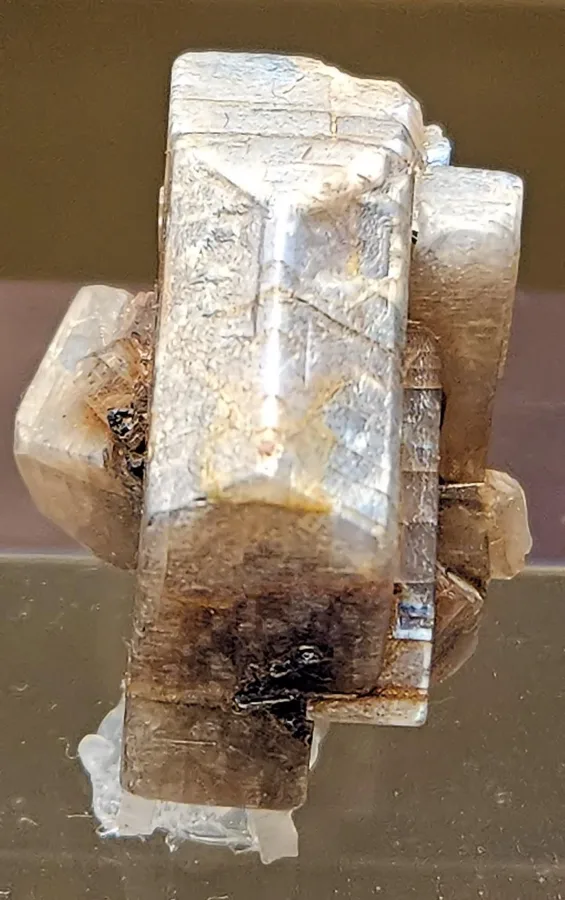
A moonstone crystal from Santo Domingo, Sonora, Mexico, at the Natural History Museum of Los Angeles. Uncut, it looks like any feldspar; the glow appears when it is cut into a dome.
Real specimen. Photo: Eric Polk, CC BY-SA 4.0.
02 The glow (step 2 of 4)
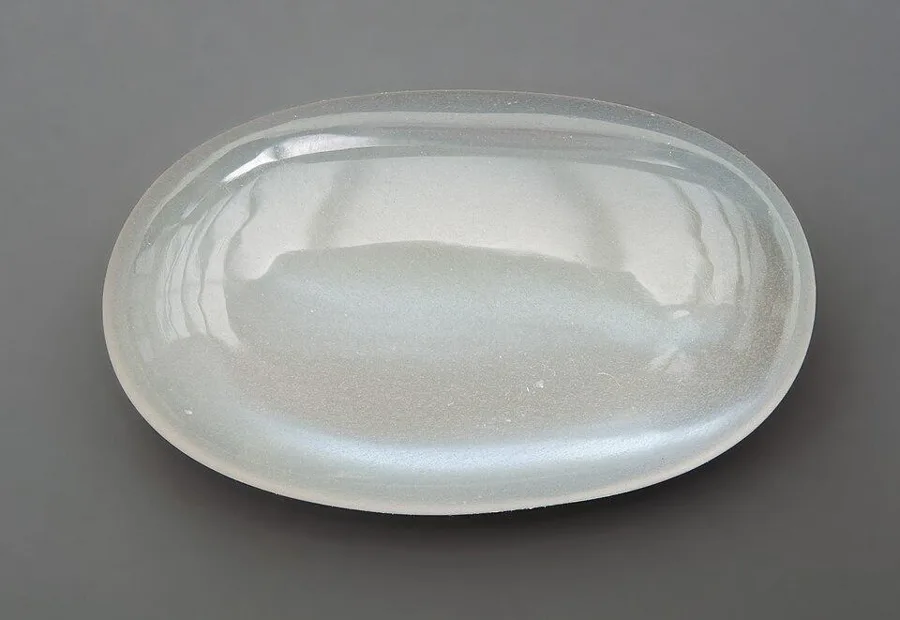
A 27 mm moonstone from Meetiyagoda, Sri Lanka, the classic source. The soft light floating just under the surface is adularescence.
Real specimen. Photo: Wouter Hagens, CC BY-SA 4.0.
03 Rough to own (step 3 of 4)

Rainbow moonstone rough: turn a piece in the light and the blue flash appears.
Amazon listing photo. See it on Amazon
04 Set (step 4 of 4)

A natural moonstone in a sterling silver Celtic knot ring.
Amazon listing photo. See it on Amazon
| Natural moonstone | Opalite ("synthetic moonstone") | |
|---|---|---|
| What it is | Feldspar from the ground | Man-made glass |
| The glow | Floats inside and moves as you turn it | Even milky blue, glows orange against a dark background |
| Inside | Small cracks and "centipede" | Clean, sometimes with bubbles |
| Price | Cheap to moderate; fine blue Sri Lankan stones cost more | Very cheap |
Moonstone is affordable, so the fake is rarely worth the trouble, but "synthetic moonstone" and "opalite" listings are glass. Look for the word natural and a glow that moves.
Treatments. Moonstone is rarely treated. Some is coated or backed to boost the glow. All gem treatments explained.
Pins mark mining districts, not exact mines. Drag to move, pinch or scroll to zoom, tap a pin to read about it. Map data © OpenStreetMap contributors.
Lab moonstone is mostly machine-cut in calibrated sizes, which is why a cut lab stone costs little more than its rough. Fine mined stones are often native-cut to keep weight, then recut by precision cutters. See cuts from easiest to hardest and whether cutting your own is cheaper than buying cut.
Checked in stock on October 10, 2026. Photos are the listings' own; prices are rounded.
Our first pick
about $45
Over 1,500 ratings on a natural moonstone in sterling silver.
See it on AmazonAlso good
about $80
Handmade, with strong blue flash.
See it on AmazonAlso good
about $21
Cheap rough to see the flash for yourself.
See it on AmazonEvery piece names the real stone and comes from a seller with a record, checked in stock on October 11, 2026. Photos are the listings' own; prices are rounded.
 WomenSilvershake natural moonstone marquise filigree ring, 14 x 7 mmNearly 1,000 ratings.about $45on Amazon →
 WomenMoonstone filigree teardrop earrings, sterling silverAbout 780 ratings.about $45on Amazon →
 WomenADITA GOLD moonstone pendant, sterling silverabout $100on Amazon →
 WomenNOVICA rainbow moonstone ring from Bali, sterling silverShips on a lead time.about $48on Amazon →
 WomenPeach moonstone necklacePeach and grey moonstone are natural colours.about $18on Amazon →
 Carvings and decorRainbow moonstone towerabout $20on Amazon →
 Carvings and decorRainbow moonstone obelisk, 3 to 3.5 inabout $15on Amazon →
Five tools that let you check what you bought (a loupe, a UV torch, locking tweezers, a gem box and a pocket scale), plus a turntable that spins your stone under the light the way jewellers show one. The full collector's kit.
 LookGemOro 10x triplet loupeunder $20
 LookDARKBEAM filtered 365 nm UV flashlightabout $10
 HandleHonoson locking tweezers, 3 packabout $10
 StoreTeensery gem display boxes with clear lids, 10 packabout $9
 ShowComXim motorized turntable, adjustable speed and directionabout $15
 MeasureGemOro Platinum XP500 pocket scale, 0.01 gabout $40
In short
Moonstone grows over millions of years in the earth, or in hours to months in a lab. Both are real moonstone; the mined stone is rare and priced for rarity, the lab stone is priced for the cost of growing it. Buy lab to wear and enjoy, check the listing names the mineral, and test it when it arrives.
See our first pick: Silvershake natural moonstone Celtic knot ring, 8 mmReal moonstone is always natural feldspar. Listings that say "synthetic moonstone" or "opalite" are glass.
It is a white labradorite, a close cousin, sold as moonstone by long trade custom. It is a natural stone with a stronger, more colourful flash.
Gently. At 6 to 6.5 on the Mohs scale and with easy cleavage, it scratches and chips more easily than quartz, so pendants and earrings suit it better than rings.
Amazon links are affiliate links (tag thegemtray-20): buying through them costs you nothing extra and supports the site. As an Amazon Associate we earn from qualifying purchases.
