
Our first pick
Instagem Mozambique garnet, round, 11 mm, about 5.5 ct, AAA
about $120
A large, clean red garnet from a long-running gem seller that names size and grade.
See it on AmazonGarnet group · silicates · 6.5 to 7.5
Garnet is not one mineral but a family of related minerals that share the same crystal structure. The red ones most people know are almandine and pyrope, and the purplish red mix of the two called rhodolite. Spessartine is orange. Grossular comes in many colours, including green tsavorite and orange hessonite. Andradite includes demantoid, a green garnet with more fire than diamond. Garnets are almost never treated. Gem garnets are not grown in labs for jewellery; the lab-made YAG and GGG have a garnet structure but are diamond imitations, not garnet gems.
The same stone at four moments. Tap a photo of a listing to see it on Amazon.
01 In the ground (step 1 of 4)
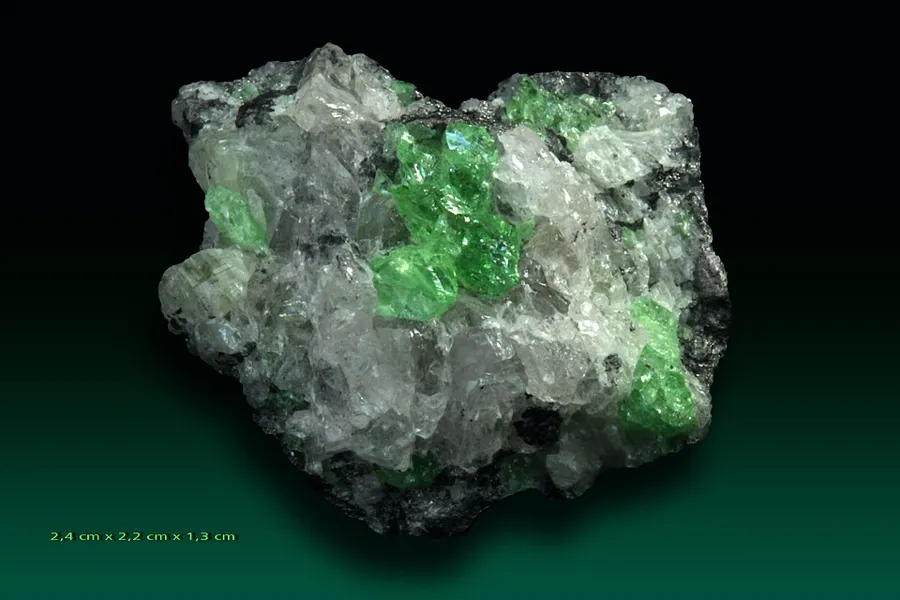
Green tsavorite garnet still in its host rock, Merelani Hills, Tanzania.
Real specimen. Photo: Lech Darski, CC BY-SA 4.0.
02 Raw (step 2 of 4)

Red garnet crystals still in mica schist, from Alaska.
Amazon listing photo. See it on Amazon
03 Cut (step 3 of 4)

A 16 x 12 mm oval Mozambique garnet, about 10 ct, from Instagem.
Amazon listing photo. See it on Amazon
04 Set (step 4 of 4)

Nearly 5 carats of garnet in a sterling silver ring by Ross-Simons.
Amazon listing photo. See it on Amazon
What the finest natural stones look like: real pieces in public collections. The whole gem museum.
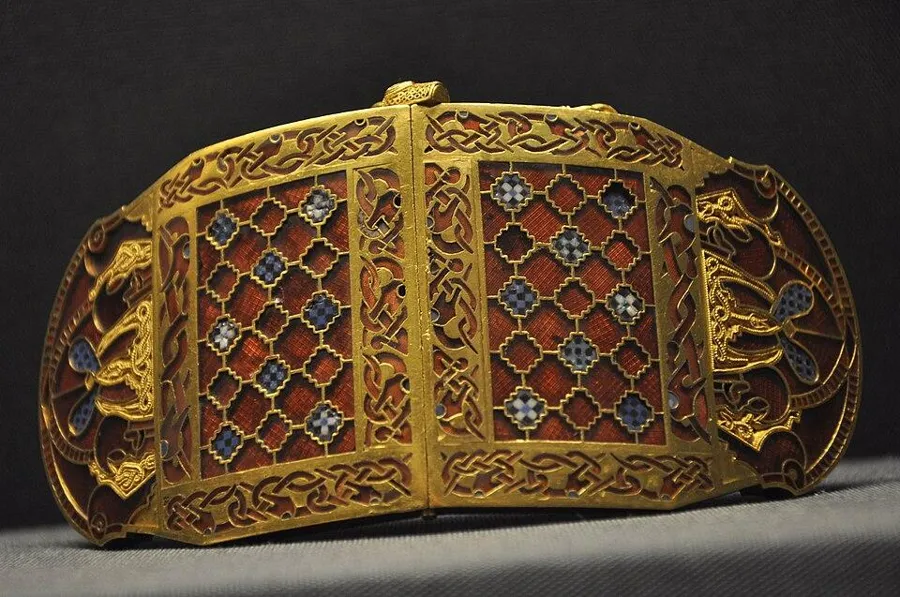
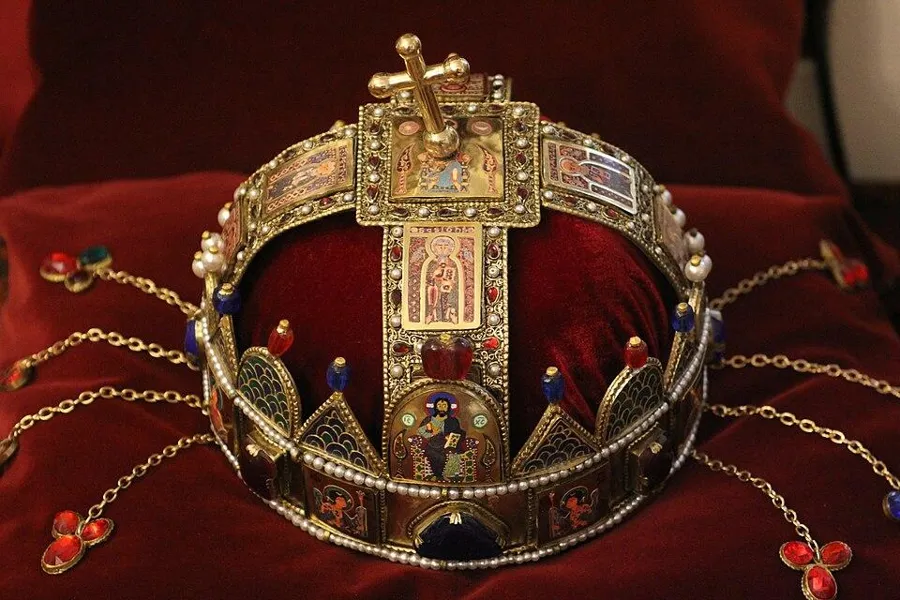
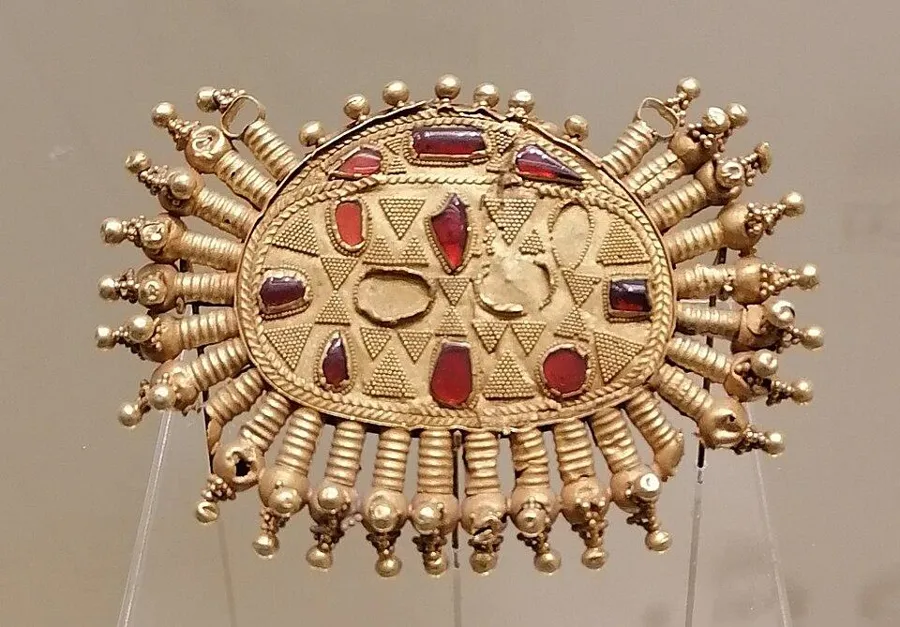
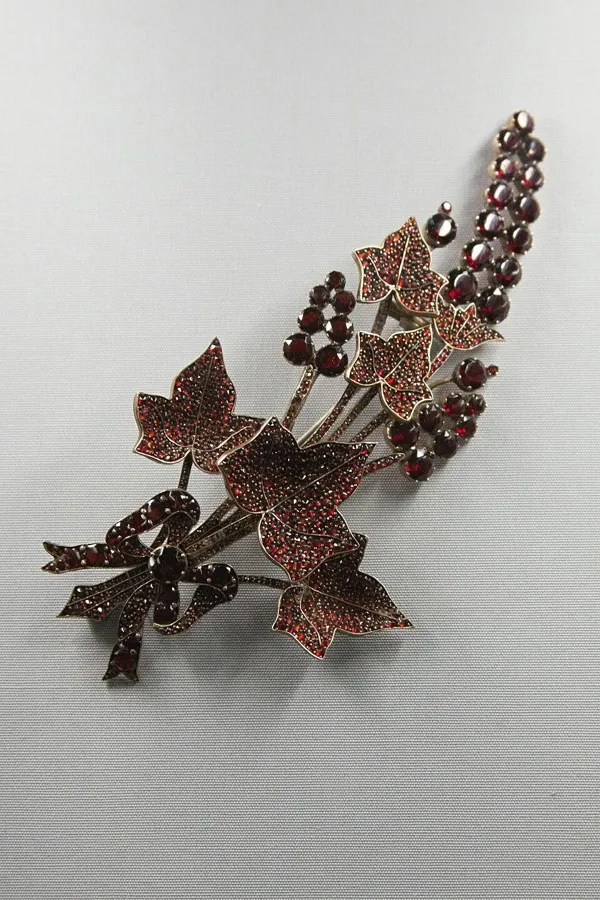
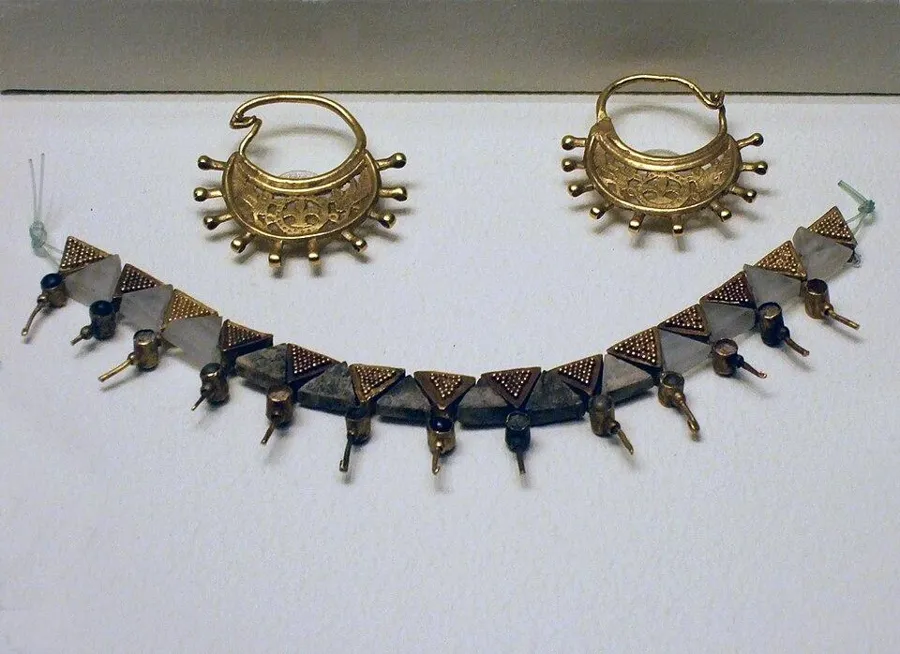
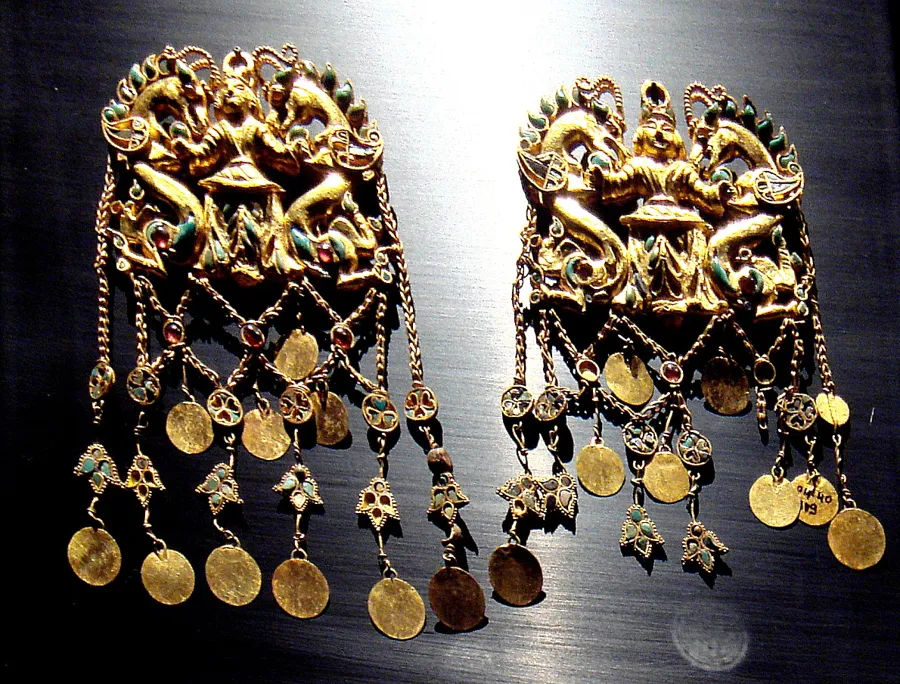
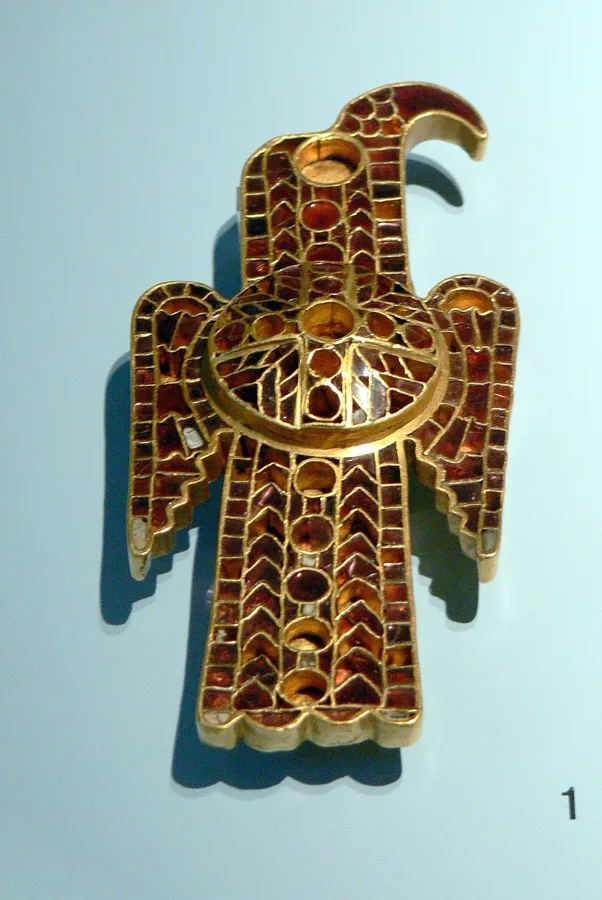
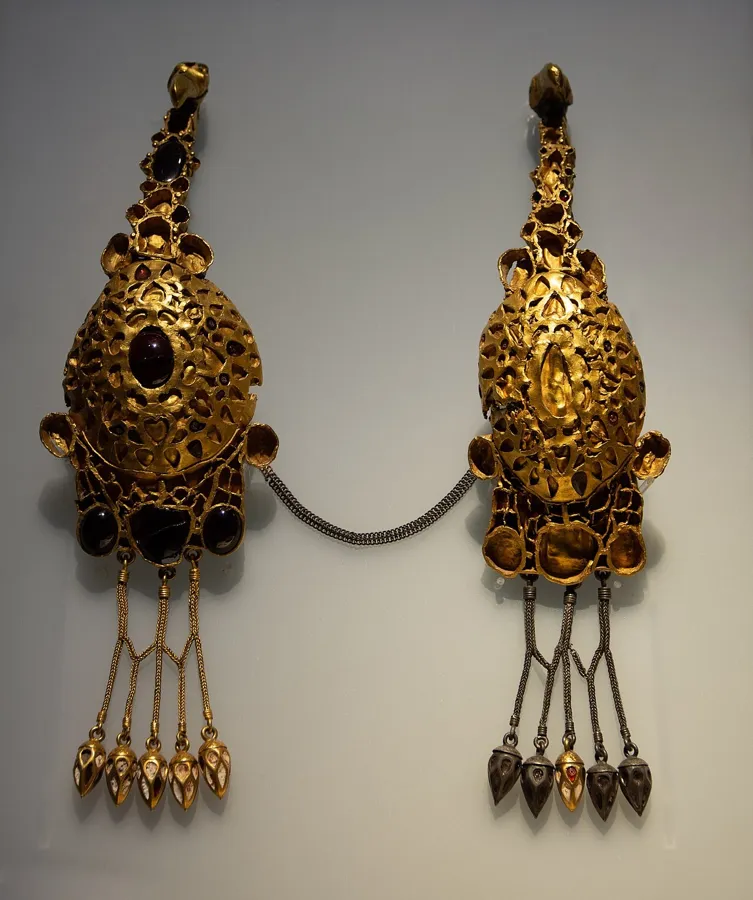
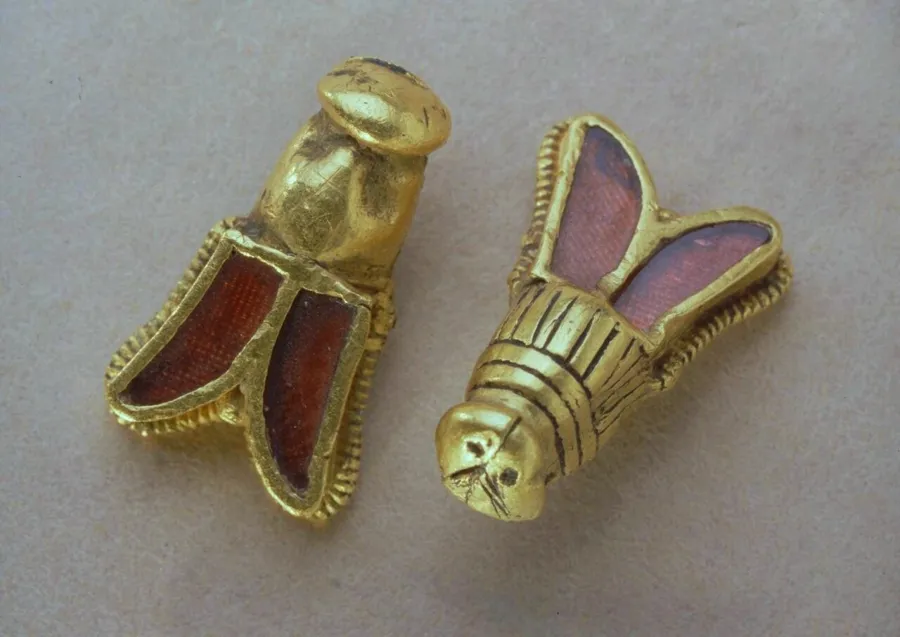
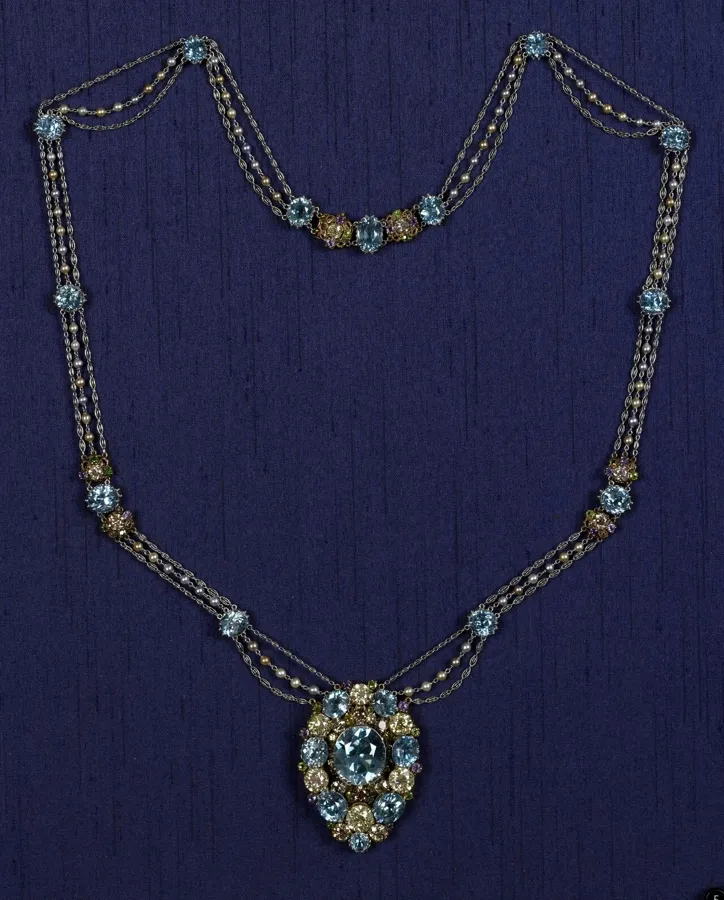
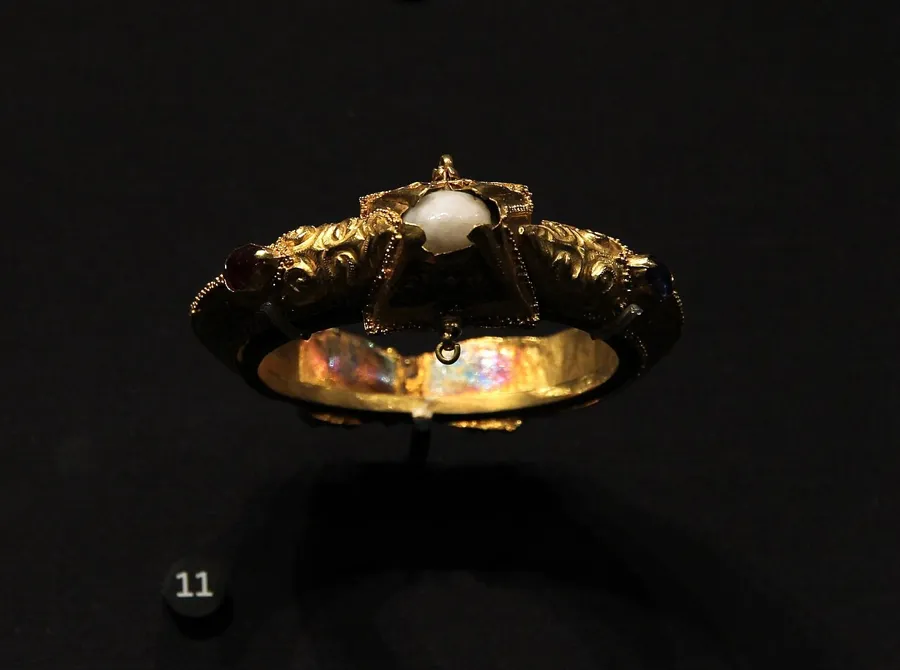
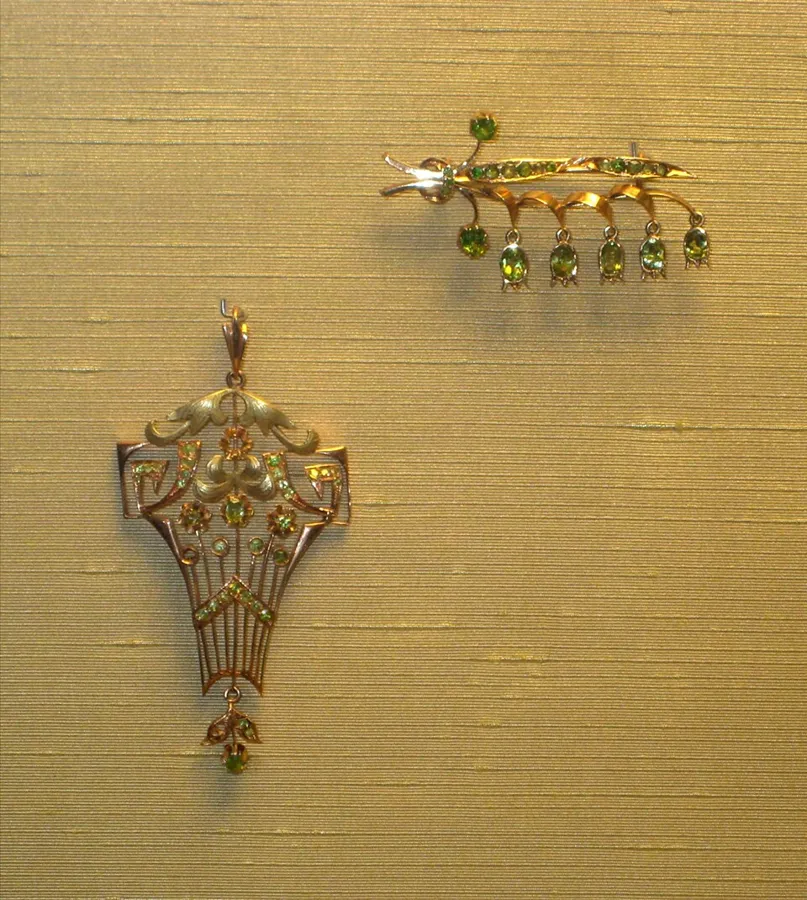
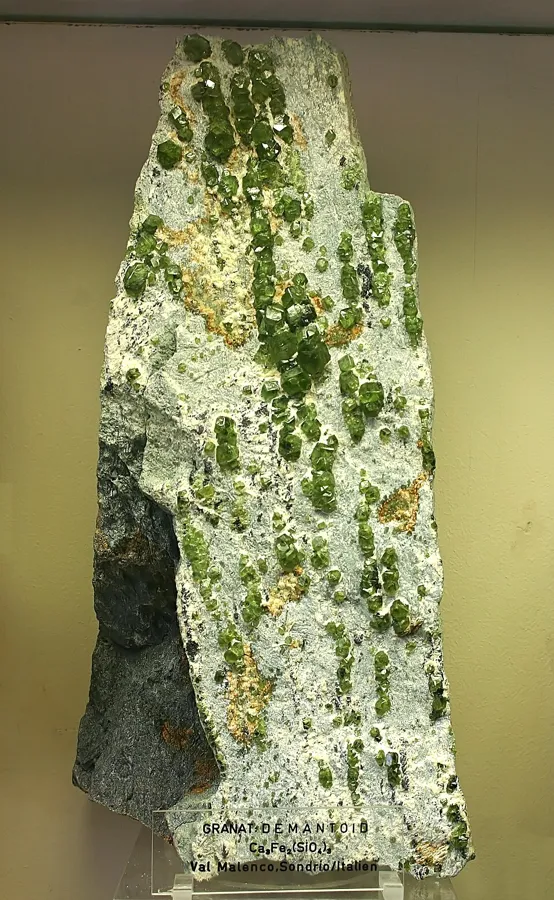
| Natural garnet | YAG and GGG | |
|---|---|---|
| What it is | A natural garnet: almandine, pyrope, rhodolite, spessartine, grossular or andradite | Lab-grown crystals with a garnet structure, made as diamond imitations |
| Colour | Deep red, purplish red, orange, green and more | Usually colourless; sometimes coloured |
| Tell-tale sign | Natural ; dark red stones can look almost black in large sizes | Very clean and heavy; sold under its own name |
| Price | From a few dollars a carat for red garnet to hundreds or thousands a carat for fine tsavorite and demantoid | Low |
| How it is listed | Names the type (rhodolite, Mozambique, tsavorite) and the size | Rare in jewellery today; named YAG or GGG |
Red garnet is cheap enough that most garnet jewellery is real garnet. The traps are in the names: bead listings called "garnet red jade" are dyed stone, not garnet. The other trap is the cheap "certified 100 ct tsavorite" or "demantoid" from sellers with no reviews: fine tsavorite and demantoid are rare and cost hundreds of dollars a carat or more, so a huge one for $30 is not what it says.
Treatments. Garnets are almost never treated: what you see is the natural colour. The main thing to watch for is dyed lookalike beads, and historically, garnet-and-glass doublets used to imitate other gems. Garnet is hard enough for most jewellery but can chip; clean it with warm soapy water. Demantoid is softer and is best kept out of ultrasonic cleaners. All gem treatments explained.
Pins mark mining districts, not exact mines. Drag to move, pinch or scroll to zoom, tap a pin to read about it. Map data © OpenStreetMap contributors.
Lab garnet is mostly machine-cut in calibrated sizes, which is why a cut lab stone costs little more than its rough. Fine mined stones are often native-cut to keep weight, then recut by precision cutters. See cuts from easiest to hardest and whether cutting your own is cheaper than buying cut.
Checked in stock on October 10, 2026. Photos are the listings' own; prices are rounded.
Our first pick
about $120
A large, clean red garnet from a long-running gem seller that names size and grade.
See it on AmazonAlso good
about $54
The purplish-red kind of garnet at a small price.
See it on AmazonAlso good
about $30
Garnet crystals in the rock they grew in: the best way to see what garnet looks like in nature.
See it on AmazonAlso good
about $100
Real garnet in solid gold with hundreds of ratings on the listing.
See it on AmazonAlso good
about $190
A lot of real garnet for the money from a seller that labels imitations.
See it on AmazonAlso good
about $1,300
If you want to see why green garnet is prized: fine tsavorite at its honest price.
See it on AmazonEvery piece names the real stone and comes from a seller with a record, checked in stock on October 11, 2026. Photos are the listings' own; prices are rounded.
Loose stones10 to 11 ctInstagem Mozambique garnet, oval, 16 x 12 mm, about 10 to 11 ct, AAAA big, clean red garnet.about $435on Amazon → Loose stones3.48 ctInstagem Tanzanian spessartite garnet, oval step cut, 3.48 ctOrange manganese garnet, a rarer kind.about $480on Amazon →
 Loose stonesInstagem Mozambique garnet, emerald cut, 9 x 7 mm, AAAA starter-priced real garnet.about $34on Amazon →
 Raw and tumbledStarborn almandine garnet crystals, 5 pieces, about 100 gabout $18on Amazon →
 Raw and tumbledCrystalAge red almandine garnet crystal, smallabout $13on Amazon →
 Raw and tumbledWixine natural red garnet stones, 100 gabout $10on Amazon →
 Carvings and decorHQRP garnet sphere, about 2.3 in and 450 g, with standA big polished ball of opaque garnet.about $40on Amazon →
 Carvings and decorAg Minerals demantoid garnets in matrix, 3.28 lbA large collector specimen of green andradite garnet.about $2,500on Amazon →
 BeadsGEM-Inside natural red garnet faceted beads, 4 mm, 15 in strandabout $11on Amazon →
 BeadsJustinstones natural garnet faceted beads, 4 mm, 16 in strandabout $11on Amazon →
 BeadsABCGEMS hessonite garnet smooth round beads, 8 to 9 mm, MadagascarOrange grossular garnet.about $20on Amazon →Jewellery4.90 ctRoss-Simons 4.90 ct total garnet ring, sterling silverabout $140on Amazon →
 Jewellery2.40 ctRoss-Simons 2.40 ct total garnet ring with black spinels, 18kt gold over sterlingabout $120on Amazon →
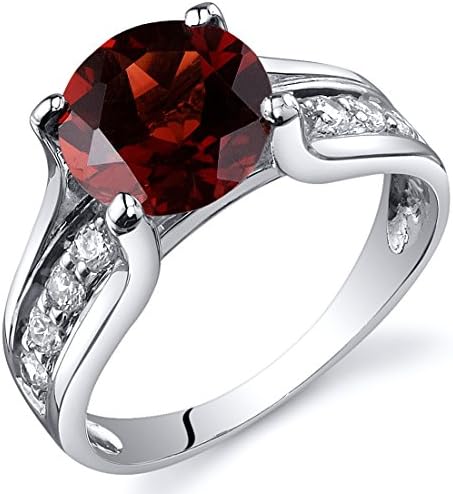 JewelleryPEORA natural garnet cathedral solitaire ring, 8 mm round, sterling silverabout $70on Amazon →
 JewelleryPEORA natural garnet cushion pendant, 6 mm, 14K white goldabout $250on Amazon →
 Jewellery7.0 ctGalaxy Gold 7.0 ct natural garnet octagon pendant, 14K solid goldabout $440on Amazon →
 JewelleryGem Stone King red garnet stud earrings, sterling silverHundreds of ratings at a low price.about $13on Amazon →
 JewelleryAmazon Essentials genuine garnet five-stone bypass ring, sterling silverabout $72on Amazon →
Five tools that let you check what you bought (a loupe, a UV torch, locking tweezers, a gem box and a pocket scale), plus a turntable that spins your stone under the light the way jewellers show one. The full collector's kit.
 LookGemOro 10x triplet loupeunder $20
 LookDARKBEAM filtered 365 nm UV flashlightabout $10
 HandleHonoson locking tweezers, 3 packabout $10
 StoreTeensery gem display boxes with clear lids, 10 packabout $9
 ShowComXim motorized turntable, adjustable speed and directionabout $15
 MeasureGemOro Platinum XP500 pocket scale, 0.01 gabout $40
In short
Garnet grows over millions of years in the earth, or in hours to months in a lab. Both are real garnet; the mined stone is rare and priced for rarity, the lab stone is priced for the cost of growing it. Buy lab to wear and enjoy, check the listing names the mineral, and test it when it arrives.
See our first pick: Instagem Mozambique garnet, round, 11 mm, about 5.5 ct, AAANo. Garnet is a group of minerals with the same crystal structure but different chemistry. The main gem kinds are almandine, pyrope, rhodolite, spessartine, grossular (including tsavorite and hessonite) and andradite (including demantoid).
No. Garnets come in almost every colour: orange spessartine, green tsavorite and demantoid, yellow and orange grossular, and rare colour-change and blue garnets.
Not for jewellery in any real amount. YAG and GGG are lab-grown crystals with a garnet structure, but they were made to imitate diamond, not to copy garnet gems.
Almost never. Garnet colour is natural. Watch instead for dyed stones sold with names like "garnet red jade".
Fine demantoid and fine tsavorite are among the rarest and most expensive. Demantoid is famous for its fire, which is higher than diamond.
Small, deep red pyrope garnets from the Czech Republic, set close together in jewellery that was hugely popular in the 1800s.
Amazon links are affiliate links (tag thegemtray-20): buying through them costs you nothing extra and supports the site. As an Amazon Associate we earn from qualifying purchases.


