Our first pick
PEORA lab alexandrite stud earrings, 2 ct total, 14K white gold
about $350
Real lab alexandrite in solid gold from a long-running lab-gem maker, with nearly 200 ratings.
See it on AmazonChrysoberyl · BeAl₂O₄ + Cr · 8.5
Alexandrite is chrysoberyl coloured by a trace of chromium, and it changes colour: green or teal in daylight, red to purple under warm lamplight. Fine mined alexandrite is one of the rarest and most expensive gems. Real lab alexandrite is the same mineral, grown slowly, and costs tens to a couple of hundred dollars a carat. Most cheap "alexandrite" on Amazon is something else: colour-change sapphire, glass or CZ.
The same stone at four moments. Tap a photo of a listing to see it on Amazon.
01 In the ground (step 1 of 4)
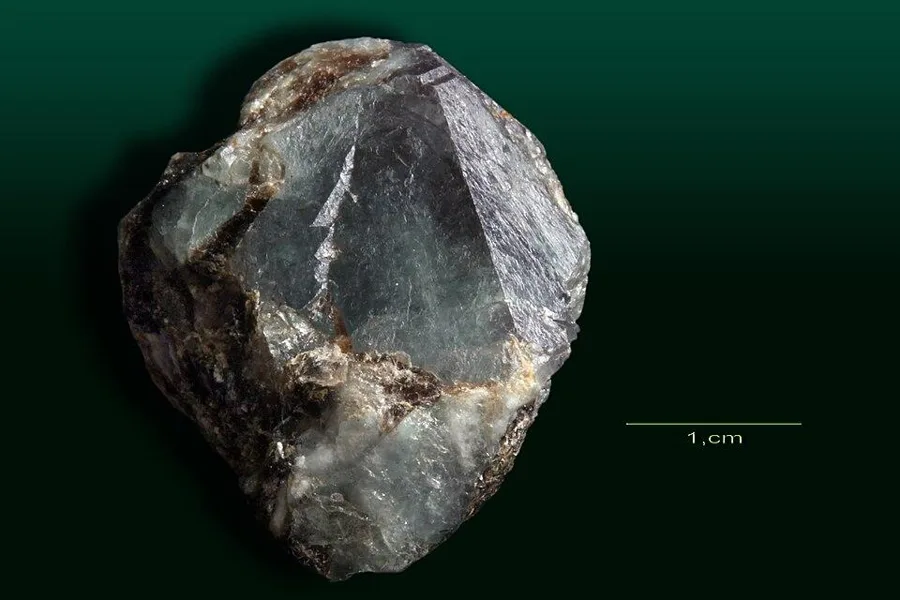
An alexandrite crystal from the Ural Mountains of Russia, in daylight. It was first found in the Urals emerald mines in the 1830s.
Real specimen. Photo: Lech Darski, CC BY-SA 4.0.
02 The colour change (step 2 of 4)
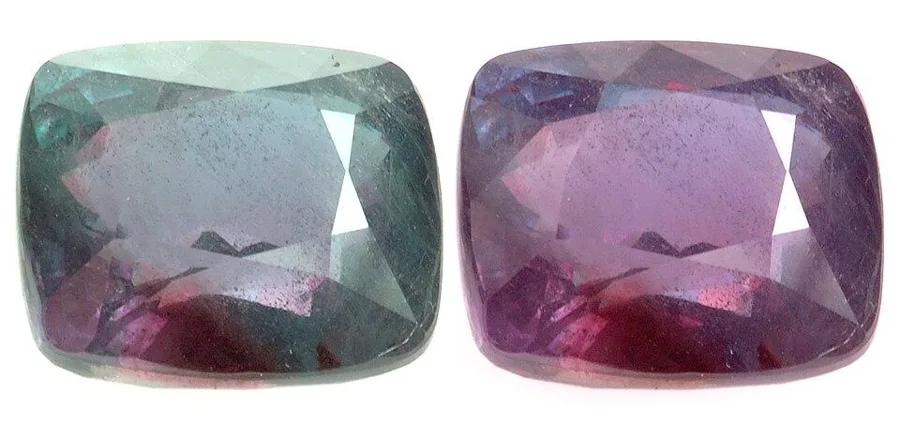
The same 26.75 ct stone twice: bluish green in daylight, purple-red under an incandescent bulb. Mined alexandrite this large is extremely rare.
Real specimen. Photo: Wikimedia Commons (original uploader), CC BY-SA 3.0.
03 Out of the lab (step 3 of 4)

A lab alexandrite of about 19 to 20 ct, 18 x 13 mm, the biggest we found. Lab alexandrite is grown from a melt or a flux over days to months.
Amazon listing photo. See it on Amazon
04 Set (step 4 of 4)

Lab alexandrite studs in 14K white gold, 2 ct total, from PEORA.
Amazon listing photo. See it on Amazon
What the finest natural stones look like: real pieces in public collections. The whole gem museum.
| Mined | Lab-grown | |
|---|---|---|
| How it formed | Where beryllium-rich granite met chromium-rich rock, a rare meeting | Pulled from a melt (Czochralski), floated zone, or flux, over days to months |
| Colour change | Often partial; strong, clean change is rare and prized | Usually strong and dependable |
| Inside | Silk, fingerprints, twinning | Clean, or flux veils in flux-grown stones |
| Price | Thousands to tens of thousands of dollars a carat for good change | Roughly $35 to $230 a carat on Amazon |
| Resale | Fine stones hold value | Little |
Price is the first test. Real lab alexandrite on Amazon costs roughly $35 to $230 a carat in our checks; mined alexandrite with a good change costs far more. A "100 ct natural alexandrite pendant" for $30, or a "colour change alexandrite" ring with a big stone for under $100, is not alexandrite.
Treatments. Alexandrite is rarely treated. The problem is identity, not treatment: colour-change synthetic sapphire ( doped with vanadium) has been sold as "alexandrite" for about a century, and so have colour-change glass and CZ. A report is worth it on any expensive stone. All gem treatments explained.
Pins mark mining districts, not exact mines. Drag to move, pinch or scroll to zoom, tap a pin to read about it. Map data © OpenStreetMap contributors.
Lab alexandrite is mostly machine-cut in calibrated sizes, which is why a cut lab stone costs little more than its rough. Fine mined stones are often native-cut to keep weight, then recut by precision cutters. See cuts from easiest to hardest and whether cutting your own is cheaper than buying cut.
Checked in stock on October 10, 2026. Photos are the listings' own; prices are rounded.
Our first pick
about $350
Real lab alexandrite in solid gold from a long-running lab-gem maker, with nearly 200 ratings.
See it on AmazonAlso good
about $165
Chatham is the best-known name in flux-grown gems; the small size keeps the price down.
See it on AmazonAlso good
about $475
A big loose stone to watch change colour, priced like real lab alexandrite.
See it on AmazonEvery piece names the real stone and comes from a seller with a record, checked in stock on October 11, 2026. Photos are the listings' own; prices are rounded.
 WomenChatham created alexandrite studs, 4 mm, 14K white gold (via Trustmark)Chatham flux-grown alexandrite.about $290on Amazon →
 Women0.5 ctChatham created alexandrite studs, 4 mm, 0.5 ct total, 14K yellow goldFull colour change. Ships on a lead time.about $650on Amazon →
 WomenPEORA lab alexandrite and diamond heart pendant, 6 mm, 14K white goldOver 150 ratings. Ships on a lead time.about $280on Amazon →
 Loose stones9 to 15.5 ctInstagem lab alexandrite, oval, 16 x 12 mm, 9 to 15.5 ctA very big lab alexandrite.about $1,150on Amazon →
 Loose stonesInstagem lab alexandrite, pear, 16 x 12 mmBig pear, priced like real lab alexandrite.about $1,000on Amazon →
 Jewellery2.5 ctLab alexandrite earrings, 6 mm, 2.5 ct, 14K white goldabout $350on Amazon →
 Jewellery2.5 ctLab alexandrite pendant, round, 8 mm, 14K white gold, 2.5 ctabout $280on Amazon →
 JewelleryLab alexandrite earrings, 14K yellow goldabout $350on Amazon →
 Jewellery1.25 ctLab alexandrite pendant, cushion, 6 mm, 14K white gold, 1.25 ctabout $250on Amazon →
 Jewellery3 ctLab alexandrite pendant, princess, 8 mm, 14K white gold, 3 ctabout $280on Amazon →
 Loose stones18.89 to 20.08 ctLab alexandrite, 18 x 13 mm, 18.89 to 20.08 ctabout $1,850on Amazon →
 Loose stones9.9 to 10.05 ctLab alexandrite, 10 x 8 mm, 9.9 to 10.05 ct the pairabout $340on Amazon →
 Loose stones4.5 to 5.65 ctLab alexandrite, round, 8 mm, 4.5 to 5.65 ct the pairabout $170on Amazon →
 Loose stones2.16 to 2.64 ctLab alexandrite, trillion, 8 mm, 2.16 to 2.64 ctabout $95on Amazon →
 Loose stones3.7 ctLab alexandrite, trillion, 10 mm, about 3.7 ctabout $250on Amazon →
 Loose stones4.55 to 4.8 ctLab alexandrite, heart, 8 mm, 4.55 to 4.8 ct the pairabout $210on Amazon →
 Loose stones4.47 to 4.76 ctLab alexandrite, oval, 9 x 7 mm, 4.47 to 4.76 ct the pairabout $200on Amazon →
 Loose stones1.45 to 1.77 ctLab alexandrite, emerald cut, 12 x 6 mm, 1.45 to 1.77 ctabout $150on Amazon →
 Loose stones1.6 ctLab alexandrite, baguette, 17 x 4 mm, about 1.6 ctabout $240on Amazon →
 Loose stones1.39 to 1.7 ctLab alexandrite, emerald cut, 6 mm, 1.39 to 1.7 ctabout $110on Amazon →Loose stones1.8 to 3.2 ctLab alexandrite, round, 6 mm, 1.8 to 3.2 ct the pairabout $70on Amazon →
 Loose stones1.48 to 1.6 ctLab alexandrite, heart, 7 mm, 1.48 to 1.6 ctabout $110on Amazon →Loose stones2.78 to 3.17 ctLab alexandrite, heart, 7 mm, 2.78 to 3.17 ct the pairabout $100on Amazon →
 Loose stones1.2 to 1.44 ctLab alexandrite, cushion, 6 mm, 1.2 to 1.44 ctabout $95on Amazon →
 Loose stones2.7 to 2.8 ctLab alexandrite, princess, 6 mm, 2.7 to 2.8 ct the pairabout $110on Amazon →
 Loose stones1 to 1.22 ctLab alexandrite, cushion, 7 x 5 mm, 1 to 1.22 ctabout $180on Amazon →Loose stones1.89 to 2.34 ctLab alexandrite, oval, 7 x 5 mm, 1.89 to 2.34 ct the pairabout $65on Amazon →
 Loose stones0.7 to 0.95 ctLab alexandrite, princess, 5 mm, 0.7 to 0.95 ctabout $60on Amazon →Loose stones1.62 to 1.85 ctLab alexandrite, emerald cut, 6 x 4 mm, 1.62 to 1.85 ct the pairabout $95on Amazon →
 Loose stones1.1 ctLab alexandrite, cushion, 6 mm, about 1.1 ctabout $80on Amazon →
 Loose stones0.8 ctLab alexandrite, oval, 7 x 5 mm, about 0.8 ctabout $120on Amazon →
Five tools that let you check what you bought (a loupe, a UV torch, locking tweezers, a gem box and a pocket scale), plus a turntable that spins your stone under the light the way jewellers show one. The full collector's kit.
 LookGemOro 10x triplet loupeunder $20
 LookDARKBEAM filtered 365 nm UV flashlightabout $10
 HandleHonoson locking tweezers, 3 packabout $10
 StoreTeensery gem display boxes with clear lids, 10 packabout $9
 ShowComXim motorized turntable, adjustable speed and directionabout $15
 MeasureGemOro Platinum XP500 pocket scale, 0.01 gabout $40
In short
Alexandrite grows over millions of years in the earth, or in hours to months in a lab. Both are real alexandrite; the mined stone is rare and priced for rarity, the lab stone is priced for the cost of growing it. Buy lab to wear and enjoy, check the listing names the mineral, and test it when it arrives.
See our first pick: PEORA lab alexandrite stud earrings, 2 ct total, 14K white goldYes, if it is lab-grown chrysoberyl. It has the same chemistry, hardness and colour change as mined alexandrite. The trouble is that much of what is sold as "lab alexandrite" or "colour change alexandrite" is synthetic sapphire, glass or CZ.
Start with price: real lab alexandrite costs tens of dollars a carat or more, so a big, very cheap stone is not it. Colour-change sapphire usually shifts blue-violet to purple, not green to red. Watch a video of the stone moving between daylight and a warm bulb, and for anything expensive ask for a lab report that names chrysoberyl.
It was found in the Ural emerald mines in the 1830s and named after the future Tsar Alexander II. Its red and green matched the colours of imperial Russia.
Very. At 8.5 on the Mohs scale, tough and without easy cleavage, it wears better than emerald and nearly as well as sapphire.
Amazon links are affiliate links (tag thegemtray-20): buying through them costs you nothing extra and supports the site. As an Amazon Associate we earn from qualifying purchases.

