Our first pick
PEORA London blue topaz pendant, 8 mm, 14K white gold
about $250
Natural topaz in solid gold from a long-running gem jeweller.
See it on AmazonTopaz · Al₂SiO₄(F,OH)₂ · 8
Topaz is an aluminium silicate with fluorine, hard (8 on the Mohs scale) and found in huge clear crystals. Most topaz comes out of the ground colourless. Almost every blue topaz you can buy, Swiss, London or sky blue, is colourless topaz treated to turn blue, a permanent and accepted treatment. Natural golden-pink imperial topaz is the rare, valuable kind. Lab-grown topaz is not sold commercially; "lab topaz" listings are usually glass or another stone.
The same stone at four moments. Tap a photo of a listing to see it on Amazon.
01 In the ground (step 1 of 4)
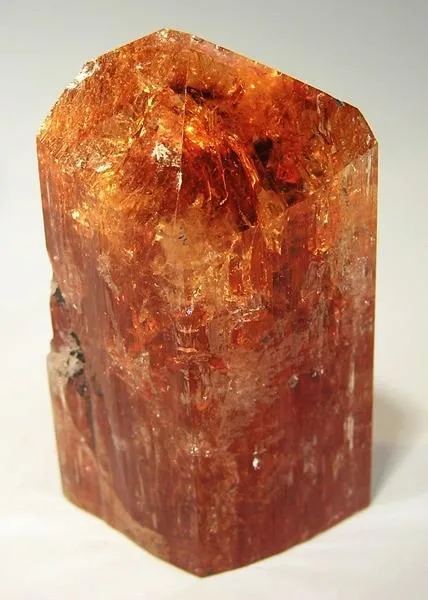
An imperial topaz crystal from Ouro Preto, Brazil. Note the flat end: topaz splits cleanly along one direction.
Real specimen. Photo: Robert M. Lavinsky, CC BY-SA 3.0.
02 In a museum (step 2 of 4)
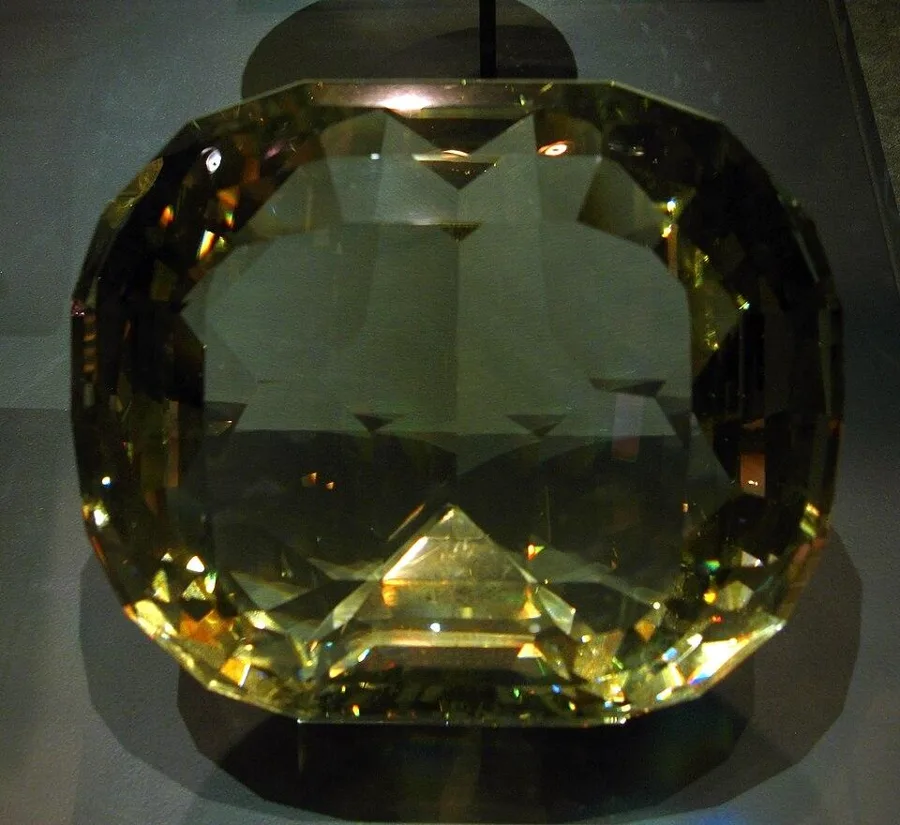
The American Golden Topaz: 22,892.5 carats and 172 facets, cut over two years from a 26 lb crystal from Minas Gerais, Brazil. Smithsonian, Washington.
Real specimen. Photo: thisisbossi, CC BY-SA 2.0.
03 Rough to own (step 3 of 4)

A real imperial topaz crystal, 15 to 20 ct, for about $40.
Amazon listing photo. See it on Amazon
04 Set (step 4 of 4)

Natural London blue topaz in 14K white gold, from PEORA.
Amazon listing photo. See it on Amazon
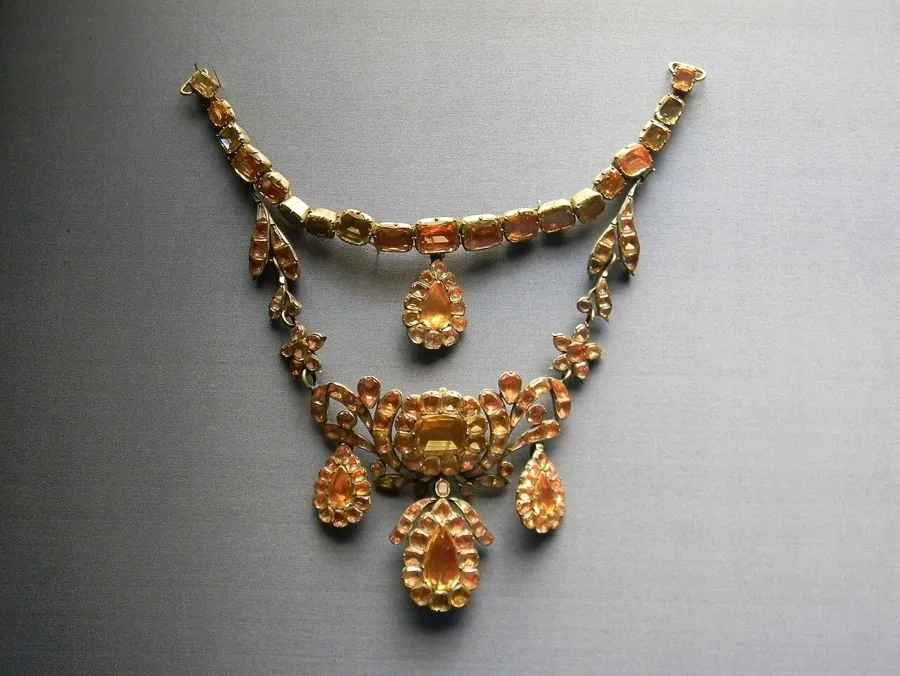
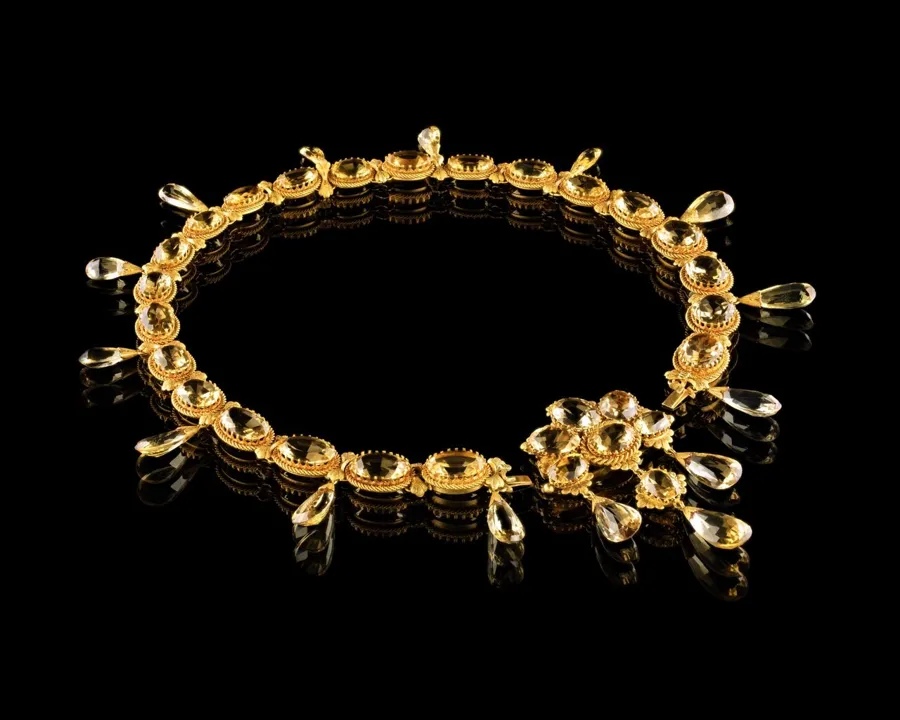
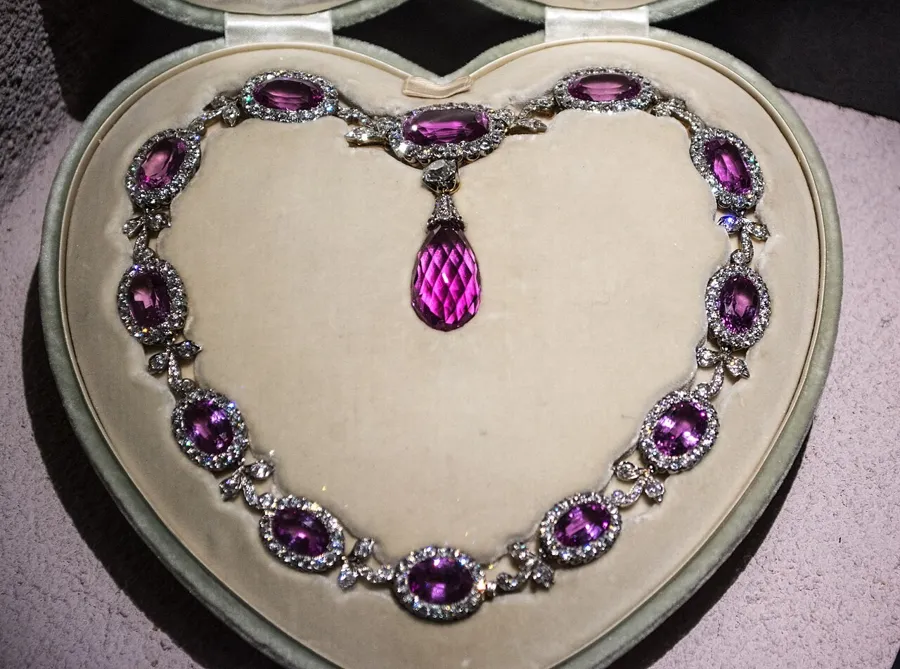
What the finest natural stones look like: real pieces in public collections. The whole gem museum.
| Natural colour | Treated blue (Swiss, London, sky) | |
|---|---|---|
| How it gets its colour | From the ground: colourless, pale blue, sherry, or the rare golden-pink imperial | Colourless topaz is irradiated, then heated, which turns it blue for good |
| How common | Fine imperial topaz is rare | Almost all blue topaz sold |
| Is it safe? | Yes | Yes: treated stones are held until any radiation has fully decayed, under regulation |
| Price | Imperial: hundreds to thousands of dollars a carat | A few dollars a carat |
| Watch out for | "Imperial topaz" that is really citrine | Mystic topaz: a thin coating that can scratch off |
Blue topaz is one of the best values in coloured gems: real topaz, hard and bright, for little money, because the colour is made, not mined. Pay real money only for imperial topaz, and only with a report.
Treatments. Nearly all blue topaz is irradiated and heated; this is permanent and accepted. Mystic and rainbow topaz are coated, and the coating can wear. Some pink topaz is heated imperial topaz. All gem treatments explained.
Pins mark mining districts, not exact mines. Drag to move, pinch or scroll to zoom, tap a pin to read about it. Map data © OpenStreetMap contributors.
Lab topaz is mostly machine-cut in calibrated sizes, which is why a cut lab stone costs little more than its rough. Fine mined stones are often native-cut to keep weight, then recut by precision cutters. See cuts from easiest to hardest and whether cutting your own is cheaper than buying cut.
Checked in stock on October 10, 2026. Photos are the listings' own; prices are rounded.
Our first pick
about $250
Natural topaz in solid gold from a long-running gem jeweller.
See it on AmazonAlso good
about $80
Over 500 ratings: the classic deep London blue.
See it on AmazonAlso good
about $40
The rare natural colour, as a real crystal you can hold.
See it on AmazonEvery piece names the real stone and comes from a seller with a record, checked in stock on October 11, 2026. Photos are the listings' own; prices are rounded.
 WomenPEORA London blue topaz cathedral solitaire ring, sterling silverAbout 400 ratings.about $80on Amazon →
 Women0.5 ctPEORA London blue topaz ring, 0.5 ct, sterling silverabout $80on Amazon →
 Women2 ctPEORA London blue topaz studs, 6 mm, 2 ct, 14K white goldSolid gold. Ships on a lead time.about $250on Amazon →
 WomenPEORA Swiss blue topaz pendant, 8 mm, 14K white goldabout $230on Amazon →
 Women1.5 ctPEORA Swiss blue topaz trillion studs, 1.5 ct, sterling silverabout $45on Amazon →
 WomenGem Stone King London blue topaz tennis bracelet, sterling silverAbout 140 ratings.about $95on Amazon →
 Women9.72 ctGem Stone King Swiss and white topaz pendant, 9.72 ct totalabout $160on Amazon →
 WomenGem Stone King London blue topaz pendant and earrings setabout $100on Amazon →
 WomenJewelryPalace Swiss blue topaz snowflake earringsabout $60on Amazon →
 Women1.2 ctJewelryPalace princess blue topaz solitaire, 1.2 ctabout $27on Amazon →
 WomenShop LC octagon blue topaz ring, sterling silverOver 1,000 ratings: the budget pick.about $28on Amazon →
 Women3 ctRoss-Simons sky blue topaz ring, 3 ct, with white topazabout $130on Amazon →
 Women1.44 ctMystic fire topaz Celtic knot pendant, 1.44 ctMystic topaz is colourless topaz with a thin rainbow coating: lovely, but the coating can wear.about $50on Amazon →
 Raw and tumbledTumbled topaz, 1.25 to 2 inabout $6on Amazon →
Five tools that let you check what you bought (a loupe, a UV torch, locking tweezers, a gem box and a pocket scale), plus a turntable that spins your stone under the light the way jewellers show one. The full collector's kit.
 LookGemOro 10x triplet loupeunder $20
 LookDARKBEAM filtered 365 nm UV flashlightabout $10
 HandleHonoson locking tweezers, 3 packabout $10
 StoreTeensery gem display boxes with clear lids, 10 packabout $9
 ShowComXim motorized turntable, adjustable speed and directionabout $15
 MeasureGemOro Platinum XP500 pocket scale, 0.01 gabout $40
In short
Topaz grows over millions of years in the earth, or in hours to months in a lab. Both are real topaz; the mined stone is rare and priced for rarity, the lab stone is priced for the cost of growing it. Buy lab to wear and enjoy, check the listing names the mineral, and test it when it arrives.
See our first pick: PEORA London blue topaz pendant, 8 mm, 14K white goldThe stone is natural topaz; the strong blue almost never is. Colourless topaz is irradiated and heated to make Swiss, London and sky blue. It is permanent, safe and the reason blue topaz is cheap.
Natural golden-orange to pinkish topaz, found almost only near Ouro Preto in Brazil. It is the valuable kind of topaz.
Not in jewellery. Topaz has been grown experimentally but is not made commercially. A "lab topaz" listing is usually glass, cubic zirconia or lab spinel.
Yes, with care: it is hard (8) but splits along one direction if knocked hard, so protective settings are wise for daily wear.
Amazon links are affiliate links (tag thegemtray-20): buying through them costs you nothing extra and supports the site. As an Amazon Associate we earn from qualifying purchases.
