
Our first pick
Instagem lab spinel, Paraiba colour, cushion, 10 mm
about $40
A big, bright lab spinel from a lab-gem specialist, sold honestly as lab-grown.
See it on AmazonSpinel · MgAl₂O₄ · 8
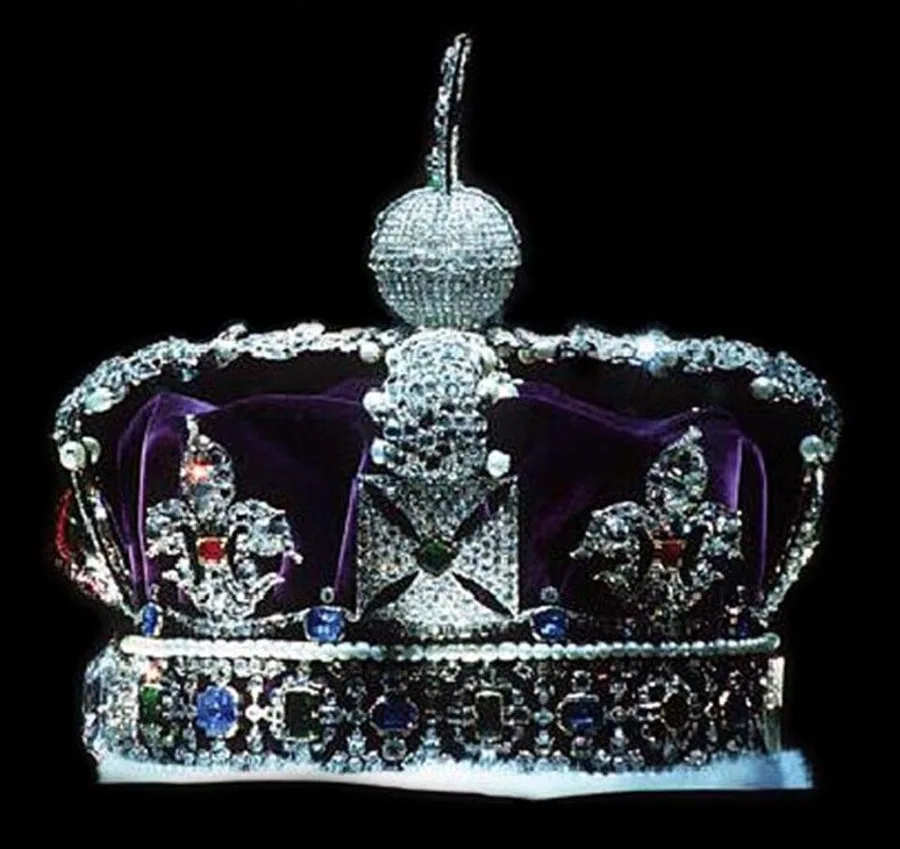
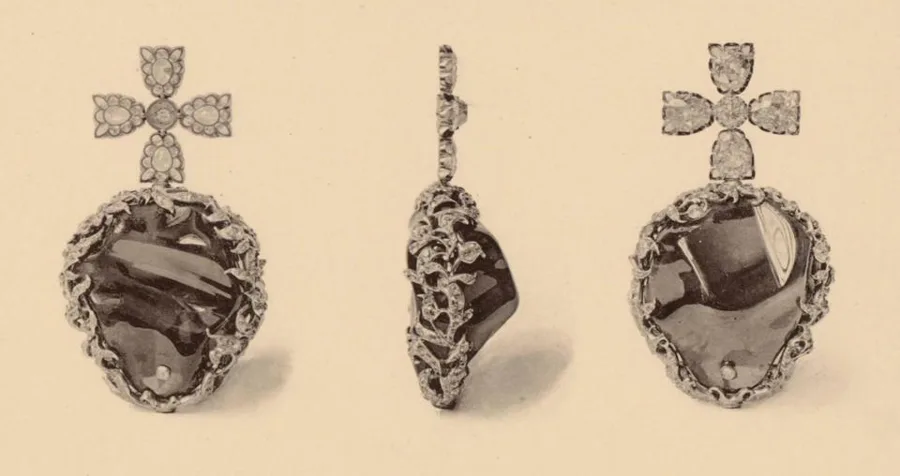
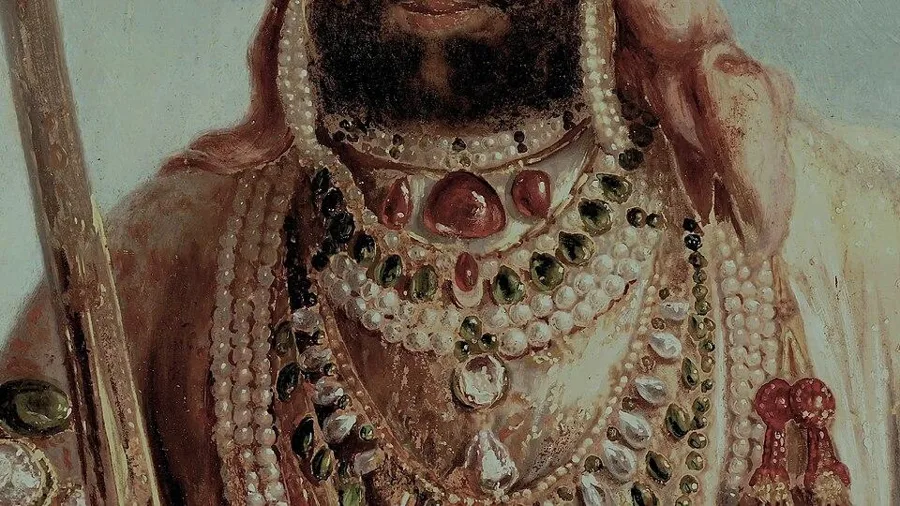
Spinel is magnesium aluminium oxide, a hard, bright gem in red, pink, blue, purple and grey. For centuries red spinel was mistaken for ruby, which is why some of the most famous "rubies" in royal crowns are spinels. Lab spinel is cheap and grown in a flame, and is often used to imitate other gems. Fine mined red or cobalt-blue spinel is rare and expensive.
The same stone at four moments. Tap a photo of a listing to see it on Amazon.
01 In the ground (step 1 of 4)
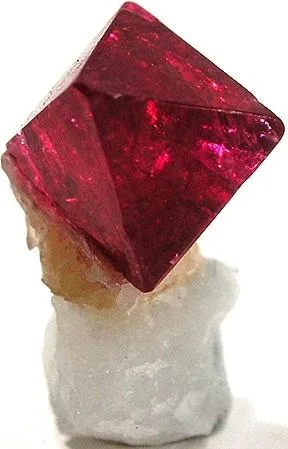
A red spinel octahedron on white marble, Mogok, Myanmar. Spinel grows in the same marble as ruby, which is how the two got confused.
Real specimen. Photo: Robert M. Lavinsky, CC BY-SA 3.0.
02 Rough (step 2 of 4)
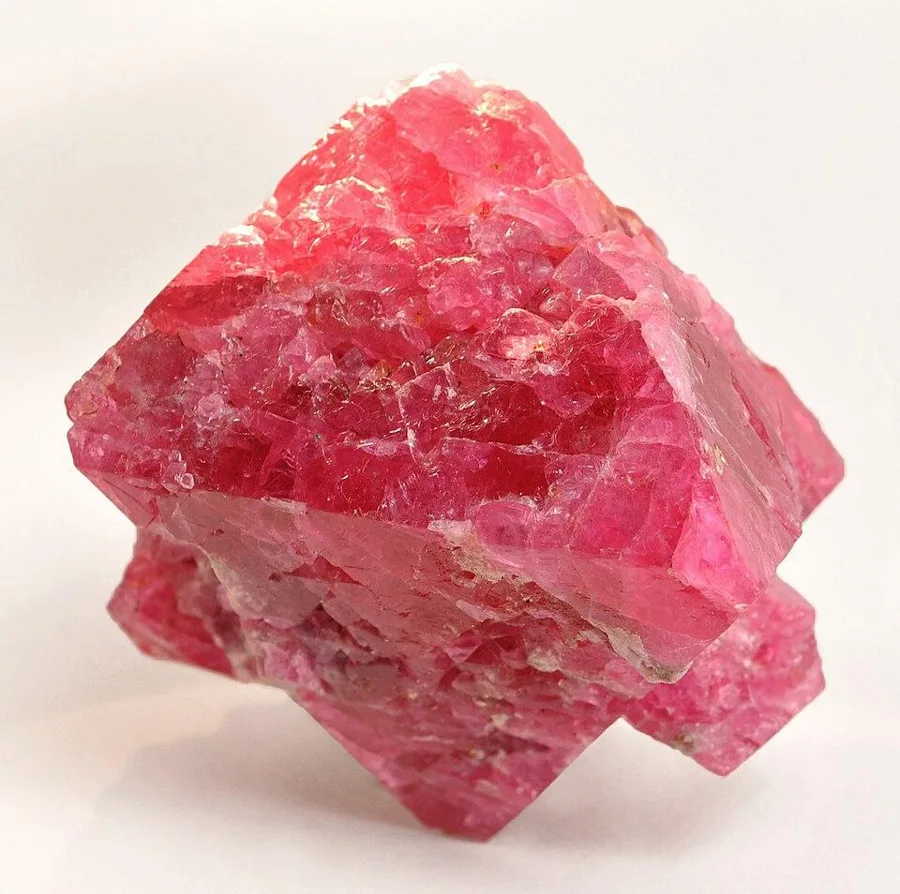
A large pink spinel crystal from Mahenge, Tanzania, where a famous find of bright pink spinel was made in 2007.
Real specimen. Photo: Robert M. Lavinsky, CC BY-SA 3.0.
03 Out of the lab (step 3 of 4)

Lab cobalt-blue spinel, cut. Most lab spinel is grown in a flame like lab sapphire; some is flux-grown and has more natural-looking .
Amazon listing photo. See it on Amazon
04 Set (step 4 of 4)

A lab blue spinel ring in sterling silver, 12 mm stone.
Amazon listing photo. See it on Amazon
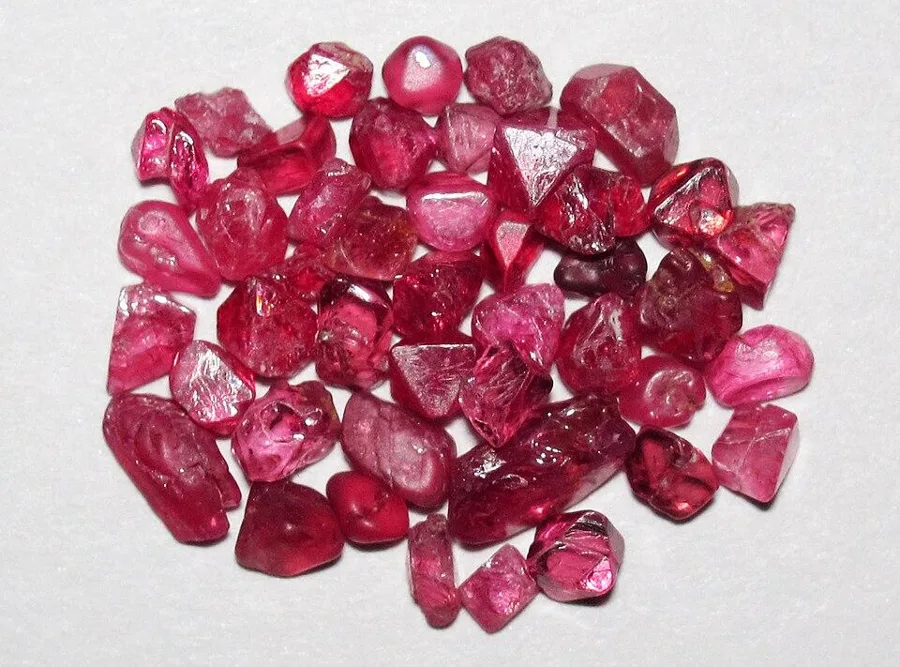
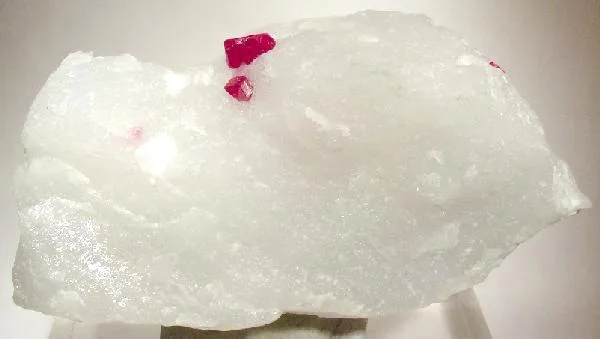
What the finest natural stones look like: real pieces in public collections. The whole gem museum.
Own a lab version, or a natural one
Lab-grownLab cobalt-blue spinel, oval, 9 x 7 mmabout $65on Amazon → NaturalNatural red spinel rough, 25 ct lotabout $25on Amazon →
Spinel to own: a cut lab stone, or small natural rough.
Own a natural piece
Small natural spinel rough: the same mineral as the crown stone, at the other end of the price scale.
Own a natural piece
Small natural spinel rough: the same mineral as the crown stone, at the other end of the price scale.
| Mined | Lab-grown | |
|---|---|---|
| How it formed | In marble and gem gravels, often beside ruby | In a flame in hours, or slowly in a flux |
| Inside | Tiny octahedral crystals, often lined up | Clean flame-fusion stones; gas bubbles; flux veils in flux stones |
| Treatment | Usually none: spinel is rarely heated | None |
| Price | Fine red or cobalt blue: thousands of dollars a carat. Grey and lavender: affordable | A few dollars to tens of dollars a stone |
| Resale | Fine red and cobalt stones hold value | Very little |
Be careful with cheap "natural" spinel on Amazon. Fine cobalt-blue and vivid red spinel cost thousands of dollars a carat; a "15 ct flawless natural cobalt spinel" for $30 is not one. Honest options: lab spinel sold as lab or synthetic, small natural rough, and black spinel, which is natural and genuinely cheap.
Treatments. Natural spinel is one of the few gems that is almost never treated, which is part of why collectors love it. The risk on Amazon is mislabelling: glass and lab material sold as natural. All gem treatments explained.
Pins mark mining districts, not exact mines. Drag to move, pinch or scroll to zoom, tap a pin to read about it. Map data © OpenStreetMap contributors.
Lab spinel is mostly machine-cut in calibrated sizes, which is why a cut lab stone costs little more than its rough. Fine mined stones are often native-cut to keep weight, then recut by precision cutters. See cuts from easiest to hardest and whether cutting your own is cheaper than buying cut.
Checked in stock on October 10, 2026. Photos are the listings' own; prices are rounded.
Our first pick
about $40
A big, bright lab spinel from a lab-gem specialist, sold honestly as lab-grown.
See it on AmazonAlso good
about $160
Natural black spinel, a real and affordable spinel, from an old jeweller with over 100 ratings.
See it on AmazonAlso good
about $230
A full circle of lab blue spinel with moissanite accents.
See it on AmazonLab spinel is grown mostly in blues and greens (the trade colour numbers are shown); natural spinel brings the reds, pinks, purples and greys. Every listing here was checked in stock on October 11, 2026; natural stones come from sellers who name the stone and, where noted, the lab report.
The colour of the crown spinels, and the most valuable.
Burmese "neon" spinel glows under daylight.
Hot pinks made Mahenge, Tanzania, famous.
A sunset colour that is rarely found in other gems.
Sri Lanka is the classic source.
Steel and silver greys are affordable natural spinel, and in fashion.
The usual stand-in for aquamarine.
A deep teal-blue.
Lab spinel was long used in place of blue sapphire.
The darkest of the lab blues.
The rarest natural spinel colour; this is the lab version.
Lab greens imitate tourmaline and emerald.
A neon blue-green, after the rare Paraiba tourmaline.
Natural black spinel is common and genuinely cheap.
Every piece names the real stone and comes from a seller with a record, checked in stock on October 11, 2026. Photos are the listings' own; prices are rounded.
 Loose stonesInstagem lab spinel, aquamarine colour, round, 5.5 mmLab spinel is the usual stand-in for aquamarine: here it is sold honestly.about $10on Amazon →
 Loose stonesInstagem lab spinel, aquamarine colour, emerald cut, 9 x 7 mmA step cut shows off spinel's clean, bright body.about $20on Amazon →
 Loose stonesInstagem lab spinel, green, round, 8 mmSold as synthetic: lab-grown, not mined.about $25on Amazon →
 Loose stonesTianzuan lab cobalt-blue spinel, round, 5 mmCobalt blue is the rarest natural spinel colour; this is the lab version, with some inclusions.about $30on Amazon →Loose stonesTianzuan lab cobalt-blue spinel, oval, 9 x 7 mmShips on a lead time.about $65on Amazon →
 Loose stonesSynthetic blue spinel, round, 12 x 12 mmA big lab stone for very little: the price of lab spinel is mostly the cut.about $9on Amazon →
 Women2.58 ctGem's Beauty lab blue spinel studs, 8 mm, 2.58 ct total, sterling silverShips on a lead time.about $60on Amazon →
 WomenSonia Jewels synthetic blue spinel eternity band, sterling silverA full circle of lab blue spinel.about $130on Amazon →
 WomenSynthetic spinel and lab sapphire earrings, sterling silverTwo lab stones, both named honestly.about $55on Amazon →
 WomenJewelryWeb lab spinel pendant, aquamarine colour, 16 inListed as "lab created spinel, aquamarine colour": the honest way to sell it.about $190on Amazon →
 WomenShop LC natural black spinel huggie hoops, sterling silverBlack spinel is natural and genuinely cheap.about $35on Amazon →
 WomenArt deco black spinel and marcasite ring, sterling silverNatural black spinel in a vintage style.about $70on Amazon →
 MenGem Stone King black spinel and moissanite men's ringNatural black spinel with moissanite.about $150on Amazon →Raw and tumbled25 ctNatural red spinel rough, 25 ct lotSold as natural small rough: a cheap way to hold spinel crystals. Not tested by us.about $25on Amazon →
Five tools that let you check what you bought (a loupe, a UV torch, locking tweezers, a gem box and a pocket scale), plus a turntable that spins your stone under the light the way jewellers show one. The full collector's kit.
 LookGemOro 10x triplet loupeunder $20
 LookDARKBEAM filtered 365 nm UV flashlightabout $10
 HandleHonoson locking tweezers, 3 packabout $10
 StoreTeensery gem display boxes with clear lids, 10 packabout $9
 ShowComXim motorized turntable, adjustable speed and directionabout $15
 MeasureGemOro Platinum XP500 pocket scale, 0.01 gabout $40
In short
Spinel grows over millions of years in the earth, or in hours to months in a lab. Both are real spinel; the mined stone is rare and priced for rarity, the lab stone is priced for the cost of growing it. Buy lab to wear and enjoy, check the listing names the mineral, and test it when it arrives.
See our first pick: Instagem lab spinel, Paraiba colour, cushion, 10 mmNo. Ruby is and spinel is a different mineral, but red spinel grows in the same marble and looks very like ruby. They were not told apart until the late 1700s, so famous "rubies" like the Black Prince’s Ruby are spinels.
Yes, as long as it is sold as lab or synthetic. It is hard enough for rings (8 on the Mohs scale) and cheap. Lab spinel is also used to imitate aquamarine, blue zircon and other gems, so check what a "lab aquamarine" really is.
It usually is not natural spinel. Fine red, pink and cobalt-blue spinel is expensive. Black spinel is the exception: it is natural, common and genuinely cheap.
Yes. In 2016 the American Gem Trade Association and Jewelers of America added spinel as a birthstone for August, alongside peridot.
Amazon links are affiliate links (tag thegemtray-20): buying through them costs you nothing extra and supports the site. As an Amazon Associate we earn from qualifying purchases.


