Make your own
Jewelry making supplies
Professional-looking handmade jewelry comes from two things: real metal (sterling silver or 14/20 gold-filled, which never wears through) and tools that do not mark it (smooth-jaw pliers and a true flush cutter). Below is a complete setup, from wire and chain to soldering and polishing. Every listing was checked before it went on this page, starting with its own material field.
Amazon prices as of . Prices and availability are accurate as of that date and time and are subject to change; the price shown on Amazon at the time of purchase applies.
Real-metal wire, sheet and chain
For pieces you will keep or sell, work in sterling silver or 14/20 gold-filled. Both are solid precious metal through the surface, so they file, hammer and solder like the real thing, and they never wear through to brass.
 Craft Wire 925 sterling wire, 20 gauge, dead soft, 5 ft Made in the USA. Dead soft bends easily for wrapping and loops; hammering hardens it. Other gauges and lengths on the listing. about $40 on Amazon →
 Craft Wire 14/20 gold-filled wire, 22 gauge, half hard, 5 ft One twentieth of the weight is 14K gold, bonded over brass: it does not wear off like plating. Half hard keeps its shape for ear wires. about $50 on Amazon →
 Fine .999 silver sheet, 3 x 1 in Fine silver is soft and fuses without solder: the classic metal for bezels around a stone. about $65 on Amazon →
 Adabele sterling silver flat cable chain, 10 ft Real 925 sterling chain by the foot, 1.6 by 1.2 mm links: cut necklaces and bracelets to any length. about $50 on Amazon →
Steel chain rolls and findings for practice and everyday pieces
Stainless steel will not tarnish, is cheap enough to learn on, and the gold PVD finish lasts years. Cut it with a hard-wire cutter, not your fine flush cutters.
 Pandahall soldered 304 steel curb chain, 82 ft Soldered links, so they cannot pull open. A roll that lasts a long time. about $14 on Amazon →
 Gold PVD rope chain roll, 3 mm, 16.5 ft 18K gold-colour PVD over stainless steel. Also in 2.5 and 4 mm. about $25 on Amazon →
 Pandahall stainless steel findings kit, 830 pieces 680 jump rings in 5 sizes, 90 lobster clasps and extender chains, all stainless steel. about $15 on Amazon →
Beading wire
Bead strands hang on flexible wire made of many fine steel strands: the more strands, the softer it drapes and the less it kinks.


Pliers and cutters
The tools you hold every minute matter most. Smooth jaws do not mark the metal, and a true flush cutter leaves a flat end that needs no filing.
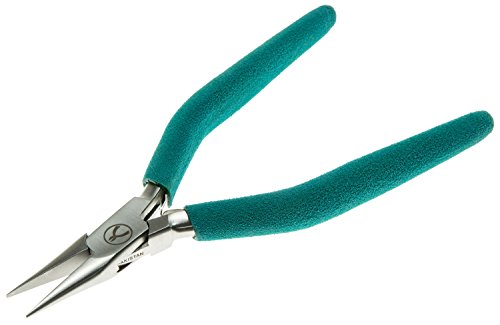 Wubbers Classic chain nose pliers Made for jewelers, with smooth polished jaws that do not mark wire, and a comfortable spring. about $25 on Amazon →
 Beadsmith flat nose pliers Get two pairs of flat or chain nose pliers: one in each hand to open and close jump rings without warping them. about $10 on Amazon →
 Beadsmith round nose pliers, 6 in For loops and ear wires. Mark the jaw with a pen so every loop comes out the same size. about $11 on Amazon →
 Xuron 2175 Maxi-Shear flush cutter Cuts soft wire flat on one side. For copper, silver and gold wire, not steel. about $20 on Amazon →
 Lindstrom RX 8141 flush cutter The Swedish professional cutter, with an ergonomic grip for long sessions. about $75 on Amazon →
Shaping rings and texture
A steel mandrel sizes and rounds rings; a hardened bench block lets you flatten and work-harden wire with a hammer.
 Splenor grooved stainless steel ring mandrel, 13 in Marked in US ring sizes; the groove lets you size a ring with a stone on it. about $25 on Amazon →
 Rosenthal steel bench block, 4 x 4 x 1/2 in Solid steel for hammering and stamping. Wipe it with a little oil: plain steel can rust. about $15 on Amazon →
Soldering
Soldering joins jump rings shut, adds bails and builds settings. Work on a fire-safe surface, in ventilation, with safety glasses, and never pickle with the torch running.
 Blazer GT8000 Big Shot butane torch Hot and steady enough for silver up to small rings; refills with butane. about $60 on Amazon →
 Solderite hard soldering board, 6 x 6 in A heat-proof board that reflects heat back into the piece. about $15 on Amazon →
 Rosenthal Aquiflux liquid flux Keeps the joint clean so solder flows. Low residue. about $12 on Amazon →
 Sparex No. 2 pickling compound, 10 oz Dissolved in warm water, it removes the firescale and flux after soldering. about $11 on Amazon →
Finishing and measuring
A professional piece is a finished piece: smooth ends, a high shine and the right size.
 Pro-Polish pads, 20 pack Pre-treated pads that take off scratches and fire stain by hand. about $10 on Amazon →
 Sunshine polishing cloths, 5 pack The final shine on silver, gold, brass and copper. about $20 on Amazon →
 iGaging Absolute Origin digital caliper, 0 to 6 in Measures wire gauge, bead size and ring thickness to the hundredth of a millimetre. about $50 on Amazon →
 Toyo 10x triplet jeweler's loupe A distortion-free 10x lens for checking solder joints, stone settings and hallmarks. about $20 on Amazon →
Where to start
- Earrings and wire-wrapped pendants: two flat nose pliers, round nose pliers, a flush cutter, and gold-filled or sterling wire.
- Custom-length chains: a roll of chain, the findings kit and two pliers. Practise on steel, then make keepers in sterling.
- Rings: add the mandrel and bench block; add the soldering set to close the band for good.
Left out for now: permanent-jewelry welders (Sunstone, Pepe), Fretz hammers, jump ring makers and silver solder could not be checked yet, and several cheap hammers, sterling clasps and a "gold filled" chain roll failed our checks. Amazon links are affiliate links.
Frequently Asked Questions
What metal should I use to make jewelry that lasts?
Sterling silver or 14/20 gold-filled wire and chain. Both are solid precious metal through the surface, so they never wear through to brass. Use stainless steel for practice and everyday pieces; avoid plated brass for anything you want to keep.
What tools do I need to start making jewelry?
Two pairs of flat or chain nose pliers, a round nose pliers and a flush cutter will make wire-wrapped pieces, chains and earrings. Add a ring mandrel and a steel bench block for rings, and a torch, board, flux and pickle when you start soldering.
Is "gold filled" chain on Amazon real gold filled?
Not always. Real gold-filled is marked 14/20 or 1/20 and bonded over brass. Some very cheap rolls called gold filled are plated brass: one 16 ft roll we checked lists brass and gold in its own material field. Check the listing's material field, and be suspicious of a full roll for a few dollars.
Where do I buy silver solder and pro hammers?
From a jewelry supplier such as Rio Grande or Otto Frei. We could not verify the silver solders or the Fretz hammers sold on Amazon yet, and the cheaper hammers did not pass our checks.