
Our first pick
Boston Bay Diamonds pink tourmaline eternity band, sterling silver
about $150
Small natural pink tourmalines all the way round, a classic October birthstone ring.
See it on AmazonBorosilicate group · mostly elbaite · 7 to 7.5
Updated
Narrated by an AI voice (Kokoro, an open-source voice model) from a script we wrote from this page and its sources, fact-checked line by line.
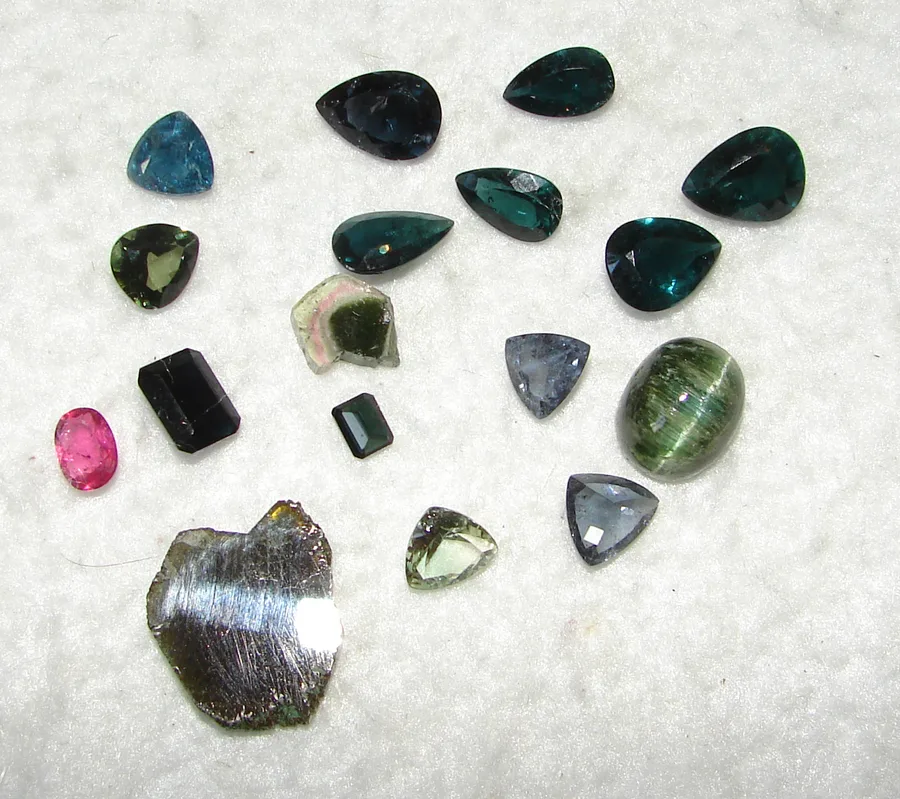
Tourmaline is a family of boron silicate minerals that comes in more colours than any other gem: pink and red (rubellite), green, blue (indicolite), black (schorl, the most common), and stones with two colours at once, like watermelon tourmaline with a pink core and a green rim. It is one of the two October birthstones, with opal, and at 7 to 7.5 on the Mohs scale it is hard enough for everyday jewellery. The rarest is neon blue-green Paraiba tourmaline, coloured by copper and first found in the late 1980s in Paraiba, Brazil. Tourmaline is not grown in labs for jewellery, so treat very cheap "natural Paraiba" listings with suspicion.
From the rock to the finished piece. Where gems are mined.
01 In the ground (step 1 of 4)
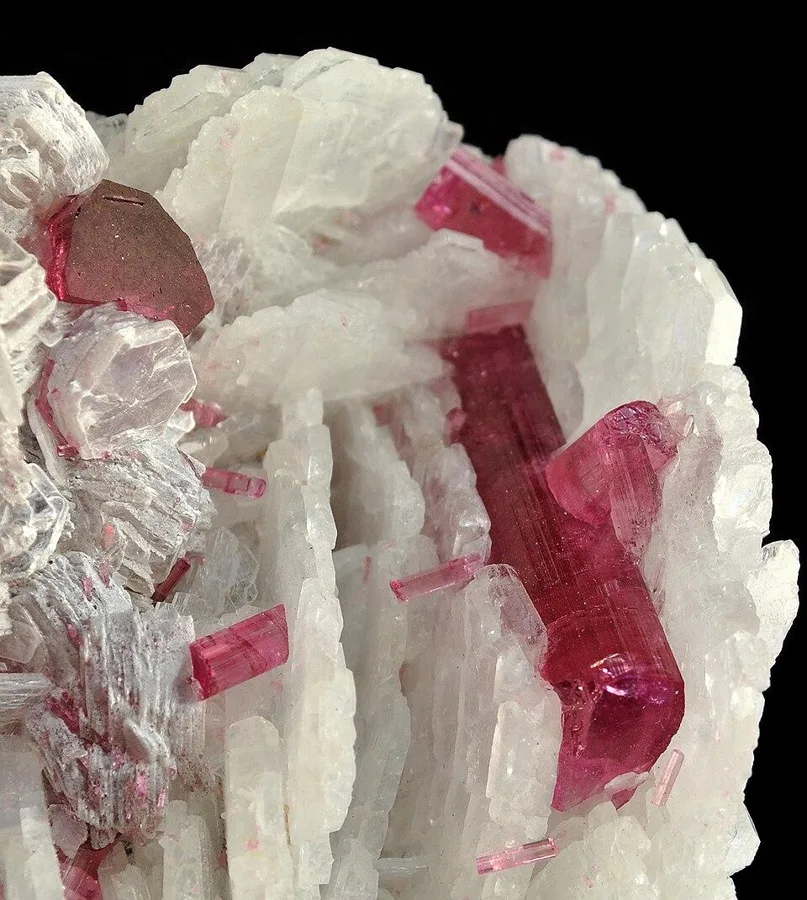
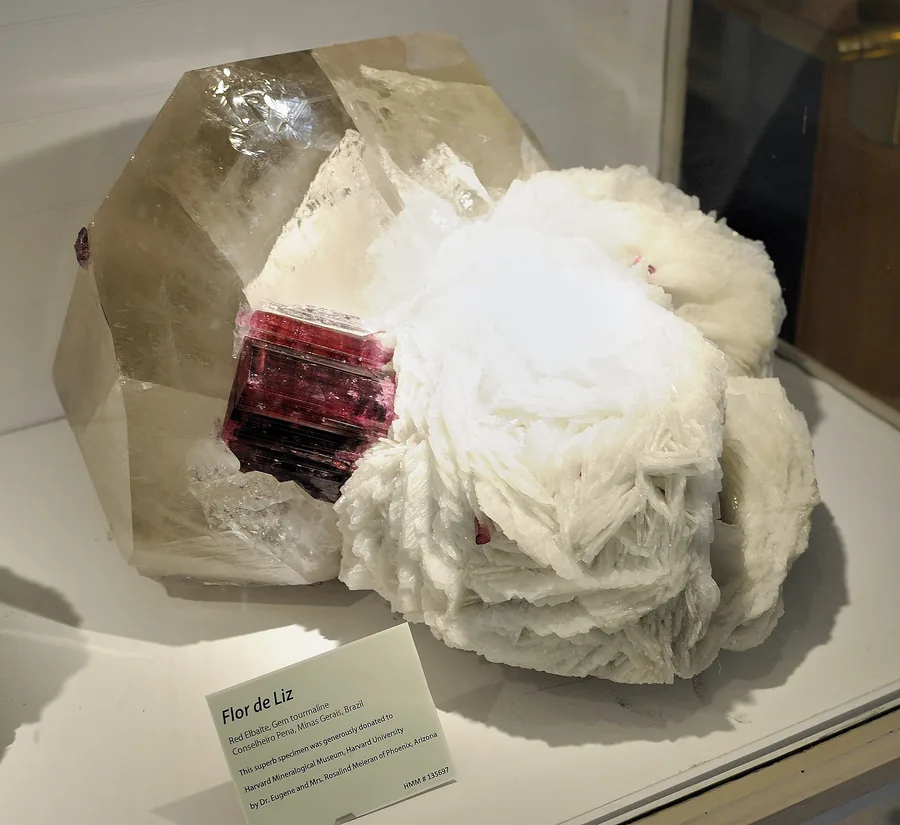
Red tourmaline (rubellite) crystals growing from white feldspar, from the Jonas mine in Minas Gerais, Brazil.
Real specimen. Photo: Robert M. Lavinsky, CC BY-SA 3.0.
02 Crystal (step 2 of 4)
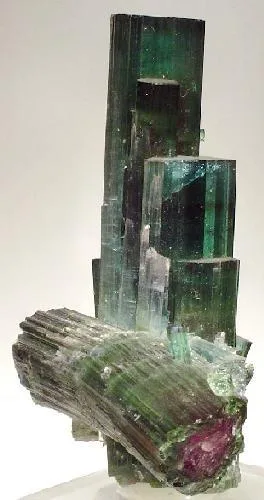
Watermelon tourmaline: the crystal changed colour as it grew, from a pink core to a green rim.
Real specimen. Photo: Robert M. Lavinsky, CC BY-SA 3.0.
03 Cut (step 3 of 4)
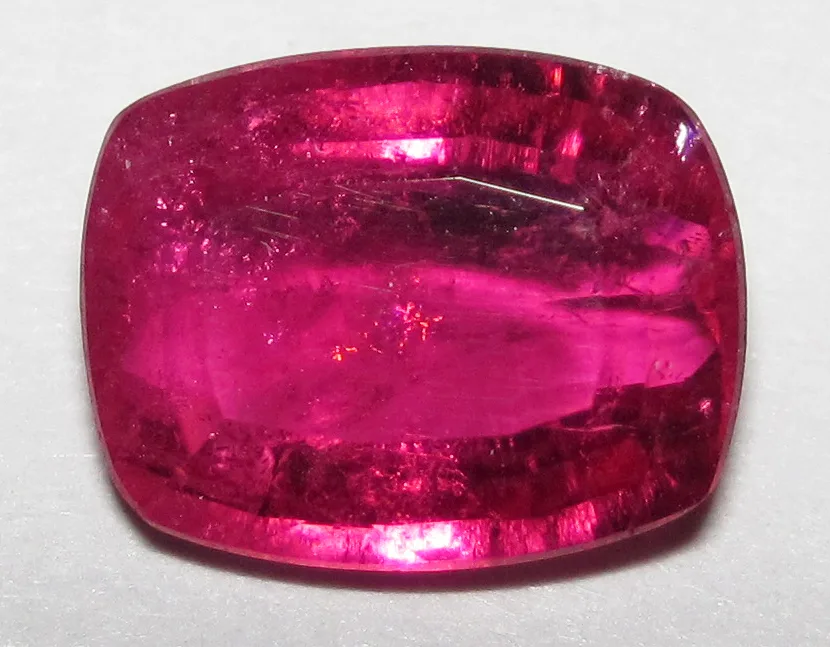
A cut rubellite, the pink-red variety of tourmaline.
Real specimen. Photo: James St. John, CC BY 2.0.
04 Set (step 4 of 4)

A band of small natural pink tourmalines in sterling silver.
Amazon listing photo. See it on Amazon
Real pieces in public collections. The whole gem museum.
Amazon prices as of . Prices and availability are accurate as of that date and time and are subject to change; the price shown on Amazon at the time of purchase applies.
Own a natural piece
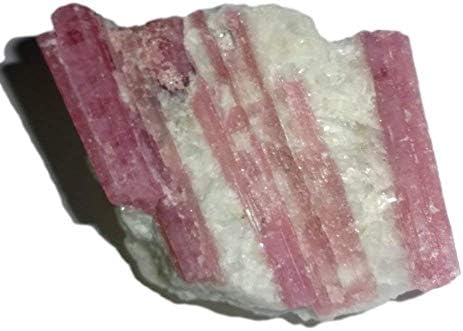
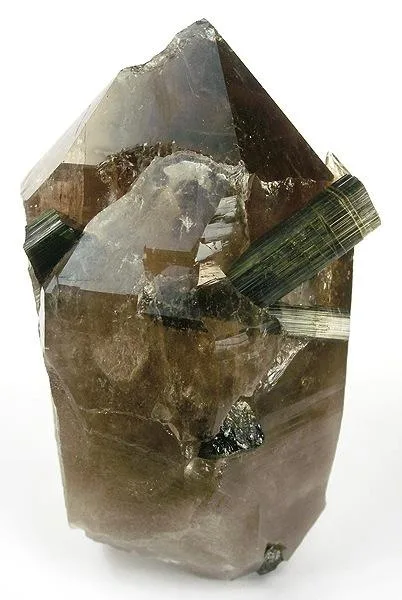
Natural pink tourmaline crystals in quartz.
| On the listing | What it usually is |
|---|---|
| Natural tourmaline | Real tourmaline; often heated or irradiated to improve colour |
| Rubellite, indicolite, verdelite | Trade names for red, blue and green tourmaline |
| "Natural Paraiba" for a few dollars a carat | Not credible: real Paraiba is among the most costly coloured gems; expect glass, cubic zirconia or other blue stones |
| "Watermelon tourmaline quartz" | Quartz, not tourmaline, coloured to look like watermelon tourmaline |
| Black tourmaline | Schorl, real and very common, sold as raw crystals and beads |
Our picks name natural tourmaline and passed our listing checks. Most tourmaline jewellery on Amazon has almost no reviews yet, and many "Paraiba" listings promise 10 to 20 carats for the price of a meal, which real Paraiba never costs.
Treatments. Heating is common: it lightens dark green and blue stones and is permanent. Pink and red tourmaline is often irradiated to deepen the colour, which is stable. Stones with many cracks may be filled with resin, which should be disclosed. Tourmaline is pyroelectric: warmed, it builds an electric charge and attracts dust, which is why Dutch traders once called it "aschentrekker", the ash puller. All gem treatments explained.
Pins mark mining districts, not exact mines. Drag to move, pinch or scroll to zoom, tap a pin to read about it. Map data © OpenStreetMap contributors.
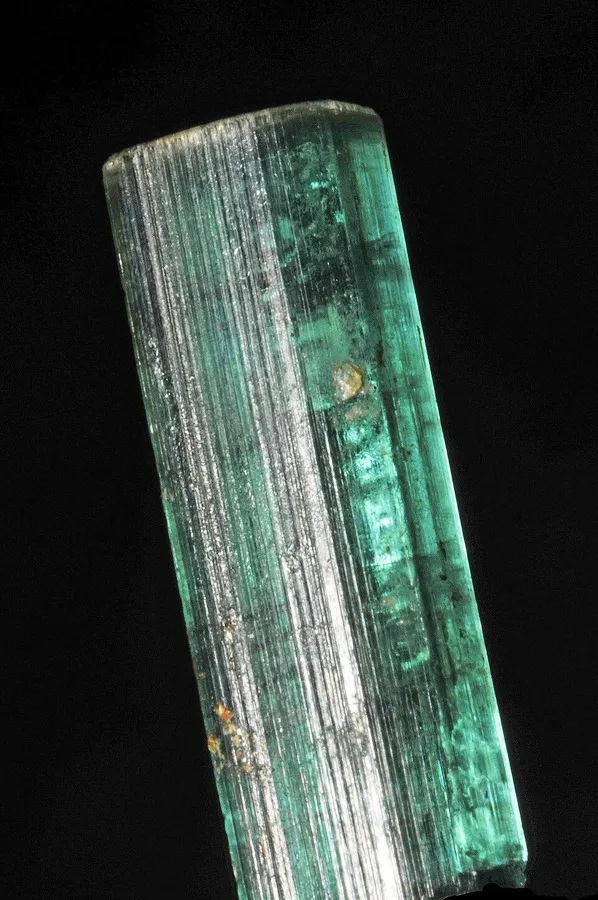
Tourmaline crystals are long and striated, so many stones are cut as long rectangles and emerald cuts that follow the crystal. Colour looks deeper looking down the length of the crystal, so cutters orient each stone to show its best colour through the top. See cuts from easiest to hardest and whether cutting your own is cheaper than buying cut.
Listing photos; prices are rounded. How we choose.
Our first pick
about $150
Small natural pink tourmalines all the way round, a classic October birthstone ring.
See it on AmazonAlso good
about $20
A real tourmaline crystal for your shelf, showing the striated sides tourmaline is known for.
See it on AmazonAlso good
about $20
Pink tourmaline columns frozen in white quartz, as they grow in nature.
See it on AmazonLoose bead strands for making your own jewellery. Cheap beads are often dyed, glass or plastic: buy strands whose listing names the natural stone, and be wary of perfectly even, bright colour.
 LookGemOro 10x triplet loupeabout $15
 LookDARKBEAM filtered 365 nm UV flashlightabout $13
 HandleHonoson locking tweezers, 3 packabout $10
 StoreTeensery gem display boxes with clear lids, 10 packabout $9
 ShowComXim motorized turntable, adjustable speed and directionabout $14
 MeasureGemOro Platinum XP500 pocket scale, 0.01 gabout $40
In short
Tourmaline is a natural boron silicate in every colour, hard enough for rings and one of the October birthstones. It is often heated or irradiated, which is normal, and it is not grown in labs for jewellery. Buy from listings that name natural tourmaline, and skip cheap "natural Paraiba" and "watermelon tourmaline quartz".
See our first pick: Boston Bay Diamonds pink tourmaline eternity band, sterling silverTourmaline with a pink or red core and a green rim, made when the chemistry of the fluid feeding the crystal changed as it grew. Slices cut across the crystal look like slices of watermelon.
Yes. It is copper-bearing tourmaline with a neon blue to green colour, first found in the late 1980s in Paraiba, Brazil, and later in Nigeria and Mozambique. It is one of the most valuable coloured gems, so large "natural Paraiba" stones for a few dollars are not real Paraiba.
It can be. At 7 to 7.5 on the Mohs scale it is hard enough for daily wear, though softer than sapphire or diamond, so a protective setting helps and it may need repolishing after years of wear.
Amazon links are affiliate links (tag thegemtray-20): buying through them costs you nothing extra and supports the site. As an Amazon Associate we earn from qualifying purchases.


