As an Amazon Associate, The Gem Tray earns from qualifying purchases. Amazon links on this page are paid links; buying through them costs you nothing extra.
Titanite · CaTiSiO₅ · 5 to 5.5
Sphene
Updated
Listen · the sphene audiobook · 6 min
More fire than diamond
0:00
6:06
8 chapters
Narrated by an AI voice (Kokoro, an open-source voice model) from a script we wrote from this page and its sources, fact-checked line by line.
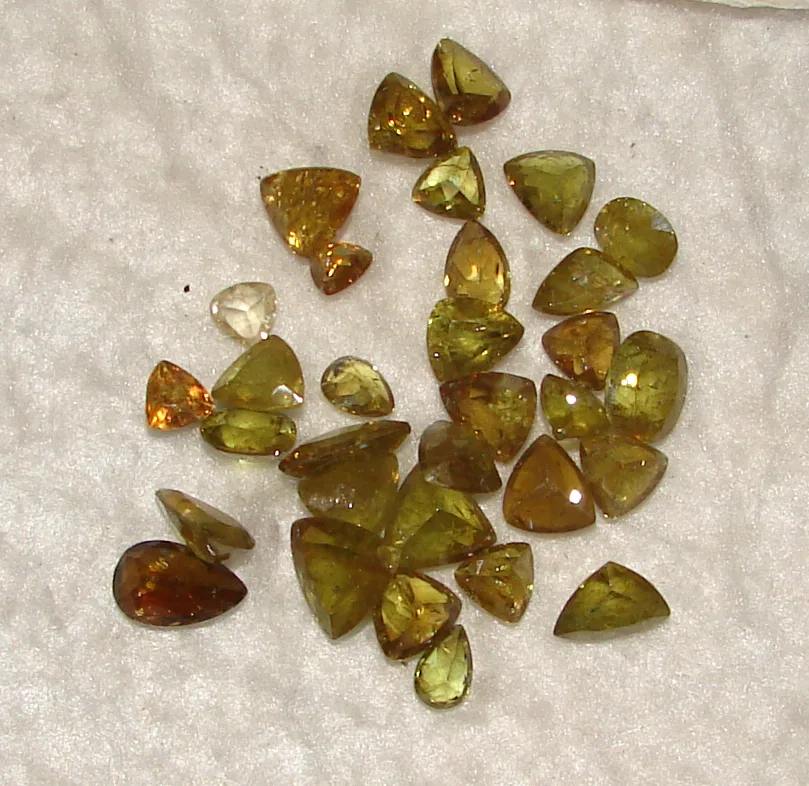
A handful of cut sphene (titanite) gems. Photo: Eurico Zimbres Zimbres, CC BY-SA 3.0.
Sphene, the mineral titanite, splits light into colours more strongly than diamond does: its dispersion is about 0.051, against diamond’s 0.044. Cut well, a yellow-green or green sphene throws flashes of fire that few gems can match. It is soft, at 5 to 5.5 on the Mohs scale, so it suits pendants and earrings better than everyday rings. It is not grown in labs, and good stones are sold mostly by specialist gem dealers.
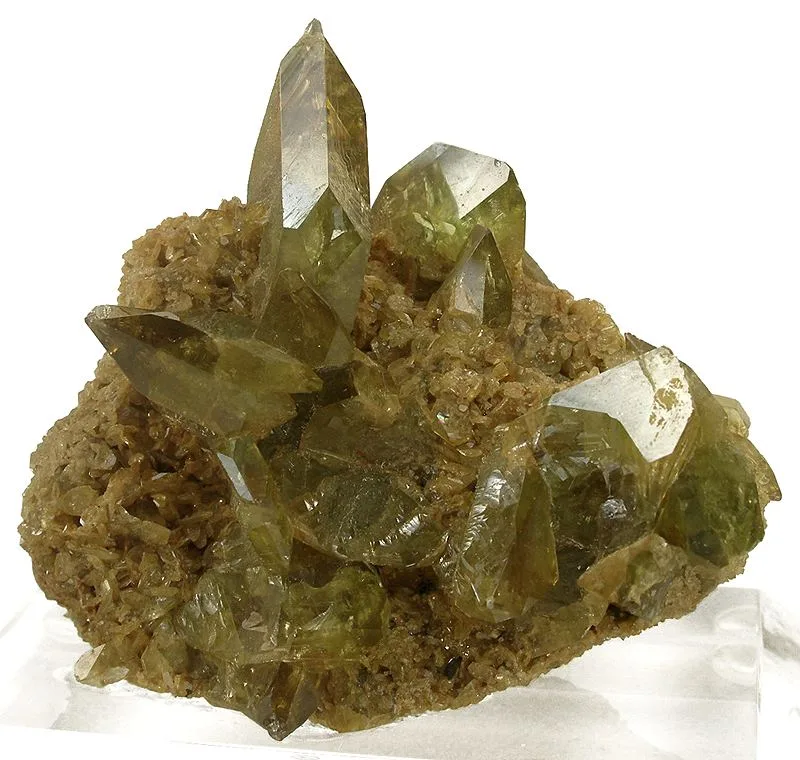
Real specimen. Photo: Robert M. Lavinsky, CC BY-SA 3.0.
02 Crystal (step 2 of 2)
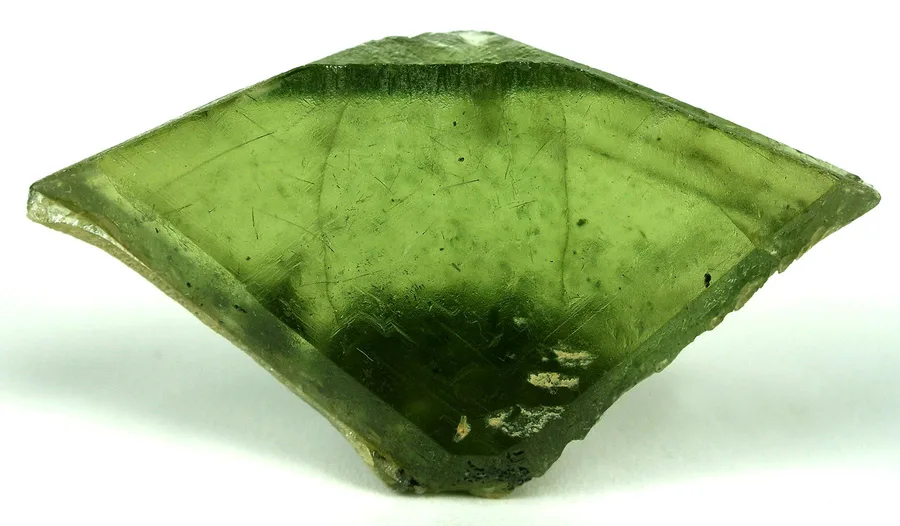
A gem sphene crystal in the wedge shape that gave it its name, from the Greek sphenos, a wedge.
Real specimen. Photo: Robert M. Lavinsky, CC BY-SA 3.0.
Mineral
Titanite (calcium titanium silicate)
Fire
Dispersion 0.051, above diamond’s 0.044
Hardness
5 to 5.5, soft
Grown in labs
No
Famous sources
Madagascar, Pakistan, Brazil
Sphene next to diamond
How sphene’s fire and wear compare with diamond
Sphene
Diamond
Fire (dispersion)
0.051, more than diamond
0.044
Hardness
5 to 5.5: scratches easily
10
Double refraction
Very strong: facet edges look doubled
None
Best for
Pendants and earrings
Anything, including everyday rings
Grown in labs
No
Yes, widely
Treatments. Sphene is usually untreated. Some brownish material is heated to turn it orange to reddish. Because it is soft and can chip, keep it away from hard knocks and ultrasonic cleaners. All gem treatments explained.
Sphene: Southern Madagascar, Madagascar. A main source of gem sphene, including green chrome sphene.
Sphene: Skardu and the northern areas, Pakistan. Fine crystals and gem rough from Himalayan pegmatites and Alpine-type veins.
Sphene: Minas Gerais, Brazil. Gem sphene among Brazil’s many pegmatite gems.
How is sphene cut?
Sphene is cut to show off its fire, usually in round, oval or cushion shapes with many facets. Its very strong double refraction makes the back facets look doubled, so cutters orient the stone carefully. Because it is soft, the facet edges can wear, which is why it is better in protected settings. See cuts from easiest to hardest and whether cutting your own is cheaper than buying cut.
Amazon prices as of . Prices and availability are accurate as of that date and time and are subject to change; the price shown on Amazon at the time of purchase applies.
A loose green pear of sphene, about 3.9 carats, sold by GlobalGemsindia. The listing has no buyer reviews yet, so look the stone over carefully when it arrives.
A big green cushion that the seller lists as semi-transparent, so expect a cloudier stone with less fire than a clean sphene. Same seller, also no reviews yet.
Sphene is the mineral titanite, with more fire than diamond but a soft 5 to 5.5 on the Mohs scale. It is not lab-grown and rarely sold in mass-market jewellery, so buy from specialist dealers and wear it in pendants or earrings.
Yes. Sphene’s dispersion, the measure of how strongly it splits white light into colours, is about 0.051, higher than diamond’s 0.044. A well-cut sphene can show more coloured flashes than a diamond of the same size.
Is sphene good for an engagement ring?
Not for daily wear. At 5 to 5.5 on the Mohs scale it scratches and chips far more easily than sapphire or diamond. A protective setting helps, but it is best in pendants and earrings.
What is the difference between sphene and titanite?
Nothing: they are the same mineral. Titanite is the official mineral name, from its titanium; sphene is the older name, used mostly for the gem, from the Greek word for wedge, after its crystal shape.
titanite-crystals-on-matrix.webp: Robert M. Lavinsky, CC BY-SA 3.0, via Wikimedia Commons.
titanite-wedge-crystal.webp: Robert M. Lavinsky, CC BY-SA 3.0, via Wikimedia Commons.
Product photos: Amazon listings, via the Amazon Product Advertising (Creators) API.
Amazon links are affiliate links (tag thegemtray-20): buying through them costs you nothing extra and supports the site. As an Amazon Associate we earn from qualifying purchases.