
Our first pick
Starborn genuine rough moldavite, 10 to 14 ct, one piece
about $95
A single natural piece from a long-running moldavite brand; the shape and colour look right for real moldavite.
See it on AmazonNatural glass (tektite) · mostly SiO₂ · 5.5 to 7
Updated
Narrated by an AI voice (Kokoro, an open-source voice model) from a script we wrote from this page and its sources, fact-checked line by line.
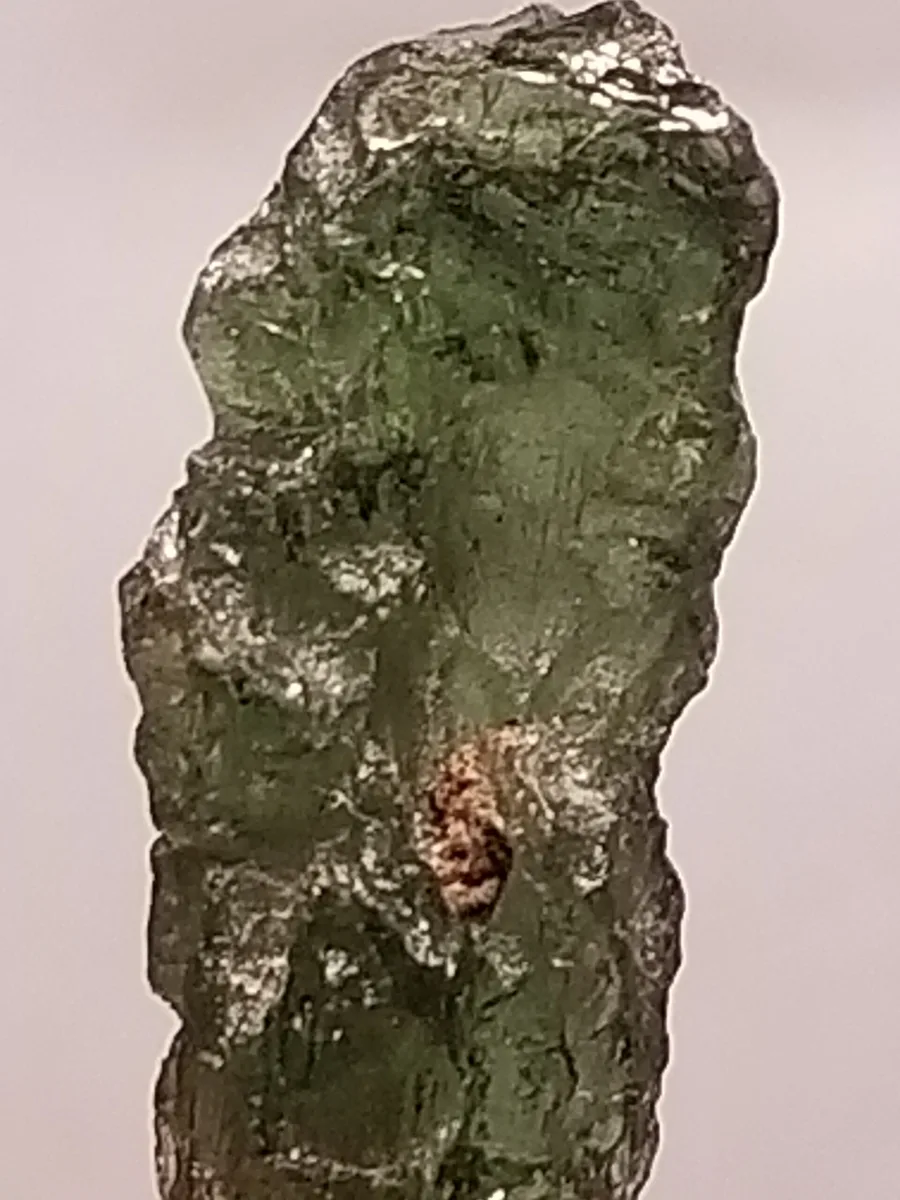
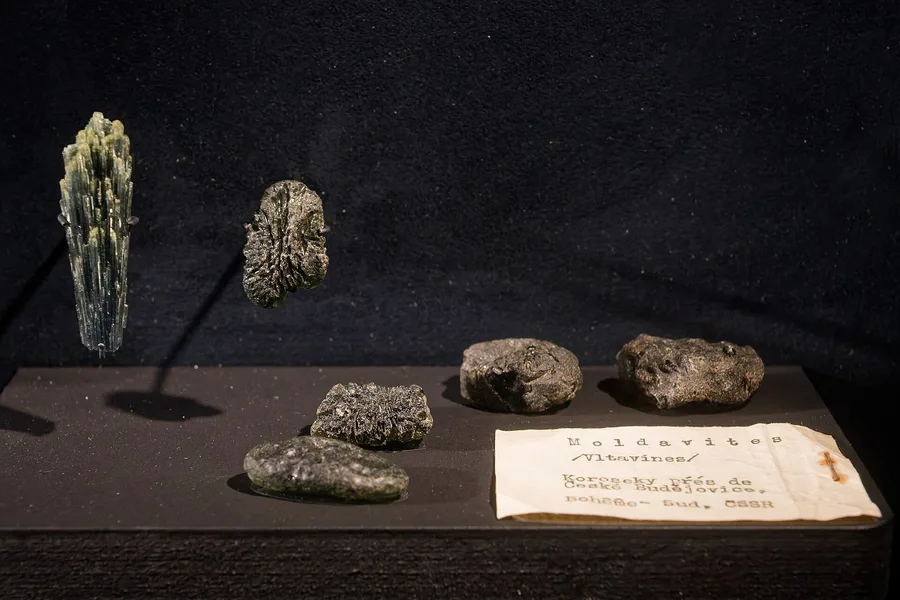
Moldavite is natural green glass, not a crystal. About 15 million years ago a meteorite hit what is now southern Germany and blasted out the Ries crater; molten rock flew hundreds of kilometres east and cooled in the air into glass, which landed in Bohemia and Moravia in today’s Czech Republic. It is found nowhere else in quantity. Its price has climbed fast, so fakes made of ordinary green glass are everywhere.
From the rock to the finished piece. Where gems are mined.
01 In the ground (step 1 of 4)
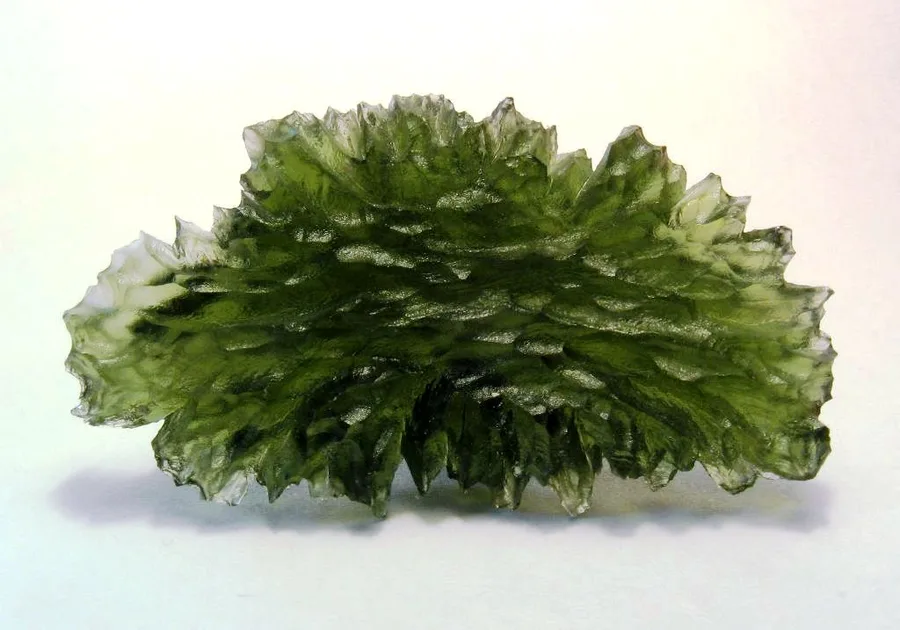
Natural moldavite from Besednice, South Bohemia, a find spot famous for pieces with deeply etched, feathery edges.
Real specimen. Photo: H. Raab (User:Vesta), CC BY-SA 3.0.
02 Rough (step 2 of 4)

A single piece of rough moldavite, 10 to 14 ct, with its natural sculpted skin.
Amazon listing photo. See it on Amazon
03 Cut (step 3 of 4)
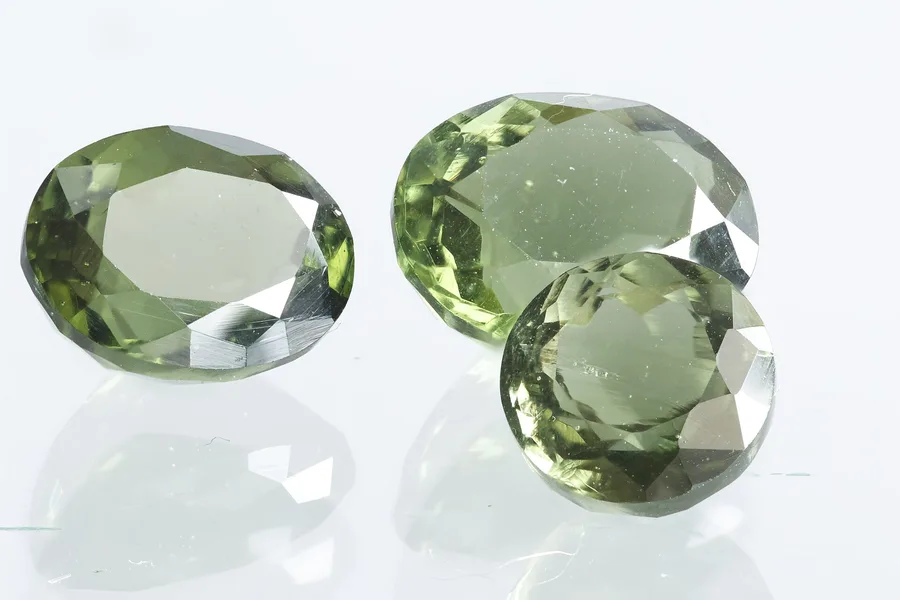
Faceted natural moldavite. Once cut, it looks like any green glass, which is why rough with its natural skin is easier to trust.
Real specimen. Photo: AdamStejskal, CC BY 4.0.
04 Set (step 4 of 4)

Rough moldavite set in a sterling silver pendant.
Amazon listing photo. See it on Amazon
| Real moldavite | Fake "moldavite" | |
|---|---|---|
| Surface | Etched and sculpted, with grooves and pits that follow the shape | Smooth or moulded, or etched in regular, repeating patterns |
| Inside (loupe) | Stretched bubbles and fine worm-like threads of pure silica glass (lechatelierite) | Round bubbles, or perfectly clean |
| Colour | Forest to olive green, often uneven | Bright bottle green, very even |
| Size and price | Price climbs steeply with weight; big pieces are rare | Big, cheap "rough" pieces |
| Where from | Named Czech find spots | No locality given |
We cannot test a stone through a screen, so we only list moldavite from Starborn, a jewellery brand that has sold it on Amazon for years. Even so, look at the photos: real moldavite has a sculpted, etched skin and soft olive-green colour, and it is never cheap by the gram.
Treatments. Real moldavite is not heated, dyed or filled. The problem is imitation: green bottle glass and slag are moulded or acid-etched to look like rough moldavite and sold far below the real price. Under a 10x loupe, real moldavite shows stretched bubbles and fine curling threads of pure silica glass that factory glass lacks. All gem treatments explained.
Pins mark mining districts, not exact mines. Drag to move, pinch or scroll to zoom, tap a pin to read about it. Map data © OpenStreetMap contributors.
Most moldavite is sold rough, because its etched natural skin is the attraction and the best proof it is real. Clear pieces are also faceted or cut as ; cut moldavite is a soft olive green and looks much like peridot or green glass, so buy cut stones only from sellers you trust. See cuts from easiest to hardest and whether cutting your own is cheaper than buying cut.
Listing photos; prices are rounded. How we choose.
Amazon prices as of . Prices and availability are accurate as of that date and time and are subject to change; the price shown on Amazon at the time of purchase applies.
Our first pick
about $95
A single natural piece from a long-running moldavite brand; the shape and colour look right for real moldavite.
See it on AmazonAlso good
about $150
Rough moldavite set whole, so you can still see the natural skin.
See it on AmazonAlso good
about $180
The larger version of the same pendant.
See it on Amazon LookGemOro 10x triplet loupeabout $15
 LookDARKBEAM filtered 365 nm UV flashlightabout $13
 HandleHonoson locking tweezers, 3 packabout $10
 StoreTeensery gem display boxes with clear lids, 10 packabout $9
 ShowComXim motorized turntable, adjustable speed and directionabout $14
 MeasureGemOro Platinum XP500 pocket scale, 0.01 gabout $40
In short
Moldavite is natural glass made by a meteorite impact about 15 million years ago and found almost only in the Czech Republic. It is never lab-grown, but fakes made of green glass are common. Look for an etched, sculpted skin, soft olive colour and stretched bubbles, and expect to pay by the gram.
See our first pick: Starborn genuine rough moldavite, 10 to 14 ct, one pieceNo. Moldavite is natural glass, a tektite. It formed when rock melted in a meteorite impact and cooled too fast to crystallise.
Almost all of it is found in southern Bohemia and Moravia in the Czech Republic, with small amounts in Austria and Germany. It was thrown there by the impact that made the Ries crater in Bavaria about 15 million years ago. The name comes from the Vltava river, Moldau in German.
Look at the skin and inside. Real rough moldavite is etched and sculpted, olive to forest green and slightly uneven in colour, with stretched bubbles and fine threads visible under a 10x loupe. Bright, even bottle-green pieces with round bubbles, regular patterns or a very low price per gram are almost always glass.
Amazon links are affiliate links (tag thegemtray-20): buying through them costs you nothing extra and supports the site. As an Amazon Associate we earn from qualifying purchases.

