
Our first pick
Amberta Baltic amber oval pendant, 925 sterling silver
about $35
A classic honey-coloured cabochon of genuine Baltic amber in a simple silver setting.
See it on AmazonFossil tree resin · organic gem · 2 to 2.5
Updated
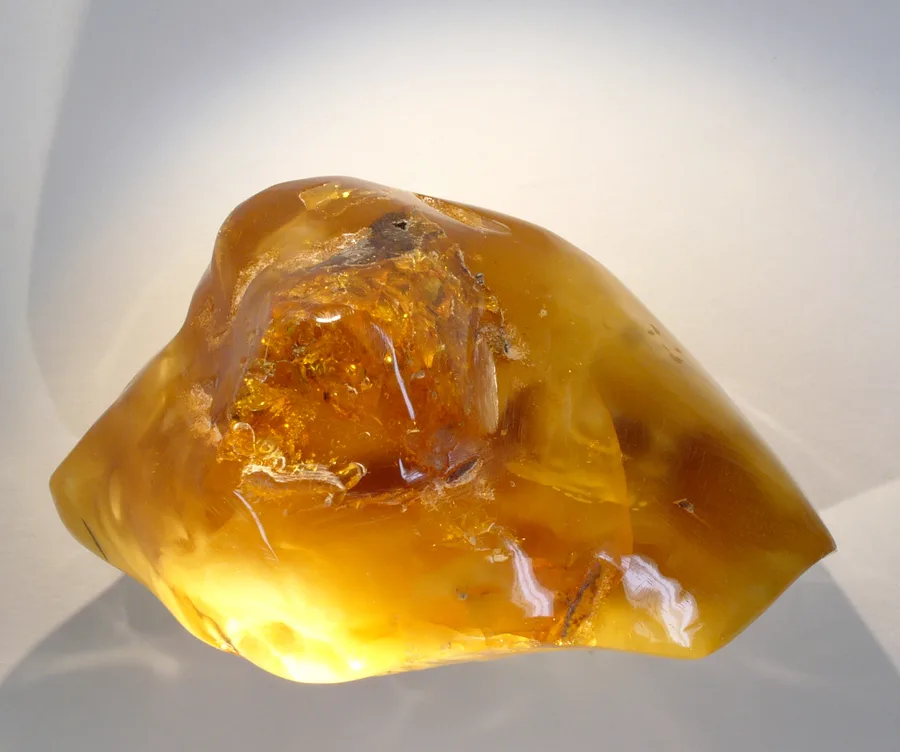
Amber is fossilised tree resin, not a mineral: sticky resin from ancient trees hardened over millions of years, sometimes trapping insects and leaves. Most amber jewellery is Baltic amber, around 40 million years old, and the Kaliningrad region of Russia on the Baltic coast supplies most of the world's amber. Amber is very light (it floats in strongly salted water, where glass sinks), soft at 2 to 2.5 on the Mohs scale, and warm to the touch. Fakes are common: plastic, glass, copal (younger, not fully fossilised resin) and "pressed amber" made from small pieces fused together, so test before you trust a cheap listing.
From the rock to the finished piece. Where gems are mined.
01 In the ground (step 1 of 4)
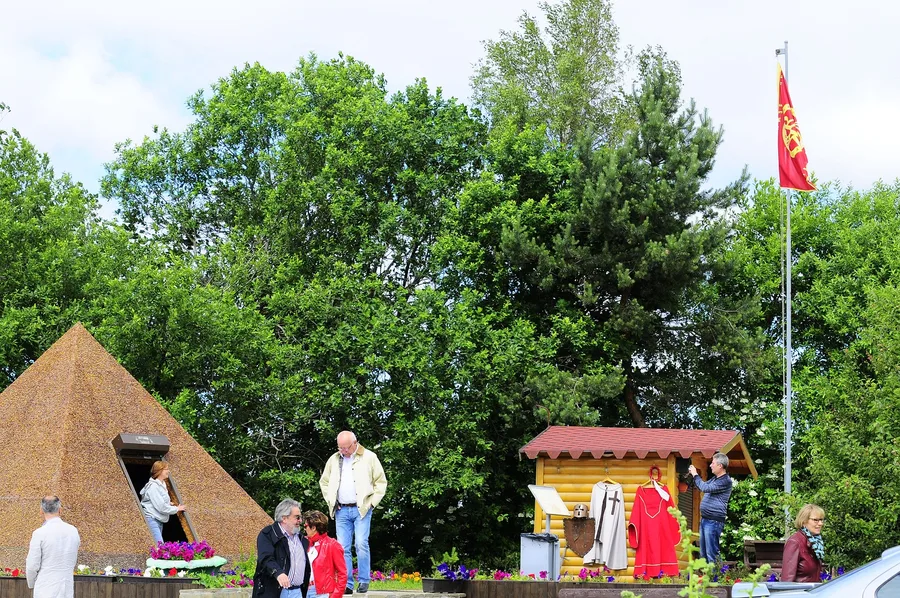
The Primorsky amber quarry at Yantarny in Kaliningrad, Russia, the largest amber mine in the world.
Real specimen. Photo: АО «Калининградский янтарный комбинат», CC BY-SA 4.0.
02 Raw (step 2 of 4)
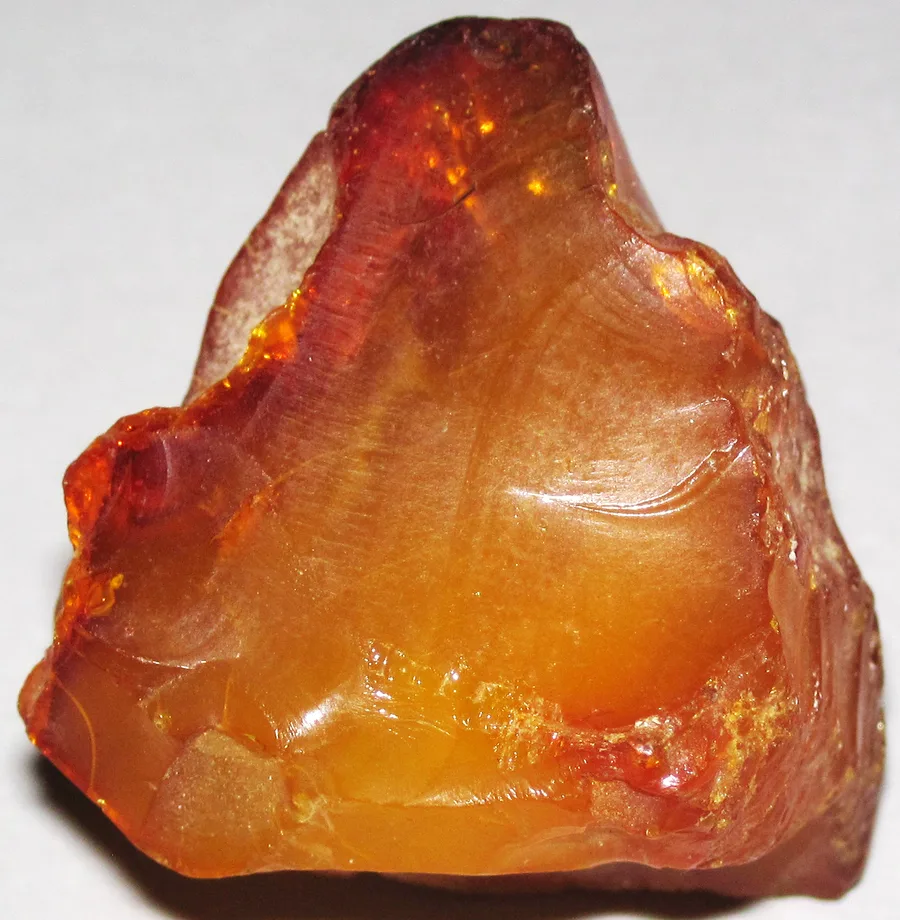
Raw Baltic amber: hardened resin with a rough, weathered skin.
Real specimen. Photo: James St. John, CC BY 2.0.
03 Polished (step 3 of 4)
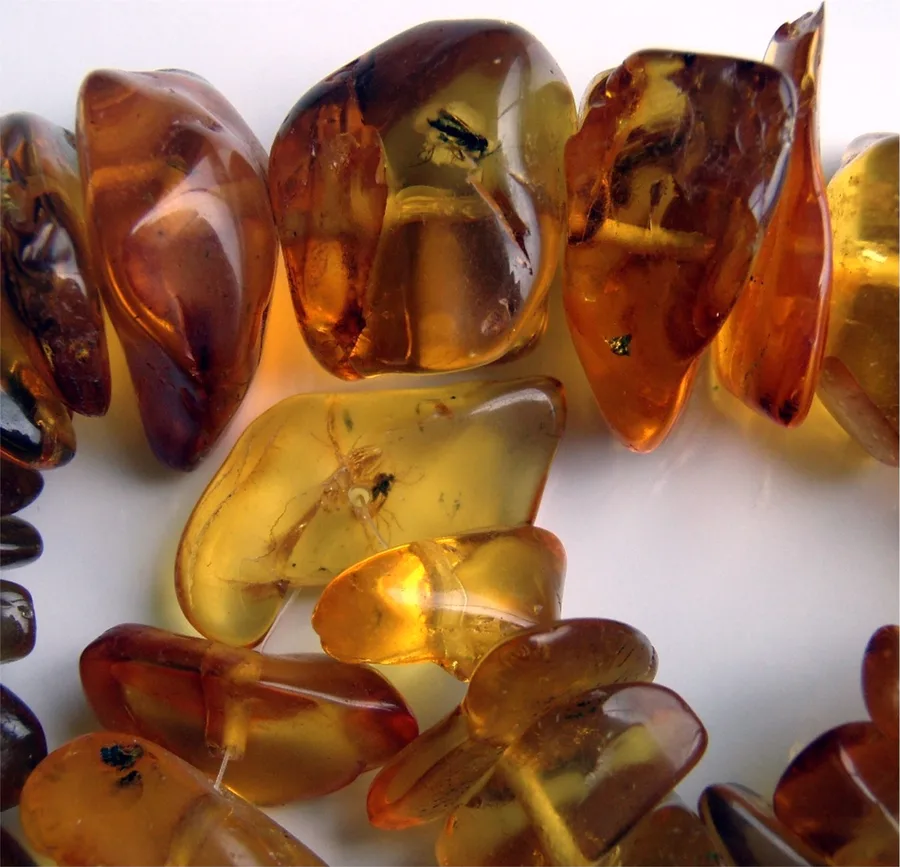
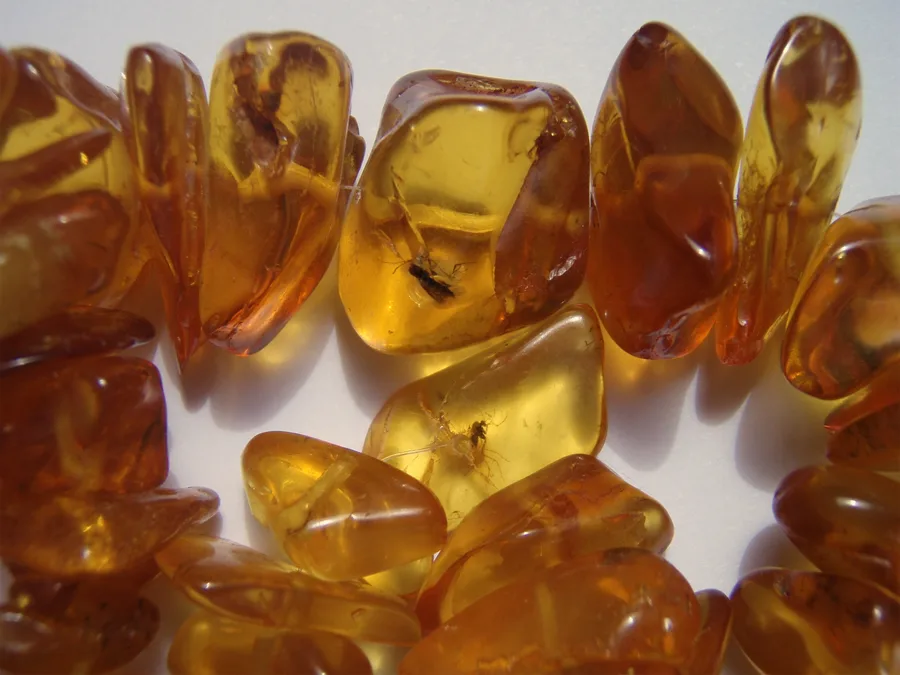
Polished amber beads with insects trapped inside, millions of years ago.
Real specimen. Photo: Brocken Inaglory, CC BY-SA 3.0.
04 Set (step 4 of 4)

A polished oval of Baltic amber set in sterling silver.
Amazon listing photo. See it on Amazon
| Test or listing word | What it tells you |
|---|---|
| Salt water (about 1 part salt to 4 parts water) | Real amber floats; glass sinks. Some plastics float too, so this only rules out glass and heavy fakes |
| Hot needle on a hidden spot | Real amber gives off a piney, resin smell; plastic smells chemical or acrid. It can mark the stone, so test loose pieces only |
| UV (black) light | Real amber usually glows a milky blue-white; most plastic and glass stay dull |
| "Copal" or "young amber" | Younger resin that is not fully fossilised; a drop of acetone makes copal sticky but leaves amber unharmed |
| "Pressed" or "reconstructed" amber | Small amber pieces heated and pressed together: real amber, but not one natural piece, and worth less |
| Perfect insects, huge and centred | Often a modern insect set in plastic or copal; real are usually small and imperfect |
Our picks name genuine Baltic amber and passed our listing checks. Insect-in-amber pieces for a few dollars are almost always plastic or copal, and listings that promise health benefits are making claims we do not repeat.
Treatments. Most Baltic amber jewellery is heated: gentle heat clears cloudy amber and can create the sparkly disc-shaped cracks called "sun spangles". Green and very dark "cherry" amber are usually heat-treated in pressure ovens. These treatments are normal and stable, but a good seller says so. Amber is soft and melts easily, so keep it away from perfume, hairspray, hot water and sharp knocks, and store it apart from harder jewellery. All gem treatments explained.
Pins mark mining districts, not exact mines. Drag to move, pinch or scroll to zoom, tap a pin to read about it. Map data © OpenStreetMap contributors.
Amber is too soft to facet well, so it is usually polished into , beads and freeform shapes that keep its natural flow lines. Because it is so light, even large amber pendants and long bead necklaces are comfortable to wear. See cuts from easiest to hardest and whether cutting your own is cheaper than buying cut.
Listing photos; prices are rounded. How we choose.
Amazon prices as of . Prices and availability are accurate as of that date and time and are subject to change; the price shown on Amazon at the time of purchase applies.
Our first pick
about $35
A classic honey-coloured cabochon of genuine Baltic amber in a simple silver setting.
See it on AmazonAlso good
about $50
Rectangle drops of honey Baltic amber, light enough to wear all day.
See it on AmazonAlso good
about $20
Polished Baltic amber beads on elastic: the cheapest way to own real amber.
See it on Amazon LookGemOro 10x triplet loupeabout $15
 LookDARKBEAM filtered 365 nm UV flashlightabout $13
 HandleHonoson locking tweezers, 3 packabout $10
 StoreTeensery gem display boxes with clear lids, 10 packabout $9
 ShowComXim motorized turntable, adjustable speed and directionabout $14
 MeasureGemOro Platinum XP500 pocket scale, 0.01 gabout $40
In short
Amber is fossilised tree resin, light enough to float in strongly salted water and soft enough to scratch. Most jewellery amber is heat-treated Baltic amber, which is normal. Test cheap pieces with salt water, UV light or a hot needle on a hidden spot, and be wary of perfect insects and "copal" sold as amber.
See our first pick: Amberta Baltic amber oval pendant, 925 sterling silverDrop a loose piece into strongly salted water (about 1 part salt to 4 parts water): real amber floats and glass sinks, though some plastics float too. Under a UV light real amber usually glows milky blue-white. A hot needle touched to a hidden spot gives off a piney resin smell on real amber and a chemical smell on plastic.
Both are hardened tree resin, but copal is much younger and not fully fossilised. It is softer and turns sticky under a drop of acetone, which does not affect amber. Copal is often sold as amber, especially pieces with large, perfect insects.
The US Food and Drug Administration warns against teething necklaces and bracelets, including amber ones, because of the risk of choking and strangulation, so we do not list them. Amber jewellery for adults is fine.
Amazon links are affiliate links (tag thegemtray-20): buying through them costs you nothing extra and supports the site. As an Amazon Associate we earn from qualifying purchases.

