Why collecting cut gems is fun, and why lab gems make it possible
Two hundred years ago a handful of faceted sapphires and rubies was a thing only a court could own. Today a furnace grows the same mineral, a factory cuts it, and the same handful arrives in a padded envelope for the price of a takeaway. That is the whole pitch of this site: science turned a royal pleasure into an ordinary hobby, and the pleasure itself did not shrink. A pile of cut stones on a desk under a lamp still feels like treasure, because it is.
The pleasure is the stone, not the price tag
Pick up a faceted stone and tilt it. The colour moves, the facets throw light back at you, and for a moment nothing else is happening. That is the hobby. It does not need paperwork, an appraisal or a provenance story to work; it needs a good cut and a colour you like. Lab-grown corundum gives you the colour of a fine Ceylon blue or a pigeon-blood red without the price of either, and moissanite gives you more fire than any diamond ever cut. What you lose, honestly, is the story of origin and the resale value. What you gain is the ability to own the stones at all.
A tray on the desk
The way we keep them: small clear display boxes with foam or a gem jar for each stone, a few of them lined up on the desk, and a parcel paper for the loose extras. Multiple boxes is the trick. One stone is a curiosity; a row of them, each a different colour and cut, is a collection, and you find yourself opening the boxes for no reason. Search Amazon for gem display boxes or gem jars; both are cheap enough to buy in tens.
It travels
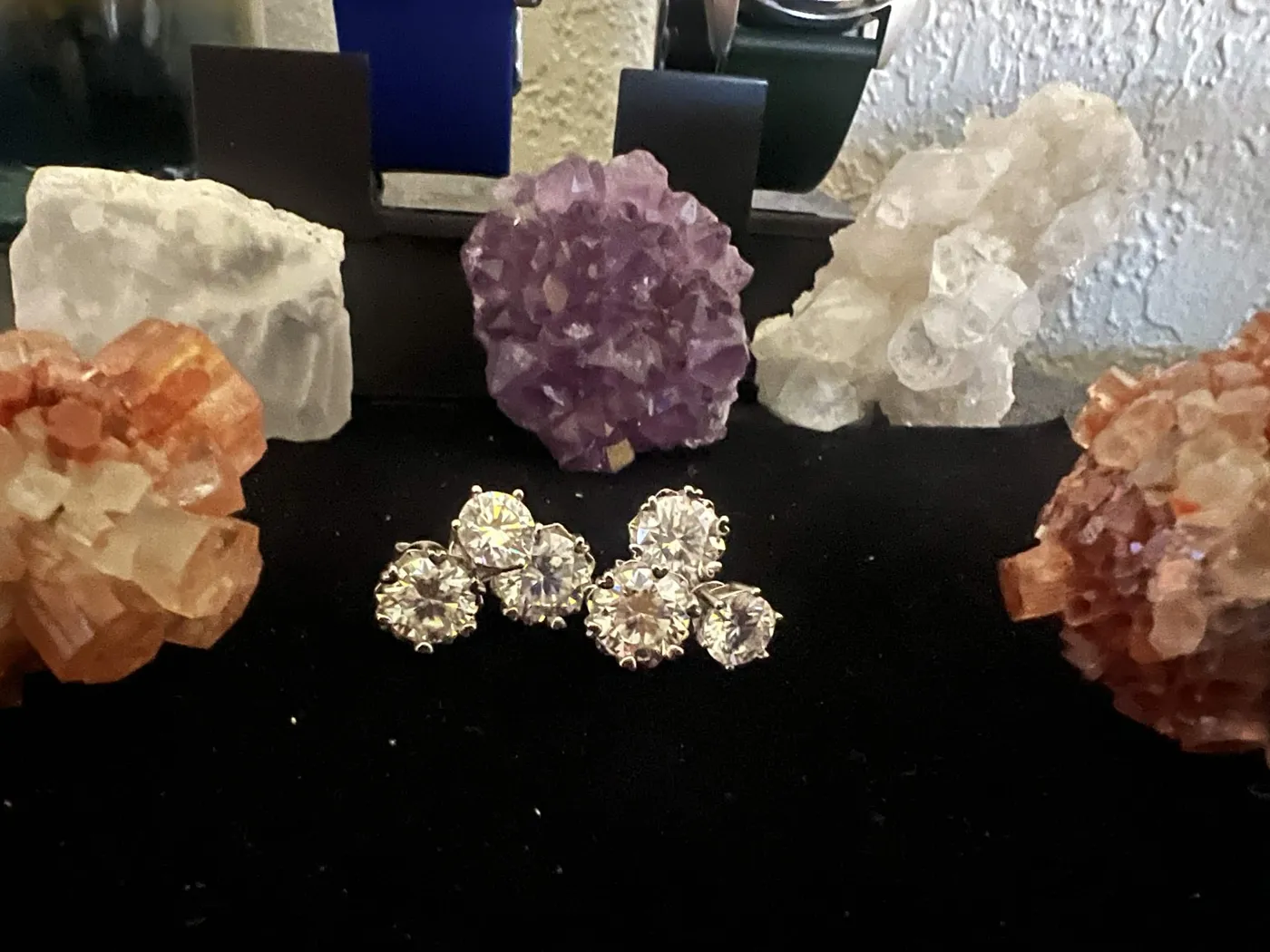
Crystal collecting is the same instinct, and we like it too, but a good specimen weighs a pound and chips if it rides in a bag. A cut-gem collection fits in a card wallet. That matters more than it sounds: you can carry it to a mineral show, a club meeting, or a friend's kitchen table, and you are always ready to compare, swap or just show. Portable collections make communities; a hobby you can bring along is a hobby other people catch.
Wearing them: the steel ring
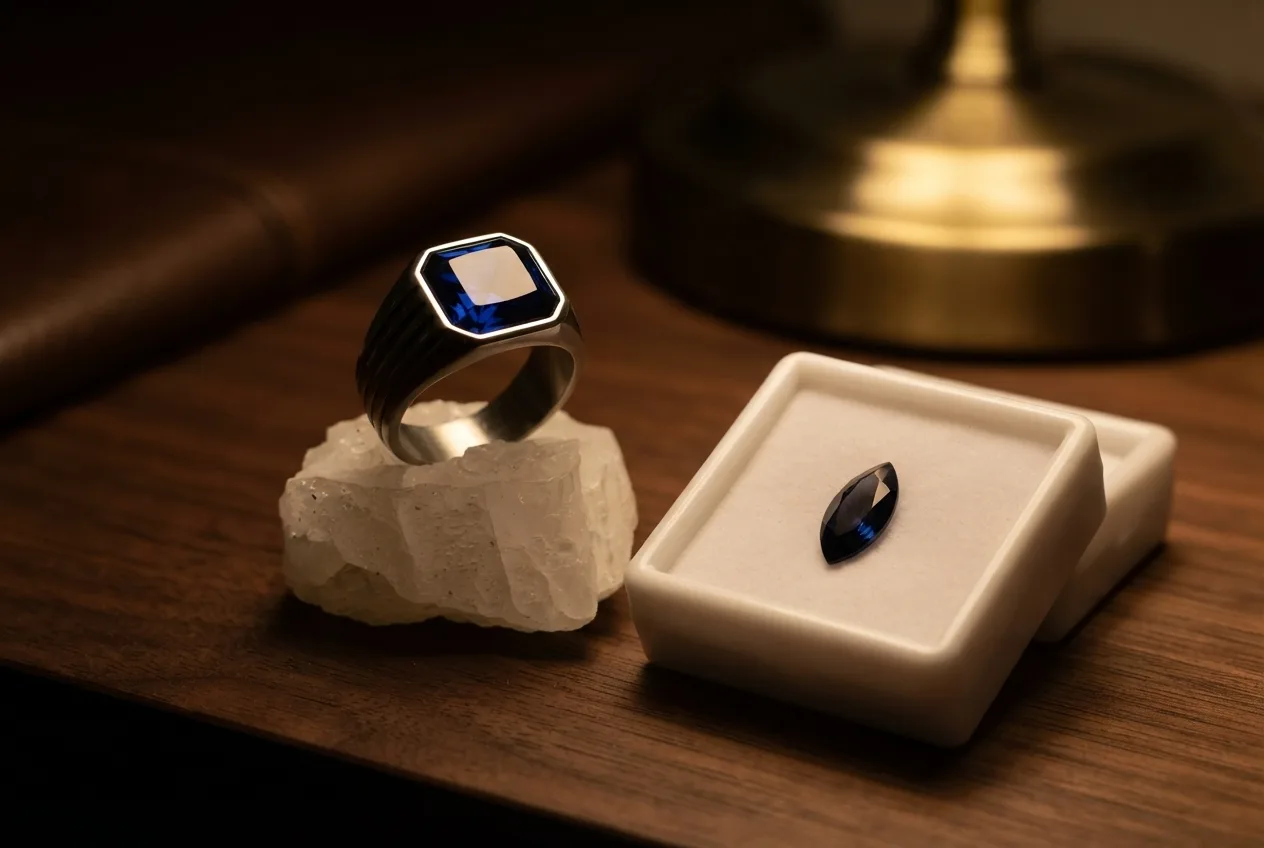
A stainless steel signet with a coloured stone costs about what two coffees a week costs for a month, and steel does not tarnish, plate off or bend; it will outlast a plated brass ring by years. The focus is the stone and its colour, and the setting is just there to hold it and survive. The ones we bought are listed as created sapphire and created emerald, which is lab-grown corundum and beryl, the real minerals; our blue ring matches the loose 2 carat lab sapphire we bought, side by side. Prefer listings that say created or lab-grown and name the stone; "sapphire" alone in a title can mean sapphire-coloured glass. Steel cannot be resized, so measure first.
Cut your own
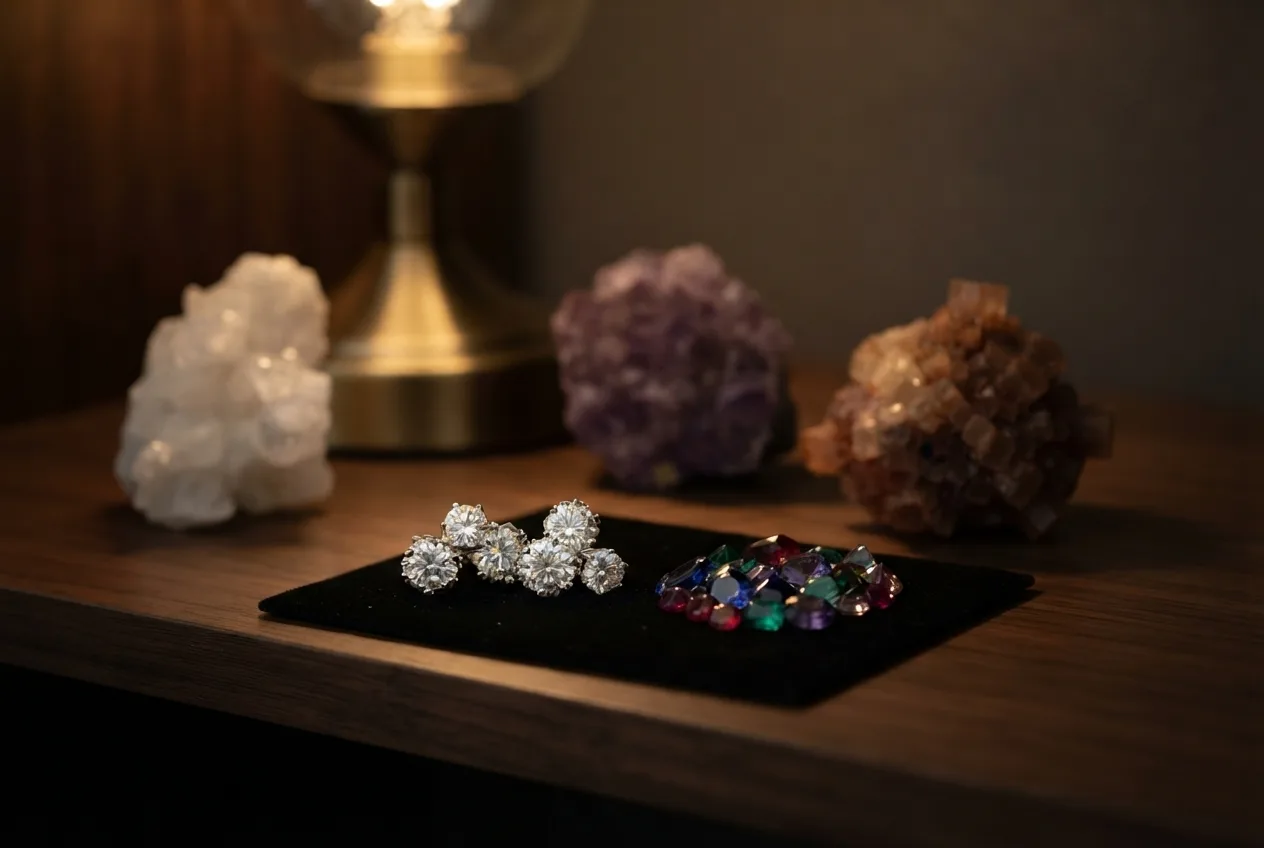
This is the part that would have been unthinkable a generation ago. Entry faceting machines are on Amazon and from lapidary suppliers at hobby prices, cheap rough like amethyst, citrine and synthetic corundum is sold by the gram, and the diagrams for a round brilliant are free online. Your first stone will take a weekend and come out lopsided; your tenth will not. Search faceting machine and facet-grade amethyst rough to see what the entry level looks like today; we have not bought a machine yet, and when we do it will be on the order log with the same honesty as everything else.
What lab gems are not
They are not an investment; supply is effectively infinite and resale is near zero. They are not the natural stone's story, and a mined sapphire with a report and a mine name is a different object with a different price for a reason. We say so on every page. But the reason lab gems have no resale value is the same reason we can have them, and artistic freedom comes with that: a matched set of six colours of corundum for a bracelet, a tray of a dozen cuts of the same blue, a pocket of stones to hand to a kid. A thousand years ago that was a king's ransom. Now it is a Tuesday.
Where to start
- Two or three loose lab stones in different colours and cuts, 6 to 8mm so you can see the facets. Ours are on the order log.
- A 10x loupe and a set of gem jars or display boxes.
- One piece you wear: steel ring or moissanite studs.
- Then, if it takes: a mixed parcel to sort and identify, and eventually the machine.
Frequently Asked Questions
Are lab gems worth anything?
Not as a store of value. They can be grown in near-unlimited quantity, so they have no scarcity and almost no resale price. That is exactly why a person with an ordinary income can own a tray of faceted sapphires, rubies and diamonds. Collect them for the colour, the cut and the pleasure, not the money.
Is this different from collecting crystals?
Same instinct, different form. A crystal collection is rough mineral specimens: heavy, fragile, and hard to carry. A cut-gem collection fits in a card wallet of gem jars or a single parcel paper, so it goes with you, to a club night, a show or a swap.
Can I really cut my own?
Yes. Entry-level faceting machines are sold on Amazon and by lapidary suppliers at a fraction of what a professional machine costs, and cheap rough such as amethyst, citrine and synthetic corundum is sold by the gram. Your first stones will be lopsided and you will keep them anyway.