Our first pick
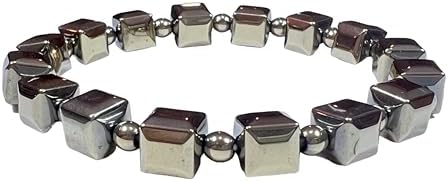
Amazing Gemstone pyrite bead bracelet, 8 mm, adjustable
See price on Amazon
Gold-coloured all the way through, so the gold does not fade. Keep it dry.
See it on AmazonPyrite · Iron sulfide · 6 to 6.5
Updated
Pyrite is iron sulfide, the brassy mineral nicknamed fool’s gold. Its gold colour belongs to the mineral itself, all the way through, so it does not fade or wear off the way gold plating does, and at 6 to 6.5 on the Mohs scale it is much harder than gold. Its weakness is water: damp air and sweat can slowly dull or tarnish the surface, and some specimens kept damp break down over the years. Spain’s Navajún mine is famous for perfect natural cubes, Peru for glittering clusters, and the “marcasite” in vintage silver jewellery is almost always small cut pyrite.
From the rock to the finished piece. Where gems are mined.
01 In the ground (step 1 of 4)
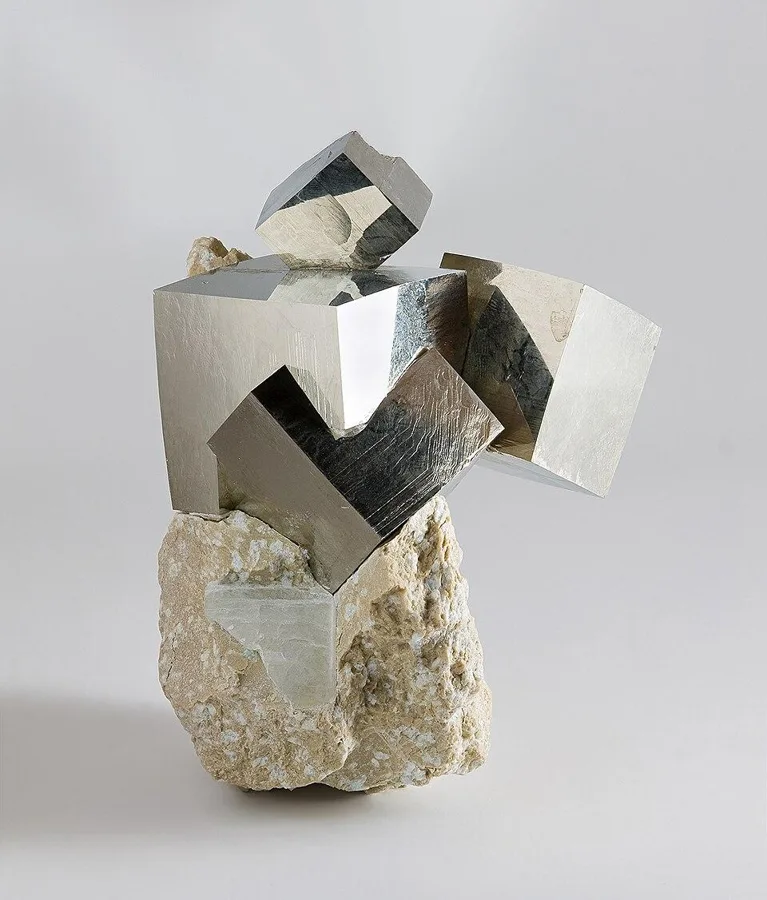
Natural pyrite cubes from Navajún, La Rioja, Spain. Nobody cut these faces: the crystals grow this way in the rock.
Real specimen. Photo: JJ Harrison, CC BY-SA 3.0.
02 Clusters (step 2 of 4)
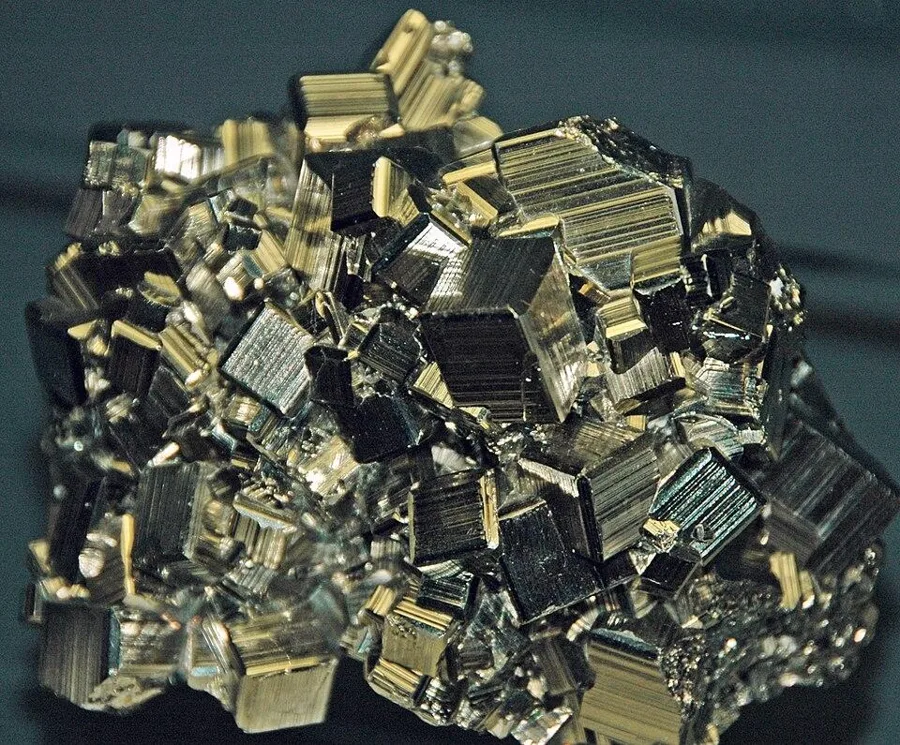
A cluster of pyrite crystals from the Huanzala mine, Peru.
Real specimen. Photo: James St. John, CC BY 2.0.
03 To own (step 3 of 4)

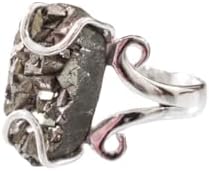
A natural pyrite cluster from Peru, sold by KALIFANO.
Amazon listing photo. See it on Amazon
04 Worn (step 4 of 4)

Pyrite beads, 8 mm, on an adjustable bracelet from Amazing Gemstone.
Amazon listing photo. See it on Amazon
| Pyrite | “Marcasite” jewellery | Gold-plated steel or silver | |
|---|---|---|---|
| What it is | A natural iron sulfide crystal | Tiny cut pyrite set in silver | Metal with a thin gold layer on top |
| Where the gold colour is | All the way through | All the way through the stones | Only in the surface layer |
| What wears out | The shine dulls in damp; wipe it dry | Same as pyrite | The plating rubs through to the metal underneath |
| Hardness | 6 to 6.5 | 6 to 6.5 for the stones | Steel is hard; the gold layer is soft |
| Does the gold fade? | No; keep it dry so the shine stays bright | No | Yes: the plating wears off |
| Typical price | A few dollars to tens of dollars | Tens of dollars in silver | Cheap to mid-priced |
Treatments. Pyrite is not dyed or heated. Specimens are often cleaned to brighten them. Real pyrite feels cold and heavy and shows flat crystal faces or a fine, granular glitter; there is no coating to chip off. All gem treatments explained.
Pins mark mining districts, not exact mines. Drag to move, pinch or scroll to zoom, tap a pin to read about it. Map data © OpenStreetMap contributors.
Listing photos; prices are rounded. How we choose.
Amazon prices as of . Prices and availability are accurate as of that date and time and are subject to change; the price shown on Amazon at the time of purchase applies.
Our first pick
See price on Amazon
Gold-coloured all the way through, so the gold does not fade. Keep it dry.
See it on AmazonAlso good
about $20
A glittering cluster of natural crystals for a shelf or a desk.
See it on AmazonAlso good
See price on Amazon
Natural pyrite in a clear collector case, a good first specimen or gift.
See it on AmazonMuseum and collector pieces of pyrite, still in their rock.
 Own the most similarKALIFANO pyrite cluster from Peruabout $20on Amazon →
 Own the most similarNatural pyrite cube from Navajún, Spain, 1.5 inabout $60on Amazon →
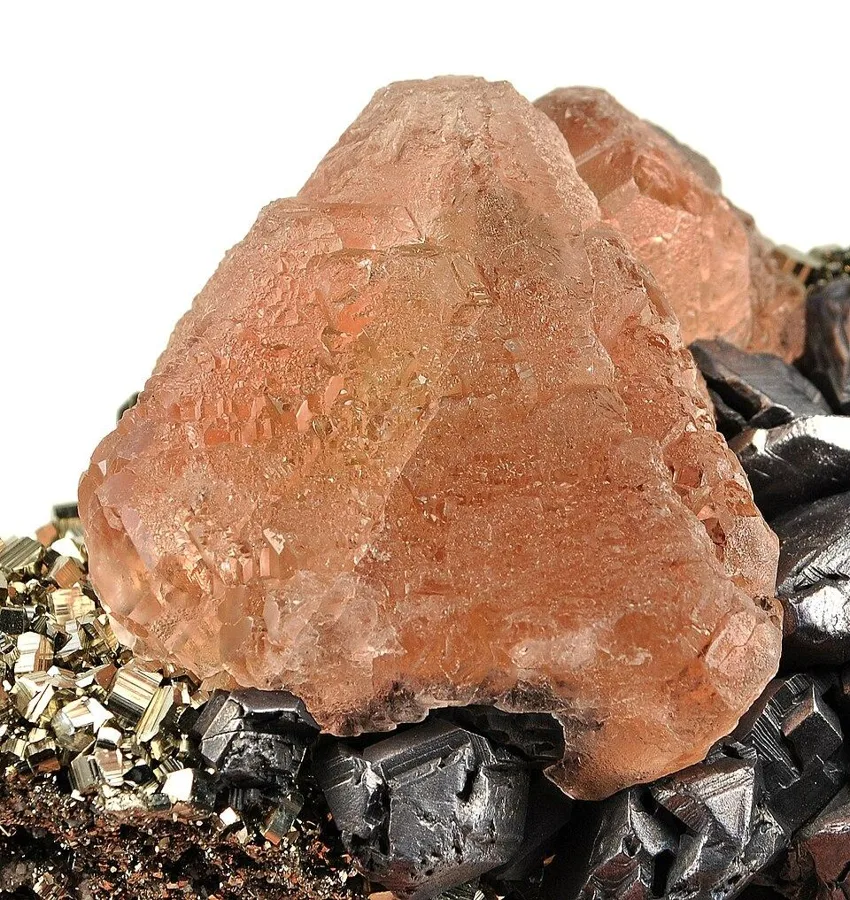
Sold as natural by the listing; listing photos.
Brand stores whose pyrite pieces we have checked, with one of their listings as an example. Browse the whole store: anything you buy through these links supports the site.
Every piece names the real stone. Listing photos; prices are rounded.
 LookGemOro 10x triplet loupeabout $15
 LookDARKBEAM filtered 365 nm UV flashlightabout $13
 HandleHonoson locking tweezers, 3 packabout $10
 StoreTeensery gem display boxes with clear lids, 10 packabout $9
 MeasureGemOro Platinum XP500 pocket scale, 0.01 gabout $40
In short
Pyrite is iron sulfide, fool’s gold. Its gold colour is the mineral itself, so it does not fade like plating, but keep it dry or the surface can tarnish.
See our first pick: Amazing Gemstone pyrite bead bracelet, 8 mm, adjustableNo. Plating is a thin layer that rubs through. Pyrite is gold-coloured all the way through, so there is nothing to rub off. What it can do is tarnish: sweat, damp and chemicals can dull the surface over the years. Take it off to swim or shower, wipe it dry, store it dry, and it keeps its shine much longer.
Because it looks like gold to an untrained eye. Gold is soft, bends and leaves a yellow streak; pyrite is hard, brittle and leaves a greenish-black streak. Its name comes from the Greek for fire, because it throws sparks when struck against steel.
For colour on a budget, yes: it is a natural stone with its own metallic gold look, and a pyrite bead bracelet costs a few dollars. It is not gold, it has no gold value, and it needs to be kept dry. Only solid gold stays gold-coloured with no care at all.
Amazon links are affiliate links (tag thegemtray-20): buying through them costs you nothing extra and supports the site. As an Amazon Associate we earn from qualifying purchases.