
Our first pick
EISCO specular hematite specimen, about 3 cm
See price on Amazon
A natural piece of glittering specular hematite from a science supplier.
See it on AmazonHematite · Iron oxide · 5.5 to 6.5
Updated
Hematite is iron oxide, the world’s main iron ore and the red in red ochre, one of the oldest pigments people have used. Polished, it is a heavy, mirror-bright grey-black, but rub it on unglazed tile and it leaves a red-brown streak, which is where its name, from the Greek for blood, comes from. Much of the “hematite” in cheap jewellery is not natural: strongly magnetic beads are a man-made material sometimes sold as hematine, and golden or rainbow hematite gets its colour from a thin coating. That gold fades: it wears off with use and the grey-black stone shows through.
From the rock to the finished piece. Where gems are mined.
01 In the ground (step 1 of 4)
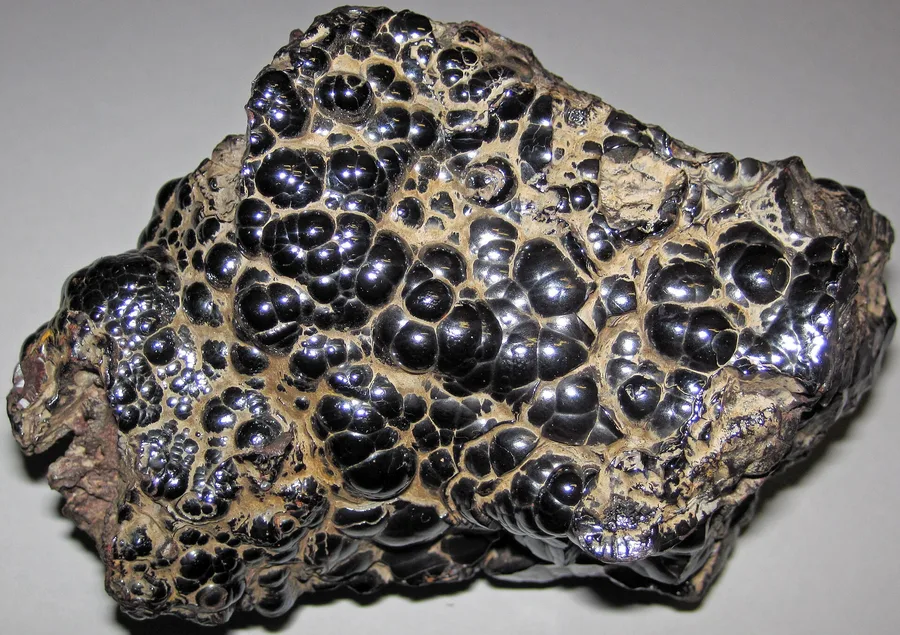
Black botryoidal hematite: rounded, bubbly masses that miners call kidney ore.
Real specimen. Photo: James St. John, CC BY 2.0.
02 Crystals (step 2 of 4)
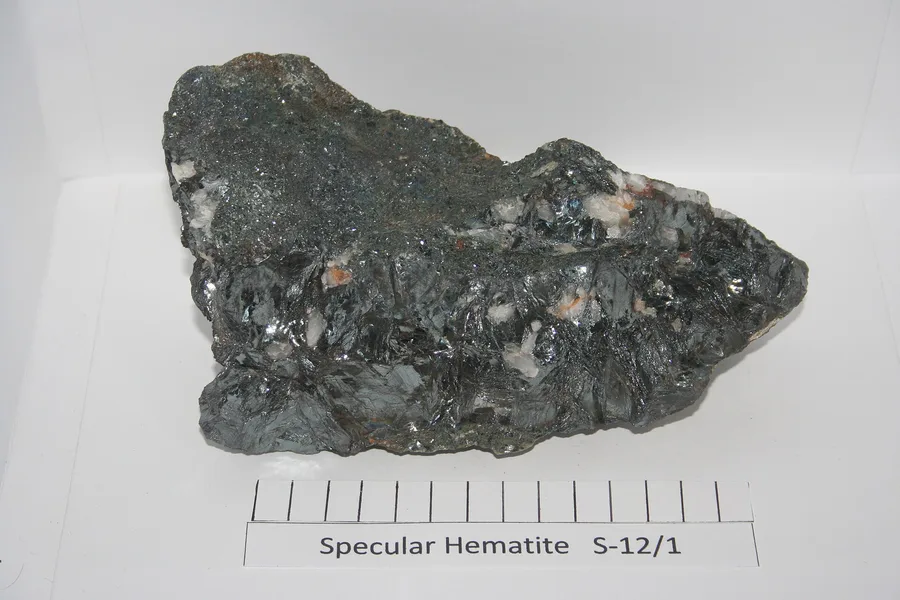
Specular hematite, made of tiny flat crystals that glitter like mirrors.
Real specimen. Photo: Lloyd.james0615, CC BY 3.0.
03 Polished (step 3 of 4)

Tumbled natural hematite from Brazil, polished to a metallic shine.
Amazon listing photo. See it on Amazon
04 Coated (step 4 of 4)

Golden hematite beads. The gold is a coating on the surface, and it fades with wear.
Amazon listing photo. See it on Amazon
| Natural hematite | Magnetic “hematite” (hematine) | Golden or rainbow hematite | |
|---|---|---|---|
| What it is | Iron oxide from the ground | A man-made material that looks like hematite | Hematite or hematine beads with a metal-coloured coating |
| Magnetic | Only weakly | Strongly: beads snap together | Depends on the bead underneath |
| Colour | Grey-black and metallic; red-brown when powdered | Grey-black and metallic | Gold, rose or rainbow, on the surface only |
| What wears out | Can scratch and chip | Can scratch and chip | The coating, at the edges first |
| Does the colour fade? | No: it is grey-black all the way through | No | Yes: the gold wears off with use |
| Typical price | A few dollars for tumbled stones | Very cheap | Very cheap |
Treatments. Natural hematite is cut and polished, not dyed. Coloured hematite is coated: gold, rose-gold and rainbow beads all owe their colour to a thin film on the surface. If a listing calls beads “magnetic hematite”, they are man-made. All gem treatments explained.
Pins mark mining districts, not exact mines. Drag to move, pinch or scroll to zoom, tap a pin to read about it. Map data © OpenStreetMap contributors.
Listing photos; prices are rounded. How we choose.
Amazon prices as of . Prices and availability are accurate as of that date and time and are subject to change; the price shown on Amazon at the time of purchase applies.
Our first pick
See price on Amazon
A natural piece of glittering specular hematite from a science supplier.
See it on AmazonAlso good
See price on Amazon
A pound of polished natural hematite, enough to sort, display or try the streak test.
See it on AmazonAlso good
See price on Amazon
The gold look for very little money, but the gold is a coating and it fades with wear. For gold that lasts, see pyrite.
See it on AmazonFrom our specimen hall.
Sold as natural by the listing; listing photos.
Brand stores whose hematite pieces we have checked, with one of their listings as an example. Browse the whole store: anything you buy through these links supports the site.
Every piece names the real stone. Listing photos; prices are rounded.
 LookGemOro 10x triplet loupeabout $15
 LookDARKBEAM filtered 365 nm UV flashlightabout $13
 HandleHonoson locking tweezers, 3 packabout $10
 StoreTeensery gem display boxes with clear lids, 10 packabout $9
 MeasureGemOro Platinum XP500 pocket scale, 0.01 gabout $40
In short
Hematite is iron oxide, the main iron ore, and it leaves a blood-red streak. Strongly magnetic beads are man-made, and golden hematite is coated, so its gold fades.
See our first pick: EISCO specular hematite specimen, about 3 cmYes. Natural hematite is grey-black; it never comes out of the ground gold. The gold colour is a thin coating on the bead, so it wears at the edges and where beads rub together, the same way plating does, and the grey-black stone shows through. Keep it away from water, perfume and rough surfaces to make it last. If you want a gold colour that cannot rub off, pyrite is gold-coloured all the way through.
Two checks. Rub it on the unglazed back of a tile: real hematite leaves a red-brown streak. And try a magnet: natural hematite is only weakly magnetic, so beads that snap together hard are man-made. Coated beads cannot be streak-tested without scratching through the coating.
Yes, as beads and . It is heavy, takes a mirror polish and costs very little. It is brittle, so a hard knock can chip a bead. Keep coated hematite away from water and chemicals.
Amazon links are affiliate links (tag thegemtray-20): buying through them costs you nothing extra and supports the site. As an Amazon Associate we earn from qualifying purchases.


