Hypoallergenic earrings for sensitive ears
For sensitive ears, choose implant-grade titanium (ASTM F136, often sold as G23, or the pure grades in ASTM F67), platinum, or solid yellow gold of 14K or more. Sterling silver and stainless steel are on dermatologists’ lists of safer metals but are not the safest bet for a known nickel allergy: 316L steel is 10 to 14% nickel, and some sterling carries traces of it. Avoid cheap plated base metal, white gold that does not say nickel-free, and any listing that does not name its metal. The US FTC Jewelry Guides define neither "hypoallergenic" nor "surgical steel", so look for a grade instead of the word.
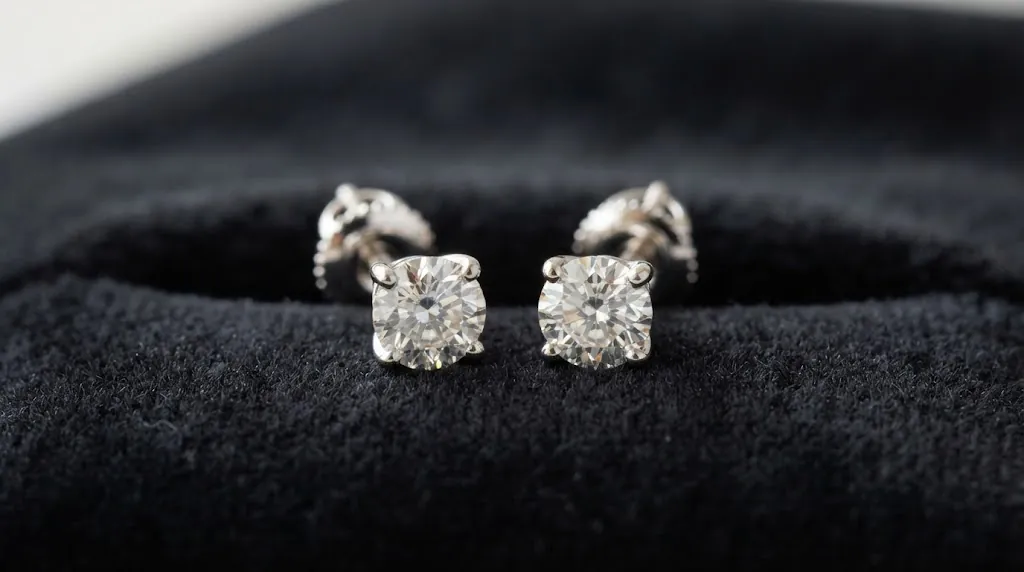
How we pick: each entry is a kind of piece and the listing details that separate a good one from a bad one, with an Amazon search already narrowed to that spec. We tell you what to look for in each listing. Grades on listings are the seller’s claims.
Amazon prices as of . Prices and availability are accurate as of that date and time and are subject to change; the price shown on Amazon at the time of purchase applies.
Implant-grade titanium studs
Best for: A known nickel allergy, first earrings, and a safe gift for a teen
ASTM F136 is the specification for the titanium alloy made for surgical implants: titanium with 5.5 to 6.5% aluminium and 3.5 to 4.5% vanadium, and no nickel among its listed elements. The Association of Professional Piercers accepts F136 and F67 titanium for fresh piercings, the hardest job an earring does. The American Academy of Dermatology estimates that more than 18% of people in North America are allergic to nickel, so this is the metal to start with when you do not know. One catch on listings: F136 is an alloy, so "G23 pure titanium" mixes up two grades. Piercers accept both, so either one is a good sign.
Look for
- "ASTM F136", "G23" or "implant grade" in the title and the Metal field, not just "titanium"
- Or "ASTM F67": the pure titanium grades made for implants
- A titanium back as well as a titanium post
- A gauge that fits the hole: 20G is thinner than 18G
 Limerencia CZ studs, G23 titanium, 20G, 4 mmThe listing says G23, F136 implant-grade titanium, 20G, with 4 mm cubic zirconia.about $10on Amazon →
  Limerencia screw-back CZ studs, G23 titanium, 20GThe listing says G23 implant-grade titanium, F136, with screw backs and cubic zirconia.about $15on Amazon →
 Titanium flat backs for cartilage
Best for: Helix, tragus and other cartilage holes, and earrings you sleep in
A flat back sits flush against the skin, so there is no butterfly back to catch on hair or a pillow, and the back is the same metal as the post. That matters: the American Academy of Dermatology names earring backs among the biggest culprits in nickel rashes.
Look for
- Internally threaded or threadless flat backs in the same titanium as the post
- G23 or ASTM F136 stated
- Gauge and post length that match the piercing

Platinum earrings
Best for: A lasting gift for the most sensitive ears
Under the US FTC Jewelry Guides, a piece may be called plain "Platinum" only if it is at least 950 parts per thousand pure platinum, and a piece that is only coated with platinum has to say so. The Association of Professional Piercers calls platinum extremely inert, and GIA calls it naturally hypoallergenic.
Look for
- "950 platinum", "950Pt", "950Plat" or plain "platinum" with no qualifier
- Not "platinum plated", which is a coat over another metal
- Platinum backs, or ask what the backs are made of
 Chow Sang Sang star earrings, 950 platinumThe listing says 950 platinum, in a star design.about $300on Amazon →
 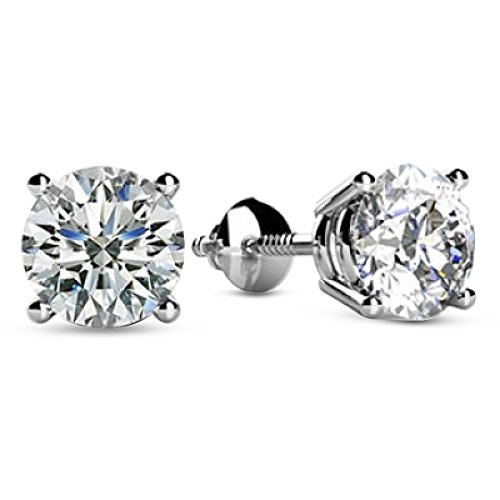 Houston Diamond District lab diamond studs, platinum, 2 caratThe listing says platinum (pick Platinum on the listing; gold versions share the page), IGI-certified lab-grown diamonds, E to F colour, VS1 to VS2, screw backs.about $1,100on Amazon →
 Solid yellow gold studs
Best for: Everyday studs for most nickel-sensitive ears
Karat gold is a mix: GIA notes that 14K is 58.3% gold (14 parts in 24) and 41.7% other metals. DermNet says white gold is usually alloyed with nickel, which is why yellow gold is the safer pick. Professional piercers accept nickel-free gold of 14K and up for fresh piercings; the American Academy of Dermatology’s list starts at 18K, so if your ears are very sensitive, go higher.
Look for
- "14K solid gold" or "18K", stamped 14K (585 or 583) or 18K (750)
- Yellow gold, or white gold that says nickel-free or palladium
- Not "gold plated", "gold filled" or "gold tone"
- Gold backs, not steel or plated ones
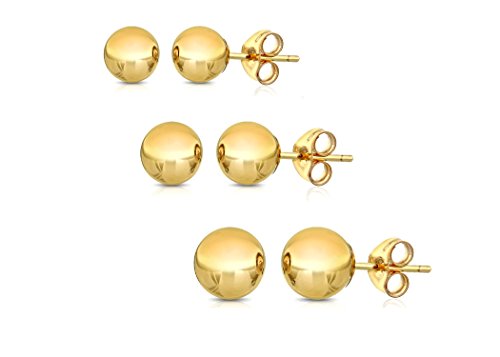 PORI ball studs, 14K yellow gold, 3 pairsThe listing says 14K solid gold in yellow, three pairs of 3, 4 and 5 mm balls.about $80on Amazon →
  Trustmark lapis ball studs, 14K yellow gold, 8 mmThe listing says 14K yellow gold with 8 mm natural lapis lazuli balls.about $65on Amazon →
  DECADENCE created ruby heart studs, 14K yellow gold, 4 mmThe listing says solid 14K yellow gold with 4 mm hearts of created ruby.about $70on Amazon →
 Sterling silver studs
Best for: An affordable gift for ears that only mind cheap metal
Sterling is 92.5% silver, the rest usually copper, and DermNet lists it among the safer metals. It is not a guarantee: DermNet notes that traces of nickel can be present in some sterling. For ears that react only to cheap plated jewellery, solid sterling studs are a sensible budget step up. For a confirmed nickel allergy or a fresh piercing, buy titanium first; sterling is not on the piercers’ list for new holes.
Look for
- "925 sterling silver" in the Metal field, not "silver tone" or "silver plated"
- Plating (rhodium or "white gold plated") is a thin coat that wears; the 925 underneath is what touches skin later
- Sterling backs too
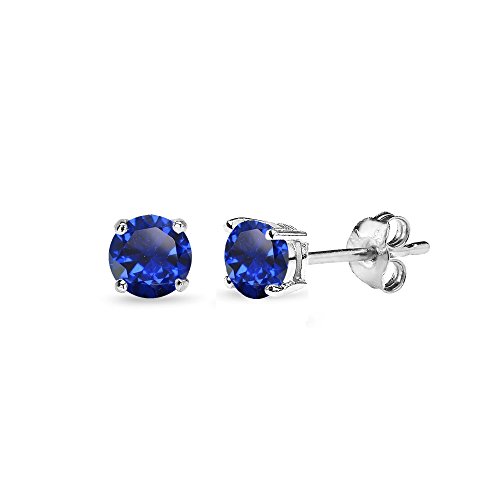 B. BRILLIANT created sapphire studs, sterling silver, 4 mmThe listing says 925 sterling silver with 4 mm round created blue sapphire.about $25on Amazon →
  Gem Stone King garnet studs, sterling silver, 6 mmThe listing says 925 sterling silver with 6 mm round red garnet, 2.00 ct total.about $13on Amazon →
  Delzzad moissanite screw-back studs, sterling silverThe listing says S925 sterling silver, D colour VVS1 moissanite, screw backs, 1 to 4 ct sizes.about $20on Amazon →
 Budget steel studs and huggies
Best for: Budget multi-packs for mildly sensitive, healed ears
316L stainless steel is 10 to 14% nickel, but DermNet says stainless steel does not usually cause dermatitis unless it is nickel-plated. Even the steel made for implants, ASTM F138, is 13 to 15% nickel, which is why titanium comes first on this page. "Surgical steel" on its own is not a grade: the Association of Professional Piercers notes it covers many alloys and accepts only specific ones, such as steel made to ASTM F138 or ISO 5832-1.
Look for
- "316L" stated, not just "stainless" or "surgical steel"
- Not for a confirmed nickel allergy
- Steel backs or hinged huggie closures
 YINCUO CZ studs, 316L steel, 6 pairs, 3 to 8 mmThe listing says surgical 316L stainless steel, six pairs with 3 to 8 mm cubic zirconia.about $6on Amazon →
  Gabry&jwl huggie hoops, 316L steel, 6 to 12 mmThe listing says 316L surgical stainless steel, hinged sleeper hoops in 6, 8, 10 and 12 mm.about $10on Amazon →
 Before you buy: the listing checklist
- The metal has a grade, not just a promise: ASTM F136, G23 or F67 titanium; 950 platinum; 14K or 18K gold; 925 sterling; 316L steel. "Hypoallergenic", "nickel-free" and "surgical steel" on their own are seller claims.
- The Metal type field under Product details agrees with the title.
- The backs are the same metal as the posts. The American Academy of Dermatology counts earring backs among the biggest culprits in nickel rashes.
- Plated pieces say what is underneath: "gold plated", "platinum plated" and "gold tone" are coats over another metal. Under the FTC Guides, a nickel layer under gold vermeil has to be disclosed.
- White gold says nickel-free or palladium white gold; otherwise choose yellow gold or platinum.
- For a teen’s first earrings or a new piercing: implant-grade titanium, platinum or 14K-plus nickel-free gold. Save sterling and ordinary steel for healed ears.
- A rash that keeps coming back needs a dermatologist and a patch test: a nickel allergy usually lasts for years, often for life.
Frequently Asked Questions
What is the best metal for sensitive ears?
Implant-grade titanium: ASTM F136 (sold as G23) or the pure titanium of ASTM F67. Platinum and solid yellow gold of 14K or more come next. Sterling silver and stainless steel are on dermatologists’ lists of safer metals too, but 316L steel is 10 to 14% nickel and some sterling has traces of nickel, so they are second choices for a confirmed nickel allergy.
Is G23 titanium the same as ASTM F136?
Nearly. Grade 23 is the industry grade number for Ti-6Al-4V ELI, the extra-low-interstitial (purer) version of the titanium alloy with about 6% aluminium and 4% vanadium. ASTM F136 is the specification for that alloy when it is made for surgical implants, so F136 is the claim to look for. ASTM F67 covers four grades of unalloyed titanium for implants. A seller’s grade is still a claim: piercers point out that a mill certificate cannot prove a given piece came from that batch.
Is surgical steel hypoallergenic?
Not for everyone. "Surgical steel" is not a defined grade, and piercers note that it covers many alloys. Many listings name 316L, which is 10 to 14% nickel. DermNet says stainless steel does not usually cause dermatitis unless it is nickel-plated. With a confirmed nickel allergy, titanium is the safer choice.
Why can white gold make my ears itch?
DermNet says white gold is usually alloyed with nickel, and is often rhodium-plated to look whiter and shinier. The plating covers the alloy at first, but DermNet notes that it wears off over months or years. Look for "nickel-free" or "palladium white gold", or choose yellow gold or platinum. In the US, the FTC Guides require a rhodium coat on precious metal to be disclosed.
What does "hypoallergenic" mean on earrings?
Nothing fixed. The US FTC Jewelry Guides never define the word, and the FDA says there are no federal standards or definitions for it on cosmetics either. Europe regulates nickel itself instead: under REACH Annex XVII, entry 27, posts that go into pierced ears must release less than 0.2 μg of nickel per cm² per week, and other earrings no more than 0.5. A named grade tells you more than the word.
What earrings should I buy for a teen with sensitive ears?
Implant-grade titanium studs with a small cubic zirconia or a plain ball: the ASTM F136 alloy has no nickel among its listed elements, so it suits the most sensitive ears. For a bigger gift, solid 14K yellow gold ball studs. The American Academy of Dermatology says a nickel allergy commonly develops from wearing jewellery that contains nickel, and DermNet says it then persists for many years, so a first pair in titanium or nickel-free 14K-plus gold is worth it.
Can I stop my earrings irritating my ears?
DermNet suggests plastic covers made for earring studs if you must wear a pair that contains nickel, and a metal testing kit to check what you already own. A dermatologist can confirm a nickel allergy with a patch test. The lasting fix is a different metal.
Sources
- ASTM F136: Standard Specification for Wrought Titanium-6Aluminum-4Vanadium ELI (Extra Low Interstitial) Alloy for Surgical Implant Applications (UNS R56401), scope
- ASTM F67: Standard Specification for Unalloyed Titanium, for Surgical Implant Applications (four grades), scope
- Fort Wayne Metals: Ti-6Al-4V ELI to ASTM F136 (aluminium 5.50 to 6.50%, vanadium 3.50 to 4.50%, iron 0.25% max; no nickel listed)
- United Performance Metals: Ti-6Al-4V ELI datasheet (Grade 23; used for hip and knee replacements and dental implants)
- Fort Wayne Metals: 316LVM implant steel to ASTM F138 (nickel 13.00 to 15.00%)
- Wikipedia: Body jewelry sizes (support: gauge follows American Wire Gauge; 20 gauge 0.812 mm, 18 gauge 1.024 mm; higher number is thinner)
- AZoM: Grade 316L stainless steel, UNS S31603 (nickel 10 to 14%)
- Association of Professional Piercers: Jewelry for initial piercings (ASTM F136 and F67 titanium; "surgical steel" covers many alloys, only ASTM F138 or ISO 5832-1 steel accepted; nickel-free 14K-plus gold; platinum extremely inert; plated gold not accepted; mill certificates)
- American Academy of Dermatology: Nickel allergy (more than 18% of people in North America; earrings and earring backs among the biggest culprits; surgical-grade stainless steel, 18K-plus yellow gold, sterling or platinum)
- DermNet: Nickel allergy (stainless steel does not usually cause dermatitis unless nickel-plated; persists for many years, often life-long; patch tests)
- DermNet: Jewellery allergy (white gold usually alloyed with nickel and often rhodium-plated; plating wears off over months or years; traces of nickel in some sterling; nickel in plated base metal; plastic stud covers; testing kits)
- GIA 4Cs: White gold vs silver (sterling is 92.5% silver, the rest usually copper; 14K is 58.3% gold and 41.7% other metals)
- GIA 4Cs: Guide to white, yellow and rose gold engagement rings (14K stamped 583 or 585, 18K stamped 750; white gold alloyed with nickel or palladium)
- REACH Annex XVII, entry 27, nickel: 0.2 μg/cm²/week for posts in pierced ears, 0.5 for earrings and other skin-contact articles (text as retained in UK law)
- ChemSafetyPro: REACH Annex XVII entry 27, nickel and its compounds (EU conditions of restriction)
- US FTC Jewelry Guides, 16 CFR part 23, full text (2024 edition): no definition of "hypoallergenic" or "surgical steel"
- 16 CFR 23.4: "vermeil"; a base-metal layer such as nickel under the gold must be disclosed (Cornell LII)
- 16 CFR 23.6: plain "Platinum" only for at least 950 parts per thousand; 950Pt and 950Plat marks; coated pieces must say so (Cornell LII)
- 16 CFR 23.7: a surface layer of rhodium on precious metal must be disclosed (Cornell LII)
- US FDA: Hypoallergenic cosmetics (no federal standards or definitions for the term)
- GIA 4Cs: Platinum, a metal fit for kings (naturally hypoallergenic)
- Wikipedia: Nickel Directive (support: EU limits now item 27 of REACH Annex XVII; EN 1811 artificial-sweat test)
Keep reading
Amazon links are affiliate links (tag thegemtray-20): buying through them costs you nothing extra and supports the site. As an Amazon Associate we earn from qualifying purchases.